 Services
 Roof Systems
 Property Types
 Industries
 Damage Repair
 Capabilities
 Manufacturers
 Service Areas
Ponding Water Roof Repair in Alexandria, VA
Roof Damage Repair:
- Wind Damage Roof Repair in Alexandria, VA
- Ponding Water Roof Repair in Alexandria, VA
- Commercial Roof Flashing Failure Repair in Alexandria, VA
- Commercial Roof Seam Failure Repair in Alexandria, VA
- Commercial Roof Membrane Puncture Repair in Alexandria, VA
- Commercial Roof Fire Damage Repair in Alexandria, VA
After a heavy rain, water remaining on a roof can mark a low point, blocked outlet or slope problem. We inspect the drain, surrounding membrane, overflow route and interior conditions before choosing a correction. Alexandria, VA’s low elevation and Potomac proximity put drainage and perimeter transitions on the inspection list, while the roof’s slope and outlet layout guide the repair.
Commercial areas in Carlyle and Eisenhower East include office and mixed-use buildings, while Landmark/Van Dorn links Duke Street with regional roads. Site conditions vary by address. We check the roof slope and discharge path directly, then record whether ponding, membrane wear or interior moisture is present. Flashing failure and wind-related damage can affect water entry, but neither substitutes for a drainage inspection.
Ponding Water Roof Repair
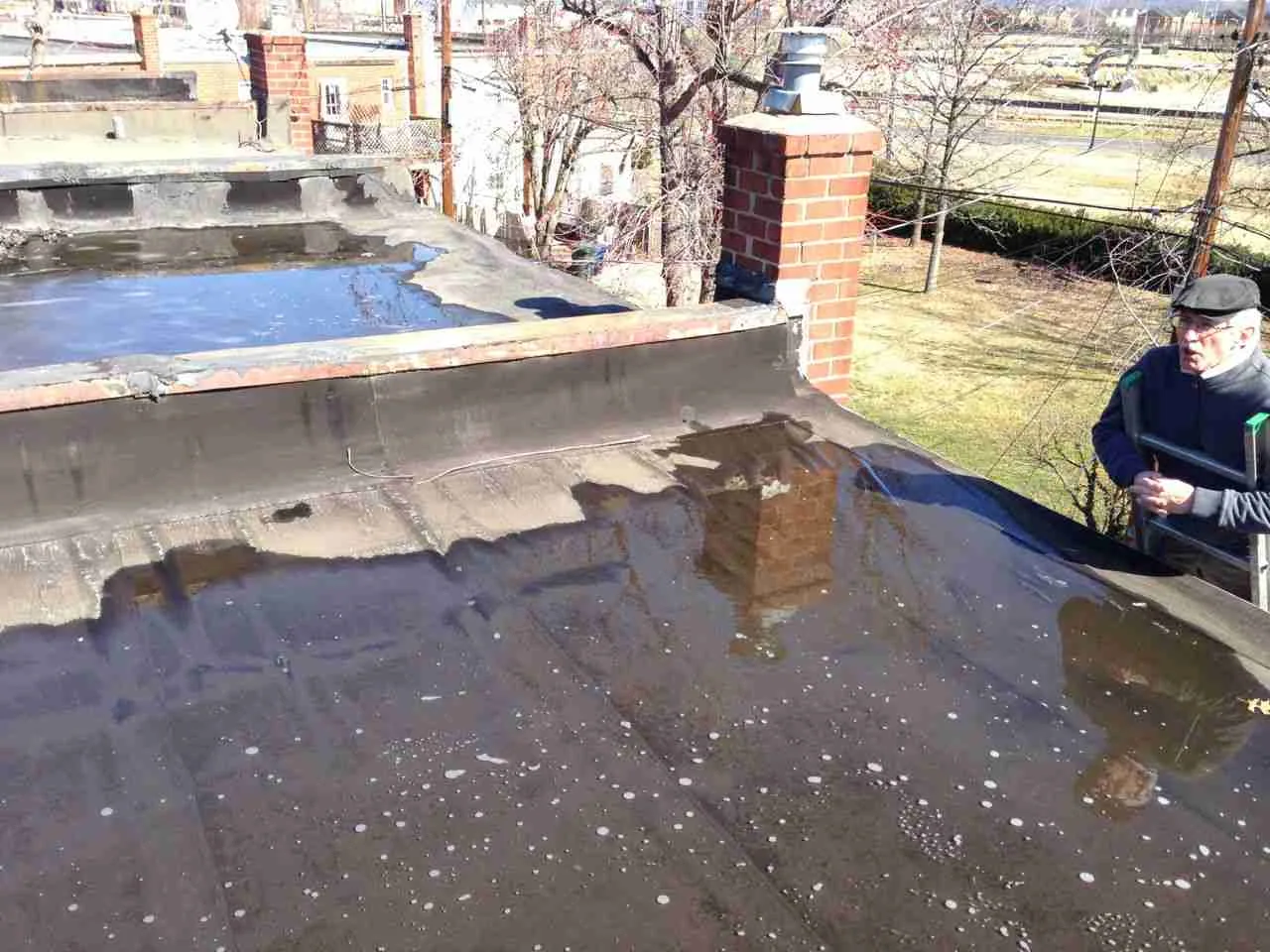
Find Why Water Remains
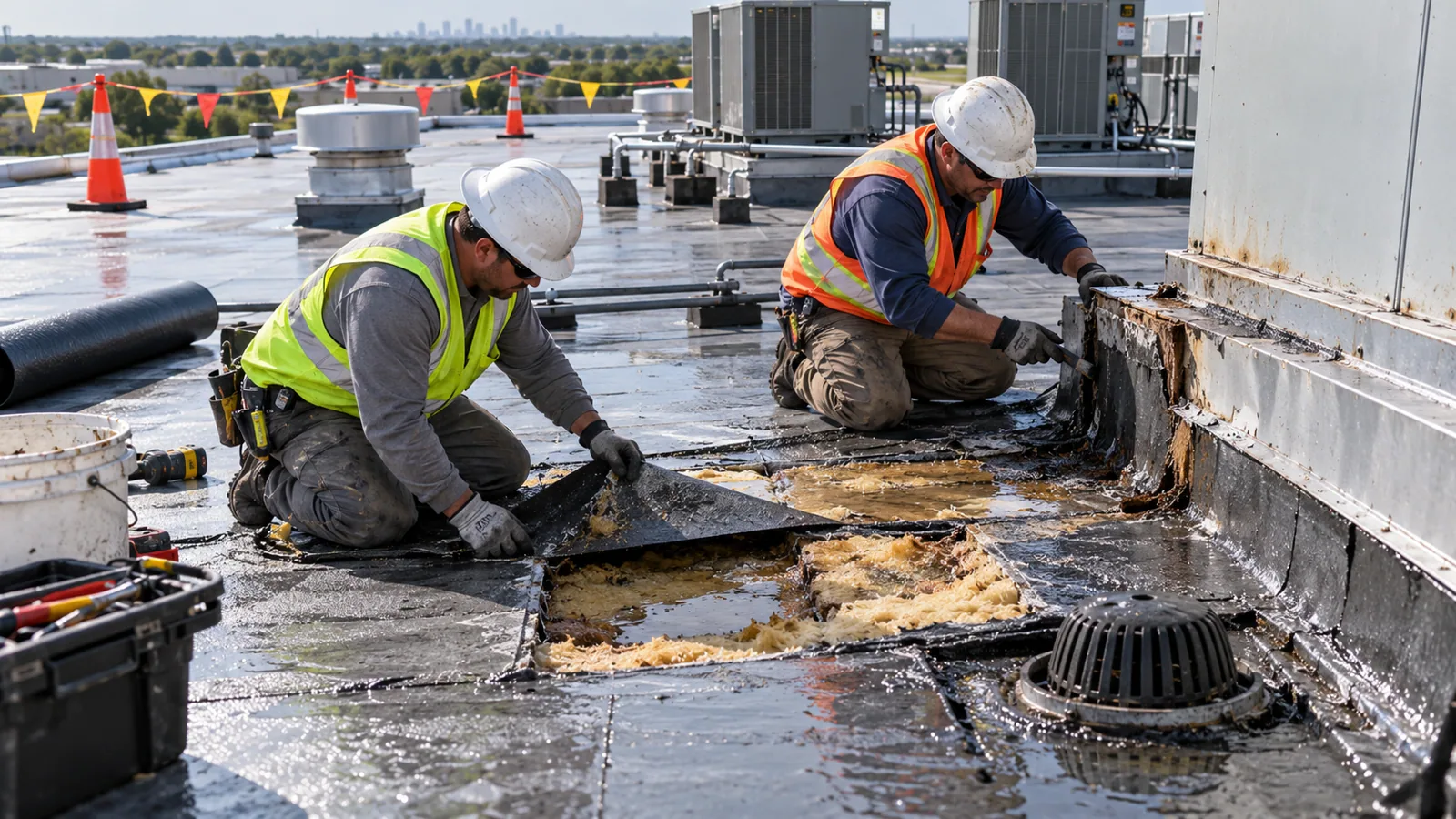
We inspect roof drains, strainers, bowls, scuppers, gutters and visible discharge points for obstruction or damage. The membrane around each outlet is checked for separation, trapped debris and low areas. We record water marks, sediment and any interior report, then compare the roof surface with slope and drainage details. A drain and scupper inspection can help show whether the outlet path is clear.
Standing water can relate to drain capacity, construction slope, a compressed assembly or a local depression. We inspect the surface and interior for related signs, then use targeted testing when concealed layers could change the repair. An approved opening reveals the layers and deck at its location; additional areas are evaluated separately.
Alexandria experiences intense rain and tidal flooding along low-lying areas. Those city conditions make it useful to inspect overflow routes and edge transitions, especially where water could collect near a parapet. We document what the roof itself shows and keep neighborhood flood exposure separate from a building-level diagnosis.
Correct the Water Route
If an outlet is blocked, clearing the obstruction and restoring a sound strainer or drain detail may be enough. A separated membrane around the bowl requires a compatible repair. If the roof repeatedly holds water because slope or outlet placement is inadequate, the repair may need a broader drainage correction. The scope names the condition and the work needed rather than applying coating over water without addressing its route.
We identify the assembly before selecting materials. TPO seams, EPDM laps, modified bitumen and metal drainage details use different repair methods. A TPO membrane needs compatible seam work, while the edge and outlet transitions on another system may need different components. If water has reached insulation, a membrane repair alone may not restore the affected assembly.
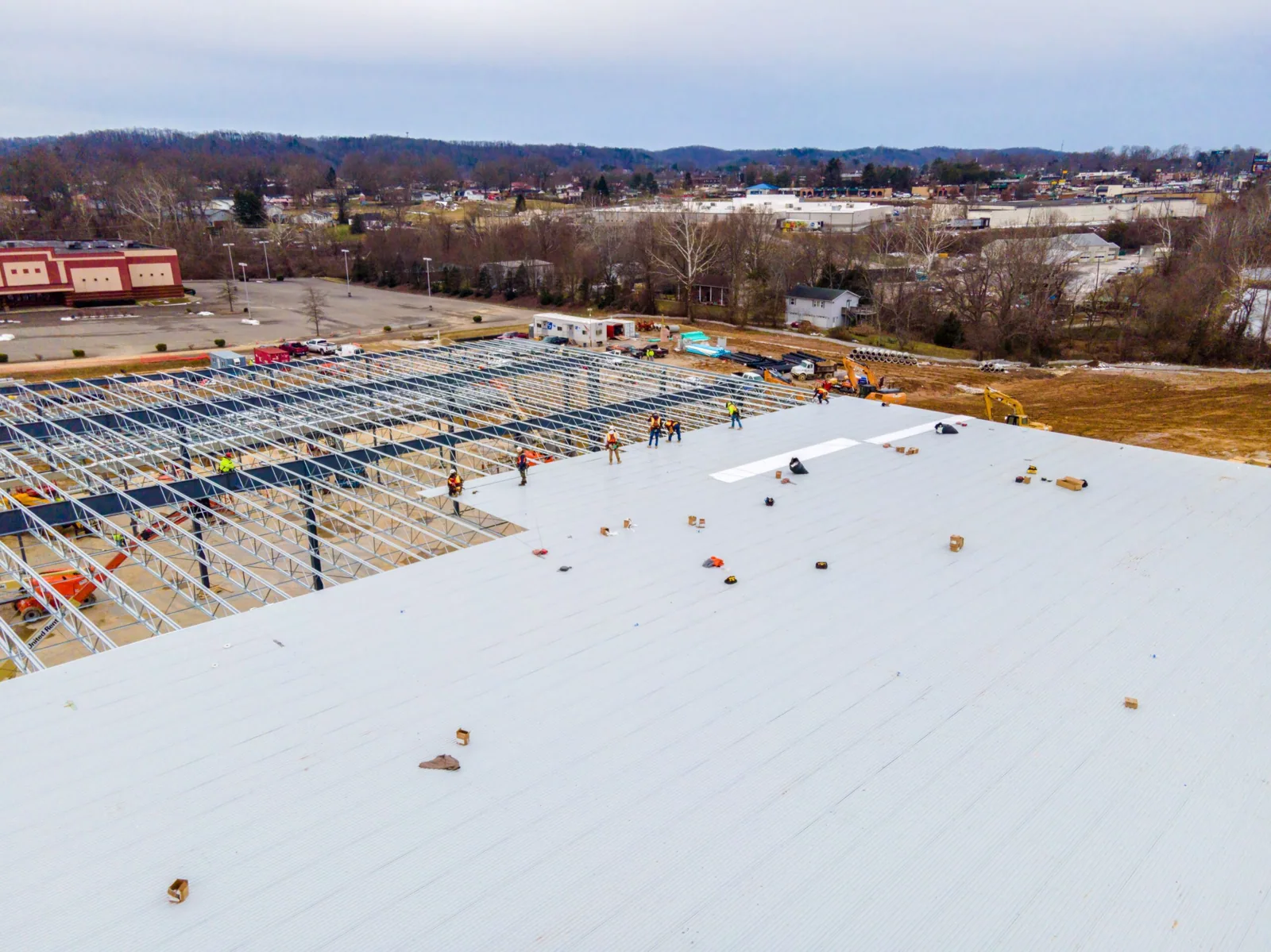
For a wider area, we compare localized repair with recover or replacement based on membrane condition, slope, drainage and substrate. A coating may be considered only when the existing roof is compatible and suitable for that application. The proposal identifies drains, overflow, low points and membrane areas for removal so the facility can see how the water route will change. We also record outlet access, visible overflow paths and any adjacent zone needing a separate review. Maintenance staff can then compare the same details after the next rain.
Protect the Building During Repair
When water is actively entering, emergency response is available around the clock, including weekends and holidays. We identify affected rooms, inventory or equipment below and coordinate temporary protection with the property contact. Any temporary cover is recorded separately from the permanent drainage or membrane correction, and the roof is revisited when safe access and weather allow.
Drain work may require roof access, lift placement or a brief restriction below the outlet. We confirm delivery route, staging, tenant hours and areas that must remain clear. For an occupied property, a phased roof project can separate active work zones if the assembly and schedule permit. The daily plan describes how each area will be protected and closed before a shift ends.
For a property in Eisenhower East, we confirm the loading point, roof entry and staging route with the building contact. Office and mixed-use operations can affect when a drain crew or lift can reach the roof, so those details go into the work sequence.
Track Drainage After the Work
We provide photos of outlets, repaired membrane, overflow details and any test location. The roof plan identifies corrected drains and areas where water retention remains under observation. If the deck or insulation was not opened, the record distinguishes that area from tested locations. Facilities staff can then compare a later inspection with the same drainage points.
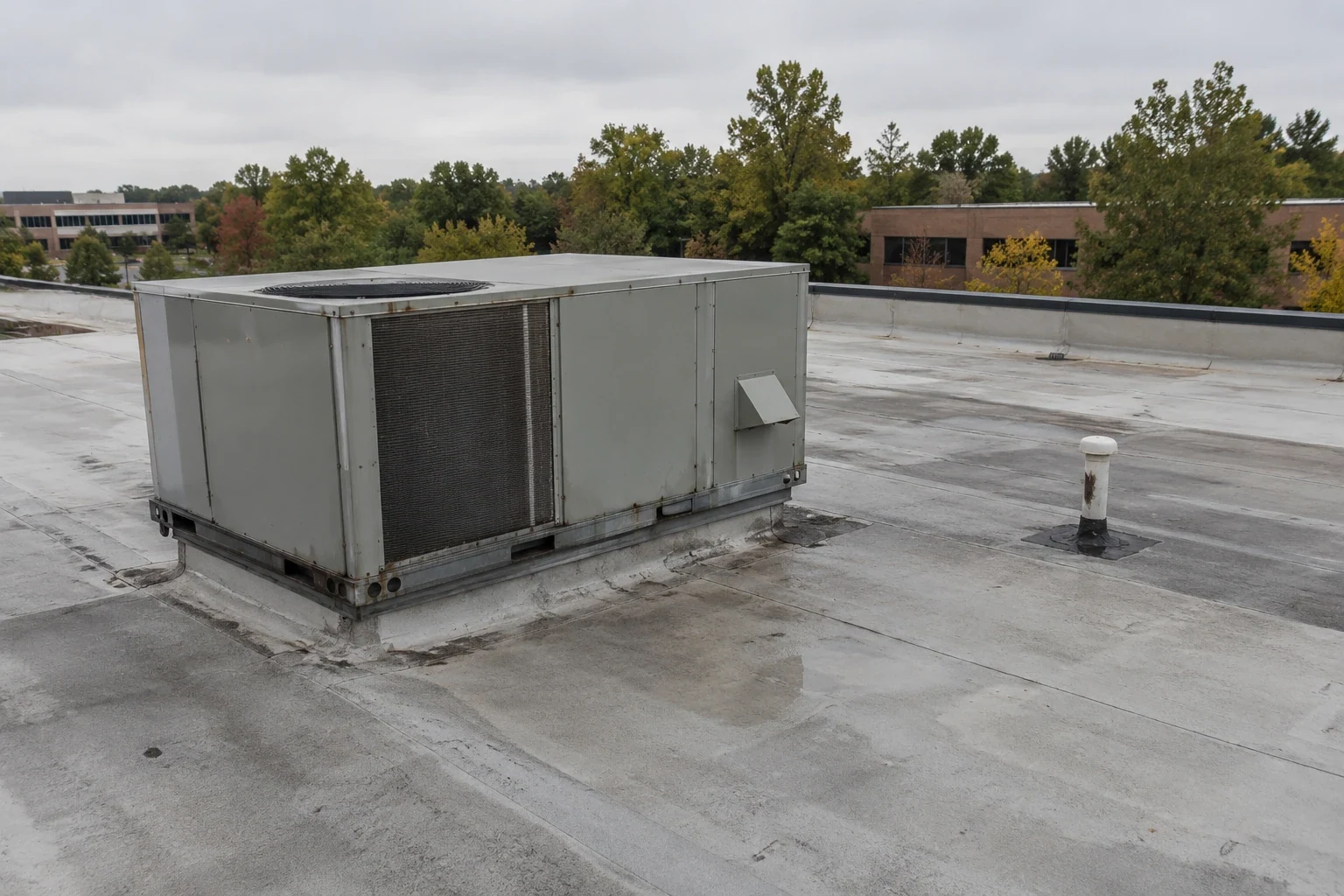
Where water collects near rooftop equipment, check the curb base and nearby membrane before changing the drain or adding slope. A correction should carry water toward an outlet without raising the finished surface above door saddles or equipment clearances. We map those transitions before the repair is priced.
Maintenance can check strainers, scuppers, gutters and overflow routes after debris events and before seasonal heavy rain. A maintenance visit can also record changed water marks or a repair edge that needs attention. Follow-up should reflect the roof's observed drainage and the property's access process. If a later visit finds the pool in a different place, we record that change before expanding the repair area.
Send the Alexandria address, roof plan if available, location of standing water and any interior symptoms. We will inspect the drains and membrane, explain what is confirmed and outline a correction that addresses the water route.
When the cause is unclear, mark the water outline and photograph the same low points again after later rainfall. That comparison helps distinguish a short-lived pool from repeat retention. A level survey can show whether slope changes toward an outlet or whether a local depression interrupts the route. If water collects beside a curb, parapet or expansion joint, inspect that transition as well as the nearest drain. Any planned fill or tapered insulation has to preserve outlet flow and clearances at doors, curbs and equipment. If the deck appears to deflect, involve the responsible structural professional before adding dead load or prescribing a roof-level correction.
Roof Damage Repair
Commercial Roofing Questions
How long can water remain before it is considered ponding?
The drainage design and weather determine what is expected, so a single observation immediately after rain is not enough. We look for persistent water marks, low points, blocked outlets and membrane effects, then compare them with roof plans and follow-up observations.
Does ponding water mean the roof is leaking?
Not by itself. Water can remain on an intact membrane, while a separate seam or flashing defect causes a leak. We inspect the pool area, outlet, nearby transitions and interior evidence before connecting ponding to water entry.
Can coating correct a low spot on a commercial roof?
Coating renews a compatible surface but does not automatically change slope or restore a blocked outlet. We check drainage and the existing assembly first. If water remains because of a low area, the scope must address that condition before a coating is considered.
What happens if the drain is clear but water still collects?
We compare roof slope, outlet location, structural and insulation conditions, and any available records. A test opening may be appropriate if concealed compression or wet material is suspected. The repair boundary follows those findings rather than assuming a clear drain resolves the issue.
What information helps diagnose recurring ponding?
Provide the property address, roof plan, photos taken after rain, locations and approximate duration of standing water, and any interior reports. We also need roof access and drainage outlet information if available. Those details help identify where to inspect first.
Inspect a Ponding Roof
Share the address, standing-water locations and any leak reports. We will inspect drainage, overflow and the surrounding assembly before recommending a repair.