 Services
 Roof Systems
 Property Types
 Industries
 Damage Repair
 Capabilities
 Manufacturers
 Service Areas
Commercial Roof Repair in Alexandria, VA
Commercial Roofing Services:
After a warm Alexandria afternoon, a roof surface can cool quickly when a storm moves through. That movement puts stress on seams, metal edges, and flashing transitions, while rain tests whether water can reach a drain or overflow point. A repair starts by tracing the water path and finding the roof detail that failed. Repeated or broad problems may lead to replacement planning. We inspect the reported area, record what can be seen, and define a repair boundary that fits the observed condition.
That boundary matters on office and mixed-use buildings in Carlyle and Eisenhower East, as well as the retail and commercial properties of Old Town North. Building use affects roof access and staging, but it does not identify the failure. We check the actual membrane, flashing, penetrations, and drainage before choosing a repair. When water is active inside, a leak investigation may be needed before permanent work is set.
Commercial Roof Repair
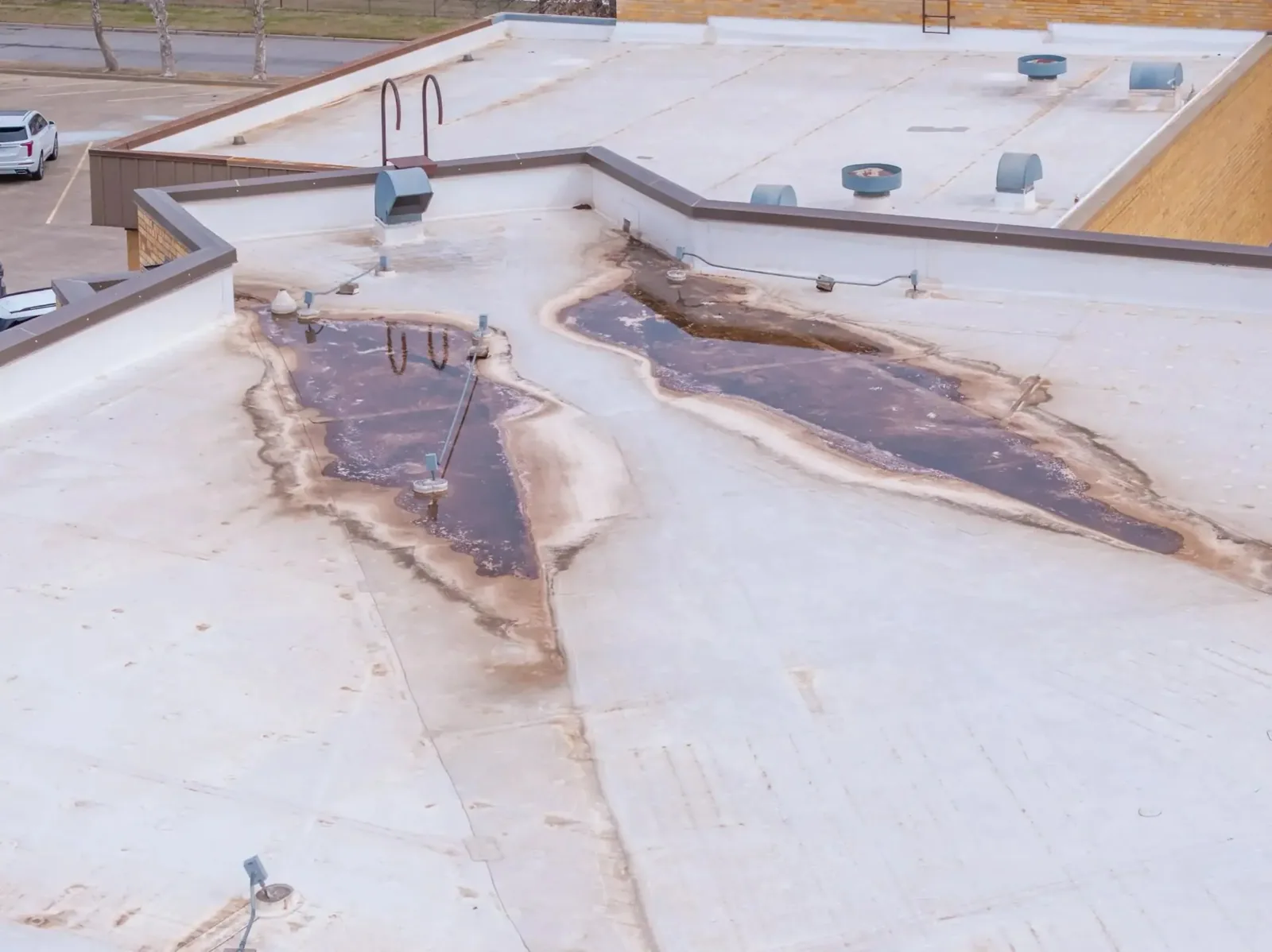
Follow the water path
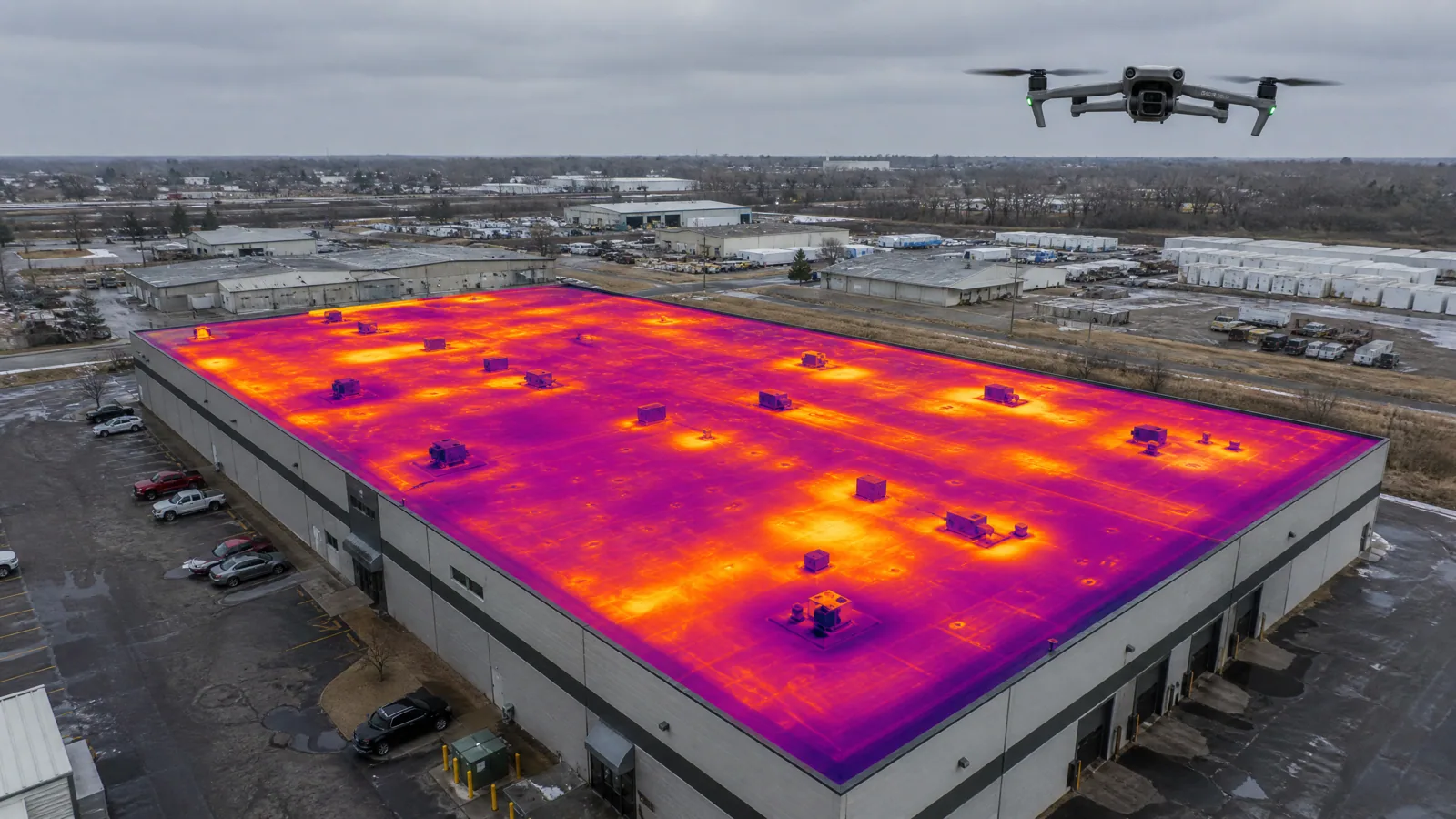
Water can enter at a seam, travel beneath the membrane, and show up at a ceiling far from the opening. We compare interior staining with roof slopes, drains, curb flashings, parapets, and prior repairs. The first visible symptom is useful, but it is not automatically the repair location. A marked field sketch can show where the water was reported, where the inspection found a likely entry, and which roof area remains unverified.
Alexandria has regular summer heat, winter freezing, occasional snow, and heavy rain exposure. Those conditions make seasonal movement and drainage worth checking, but they do not prove that weather caused a specific defect. We look for separated laps, loose edge metal, punctures, deteriorated sealant, blocked outlets, and evidence of trapped moisture. If more than one detail could explain the leak, the proposal can separate testing from repair instead of covering every possibility with one assumed scope.
Check the repair limits
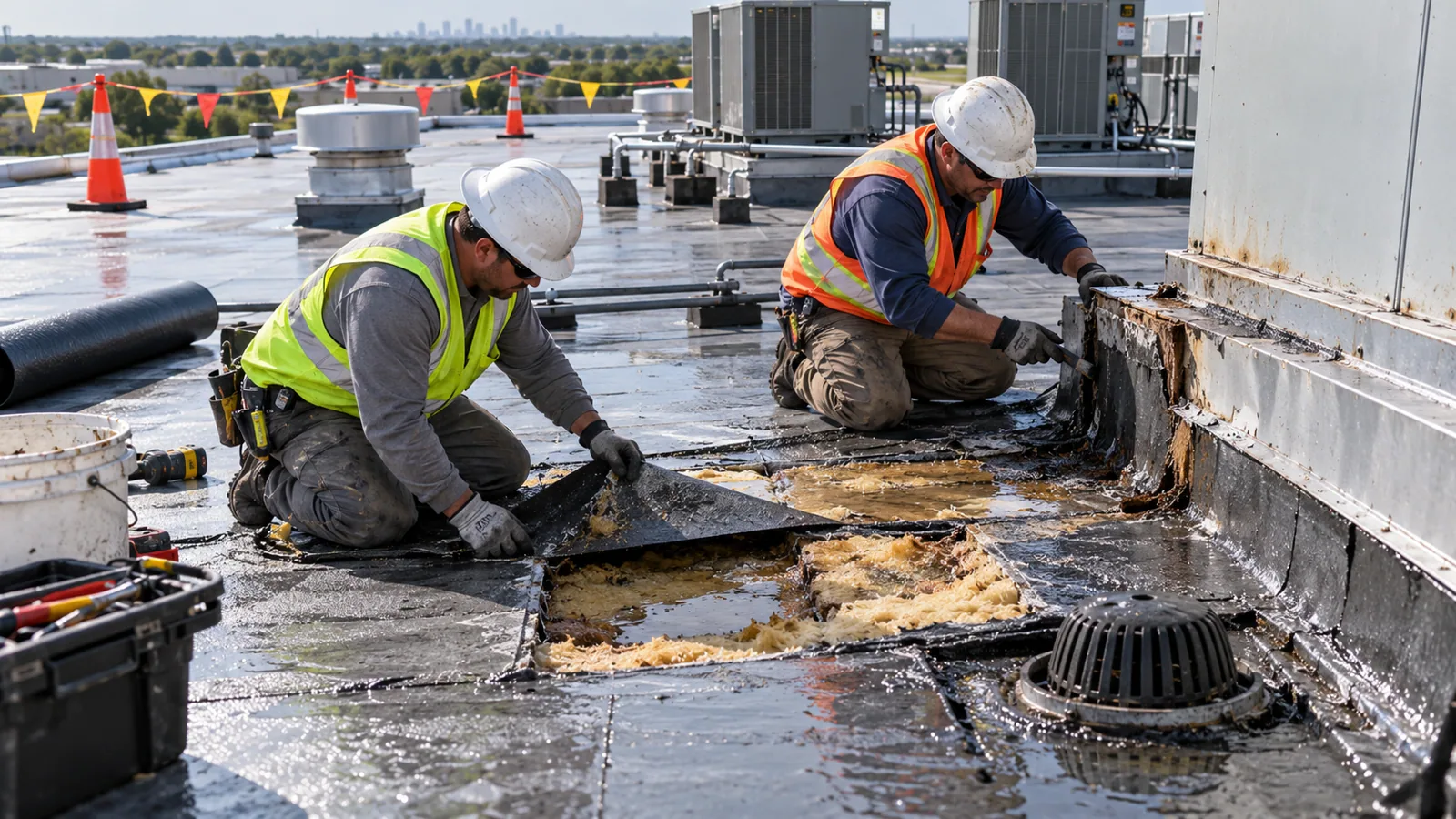
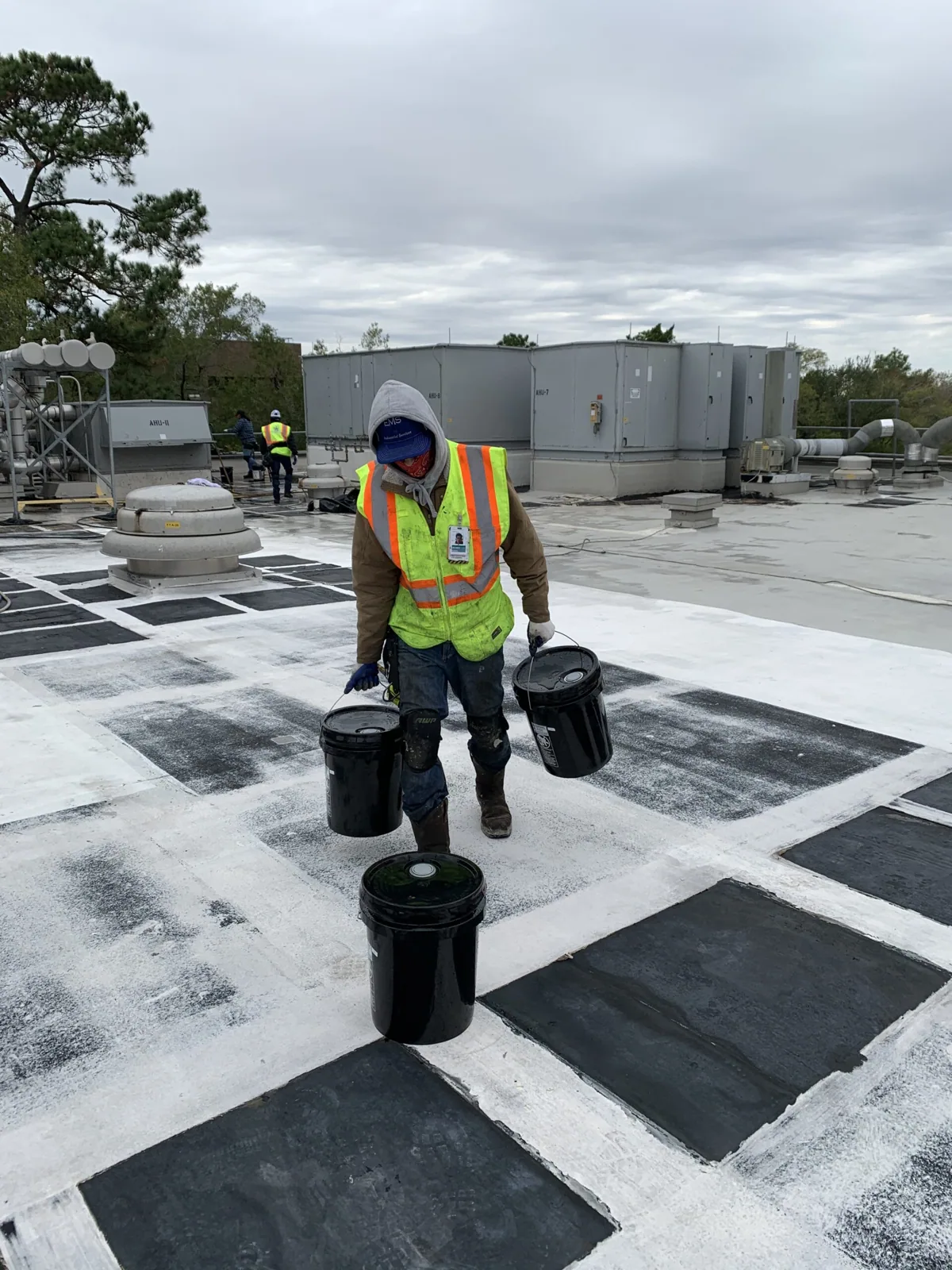
Before work begins, we identify the roof system and confirm that proposed materials are compatible with it. A patch on PVC, EPDM, modified bitumen, or metal requires the right preparation and tie-in detail. We confirm whether a TPO roof system needs a compatible repair material. We clean the surface, remove loose material only within the agreed limits, and check that the substrate is sound enough to receive the repair. If moisture extends beyond that boundary, we stop and document what changed rather than burying it under a new patch.
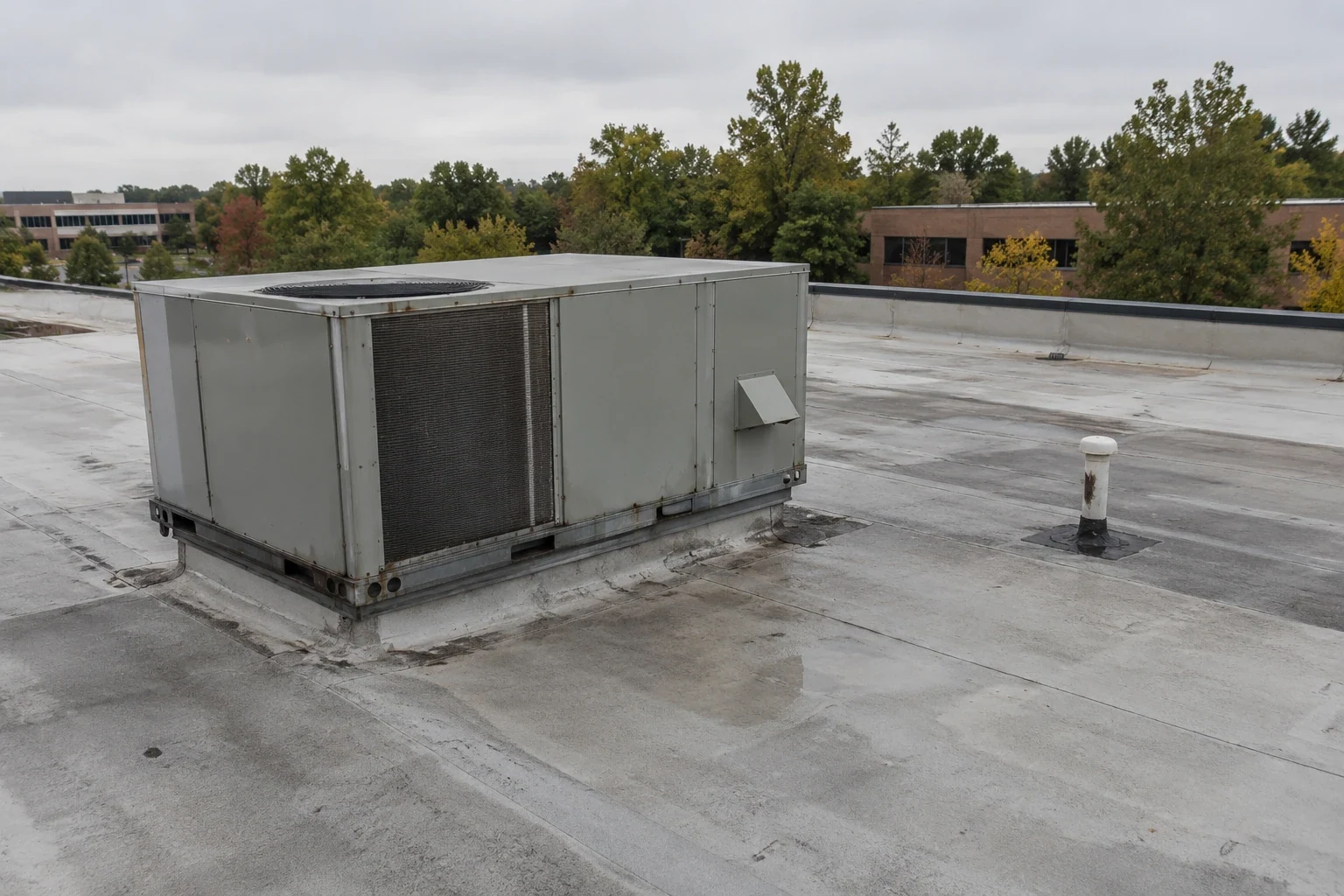
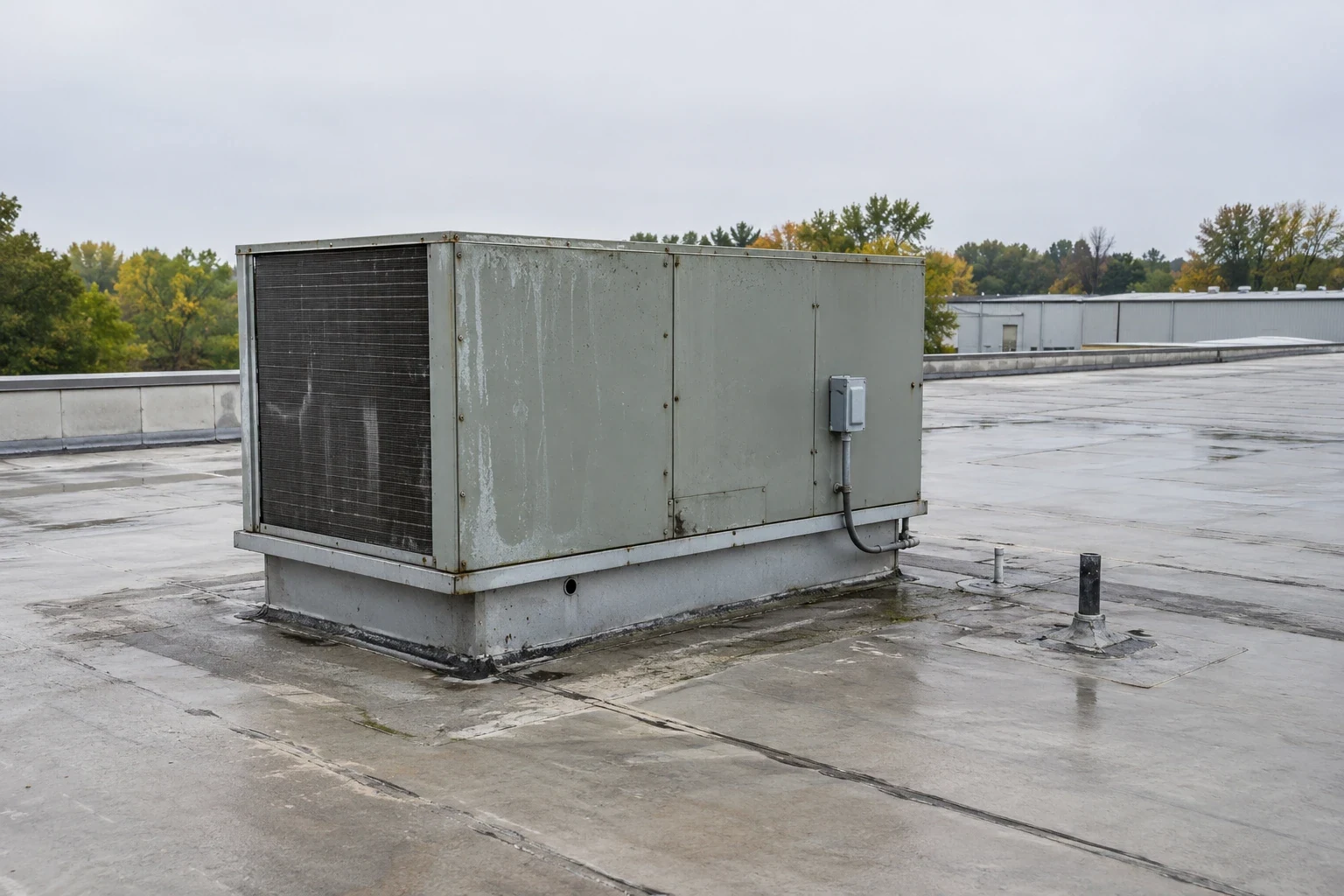
At a building near Old Town North, a parapet or wall transition can be as important as the field membrane. At Carlyle, rooftop equipment and access routes may affect where crews stage and move tools. We inspect the perimeter, curbs, penetrations, and adjacent seams so the repair connects to material that remains secure. When drainage is part of the failure, a drain or scupper correction may be included or listed separately from the membrane work.
The written scope should state the affected roof zone, preparation, repair material, tie-in length, and any temporary protection. We include photographs when they help show the visible condition. If the repair depends on a test opening, the estimate should say where it will be made and how concealed wet material will be handled. This gives the owner and general contractor a defined work area to approve before the crew mobilizes.
Repair or replace the area
A measured repair can be appropriate when the defect is localized and the adjacent assembly remains sound. For broader damage, we can compare it with seam failure correction. Repeated patches, broad moisture, loose attachment, or a deteriorated substrate can make a larger correction more practical. We compare the condition of neighboring seams and flashings, not just the last point of water entry. A repair should extend to secure material and finish with a compatible termination that resists renewed movement.
For an occupied building, we plan a sequence that protects the interior and keeps agreed access routes open. Emergency dry-in can control active water first, followed by permanent work after the surface and materials are ready. High heat, rain, and freezing conditions affect safe access and material handling, so we confirm the roof zone before starting. If the condition exceeds the approved boundary, we photograph it and review the added work with the project contact.
Coordinate access and timing
Repair logistics begin with roof access, equipment locations, tenant hours, and material handling. We confirm where ladders or lifts may be used, whether equipment requires protection, and which rooms or entrances need notice. The work area can then be isolated from normal operations without blocking a required route. For offices in Eisenhower East, this may involve coordinating a loading window; at a retail property, it may mean setting the repair sequence around customer access.
At the end of each shift, we leave the repair area secure and any temporary protection in place. We schedule permanent tie-ins when the substrate is dry and conditions fit the system. The general contractor receives a record of completed repairs and any remaining observation, such as a drain that needs cleaning or a nearby seam that was not part of the approved work. That keeps follow-up clear and prevents an unfinished item from being mistaken for a completed repair.
Record what was corrected
Closeout can include before-and-after photographs, the marked roof zone, repair materials, and a note on any area that needs another inspection. We check the repair tie-in and nearby drainage details, then explain which condition was corrected and which was outside scope. For a wider review, a roof condition report can organize the observations for future maintenance or capital planning.
Send the Alexandria address, leak history, roof access requirements, and any prior repair notes. We will inspect the affected details and provide a repair scope with a defined boundary. Properties near Old Town North can include access or façade restrictions with the request. In Carlyle, note any roof equipment or loading limits.
Commercial Roofing Services
Commercial Roofing Questions
Can a repair be made while water is still entering the building?
We first protect the interior and control active water with a temporary dry-in when conditions allow. Permanent repair follows after we locate the likely entry and confirm the roof surface is ready for the system. The work record should distinguish temporary protection from the finished correction. If rain continues or water is moving through concealed layers, we may need to return after the roof dries or make a test opening before setting the permanent boundary.
How do you decide how far a seam or flashing repair should extend?
The repair continues to material that is secure, clean, and compatible with the new tie-in. We inspect beyond the visible opening and compare nearby seams, wall transitions, and penetrations. If separation or moisture continues, we photograph and mark the added area before changing the scope. The owner can approve a defined extension rather than paying for a patch that ends at loose material or an unverified line.
Will you repair a roof if the original system is unknown?
We identify the existing material as closely as the visible surface and records allow before selecting a repair. A small test area may be required where layers or coating obscure the substrate. The proposal can list what is known, what material compatibility needs confirmation, and any test cost separately. We do not install a patch that depends on an incompatible adhesive or membrane to meet a schedule.
When does repeated repair point toward replacement?
A pattern of failures across several roof zones, widespread moisture, weak attachment, or recurring leaks after earlier corrections can justify comparing larger work. We document the locations and conditions, then outline the limits of another repair against the likely replacement scope. The decision depends on verified assembly condition and the owner's operating and budget schedule. We can provide both options where enough evidence exists for a fair comparison.
What information helps you price a repair visit?
Send the property address, active leak locations, photos from inside if available, access rules, and any prior roof or repair records. Tell us whether water is still entering and whether equipment or tenant operations limit access. Those details help us bring the right inspection approach and plan safe staging. We confirm the actual repair area on the roof before finalizing material and quantity.
Set a measured repair
Share the Alexandria address, reported leak area, access rules, and prior repair notes. We will inspect the roof detail and define the work boundary before permanent repair.