 Services
 Roof Systems
 Property Types
 Industries
 Damage Repair
 Capabilities
 Manufacturers
 Service Areas
Built-Up Commercial Roofing in Alexandria, VA
Roof Systems:
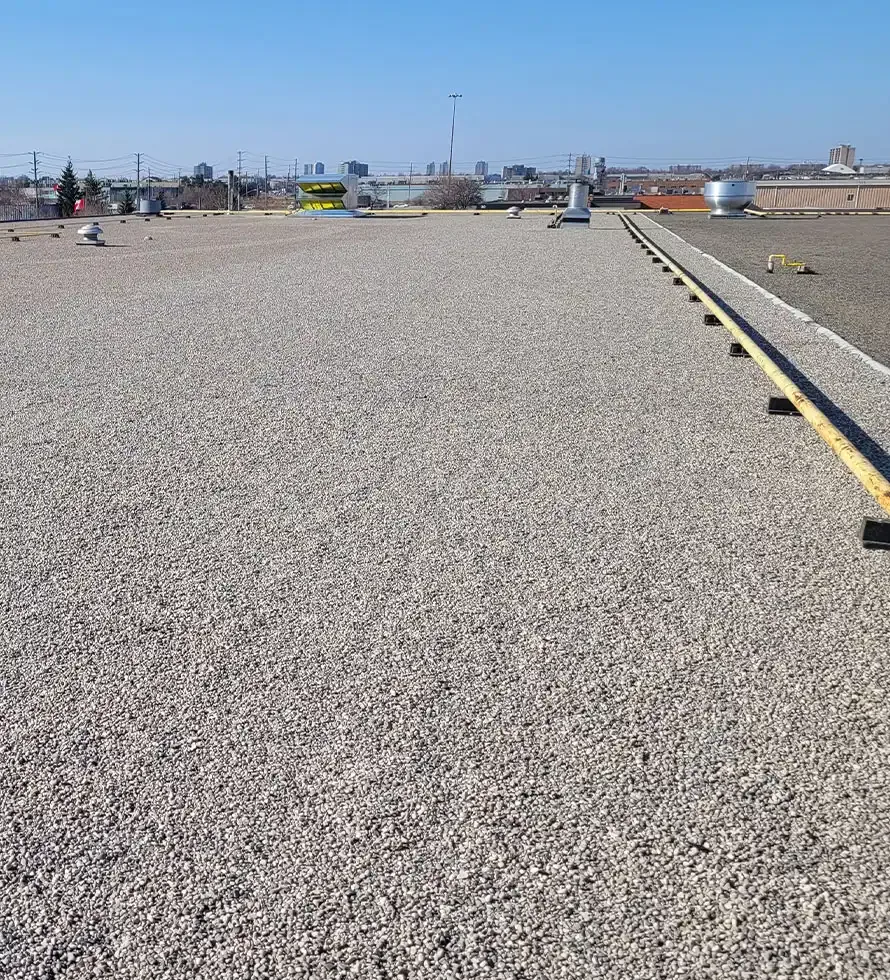
Aggregate can obscure a split in the underlying membrane or a damaged area around a drain. A built-up roof uses multiple plies of reinforcing fabric set in bitumen, with surfacing that protects the assembly. In Alexandria, repeated heavy rain and summer heat make drainage, flashing and surface condition important to review. We inspect the roof build-up and tie each finding to a zone before recommending repair, recover or replacement.
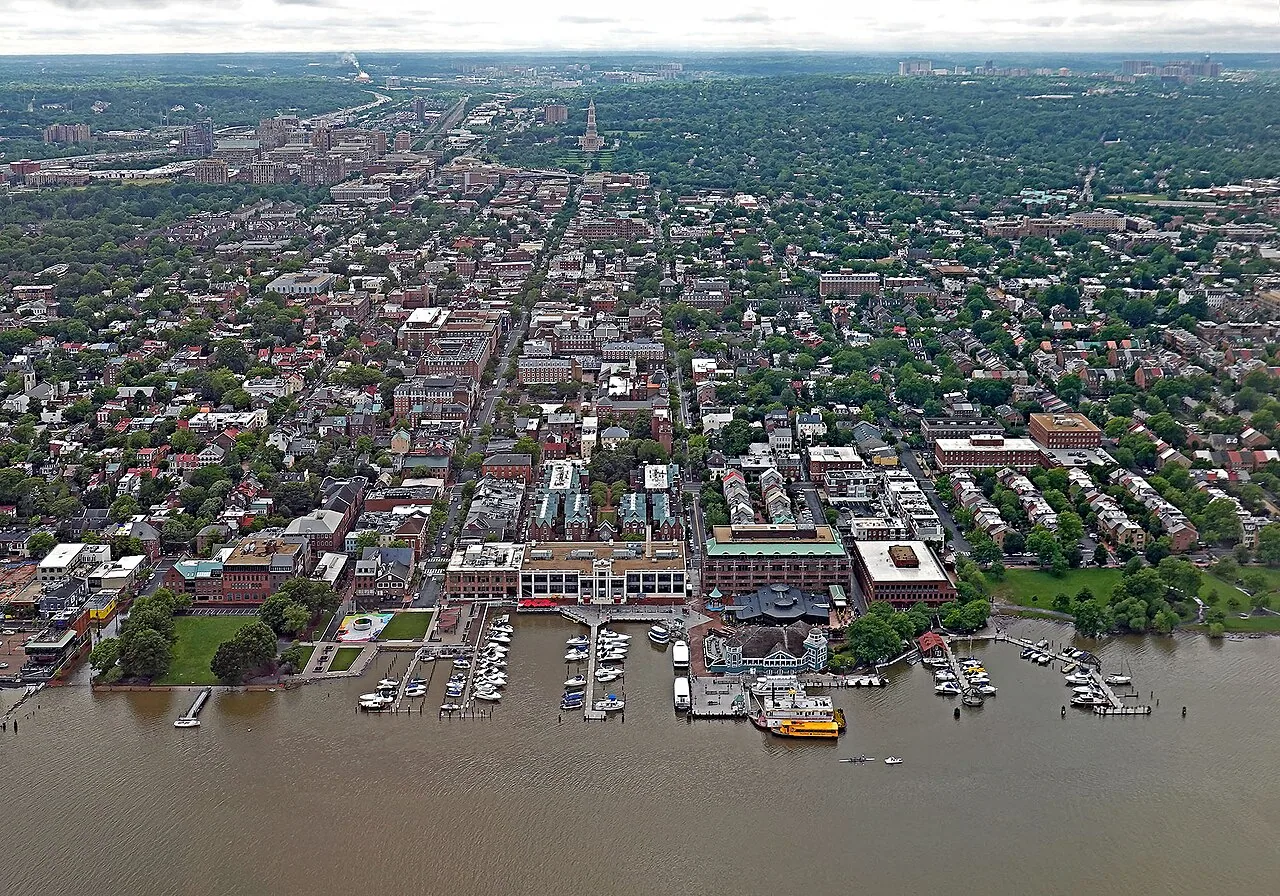
Old Town North’s commercial and retail properties sit near redevelopment at the former Potomac River Generating Station; Eisenhower East contains office and mixed-use buildings. Roof materials and access routes vary by building. We review plans, leak history, patching and test openings before deciding whether existing plies can remain. A modified bitumen option may fit another configuration, while a TPO assembly has different attachment and flashing requirements.
Built-Up Commercial Roofing
Read the Built-Up Layers
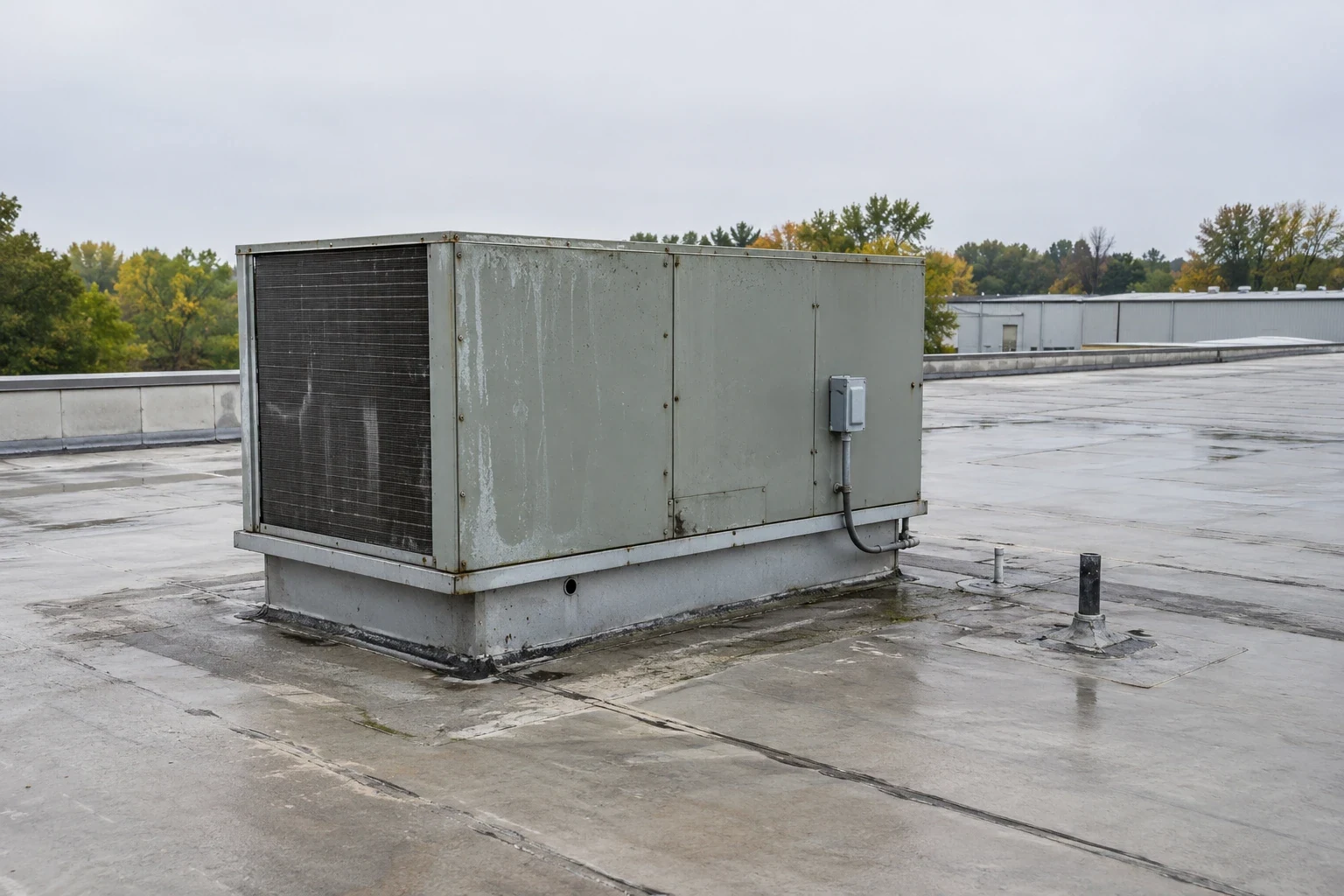
A BUR assembly may contain several plies, bitumen and a cap surface such as aggregate or coating. The top can look rough or patched without showing the condition of layers below. We check blisters, splits, exposed reinforcement, loose aggregate, open laps and prior repairs. Where the surface prevents a reliable view, a test opening reveals the build-up and underlying deck.
Bitumen binds reinforcing sheets into a continuous field, while flashing turns the assembly at curbs, walls, drains and parapets. A drain can collect aggregate or debris, and a parapet corner can open as materials move. We record the transition and whether water is pooling or entering. A patch over a loose cap surface may not connect to sound material, so preparation is part of the repair scope.
Records or a core sample can identify unknown layer thickness and composition. We document the opening and do not assume the whole roof shares that build-up. Repair history can differ by section, especially where equipment or additions changed the roof over time.
Check Runoff and Ponding
Heavy rain in Alexandria makes the route through aggregate-covered roof areas to drains and emergency overflows an important part of the inspection. We follow the surface toward drains, scuppers and overflow points, then check whether surfacing or debris blocks the route. Nearby flood exposure does not establish a defect on the roof itself. The report records roof-level conditions and any interior symptoms separately.
Standing water may reflect a blocked outlet, low spot, deflected deck or an inadequate slope. We note how the roof is surfaced and whether ponding reaches seams or flashing. If drainage correction is required, it can be priced apart from membrane repairs. A drain and scupper review can check outlet connections before a new layer is added.
Aggregate can move during maintenance or repairs and collect at drain baskets. We inspect around strainers and check that the underlying roof membrane remains intact where surfacing is thin. If drainage testing is planned, the building contact identifies any interior area that needs observation so a controlled test does not expose occupied space to water.
Set a Repair Limit
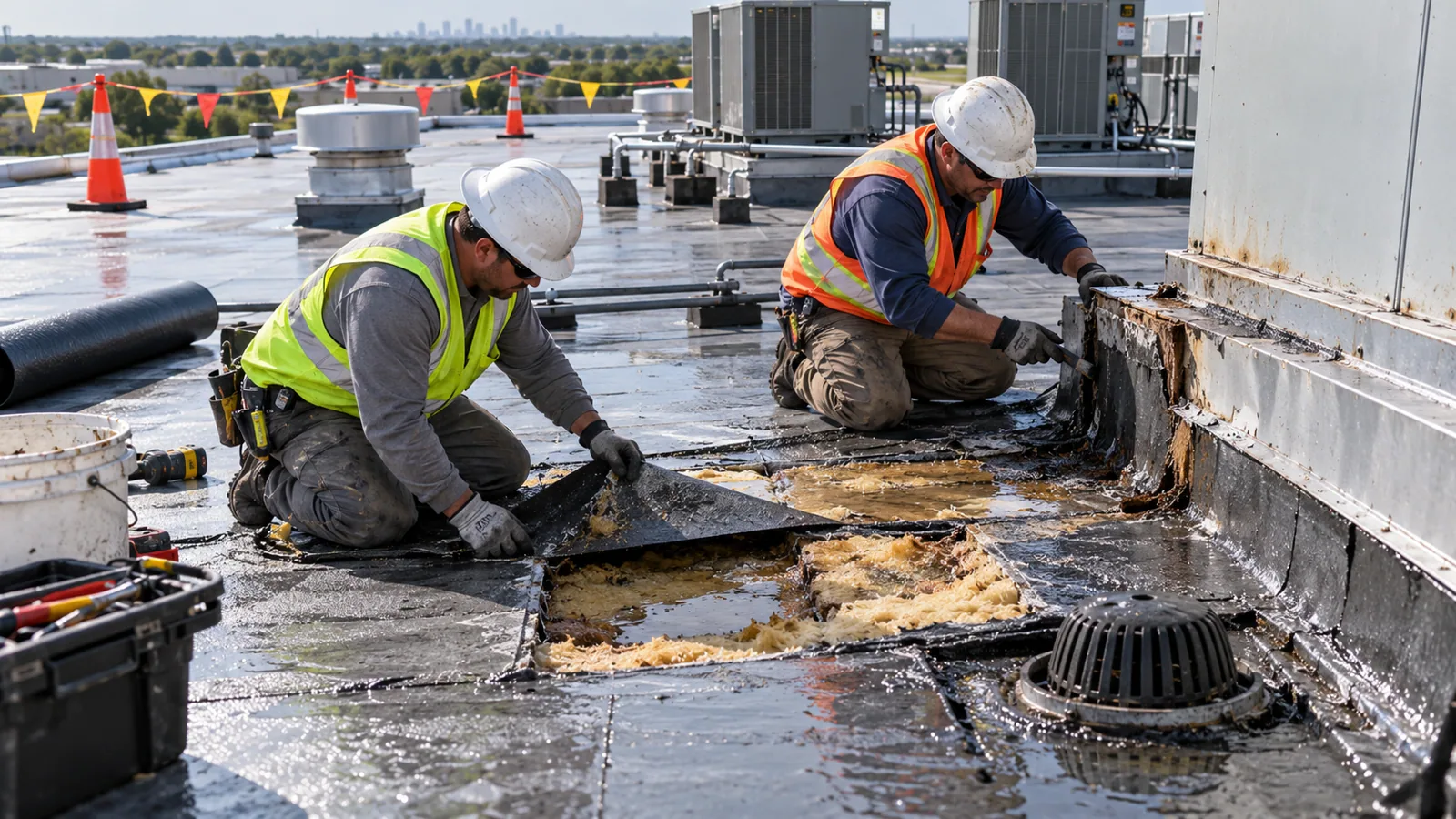
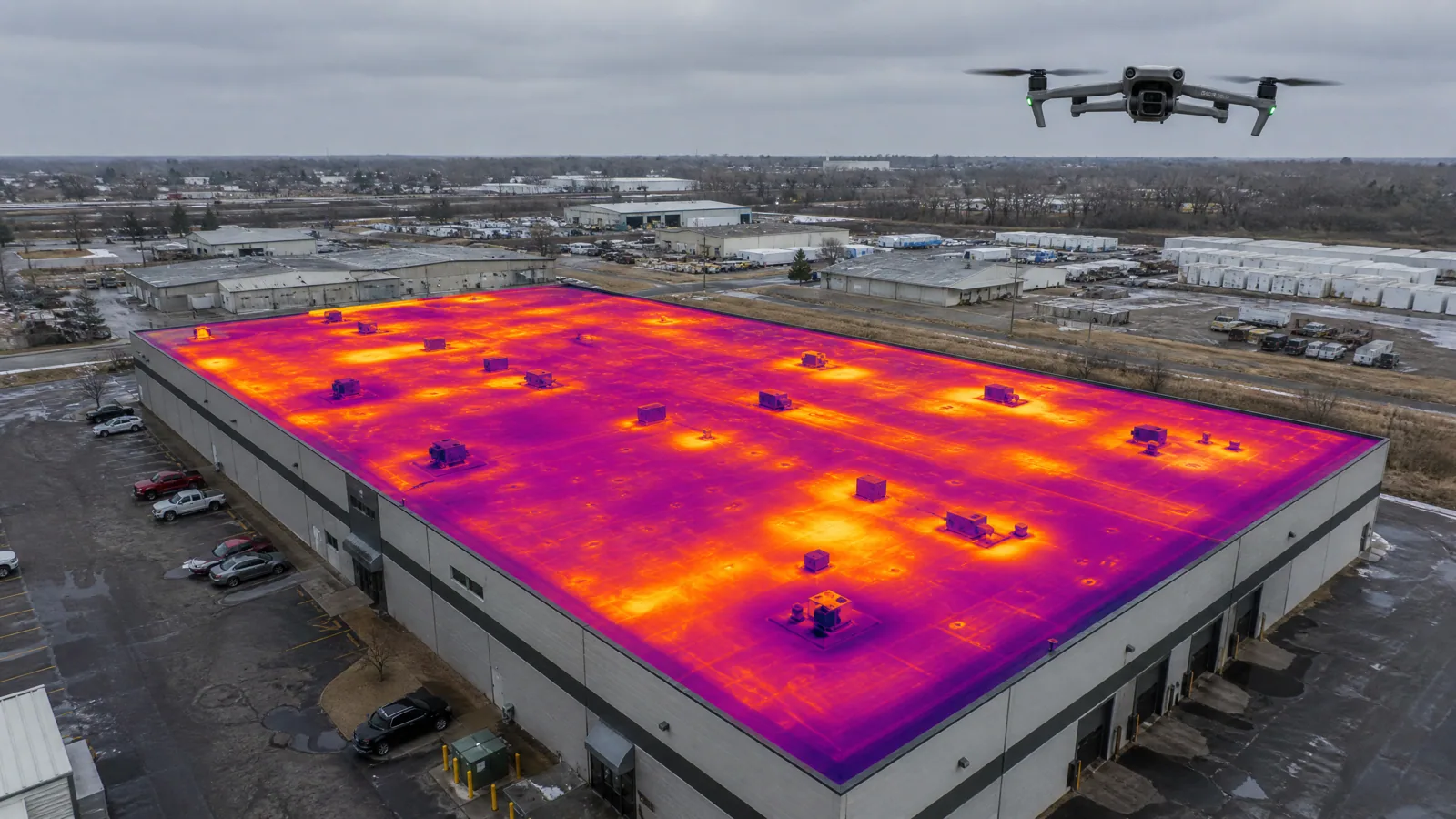
A soft or discolored roof area may indicate moisture, but the surface alone does not establish how far it extends. Test openings can expose wet insulation, bitumen layers and deck condition. We compare openings with leak history and visible changes, then set removal to sound material where confirmed. If the owner needs broader screening, an infrared survey may help select points under suitable conditions; the test cut verifies the assembly.
If water is entering at a parapet or drain, it may travel between plies before appearing in a room. We inspect the suspected source and nearby route. A leak investigation can map the entry point, while a separate test opening confirms insulation moisture. The estimate states which evidence supports each repair and what remains untested.
When wet layers are removed, the crew records the deck, insulation and remaining plies before rebuilding the system. The tie-in needs sound material and compatible bitumen or membrane. If the deck is deteriorated or plies are separating across several zones, a localized patch may not provide a durable boundary; we compare that condition with full removal.
Choose Repair or a New Roof
A confined split, puncture or flashing defect can sometimes be repaired after loose surfacing is removed and a sound boundary is exposed. The method depends on ply count, bitumen, cap-sheet condition and whether a compatible material can tie in. We identify hot work or other application controls, surface preparation and protection for the building below.
Recover work may be possible when the existing roof is dry, stable, and able to support a new assembly under project requirements. Adding a layer can change drains, parapet heights and roof equipment clearances. A recover assessment should state which layers stay and what test evidence supports that choice. If moisture or deck damage is widespread, replacement may better define the assembly.
Alexandria’s long-term climate includes hot summer days, winter freezing and occasional snowfall. Temperature and moisture conditions affect surface preparation and application. The project schedule should follow actual roof conditions, product requirements, fire controls and access constraints rather than rely on a generic season label.
Coordinate Work on the Building
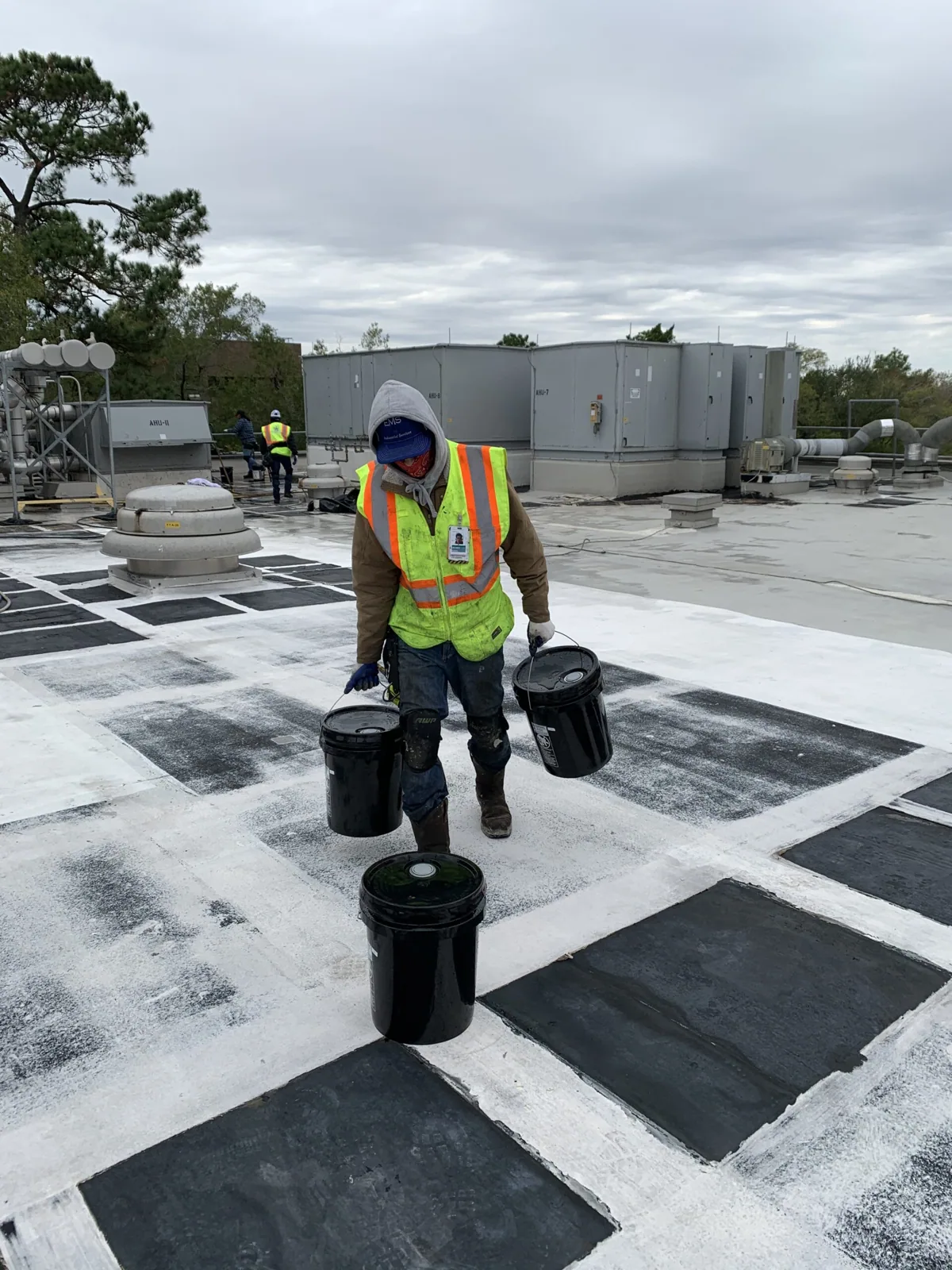
Built-up roof work may involve aggregate removal, hot asphalt, odor control, debris handling and temporary protection. We confirm roof access, loading, ventilation and occupied areas with the building contact. At a mixed-use property in Old Town or an office in Carlyle, staging and tenant notice can differ. The property manager identifies restricted areas and when mechanical equipment needs to remain available.
If hot work is proposed, we review the site’s fire-prevention rules, adjacent materials, monitoring and approval process before mobilization. An alternate repair method may be considered where the project and system allow it. The estimate states what precautions are included and how the crew secures each section before leaving.
Cost depends on surfacing, ply count, removal depth, deck condition, access, disposal, wet insulation and flashing details. We separate known scope from conditions that require opening the roof. If concealed damage changes the plan, the owner receives a documented finding and approval point.
Keep the Roof History
Closeout includes photos of the exposed build-up, replaced layers, flashing, drains and repaired transitions. We note test locations, materials and the limits of the work. This helps a later manager understand what remains below the surfacing and where new repairs tie into existing plies.
A condition report can organize test results and open recommendations across roof zones. For an Old Town North property, include the access route, tenant schedule and roof records when requesting a review. We can assess the assembly and explain which work is confirmed, which needs testing and what can be monitored.
Roof Systems
Commercial Roofing Questions
How many plies are in my built-up roof?
The visible surface does not always reveal the full layer count. We review records or make a test opening to identify the plies and surfacing at a selected location. If the roof varies by section, additional checks may be needed before a recover or removal boundary is set.
Can built-up roofing be repaired without removing aggregate?
Some repairs need surfacing removed so the crew can reach sound membrane and prepare a compatible tie-in. The amount depends on the defect and existing cap sheet. We document the area exposed and restore surfacing only after the underlying repair has been checked.
Does a built-up roof need to be replaced if it ponds?
Ponding alone does not define the right scope. We check outlet condition, roof slope, deck movement, plies and moisture. A drain correction may address an obstruction, while widespread wet layers or deteriorated plies can support a larger replacement comparison.
Can a BUR be recovered with a new membrane?
A recover is considered when existing materials are dry and stable, attachment is suitable and roof height remains workable at drains and curbs. Test openings and project review help confirm eligibility. We state which layers remain and what concealed conditions were not checked.
What does a built-up roof inspection include?
We check surfacing, plies where visible, seams, flashing, penetrations, drains and ponding. Photos show each area, and test openings can confirm hidden layers. The report distinguishes observed failure from moisture or deck conditions that have not been verified.
Inspect a Built-Up Roof in Alexandria
Share the Alexandria address, roof plans, past repairs, leak history and access window. We will inspect surfacing, drains and flashing, verify uncertain layers and present repair or replacement limits.