 Services
 Roof Systems
 Property Types
 Industries
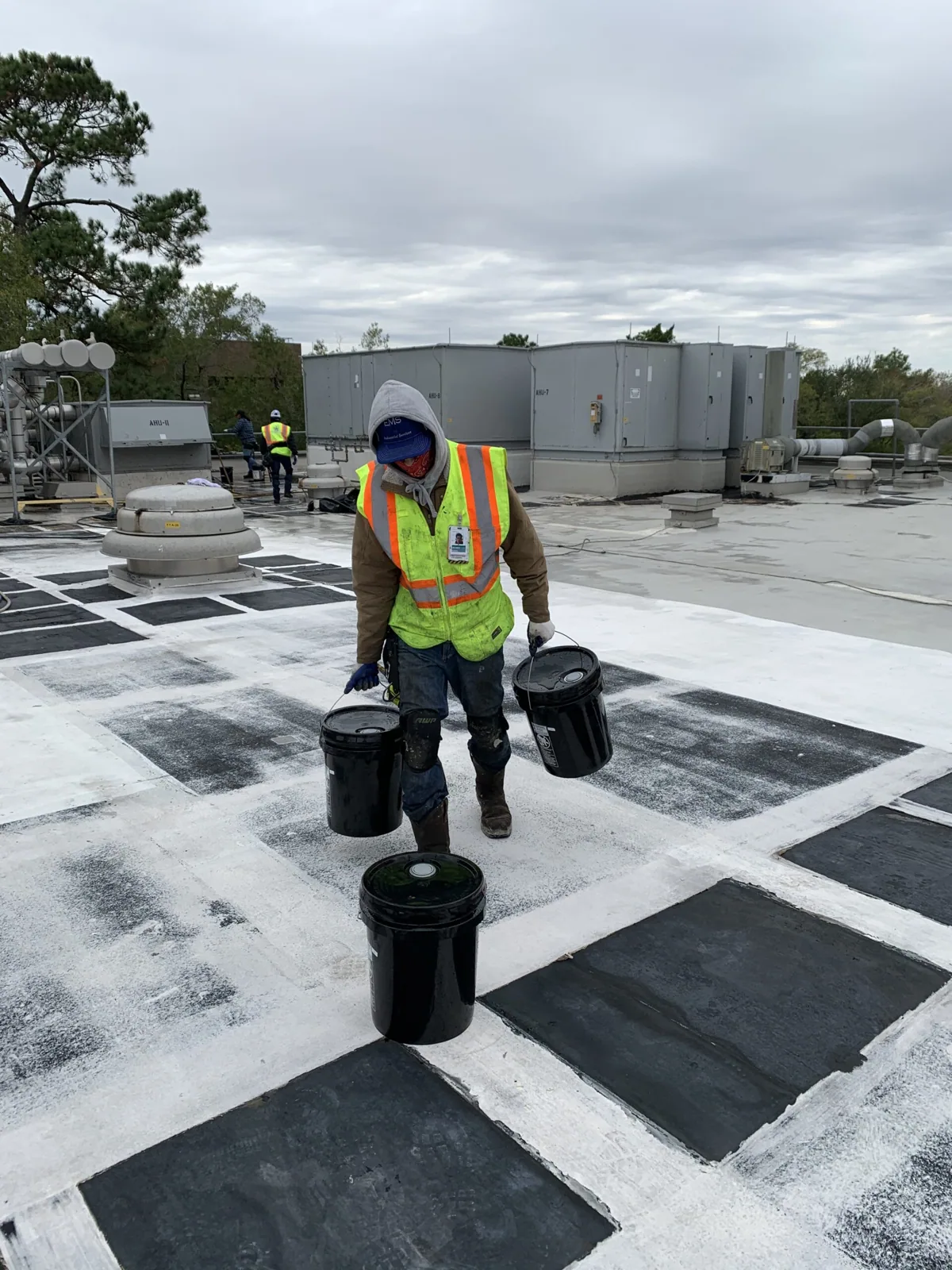 Damage Repair
 Capabilities
 Manufacturers
 Service Areas
Commercial Roof Maintenance in Alexandria, VA
Commercial Roofing Services:
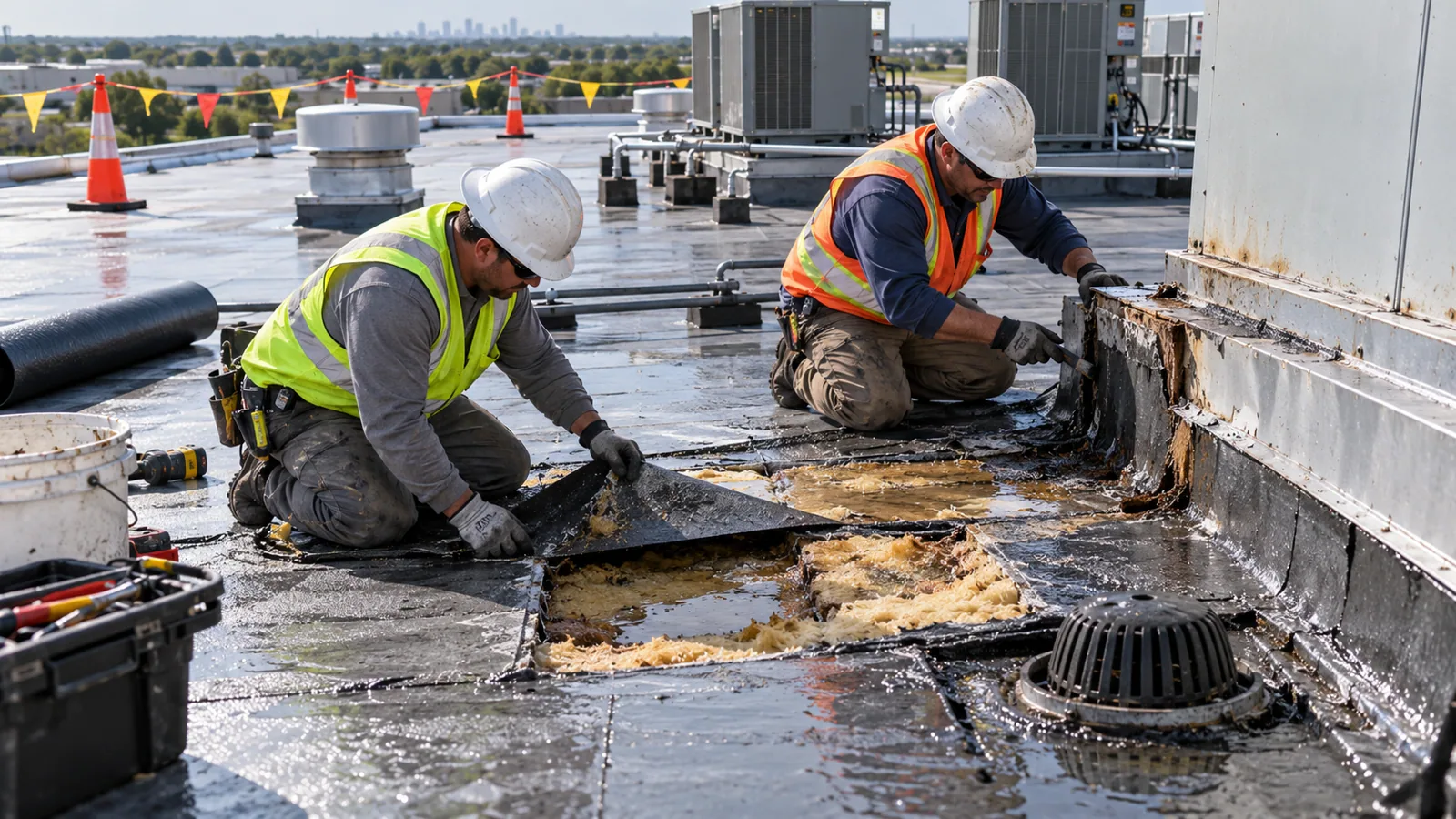
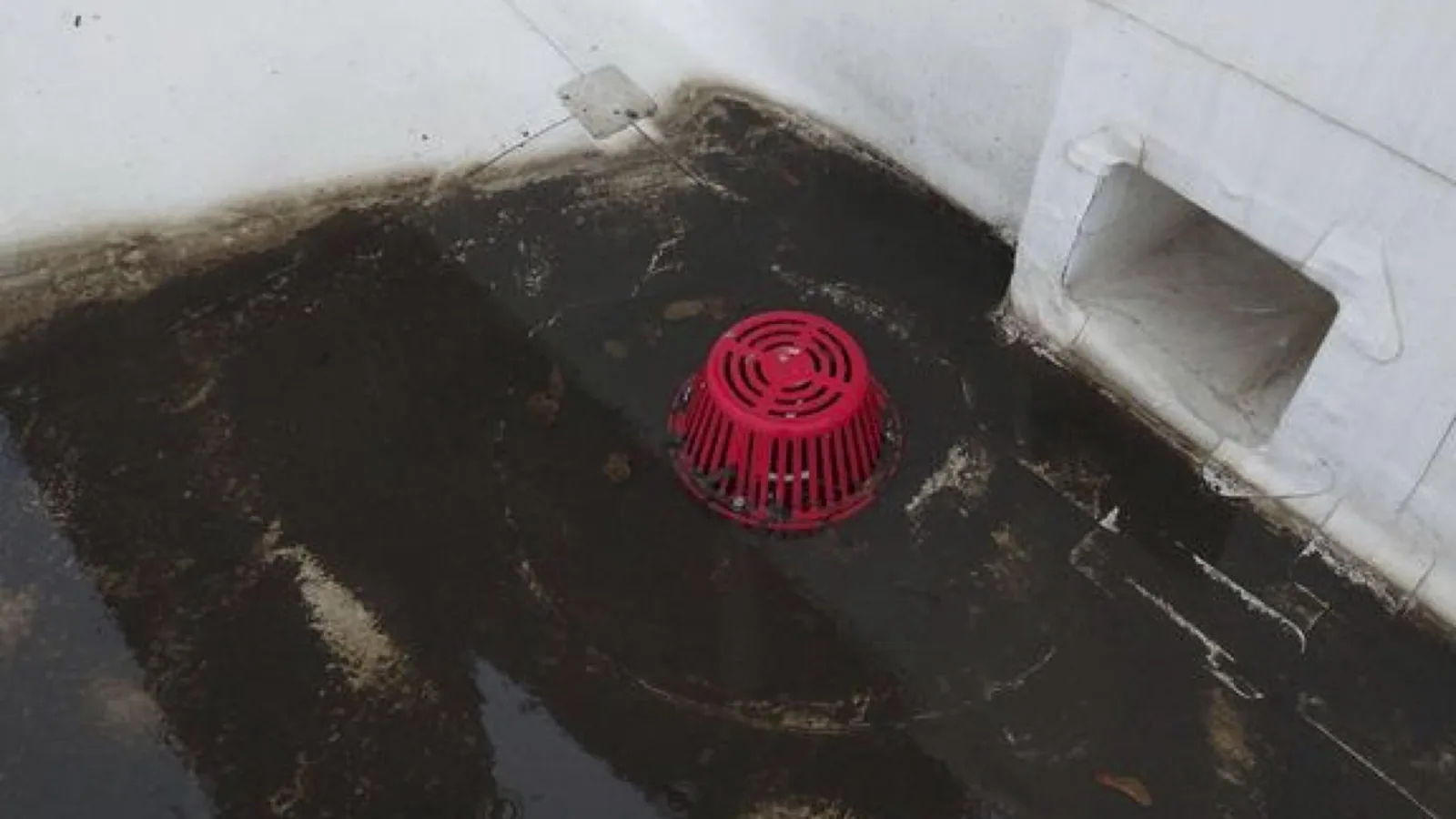
A drain strainer with leaves pressed against it can keep water on a roof long after a storm ends. In Alexandria, heavy rain and tidal flooding make drainage routes worth checking, even when a building has no active leak. Preventive maintenance records the condition of drains, seams, flashing, roof edges and equipment transitions before a small defect becomes an interior problem. We give the property manager a work list with locations, photos and a recommended timing for each item.
A scheduled roof walk clears routine obstructions, catches details beginning to separate and preserves a useful history for later decisions. A leak can still develop between visits, so active water entry needs a separate response. Carlyle offices and Old Town retail and civic buildings have different access needs. We confirm roof plans, operating windows and service routes for the address, then set a scope that fits the building rather than repeating the same visit at every property.
Commercial Roof Maintenance
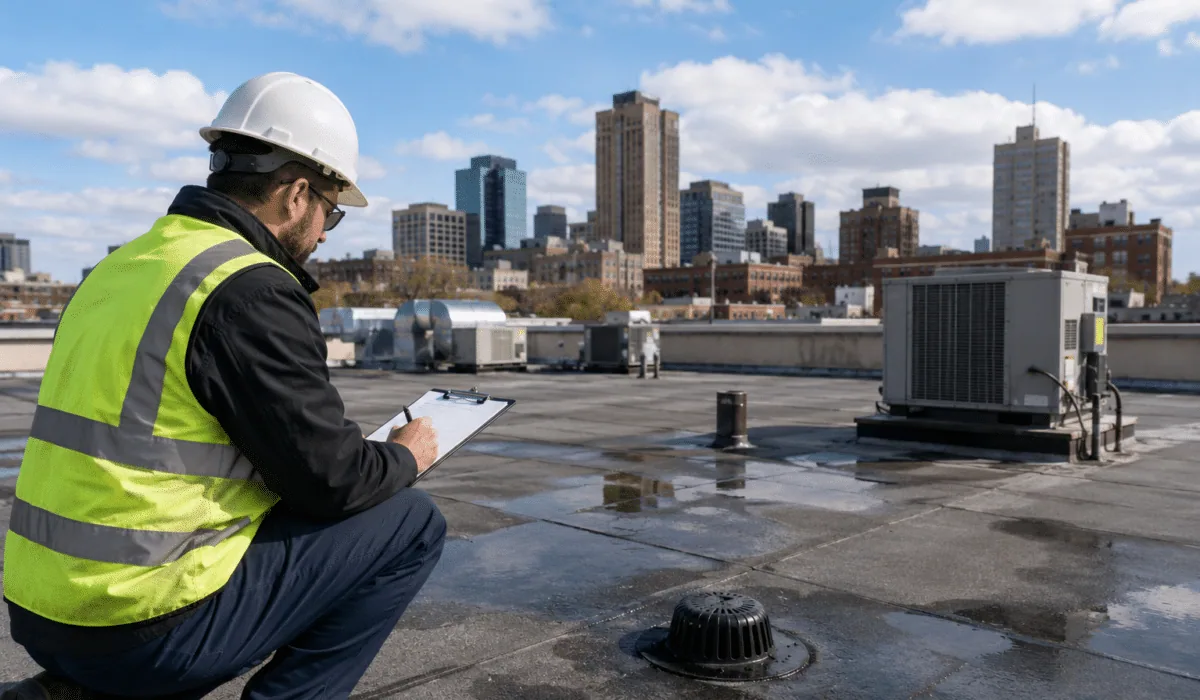
Set a Useful Visit Rhythm
Visit frequency depends on roof system, drainage, nearby debris, rooftop equipment, prior repairs and the cost of an unexpected closure. We review those conditions with the building contact and set a practical schedule, often timed around seasonal changes or after known work above the roof. The service agreement should identify the roof zones included, routine clearing tasks and conditions that trigger a separate repair estimate.
Before the crew arrives, the site contact can confirm service-hatch access, escort rules, loading limits and equipment shutdown needs. We note when a tenant notice or interior access is required. In Eisenhower East, offices and redevelopment properties along Eisenhower Avenue and Mill Road may have active operations at ground level while rooftop equipment continues to serve occupied floors. A planned visit reduces uncertainty about routes and helps the manager arrange the right access window.
Maintenance after rooftop work is useful because new equipment, conduit or supports can affect the membrane and flashing. We photograph the area when access allows, identify who closes the roof and record open items.
Check the Details That Move Water
We start with the water route: drains, scuppers, overflow points, crickets and low areas. Leaves, construction debris or a displaced strainer can slow flow, while a loose drain ring or cracked seal can let water reach the assembly. We clear routine debris when included in the agreed scope and record any repair that requires replacement parts or a larger drainage correction. A drain and scupper service can address persistent ponding or a detail needing reconstruction.
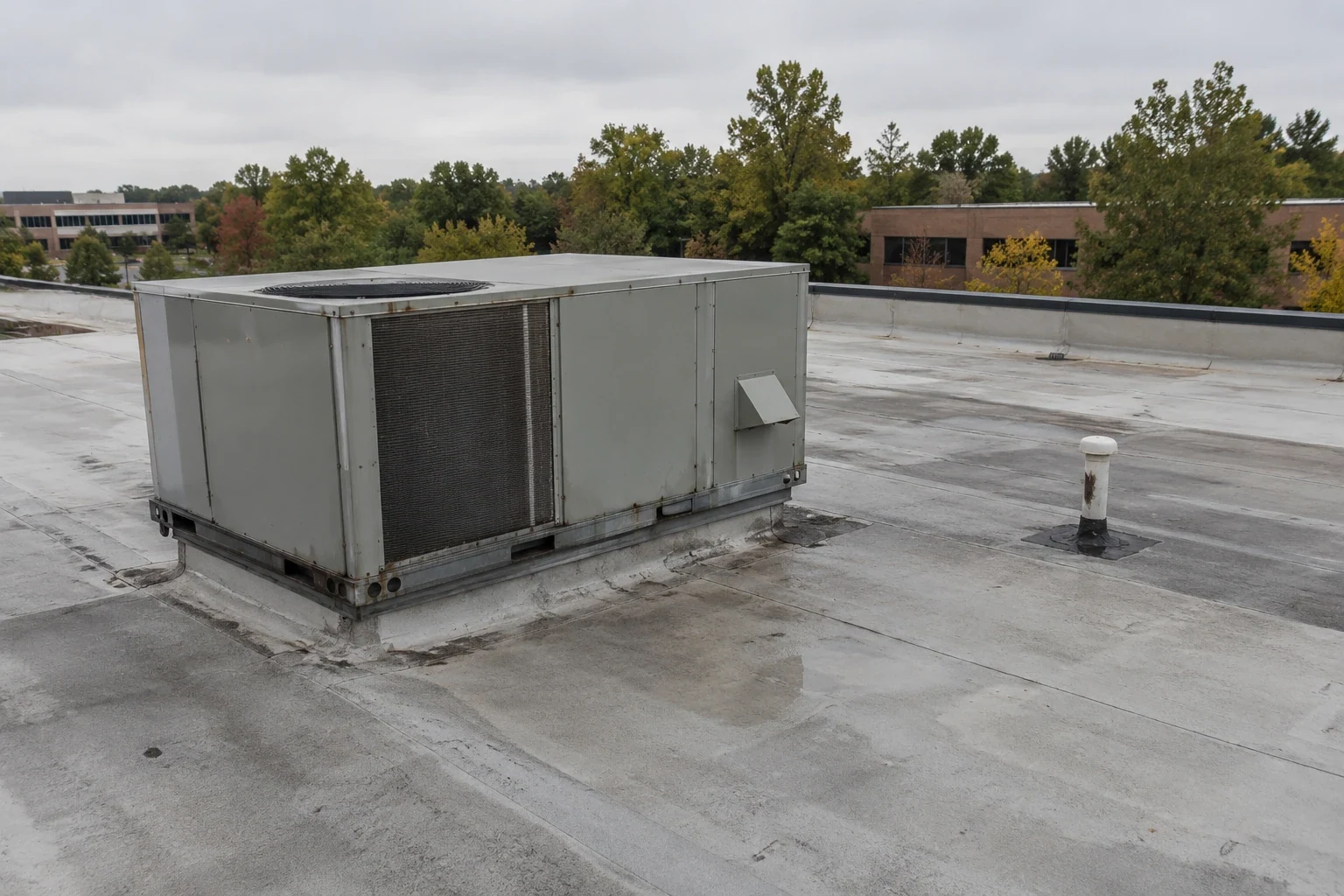
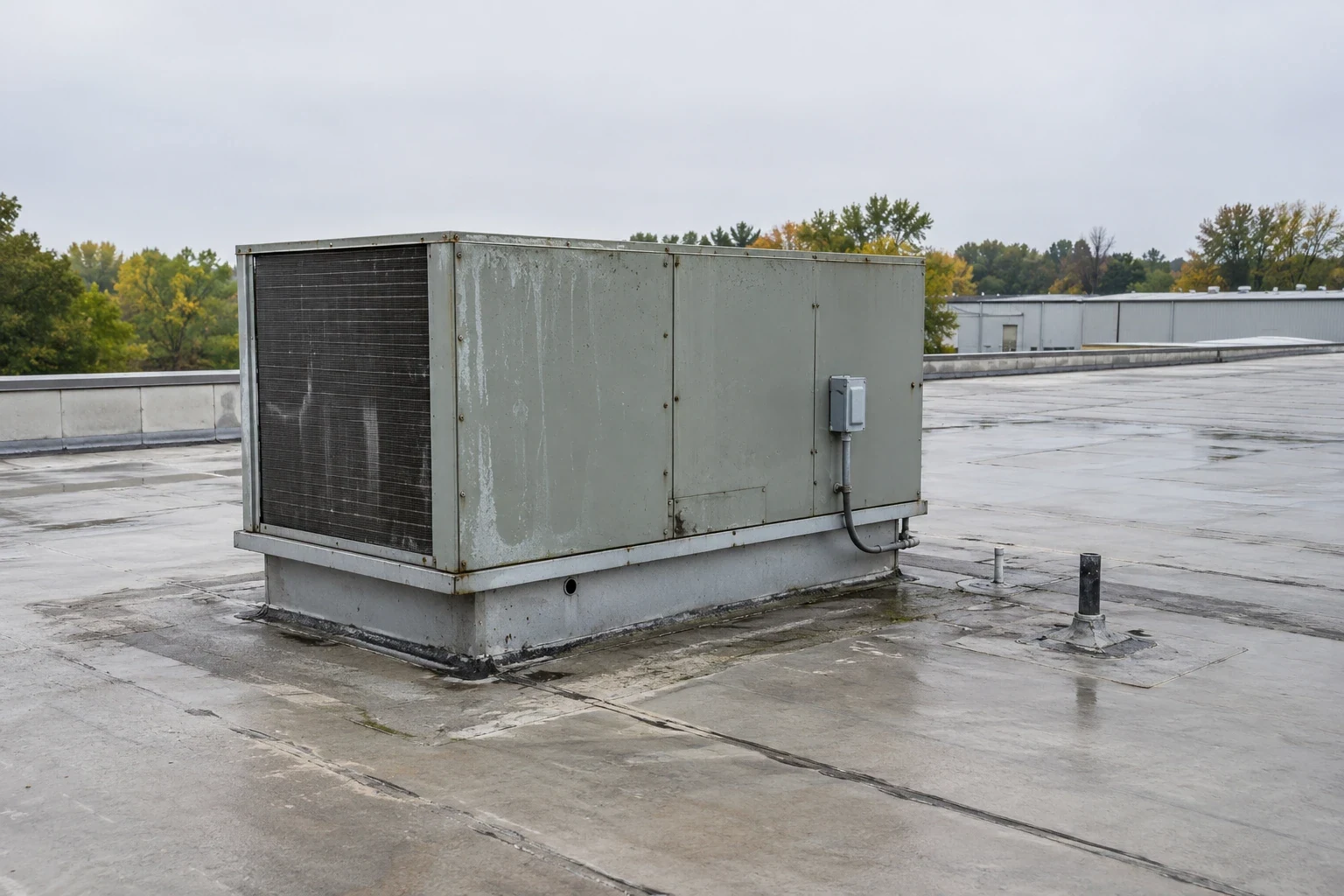
The roof walk checks laps, corners, penetrations, curb flashing, edge metal and sealant. We look for separation, punctures, loose metal and failing patches. Notes identify each condition and location. If the assembly is unclear, we record the limitation and propose a test before selecting materials.
Washington National Airport records 4.9 inches of normal snowfall in January. After winter, we revisit exposed transitions and drainage points for movement or debris. Summer heat also affects sealant and metal movement. We check exposed transitions and drainage after seasonal weather, then tie each recommendation to the condition found at the property.
Sort Work by Urgency
Findings are grouped by immediate water risk, developing condition, routine maintenance and observation. A loose flashing edge above an occupied room may need prompt correction. A small surface mark with no open seam may need a photo and follow-up rather than an immediate tear-back. We explain why an item is placed in a category and what evidence would change its priority.
At Old Town North, retail and commercial uses sit beside redevelopment at the former Potomac River Generating Station site. At occupied properties, maintenance visits account for interior protection and coordinated roof access. In Landmark / Van Dorn, Duke Street links the West End to regional roads, which can influence crew arrival and material delivery. We confirm actual staging and tenant constraints with the building contact.
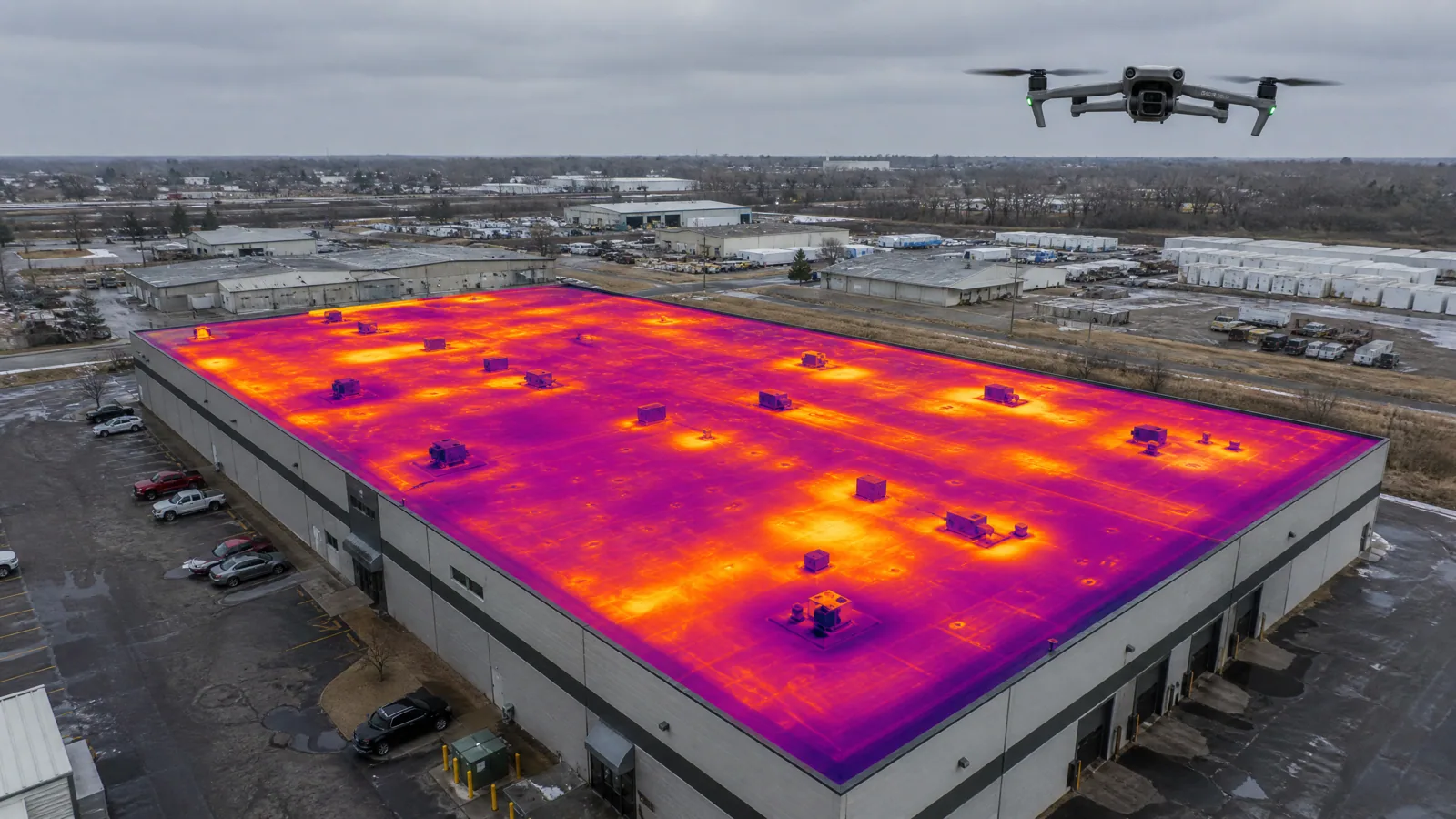
When signs point to concealed moisture, we recommend a targeted test to set the removal boundary. An infrared moisture survey may help select test points when conditions support it. If water entry is active, a focused leak investigation should trace it before routine maintenance resumes. A ponding-water repair may address persistent drainage issues.
Keep a Roof History
Each completed visit can add date, roof zones checked, photographs, cleared items, repairs completed and recommendations awaiting approval. This gives the next manager a record of which conditions changed and which remained stable. It also helps coordinate roof work with interior repairs, equipment projects and seasonal budgets. A condition report can organize those observations when several buildings or roof sections need comparison.
Maintenance does not replace a full inspection when an owner is planning a recover, replacement or building purchase. It is a recurring view of visible details and agreed tasks. If the roof has a leak history or repairs in several places, we can recommend a deeper review and separate testing so the manager understands the additional scope. The report states what was covered and what remains outside the routine program.
Coordinate Around Occupancy
Occupied buildings require a clear path from service hatch to roof zone and a plan for any interior check. We coordinate access with the contact, respect restricted areas and identify whether rooftop equipment must remain running. For a hospital, office, retail block or academic building, we coordinate the visit with the property team and protect occupied areas. The work order states what the crew can inspect without interrupting building use.
Virginia Tech’s academic programs are located in North Potomac Yard, where approved office construction adds another access consideration. Carlyle also has office and mixed-use properties with distinct service routes. The site contact confirms where the crew can enter and which operations take priority, so each visit follows the property's schedule.
When maintenance finds a repair, the follow-up estimate can show material, preparation, access and any test opening separately. That allows the owner to approve the urgent item while scheduling other work later. If the roof needs a broader decision, compare a coating restoration or repair only when its surface and assembly support that option, alongside a replacement evaluation if the evidence points to widespread failure.
Commercial Roofing Services
Commercial Roofing Questions
What is included in a preventive maintenance visit?
The agreed scope can include a roof walk, drain and overflow checks, debris removal, visible seam and flashing review, photos and a prioritized work list. We identify areas that were inaccessible and separate routine tasks from repairs requiring different materials or authorization. The service record states which roof zones were included.
When should maintenance visits be scheduled in Alexandria?
Timing depends on the assembly, nearby trees, rooftop work, leak history and operating needs. Seasonal checks can catch drainage issues before periods of heavy rain and review details after winter. We set a schedule for the actual roof, then adjust when equipment work or a storm changes its condition.
Does routine maintenance include repairs?
The agreement should distinguish routine clearing and inspection from repair labor or replacement materials. When we find an open seam, failed flashing or damaged membrane, we document the condition and provide a separate scope if it falls outside the scheduled tasks. The manager can approve urgent work without losing the maintenance record.
Can maintenance help with warranty requirements?
Roof records and routine service may support obligations in a roof-system warranty, but requirements depend on the specific documents. We can note the visible work performed and maintenance observations. The owner should retain the warranty terms and confirm any required inspections, approved methods or notice periods for that system.
How do you handle maintenance on an occupied building?
We confirm roof access, service routes, equipment restrictions and any interior check with the site contact. Tenant notice or loading access can affect the window. The crew records completed checks and blocked areas, then gives the manager a repair estimate or follow-up plan for each open item.
Build a Practical Maintenance Schedule
Share the Alexandria address, roof history, known leak areas, equipment work and preferred access window. We will inspect the agreed zones, clear routine obstructions and return a prioritized record for the next decision.