 Services
 Roof Systems
 Property Types
 Industries
 Damage Repair
 Capabilities
 Manufacturers
 Service Areas
Commercial Roofing for Manufacturers in Alexandria, VA
Industries We Serve:
- Commercial Roofing for Property Management Companies in Alexandria, VA
- Commercial Roofing for Real Estate Investors and REITs in Alexandria, VA
- Commercial Roofing for Healthcare Systems in Alexandria, VA
- Commercial Roofing for Manufacturers in Alexandria, VA
- Commercial Roofing for Logistics and 3PL Operators in Alexandria, VA
- Commercial Roofing for School Districts in Alexandria, VA
A leak above a production line can interrupt work before the entry point is visible from the floor. Water may enter at a curb, seam or roof edge, then travel across the deck to a different bay. We compare the reported area with roof drainage and penetrations, and record what can be confirmed. Alexandria, VA brings summer heat, intense rain and winter freeze-thaw to roof inspections. Those conditions help direct attention to joints and discharge paths, but the building itself determines the repair.
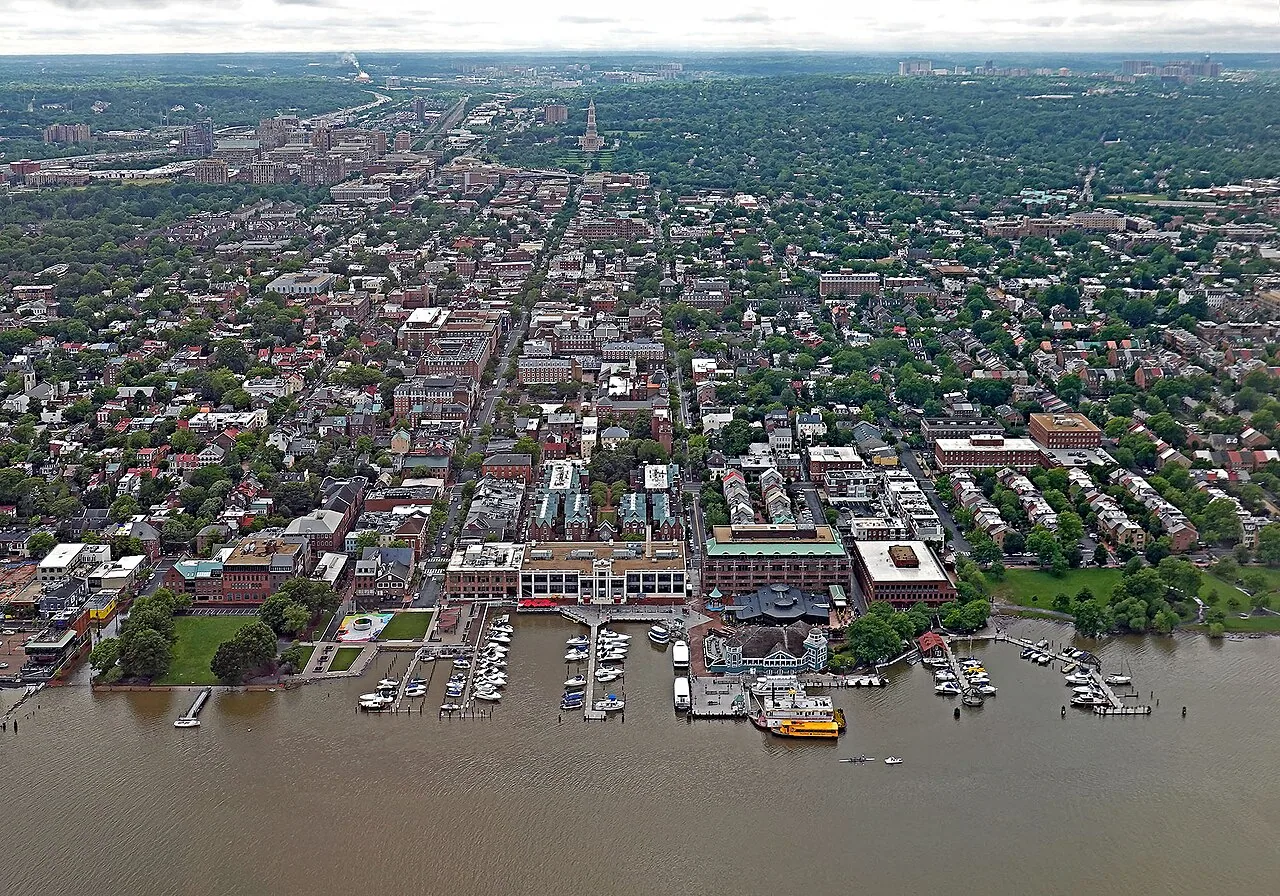
Alexandria’s innovation economy includes Virginia Tech’s North Potomac Yard campus, the National Science Foundation and the USPTO. Along Route 1 and at Oakville Triangle, commercial projects also require careful coordination of deliveries, work windows and roof access. We confirm production hours, material-handling routes, roof assembly and restricted areas with the site contact. Logistics operators may share loading constraints, while general contractors can coordinate roofing with equipment or envelope work.
Manufacturers
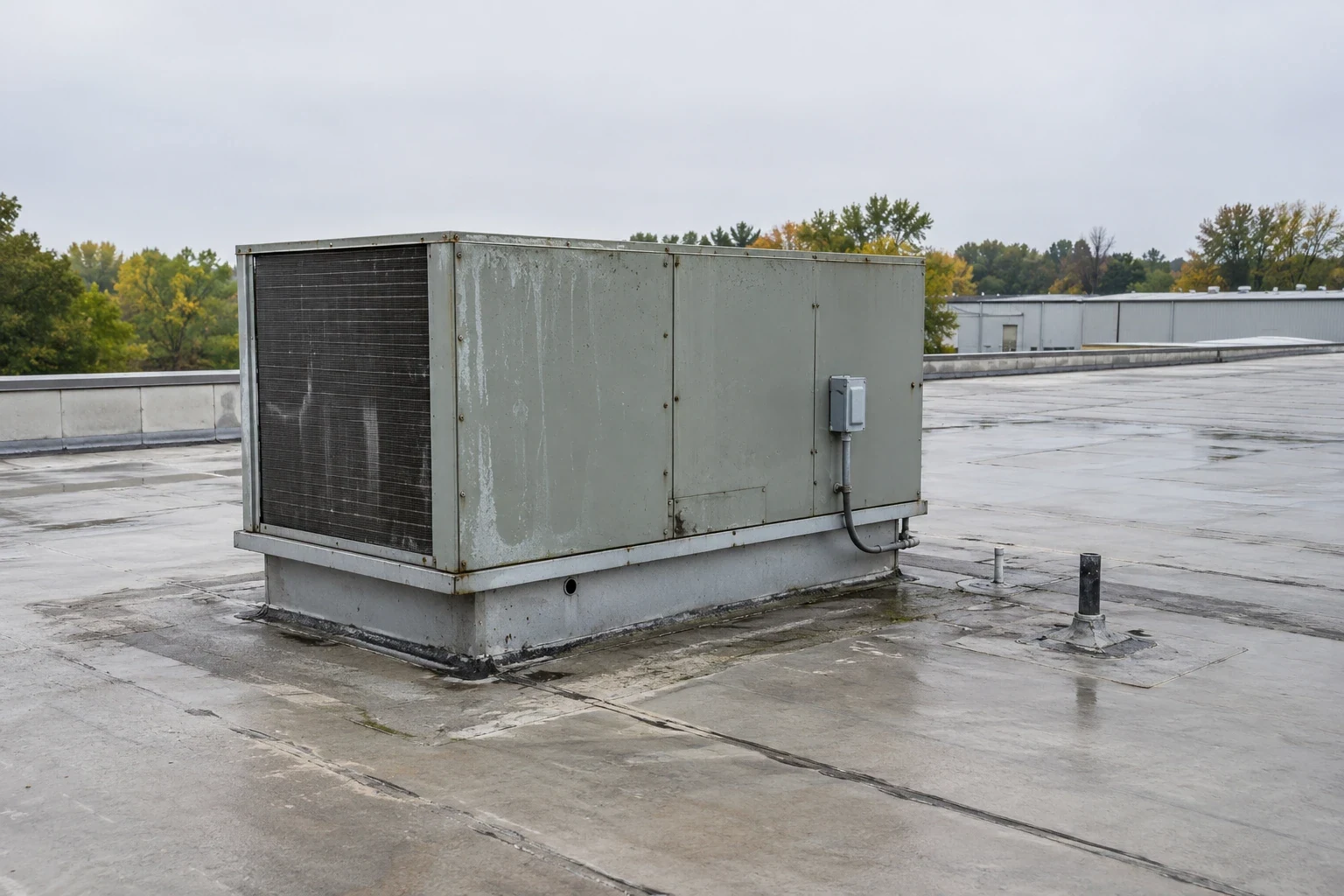
Protect Production and Material Flow
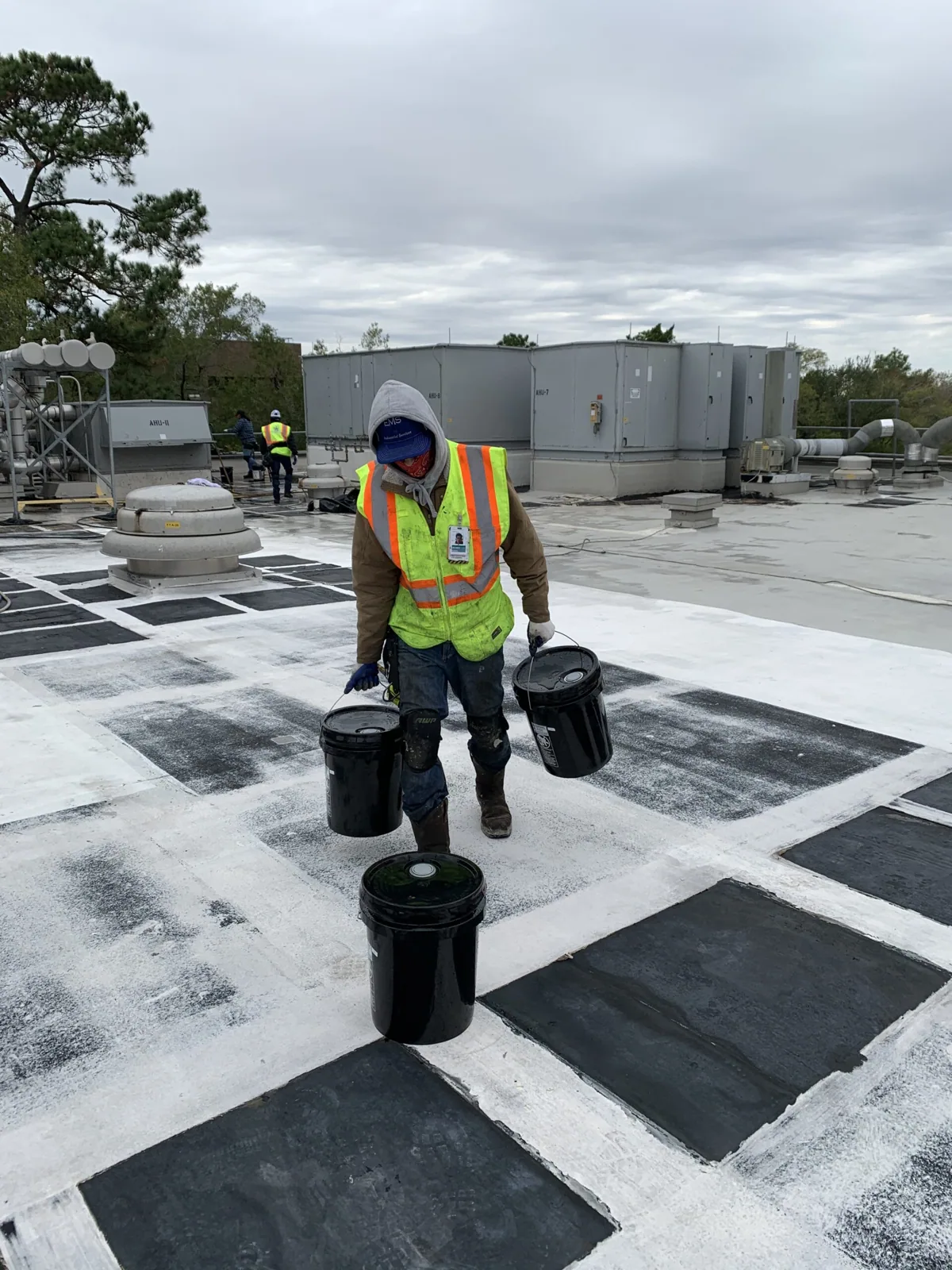
The plant contact identifies shifts, sanitation or process limits, overhead equipment, loading doors and areas where dust or odor cannot be tolerated. We use that information to select access points and staging. Emergency response is available around the clock, including weekends and holidays, when water is actively threatening operations. Permanent work is sequenced with the facility representative so roof access, interior protection and work hours match the plant’s rules.
Membrane removal can expose the interior to sound, debris and temporary weather risk. Before an opening is made, we agree on the roof boundary, the area below and the method for closing the section at shift end. If equipment or inventory sits below the work zone, the contact determines whether it should move or receive protection. The production contact identifies whether a shift change, line stop or alternate work window is available.
Material deliveries and waste removal also affect operations. We confirm truck access, forklift routes, lift placement and any fire lane or loading dock that must remain clear. The daily plan identifies the work area and route, then can be revised if production schedules change. A written sequence helps the plant manager see when noisy work, roof access or temporary protection will occur.
Find the Entry Point and Extent
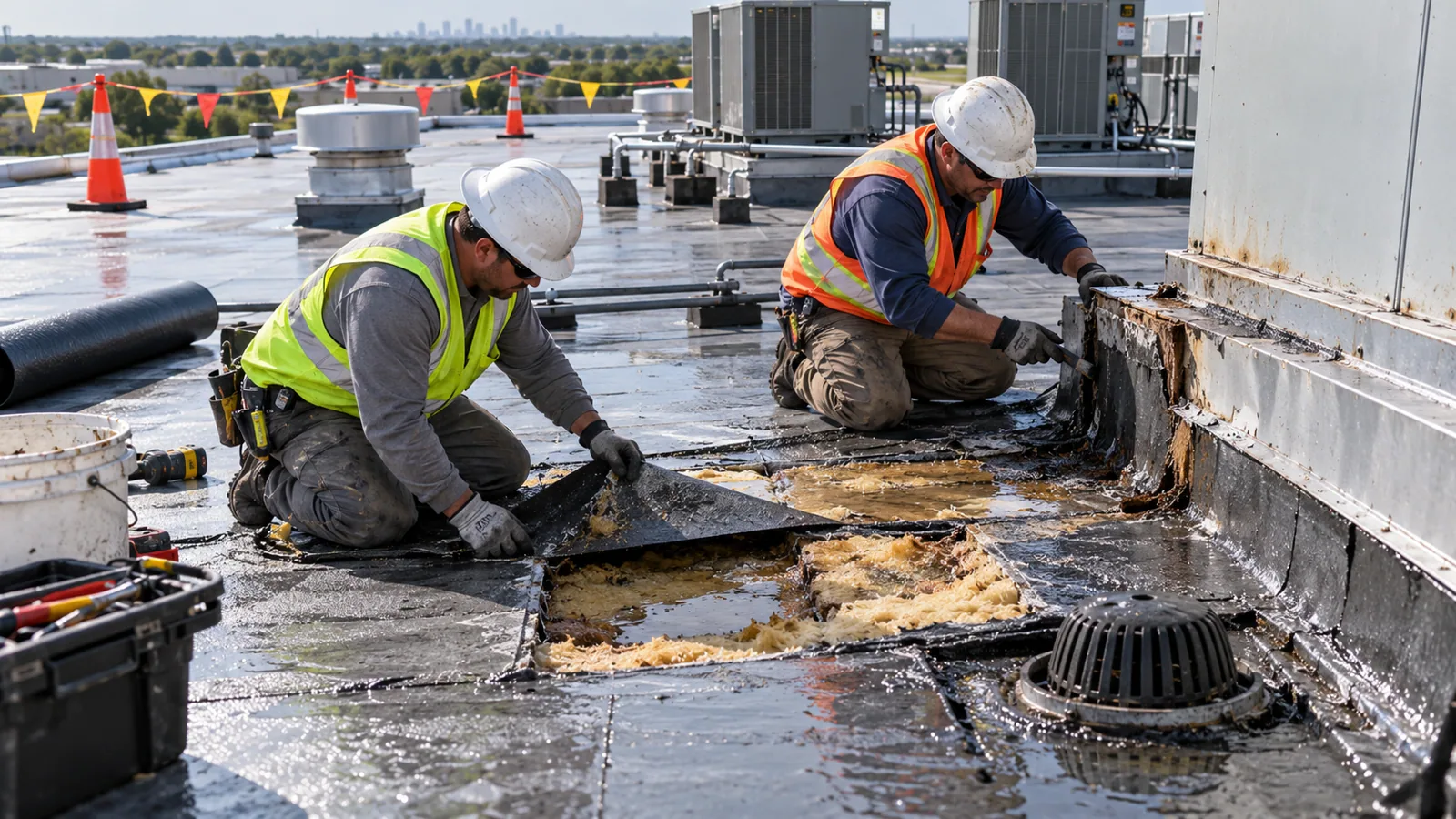
We map the ceiling symptom against the roof plan, slope, drains, expansion joints, equipment curbs and wall transitions. A commercial roof inspection records likely entry details separately from where water appeared indoors. Photographs and a field sketch make the work boundary reviewable by maintenance and safety staff.
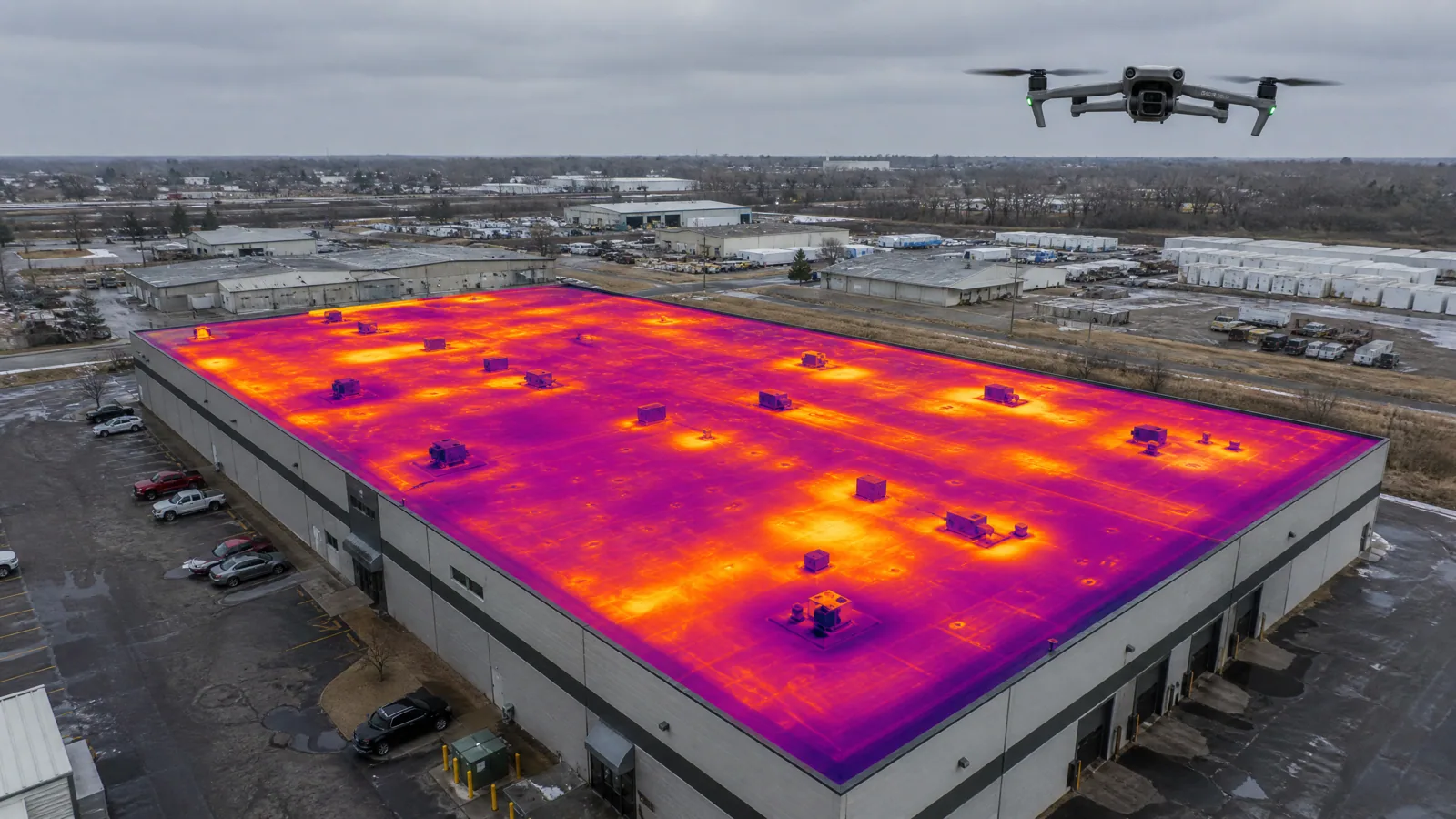
At equipment penetrations, we check flashing and supports for movement or separation. At seams, we look for open laps, incomplete welds, punctures and prior repairs. Drains and scuppers are inspected for obstruction and discharge conditions. A moisture survey may help identify a candidate area, but a temperature pattern needs confirmation against the assembly before insulation is removed.
If uncertainty remains, a test opening can confirm roof layers and deck at one selected point. We coordinate location, interior observation and restoration with the facility. If a leak is near a process exhaust or cooling unit, we also consider condensation or equipment drainage as alternate paths. We label each finding as observed, suspected or awaiting a test, so production decisions reflect the evidence available.
Choose Materials for the Installed System
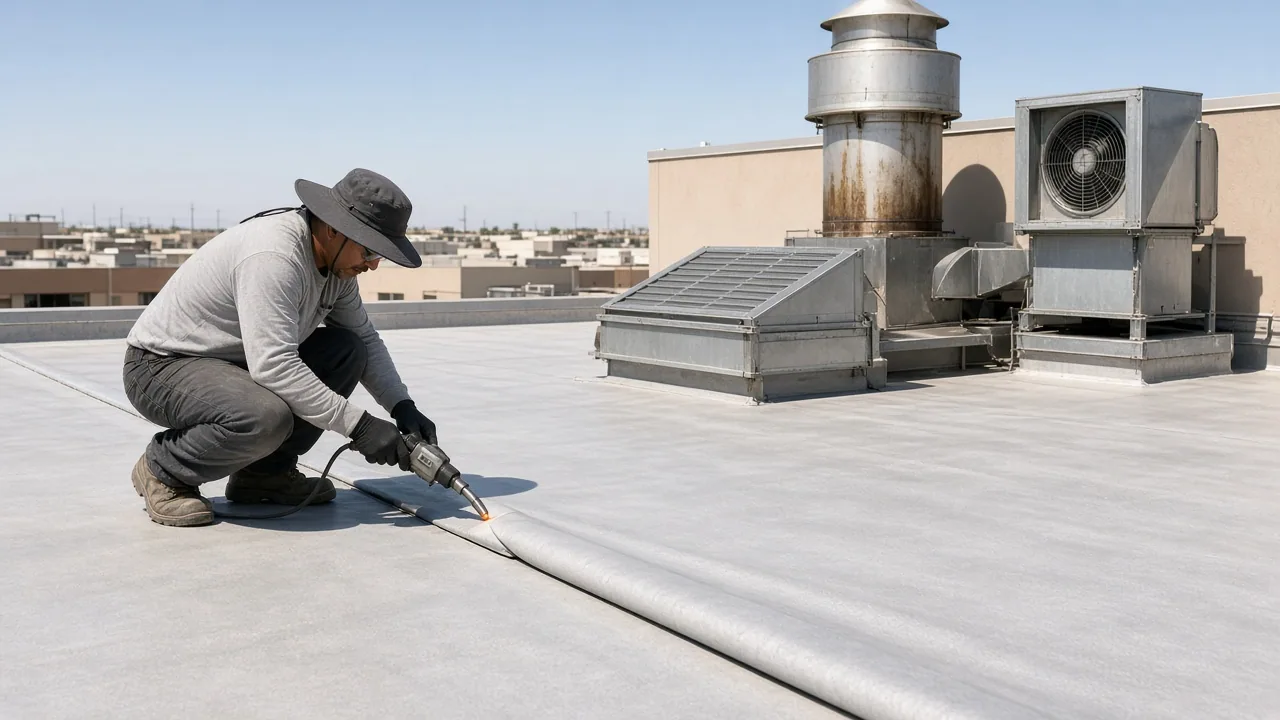
We identify the membrane from product records, markings and roof-level details before selecting repair materials. We use available plans and field inspection to determine whether the assembly is TPO, EPDM, modified bitumen, built-up or metal, and note its insulation, deck and attachment. Each repair must suit the installed material. A patch on an incompatible surface can separate, so the substrate and nearby details are checked before scope is finalized.
Localized damage with sound surrounding material may allow a measured correction. Wet insulation, widespread seam failure or loose edge conditions can expand the repair boundary. TPO seams and standing-seam panels require different tools and movement details. If a curb or exhaust detail is involved, we set a clear handoff with the mechanical trade before closing the flashing.
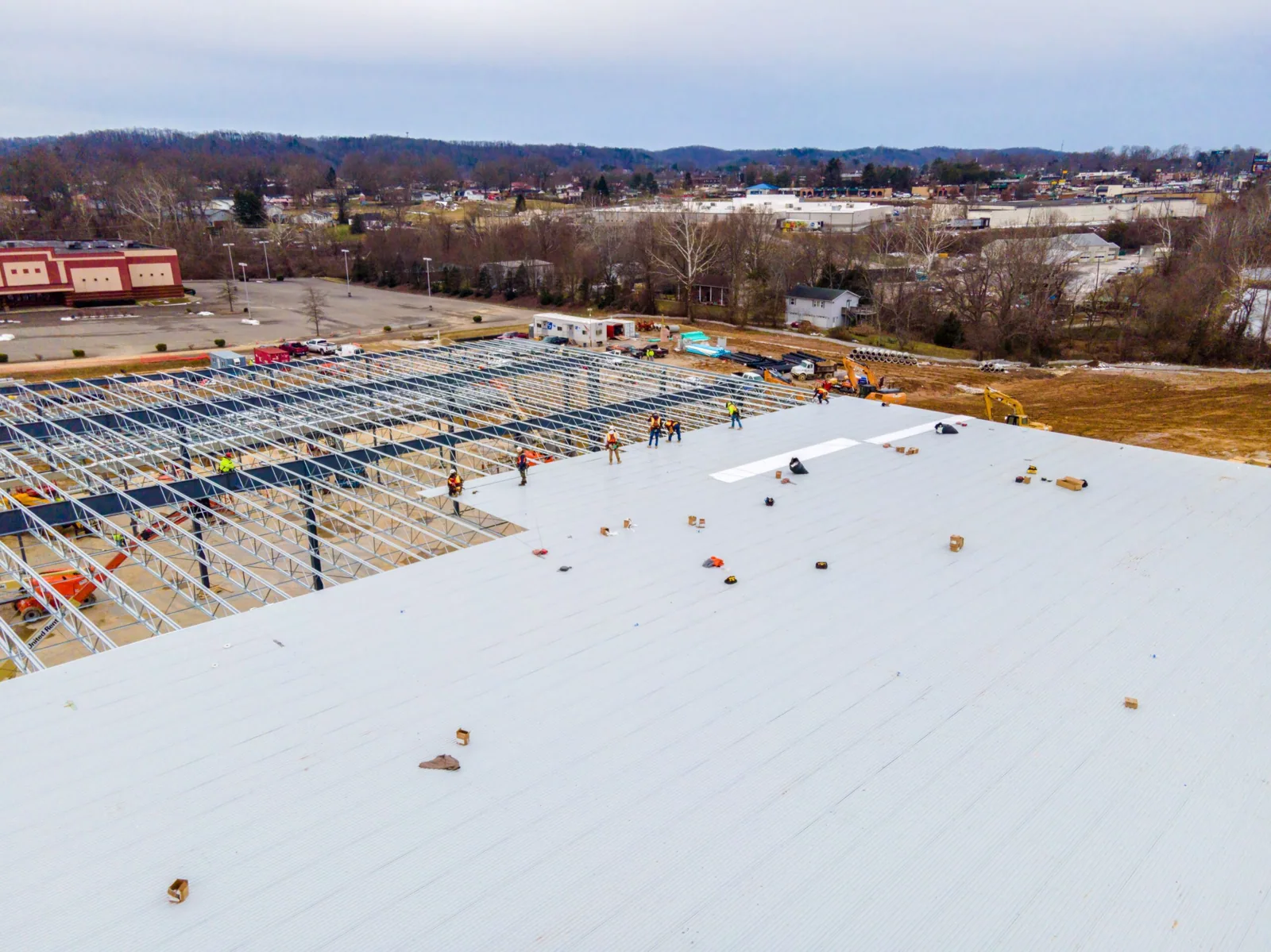
For a larger project, we compare repair, recover and replacement based on deck condition, drainage, access and production disruption. A recover is appropriate only when the existing assembly can accept another layer and project criteria permit it. The scope identifies removal, protection below, waste path and daily weather closure, then divides a large roof into phases the plant can review.
Set a Practical Installation Window
Summer roof temperatures can increase movement at exposed seams and flashing. Intense rain tests drain capacity and overflow routes, while freeze-thaw can work on joints that retain moisture. We inspect the roof for open seams, blocked outlets and loose flashing before selecting a repair. A blocked drain, open edge or wet insulation each calls for a different scope.
Surface preparation, adhesive or coating requirements and forecast conditions determine when work can proceed. If the production floor must remain active, we plan the open area and protection so the roof can be closed at the end of each shift. A staged reroof can help manage interruption when the facility schedule and roof assembly allow it.
For a site near Oakville Triangle or along Route 1, the facility contact confirms truck access, local staging and production constraints. We use the actual address and operating plan to coordinate deliveries and keep the plant’s required truck and loading routes open.
Document the Work for Maintenance
We provide a roof-zone sketch, photographs, repair details and any limits that remained after the work. The plant team can retain the record with equipment and maintenance documents, then compare later reports with the original path. If inspection could not reach an area, that boundary stays clear instead of being described as checked.
Preventive visits can look at drains, seams, curbs, edge attachment and previous repair points. We set follow-up visits according to observed wear and the access windows the plant can provide. Those checks can catch a changed drain or seam before moisture reaches a production area. A maintenance visit can record those changes.
Share the facility address, affected line or bay, production schedule, roof plans and access contact. We will inspect the relevant zones and outline repair or replacement options with the protection and staging needed to keep the plant informed.
Industries We Serve
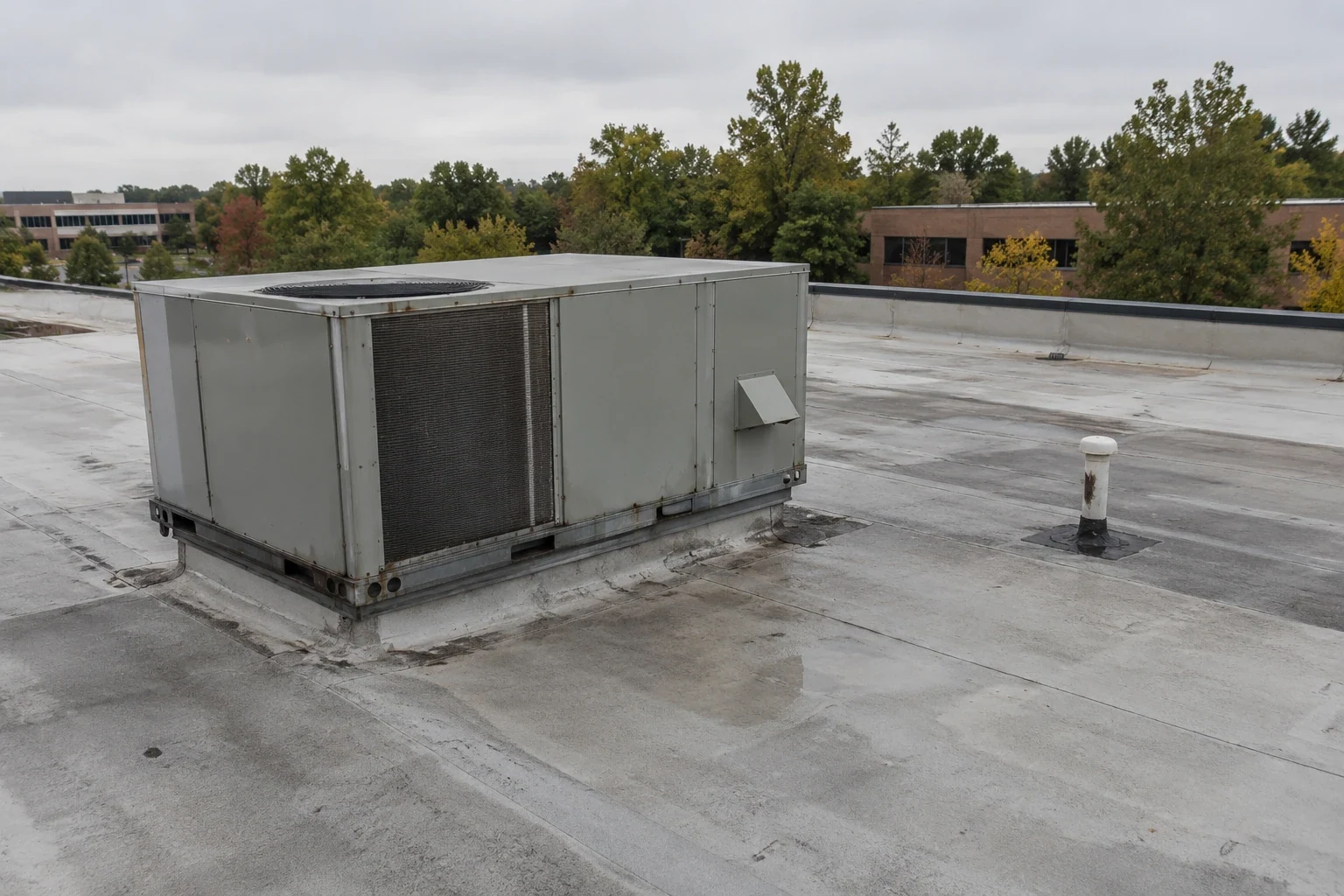
Commercial Roofing Questions
Can roof work continue during production?
It can when the facility approves the work zone, hours, route and protection plan. Some removal or interior testing may require a temporary restriction below. We identify noise, debris, odor and roof-opening risks so the plant contact can coordinate the sequence with production staff.
How do you protect machinery or inventory below a repair?
The facility identifies sensitive equipment and stored material in or near the affected zone. We coordinate barriers, coverings, access and any move that the plant approves. The roof scope names the protection planned, while the facility determines operational controls for its equipment and inventory.
Can a roof leak be confused with equipment condensation?
Yes. We compare the timing and location with roof details, mechanical equipment and interior conditions. A test opening or other targeted check may be needed if the route remains uncertain. The report separates evidence for each possible entry point before recommending roof removal.
What roof information is useful before the site visit?
Provide the address, current roof plans, leak area, production shifts, delivery limits and contact for roof access. Note process exhaust, cooling equipment or areas where dust and odor are restricted. Those details help us plan tools and staging around the plant.
When should a manufacturer consider replacing a roof instead of repairing it?
Replacement enters the comparison when observed deterioration, moisture or repeated failure extends beyond a practical repair area. We inspect the assembly and document the evidence before proposing a broader boundary. The plant can then compare disruption, access, drainage and phased work against the repair option.
Inspect a Manufacturing Roof
Send the facility address, affected production area and operating constraints. We will trace the roof condition and prepare a repair or phased replacement scope.