



 Services
 Roof Systems
 Property Types
 Industries
 Damage Repair
 Capabilities
 Manufacturers
 Service Areas
Commercial Roof Inspection in Alexandria, VA
Commercial Roofing Services:
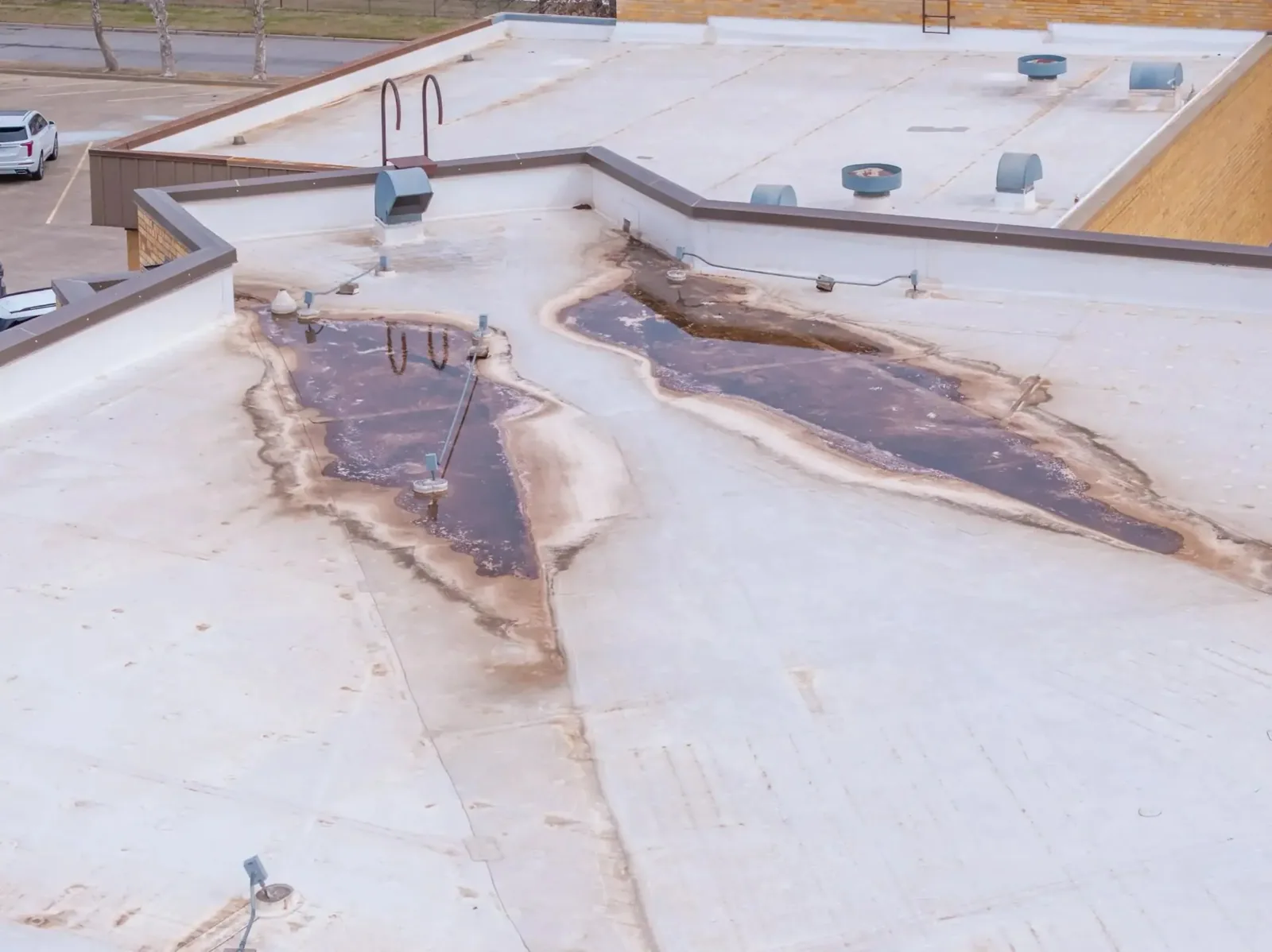
Standing water after a hard Alexandria rain can point to a drain issue, a low area, or both. A commercial roof inspection records the condition of the roof as it can actually be seen and tested, then ties each finding to a location. We inspect membrane, seams, flashing transitions, edges, penetrations and drainage routes, and record access limits. For a general contractor, that turns an unclear roof concern into a field sketch, photos and repair items that can be priced and sequenced.
Alexandria’s tidal Potomac exposure makes roof overflow routes an important inspection item. We check them with the drains, edges and assembly at each property. Carlyle office and mixed-use buildings and the retail and commercial properties around Old Town have distinct roof layouts and access needs. We build the inspection route around the address, assembly and reported concern, not a generic checklist. When a specific leak is active, a focused leak investigation can trace the water path alongside the broader condition review.
Commercial Roof Inspection
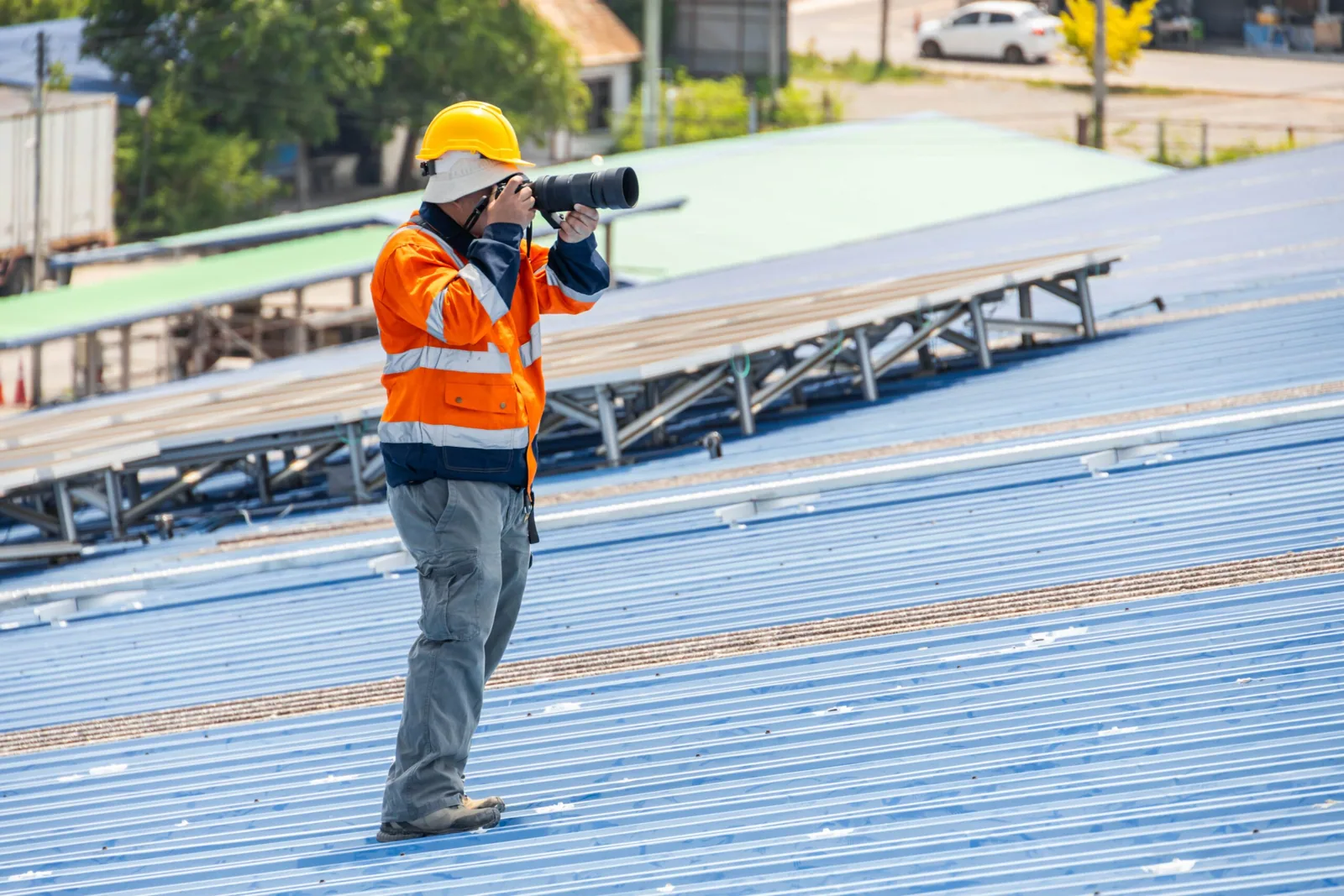
Record the Roof in Zones
We divide the roof into identifiable zones and inspect each accessible area in sequence. The report lists membrane type when visible, seam condition, patch history, surface wear, exposed attachment, edge metal, parapet transitions and rooftop penetrations. We photograph both typical conditions and exceptions. A consistent field sketch lets the building team locate each item by unit, side and roof section.
Drainage gets its own attention. We inspect drains, scuppers, strainers, overflow points, slopes and areas where debris or equipment may interrupt water movement. A small amount of standing water immediately after rain differs from persistent ponding, so timing and roof geometry matter. We record what was visible at the inspection and recommend a follow-up observation or test if the condition cannot be resolved in one visit. This is especially useful where heavy rain can make a drain limitation look like a membrane failure.
At an occupied property, rooftop access and interior coordination shape the inspection. We confirm safe access, identify areas blocked by equipment or operating restrictions, and mark those limits on the roof plan. Concealed insulation and untested details remain outside a surface inspection; the report identifies any return visit or test needed to assess them.
Connect Exposure to Details
Alexandria experiences summer heat, winter freeze-thaw and occasional snow. Those conditions focus attention on sealant, membrane movement, drainage and attachment details during the inspection. We record what is visible: open edges, cracked sealant, loose metal, displaced membrane, separated seams or water marks. The condition and location determine whether a repair, closer test or continued observation is appropriate.
Washington National Airport’s January normals show an average low of 30.1°F and 4.9 inches of snowfall. In cold weather, we distinguish visible surface conditions from details that need warmer, drier conditions to test. In summer, heat affects access and surface temperature. When roof work touches a property in Eisenhower East, the building contact can help coordinate routes around active office operations and rooftop equipment schedules.
The inspection can also identify transitions where different materials meet: walls, skylights, expansion joints, curbs, rooftop units and metal edges. Water often tests these details before it crosses an open roof field. We describe the visible boundary and record whether sealant, flashing or a termination appears to be the likely issue. A related flashing failure assessment can define corrective work when the inspection finds separation at a transition.
Make Findings Actionable
Each finding should tell the reader what was seen, where it is, why it matters to the roof, and what next step can confirm or correct it. We separate immediate repair items from maintenance observations and areas that need additional testing. Photos pair with short captions and a roof zone reference. If the inspection finds active moisture, we state where it was confirmed and whether a test opening or additional survey is recommended before setting a removal boundary.
The resulting scope separates work with different access or sequencing needs. Seam repair may fit a short visit; edge metal or insulation work may need staging. Alexandria building applicants use the 2021 Virginia Codes, and the project scope determines which requirements need review. We identify repair assumptions and access needs so the general contractor can coordinate the next decision with the appropriate project team.
For a multi-building portfolio, an inspection record creates a common basis for prioritizing active leaks, progressing details and routine maintenance across sites. Landmark’s planned Inova facilities call for coordination with medical project teams; Old Town North retail blocks bring guest and delivery routes into the sequence. The written findings can mark safety concerns, active leaks, progressing details and lower-priority monitoring items so owners can phase work against access windows and project constraints.
Choose the Right Inspection Depth
A hands-on roof inspection is the right starting point when the question involves seam adhesion, flashing movement, surface condition or a repair boundary. Drone imagery can help map a large roof or view a difficult section, but it cannot confirm a weld or moisture beneath the membrane. For broad roofs, a drone inspection can complement the walk. Suspected wet insulation may call for a targeted infrared survey and test opening.
Inspection depth should match the decision. A pre-bid walkthrough may document visible conditions; a leak assessment can focus on the water path. We clarify the question before scheduling and state what was included. If replacement is being evaluated, inspection findings can be paired with a capital plan and a defined replacement scope rather than relying on roof age alone.
Use the Report to Sequence Work
After inspection, we review findings with the building contact or general contractor. The report can support a maintenance ticket, repair estimate or budget discussion. Weather, tenant activity and access limits stay attached to the relevant roof zone.
Properties along Eisenhower Avenue and Mill Road include offices and redevelopment blocks, while North Potomac Yard includes Virginia Tech academic and approved office buildings. Those settings make access planning part of the roof decision. Provide the address, reported concern, available plans or prior roof records, and any operating limits. We can then inspect the right areas and return findings in a format the project team can act on.
Commercial Roofing Services
Commercial Roofing Questions
What does a commercial roof inspection document?
We record accessible roof zones, visible membrane and seam conditions, flashing, penetrations, drainage, edge details, photos and access limits. Each concern receives a location and recommended next step. If a condition needs testing before repair is priced, the report says what remains unknown instead of treating an observation as a confirmed failure.
Can an inspection confirm whether insulation is wet?
A surface walk may identify clues, but concealed moisture generally needs a closer method. We can recommend a targeted infrared scan and test opening where the decision depends on the extent of wet material. The opening verifies the roof layers at that point; the repair boundary should extend only as far as evidence supports.
Should we inspect before asking for a replacement proposal?
A condition review can identify what is serviceable, which details need repair, and where uncertainty remains. That makes a replacement comparison more useful than deciding from age alone. If the existing assembly has widespread moisture or repeated failure, the findings can support a larger scope; if not, a phased repair may remain viable.
Can you inspect while tenants are working?
Often, the roof walk can proceed while the building operates, but access to rooms, loading areas or equipment may need coordination. Carlyle offices and Old Town commercial properties have different operating patterns. We confirm the route and any interior checks with the site contact, then record sections we could not safely reach.
How is the inspection report used by a general contractor?
The report connects photos and observations to specific roof zones, then identifies repair, testing and access needs. A general contractor can use those boundaries to request pricing, coordinate rooftop equipment or schedule interior work after a leak repair. Across multiple buildings, each roof keeps its own condition record and priority.
Schedule a Roof Condition Review
Share the Alexandria address, the decision you need to make, any active leak information and site access constraints. We will inspect the relevant roof zones and document findings, limits and practical next steps.