
 Services
 Roof Systems
 Property Types
 Industries
 Damage Repair
 Capabilities
 Manufacturers
 Service Areas
Commercial Roof Leak Repair in Alexandria, VA
Commercial Roofing Services:
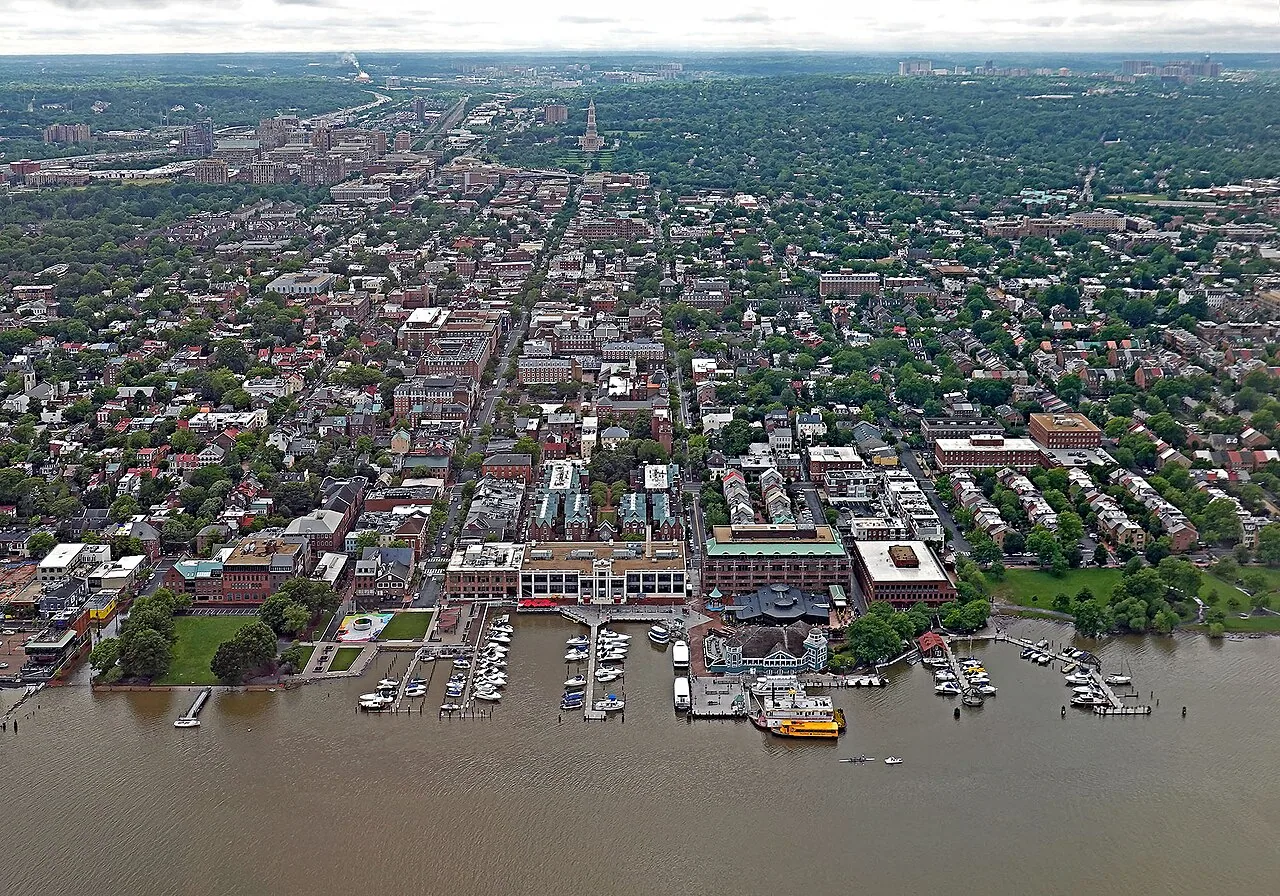
Alexandria's low elevation and tidal Potomac make flood pathways part of commercial roof inspections. At a Carlyle office, an opening near a curb can feed water beneath the membrane before it reaches a room. We trace the path from the wet area toward drains, parapets, seams and flashing transitions, then separate what can be confirmed from what still needs a test opening. In Alexandria, intense rain and tidal flooding make drainage routes worth checking, especially near Old Town North. A leak still needs evidence at its own address.
For a general contractor coordinating tenant work, the first useful result is a repair boundary with photos and a field sketch. We document the room or equipment affected, the roof zone above it, nearby penetrations, and any drainage issue that could keep feeding the leak. That record supports a measured repair instead of a broad patch that hides the cause. When replacement is under consideration, we can also show how the observed condition compares with a larger commercial roof replacement.
Commercial Roof Leak Repair
Follow the Water Path
A leak investigation starts with timing and location. We ask when water appears, whether wind changes its direction, which rooms are affected, and what equipment or ceiling work sits above them. Those details help narrow the roof zones without treating a ceiling mark as a map. On the roof, we inspect seams, penetrations, edge metal, wall transitions and the route water takes to drains or scuppers. Each observation is tied to a location for later review.
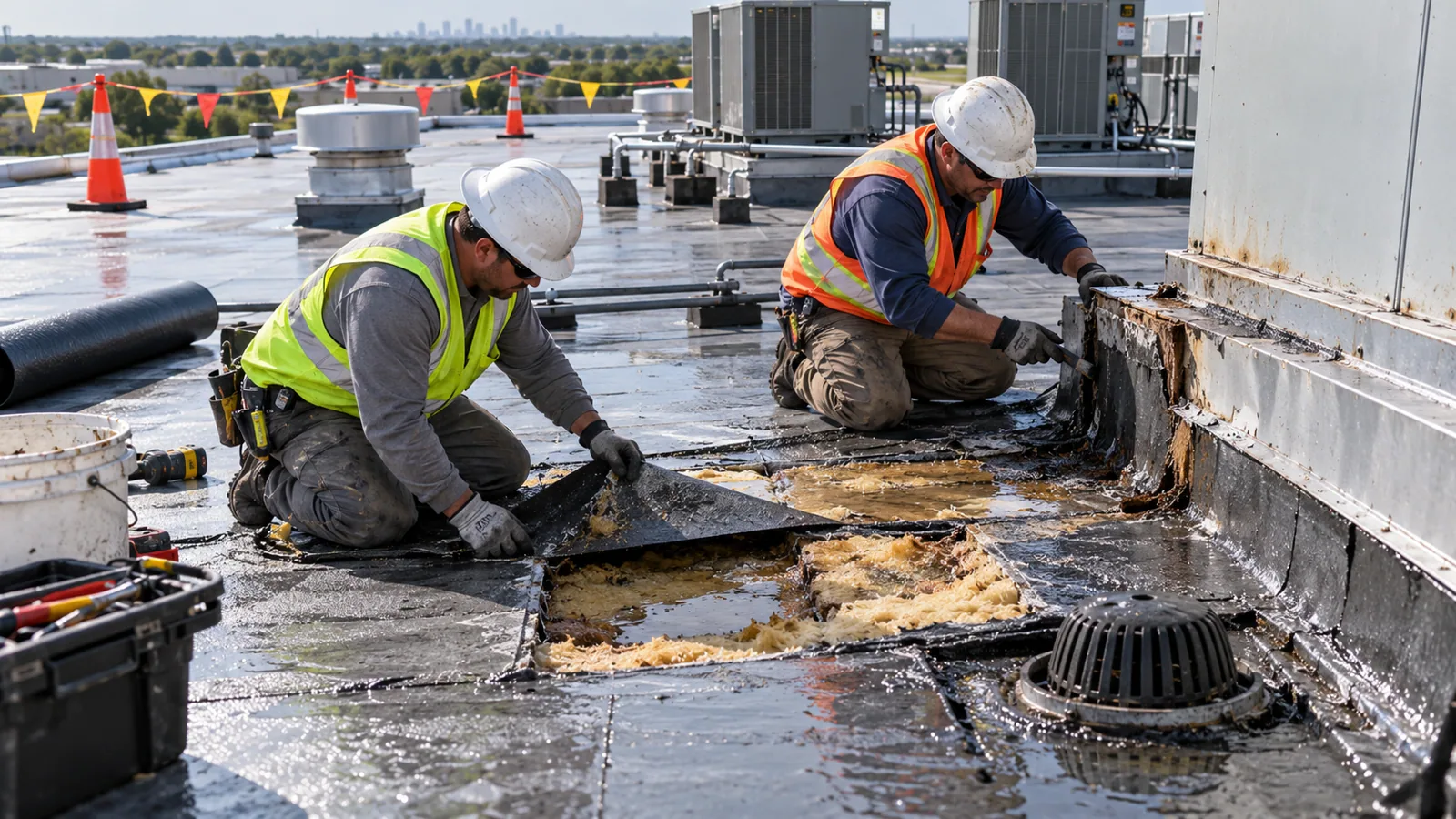
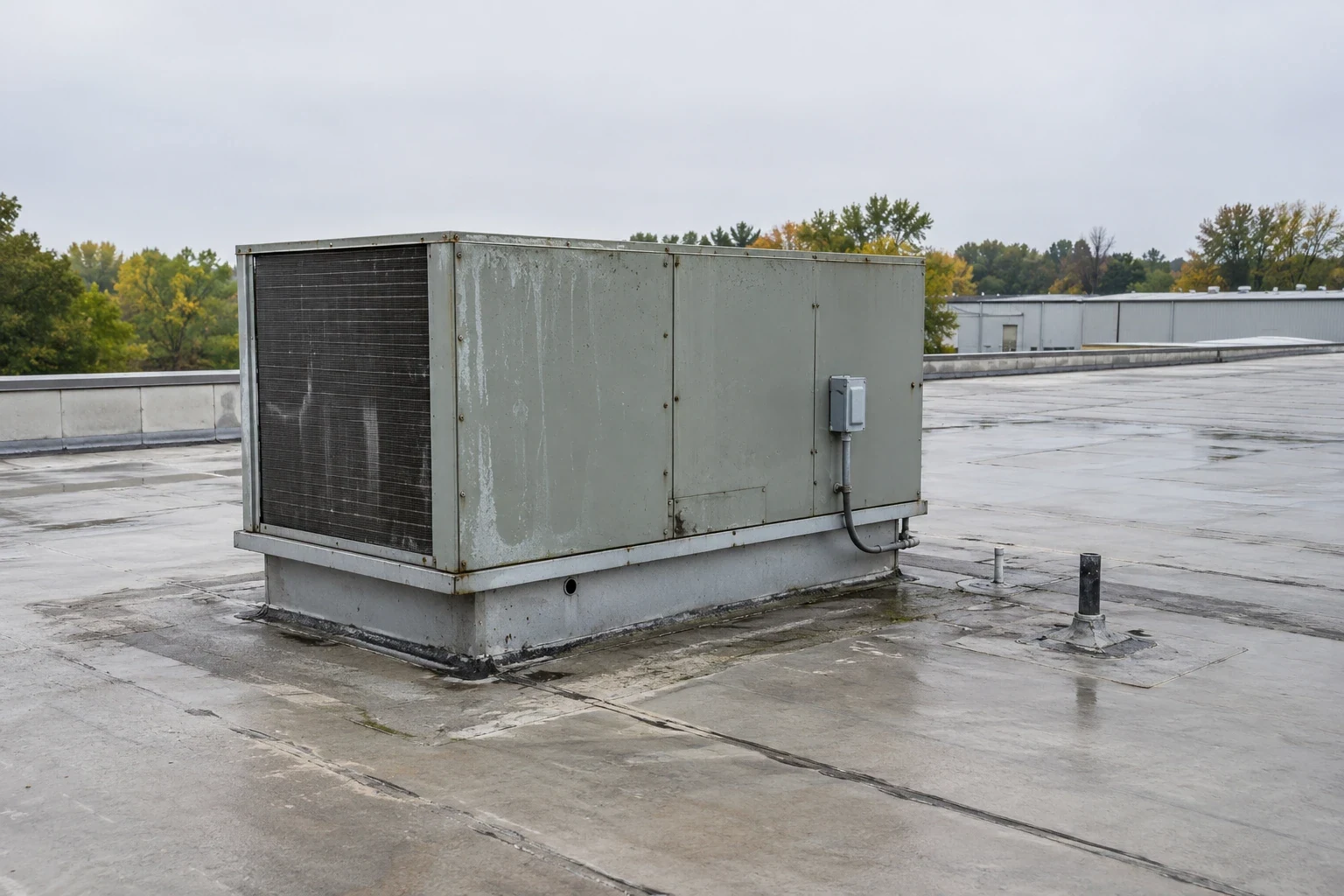
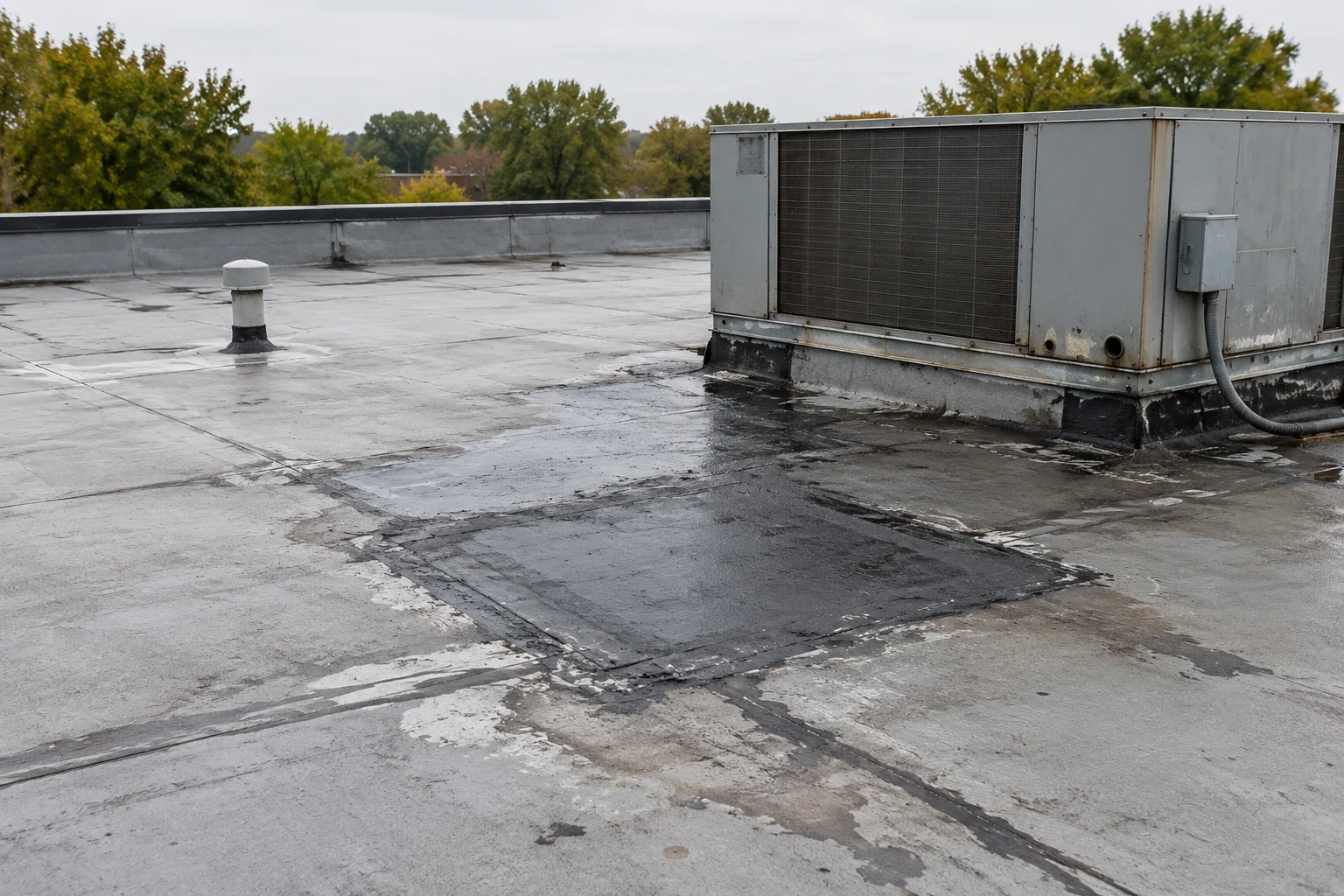
Water may move laterally between membrane and insulation before reaching a deck opening. A seam can look intact from several feet away while a lifted edge or failed weld admits water at a corner. A curb may have sound membrane on its field side but an open gap where metal and flashing meet. We photograph the detail, check adjacent laps and record whether the same condition repeats across a roof zone. The goal is to distinguish the entry point from downstream symptoms before material is cut or added.
Separate Entry From Damage
Once a likely entry detail is found, we check how far moisture may have traveled. A small wet area can sit above a much wider ceiling stain, and insulation can hold water after the visible drip stops. We look for soft or displaced membrane, open laps, damaged flashing, wet insulation indicators, rust at exposed metal and debris that changes drainage. When surface inspection cannot show the layers, a limited test opening can reveal the assembly and help set a sound repair edge.
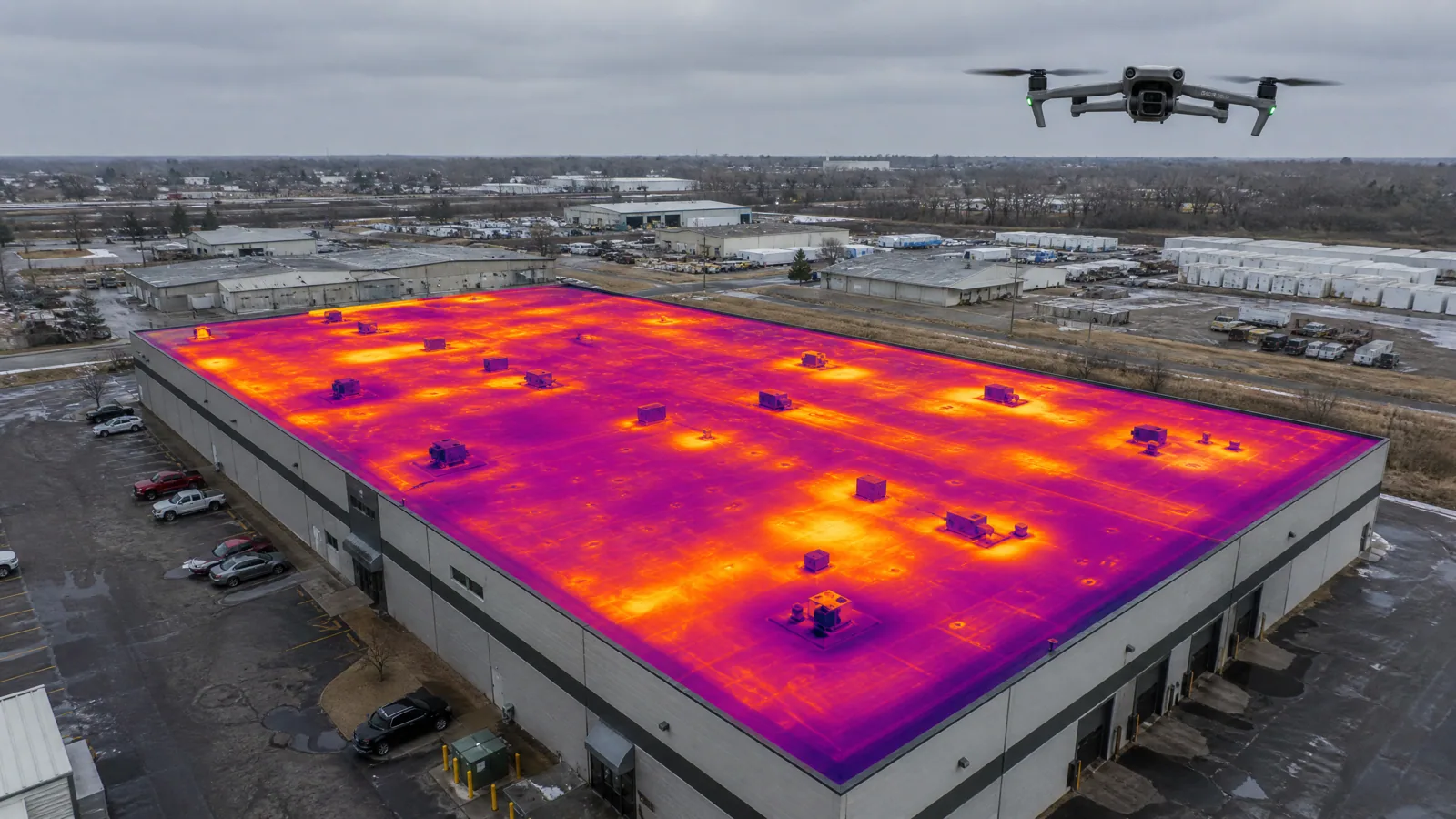
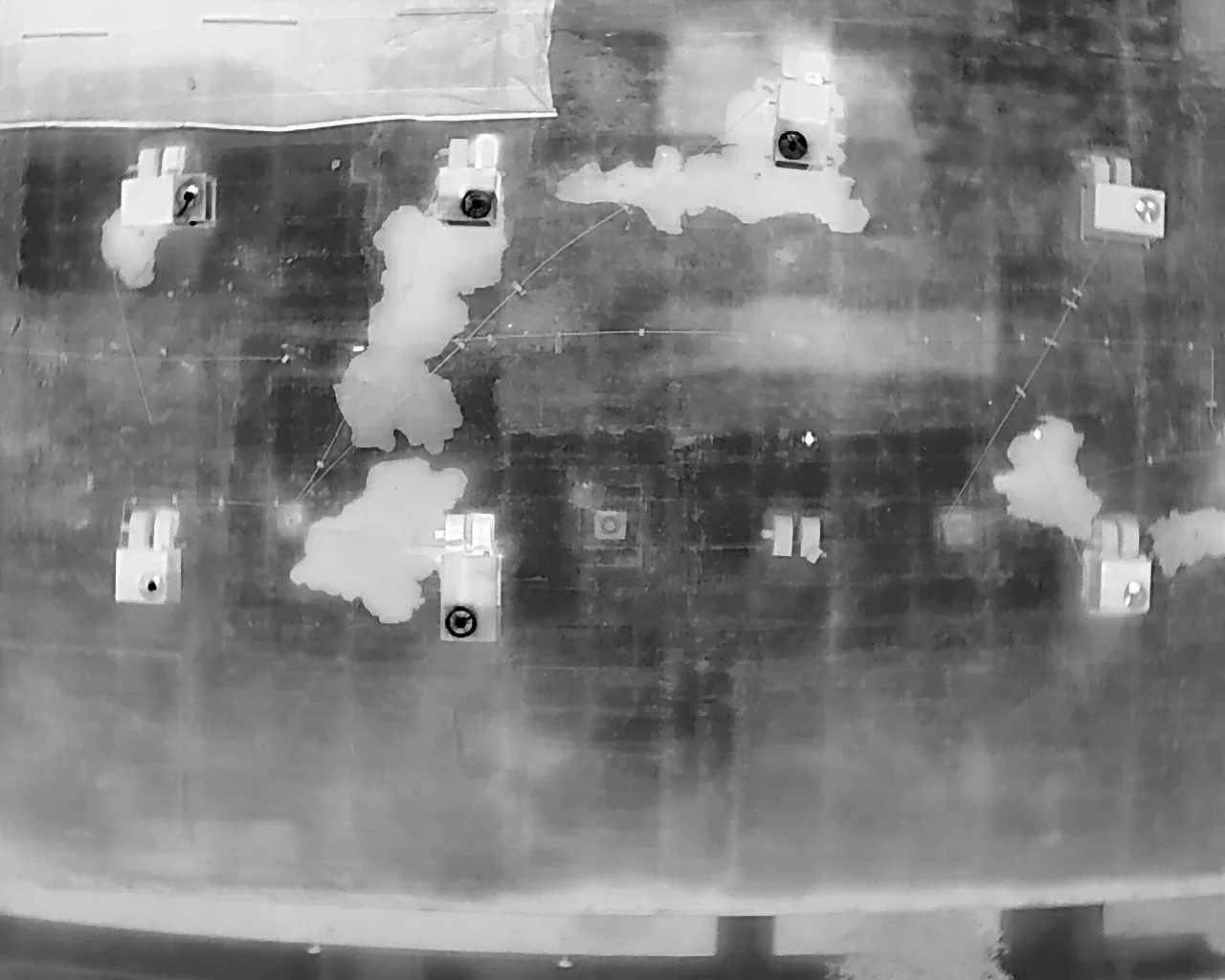
Where a roof is too large or access is constrained, drone imagery can add context to a hands-on review. Drone imagery can show broad drainage patterns, roof geometry and areas for closer inspection; hands-on checks assess seams and moisture in the assembly. A drone roof inspection can help map a large roof before targeted testing, while an infrared moisture survey can identify temperature patterns that require confirmation. Each method answers a different question; neither should be treated as a leak diagnosis by itself.
Match the Repair to the Opening
The repair scope follows the defect found and the material around it. A localized puncture may need compatible membrane and reinforcement. A failed seam needs preparation and a weld or bonded repair suited to that roof system. A curb or wall transition may require removal of loose material and rebuilding the flashing termination. If insulation is wet, the repair boundary may need to extend to dry material so trapped moisture is not sealed into the assembly. We mark each item separately when one roof contains several unrelated conditions.
Material compatibility matters. TPO, PVC, EPDM, modified bitumen and coated assemblies use different repair methods, and an unknown roof history can make a small test area valuable. Identify the membrane and inspect existing patches before choosing repair materials. A dirty, brittle or incompatible surface changes preparation. A compatible commercial roof repair begins with the actual assembly and its attachment, not a generic sealant applied over the symptom.
Some leaks point to a broader drainage or edge problem. A low spot that retains water, a disconnected downspout, or a scupper detail that spills against a wall can keep stressing a repaired area. We document the contributing condition and present it as a separate correction when the immediate opening can be repaired independently. In Old Town North and along the King Street business area, varied commercial and retail uses call for clear phasing: first stop active water, then schedule drainage or finish work that requires wider access.
confirm Before Closing
After repair, we inspect the completed detail and photograph its edges, laps and termination. Where conditions allow, a controlled water test can help confirm that the repaired transition sheds water, but the test must be planned around drainage, occupied space and the roof assembly. A test should not flood a building simply to create a pass or fail. We also record any adjacent condition that was not included in the repair, so the building team can make a later decision with the boundary visible.
The closeout record can include the reported symptom, inspection route, confirmed opening, materials used, repair limits and remaining recommendations. If a leak returns, the next inspection can compare the same detail. It also gives a general contractor a basis for coordinating ceiling restoration after the roof has been checked. If water affected several roof zones or the repair is one step in a larger program, roof condition reporting can organize photos and findings for capital planning.
When a Patch Is Not Enough
A repair is sensible when the defect is limited, surrounding membrane remains serviceable, and the assembly can be closed with compatible materials. A larger scope deserves comparison when leaks recur at several seams, insulation is wet across a broad area, or prior patches cover deteriorated flashing. The seam failure repair scope may be localized, while repeated seam separation can change the cost and disruption calculation. We describe those alternatives with separate boundaries instead of turning one leak call into an unsupported replacement recommendation.
Commercial Roofing Services
Commercial Roofing Questions
Why is water appearing far from the roof opening?
Water can move along the deck, insulation joints or the underside of a membrane before it reaches a ceiling opening. We compare the interior stain with roof penetrations, seams, walls and drainage routes, then use photos or a limited test opening to confirm the path. Set the repair boundary at the roof entry detail and any wet material, which may extend beyond the ceiling mark.
Can you stop a leak before the full repair is ready?
For active water, we can assess an interim measure such as temporary protection or a localized dry-in, then return for a permanent repair when the roof is safe and materials are ready. The temporary boundary and limitations should be written down. Temporary protection reduces exposure while the crew schedules follow-up inspection of nearby insulation and finishes.
What should a leak report include for a general contractor?
A useful record identifies the reported room, roof zone, confirmed entry detail, photos, repair limits, access needs and any unresolved moisture question. We can record the sequence for opening, protecting and closing the roof so ceiling work follows a confirmed repair. If several trades need the area, the schedule should show who provides roof access and who restores interior finishes.
Will a roof coating stop a leak at a failed curb?
A coating is not a substitute for rebuilding a failed flashing transition. We first determine whether the curb, membrane and surrounding surface can accept a compatible restoration system. If the opening is localized, a direct flashing repair may be more appropriate; if deterioration spans a broader field, a separate restoration comparison can show the difference in preparation and scope.
How do you tell whether wet insulation must be removed?
Surface appearance may not show how far moisture extends; a test opening can compare wet and dry material. We check accessible edges and use a test opening when needed to identify the roof layers and compare wet material with dry material. The estimate then separates removal and replacement from membrane work. That boundary matters because sealing over trapped moisture can leave the assembly compromised even after the visible drip stops.
Trace the Leak Before Repair
Send the Alexandria address, the room or roof area affected, when water appears, and any access or project constraints. We will inspect the water path, document the confirmed repair boundary, and outline what can be completed now.