
 Services
 Roof Systems
 Property Types
 Industries
 Damage Repair
 Capabilities
 Manufacturers
 Service Areas
Commercial Roof Drains and Scuppers in Alexandria, VA
Commercial Roofing Services:
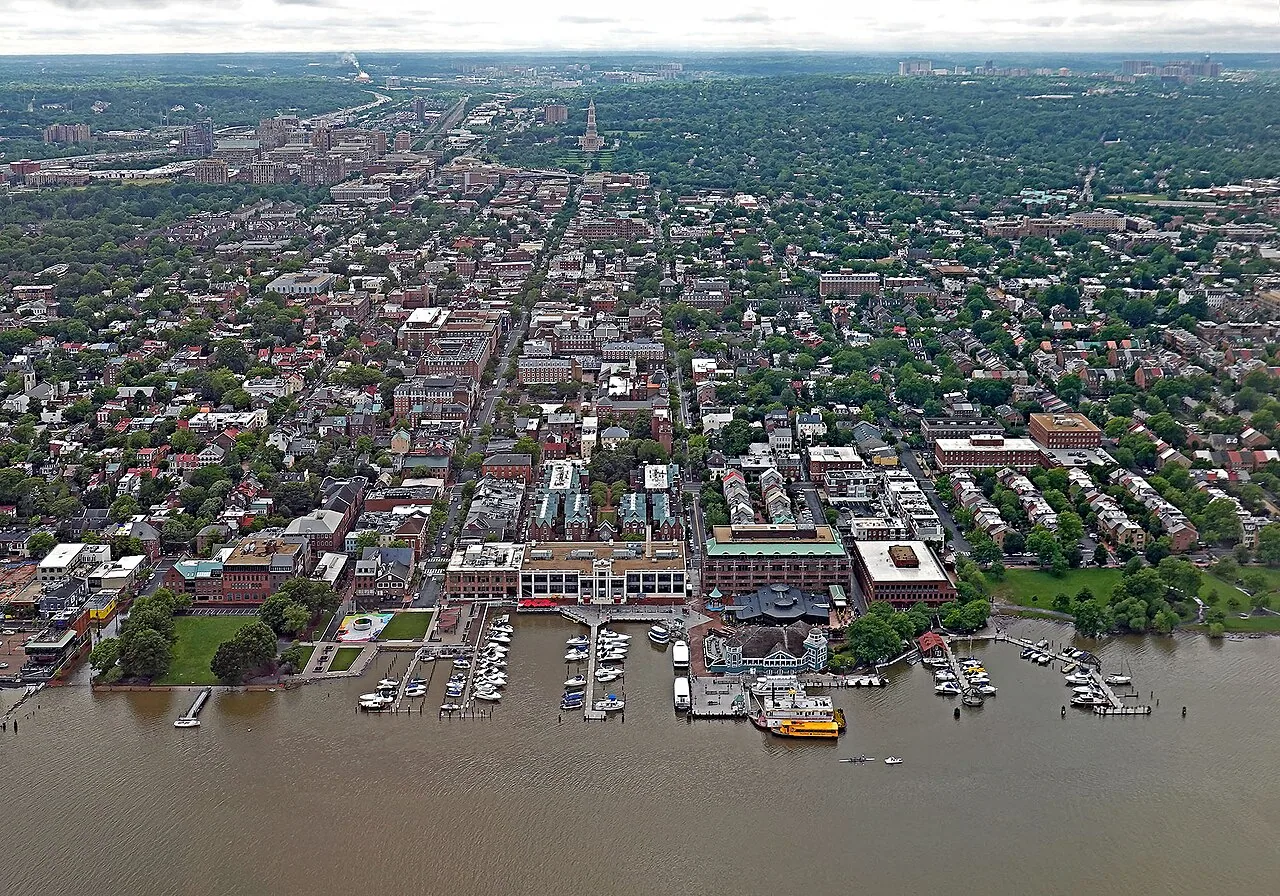
Water collecting at a drain bowl after a downpour can mean the strainer is blocked, the bowl is slow or the roof is not directing water to it. In Alexandria, heavy rain and the tidal Potomac flood context make a clear overflow route part of a useful roof review. We inspect drains, scuppers, crickets, low areas and the membrane around each outlet, then separate routine clearing from a repair that changes the drainage assembly.
Office properties in Carlyle and retail buildings around Old Town have different roof layouts and access rules. The work still begins at the actual outlet: what is obstructed, whether the membrane is attached, where overflow travels and whether the roof surface is ponding. If water is entering the building, a leak investigation can trace the entry point while drainage work is scoped as its own correction.
Commercial Roof Drains and Scuppers
Trace the Drainage Route
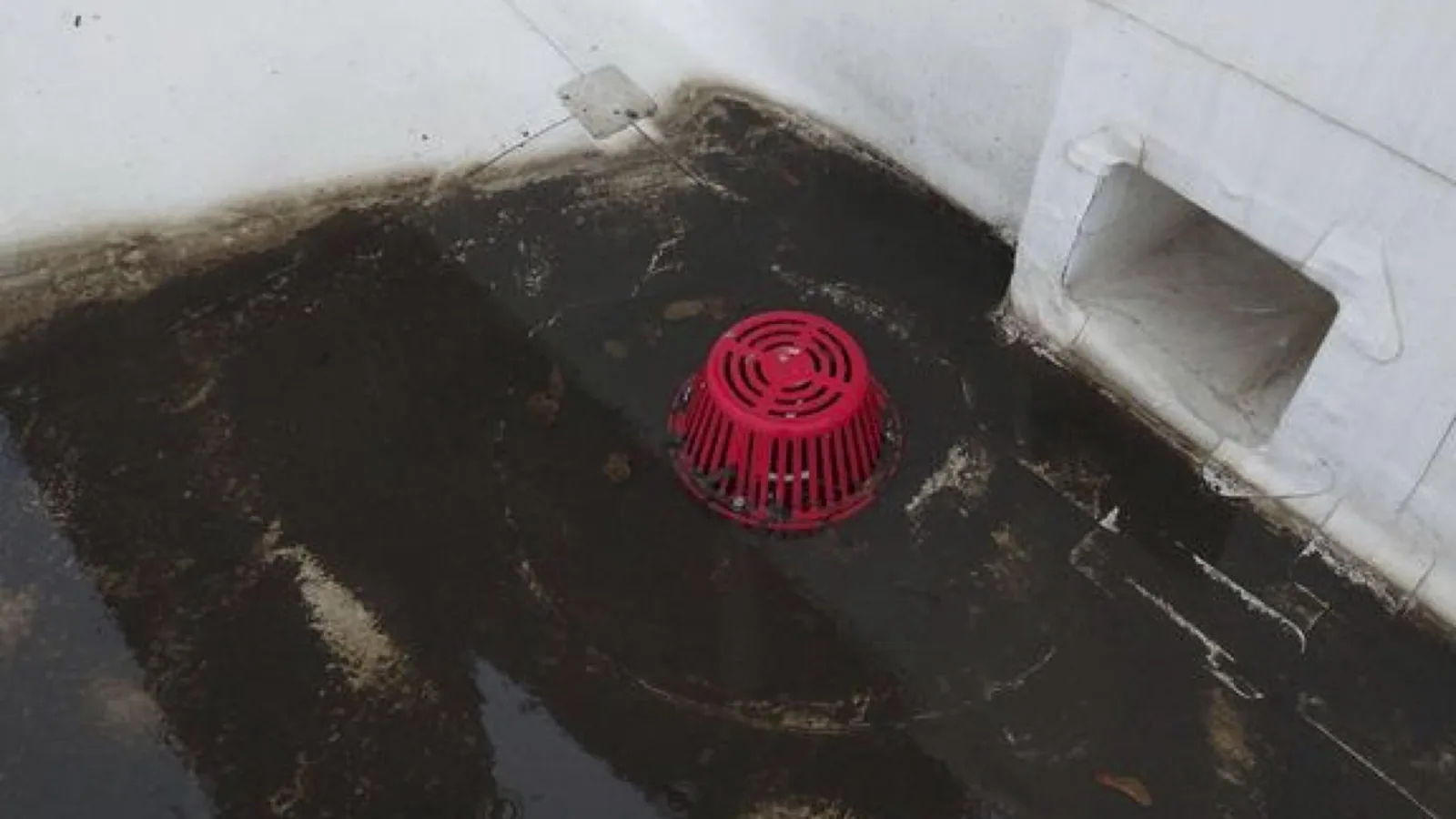
We start where water leaves the roof. A drain bowl, strainer, leader, scupper opening and downstream connection all affect performance. The roof walk checks for debris, loose components, standing water, cracked sealant, corrosion or a membrane gap around the flange. We note whether the outlet is clear at inspection and whether water appears to reach it from the surrounding area.
Scuppers need a clear opening and a route that discharges away from vulnerable walls or finishes. An overflow outlet should sit where it can relieve water if the primary drain slows. We examine the visible connection and document staining or erosion at the discharge. If piping or a concealed connection cannot be inspected from the roof, we identify that limit and coordinate with the building team before assuming the roofing detail is the only issue.
A cricket directs water around a curb or toward an outlet, but its shape and condition matter. We look for debris traps, low pockets and edges where water can return toward a flashing transition. A drain that appears clear can still be slow because of a downstream blockage or undersized piping; a roofer’s inspection records the visible roof detail and calls for plumbing review when needed.
Understand Persistent Ponding
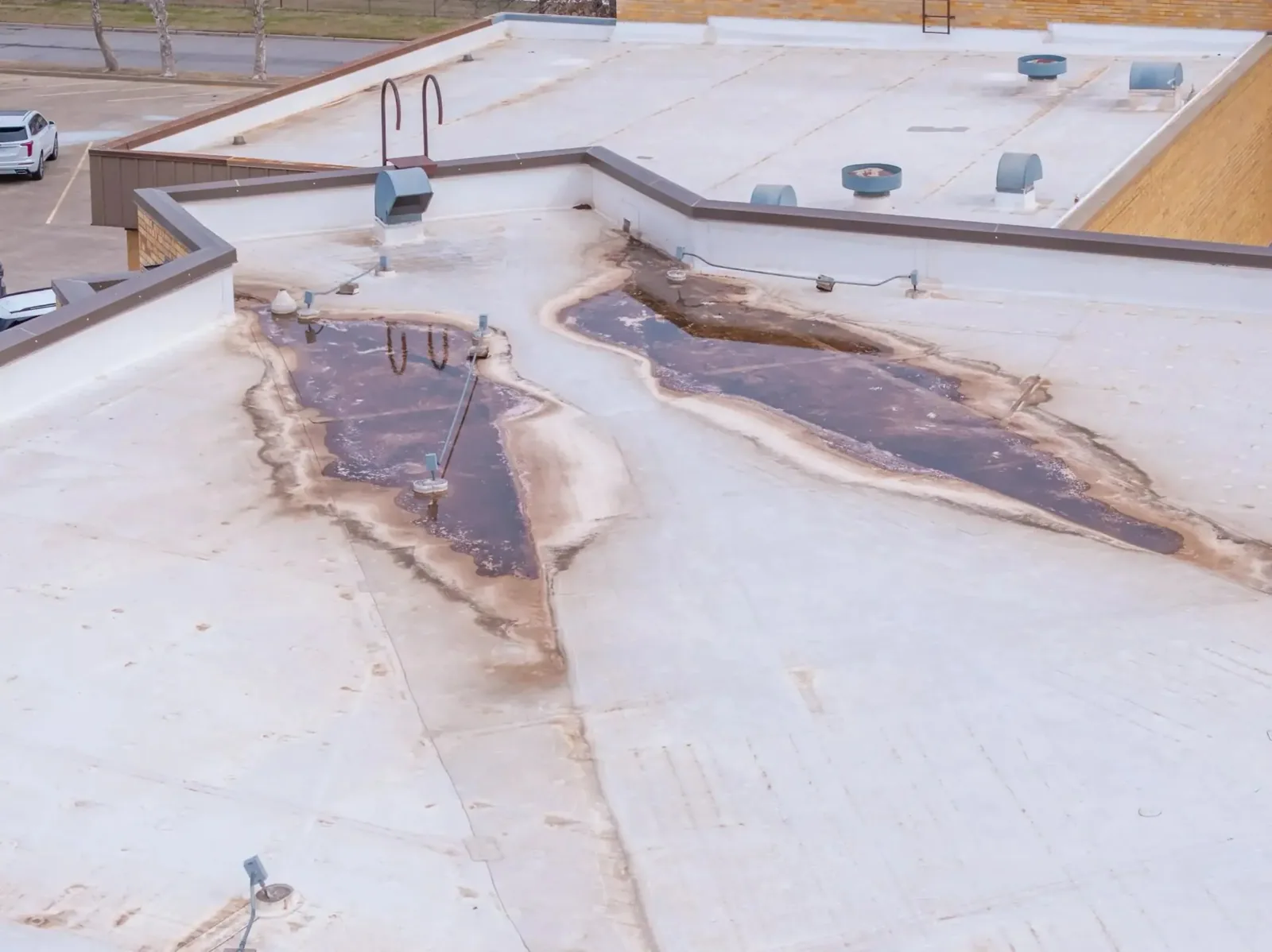
Water left after a storm can reflect blocked drains, deflected deck, inadequate slope, a poorly located outlet or a combination of factors. We record the depth and location visible during the visit, note how long water reportedly remains and compare it with roof geometry. The observation matters because persistent ponding can increase stress on seams and coatings and may expose weak flashing repeatedly.
Washington National Airport’s January normal snowfall is 4.9 inches. Any accumulation or freezing at the roof should be assessed at the drain and overflow detail. We use roof plans, slope measurements and project criteria to assess outlet capacity and drainage design. We document actual slopes, visible ponding and overflow routes, then identify if an engineer or plumbing contractor needs to evaluate a separate system.
Repair the Outlet Detail
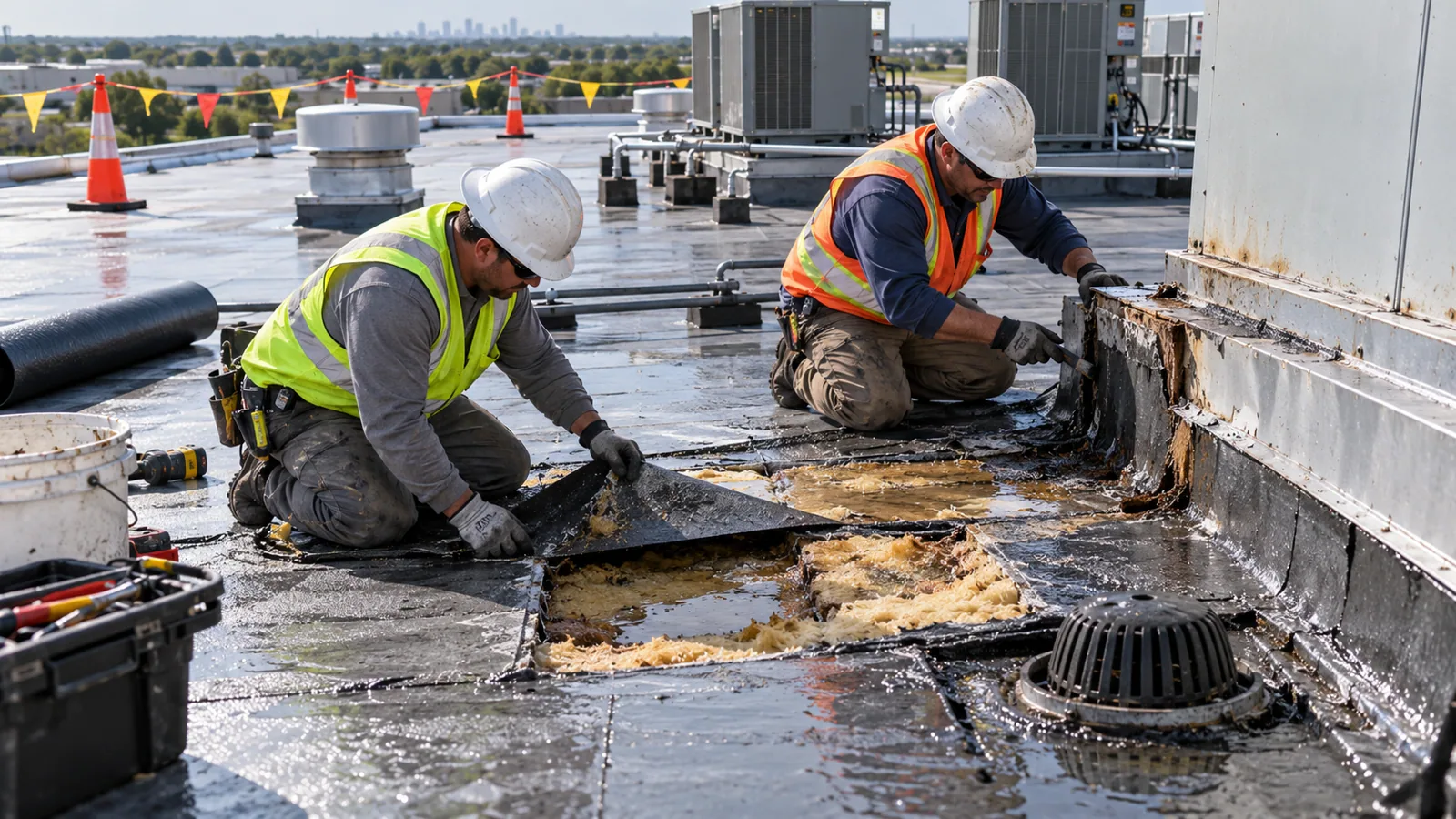
A drain repair may involve removing debris, replacing a damaged strainer, resetting a clamping ring, repairing the membrane flange or rebuilding flashing around a leader. A scupper correction can require a sound opening, secure metal, properly terminated membrane and a discharge that clears the wall. We identify each item and the materials that must connect, rather than treating a bead of sealant as the whole repair.
If the drain is lower than a new roof surface, a recover or replacement plan may need an extension or a changed bowl detail. If ponding comes from deck deflection or insufficient slope, clearing the outlet may not solve the low area. We separate those conditions and can price tapered insulation or broader work after measuring the roof. A tapered insulation scope may help establish drainage where the assembly and code allow it.
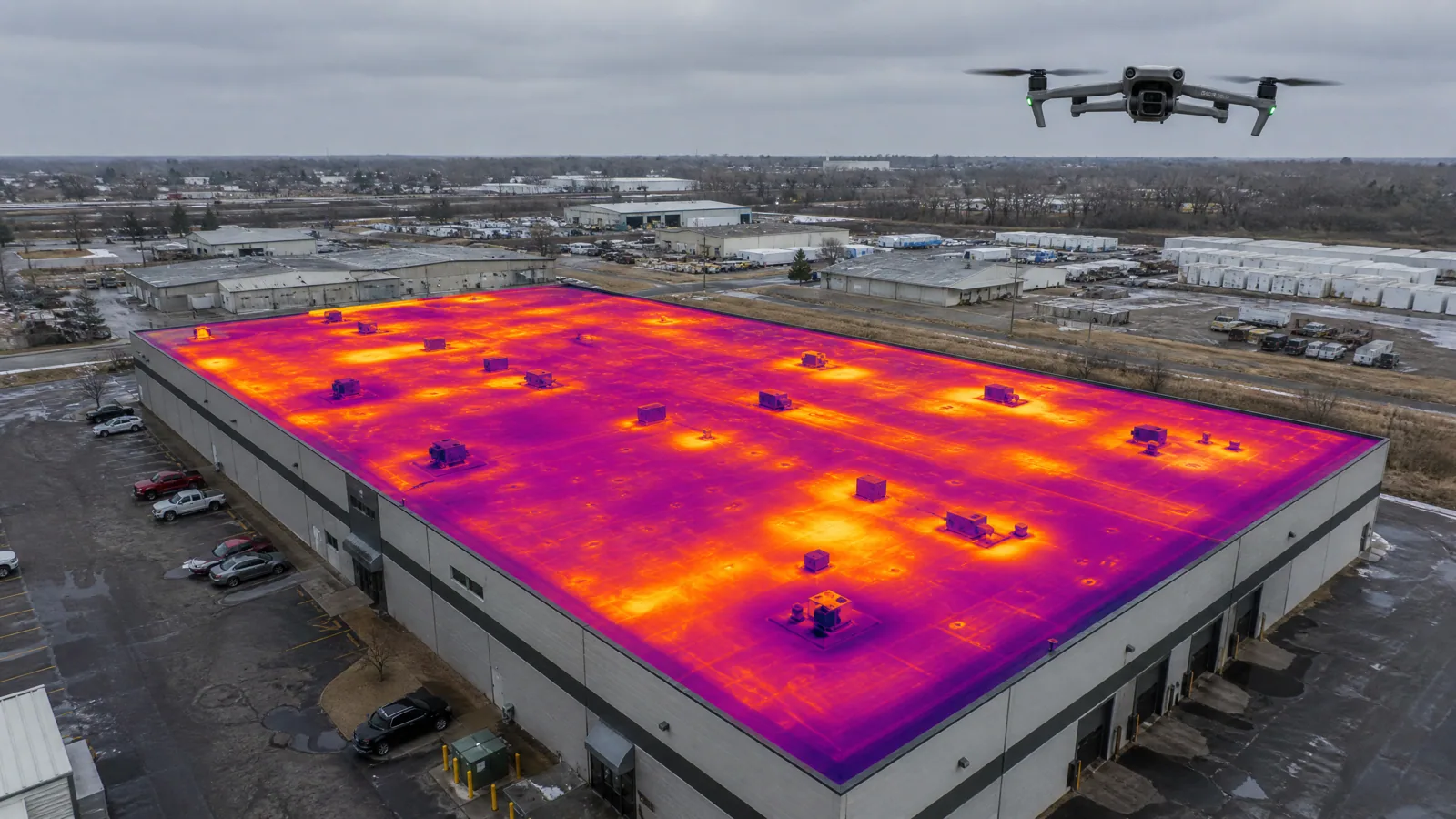
When the membrane around a drain is wet or deteriorated, test openings may establish how far removal should extend. We close each opening with compatible materials and record its location. A moisture survey can help choose test points across a larger zone, but thermal patterns still need physical inspection. The repair estimate distinguishes confirmed wet insulation from areas not yet checked.
Coordinate Roof and Interior Access
Drain work may require access to a roof hatch, ceiling space, plumbing chase or discharge point. We confirm the route and any escort requirements before the visit. In a multi-tenant building, the manager can identify rooms that need protection and the windows when water can be tested. If a controlled test is appropriate, we agree where water will flow and who can observe inside before starting.
Old Town North contains retail and commercial uses, and the former Potomac River Generating Station site is in redevelopment. Current loading and access limits come from the property team; we coordinate staging and work hours for the address. For a public-facing property, the work plan names which outlet is under repair and how the crew will keep the opening protected before leaving.
Cost and timing depend on outlet type, metal and membrane condition, pipe access, roof height, water testing, slope correction and whether wet insulation is found. The estimate separates cleaning, localized repair, new components and larger drainage changes. If a leak is active, temporary protection may be needed before the full outlet correction can be completed.
Keep Water Moving After Repair
After the repair, we photograph the bowl or scupper, show the membrane termination and confirm that the visible outlet is clear. Where water testing is planned, we observe the discharge route and note the result. We record any connection that could not be checked, so the manager knows what remains outside the roofing scope.
A maintenance visit can remove debris and check strainers before the next heavy-rain period. The visit also reviews overflow points, membrane around the outlet and any area that continues to pond. A preventive maintenance plan can track those observations, while a roof inspection can document other roof zones.
Share roof plans if available, leak timing, drain locations, prior repairs and the Alexandria address. We can review each drainage route, identify whether a roofer or another trade needs to act and provide a repair boundary with access needs. For properties in Old Town or Carlyle, include discharge restrictions and any interior contact for a controlled test.
Commercial Roofing Services
Commercial Roofing Questions
How can we tell if a roof drain is blocked or the roof has a low spot?
We inspect the strainer, bowl, surrounding membrane and visible slope, then compare ponding with roof geometry and drainage history. A blocked strainer is a direct maintenance issue; a low area may require slope correction or further review. The report separates what can be cleared from what needs measured design work.
Do scuppers need an overflow outlet?
The drainage design and applicable code determine the required arrangement. We document existing primary and overflow openings, their visible condition and discharge route. If a proposed repair changes roof height or drainage, the project team should confirm the required design and review before work proceeds.
Can you test a drain while tenants are inside?
A controlled water test may be possible if the building contact can identify the interior observation point and protect the space. We agree on the amount and route before beginning. If access or occupancy makes a test unsuitable, we document the visible roof condition and state what remains unverified.
Will replacing the drain fix all ponding?
A new drain corrects a failed outlet, but it does not change a low deck or reverse slope. We inspect the path from the low area to the outlet and identify whether debris, bowl condition or roof geometry is involved. The estimate separates outlet replacement from slope work so the owner can choose based on evidence.
What should be included in a drain repair scope?
The scope should identify the outlet, membrane or metal work, strainer and ring, discharge access, any test opening and water testing. If a pipe connection is concealed, the estimate notes who will inspect it. Photographs before and after help the manager confirm the repair location and future maintenance route.
Review the Roof Drainage Route
Send the Alexandria address, drain locations, ponding or leak history, roof plans and access window. We will inspect the outlets and transitions, identify the entry point of delay and outline repairs or testing.