



 Services
 Roof Systems
 Property Types
 Industries
 Damage Repair
 Capabilities
 Manufacturers
 Service Areas
KEE Commercial Roofing in Alexandria, VA
Roof Systems:
A white membrane near a kitchen exhaust may show discoloration or softened material where grease and heat reach the roof. KEE roofing is a PVC-alloy membrane that may be considered when chemical exposure is part of the project review. The exact product formulation and exposure need confirmation before selection. In Alexandria, heavy rain and hot summer conditions also make drainage, seam work and flashing important to the assembly.
We inspect the current roof, identify exhaust and equipment locations, check seam and membrane condition, and document how water leaves the roof. Old Town retail and civic properties and Carlyle office blocks have different operating demands, but the membrane choice follows the actual roof. Compare a PVC system or TPO system when other exposure and project requirements favor those options.
KEE Commercial Roofing
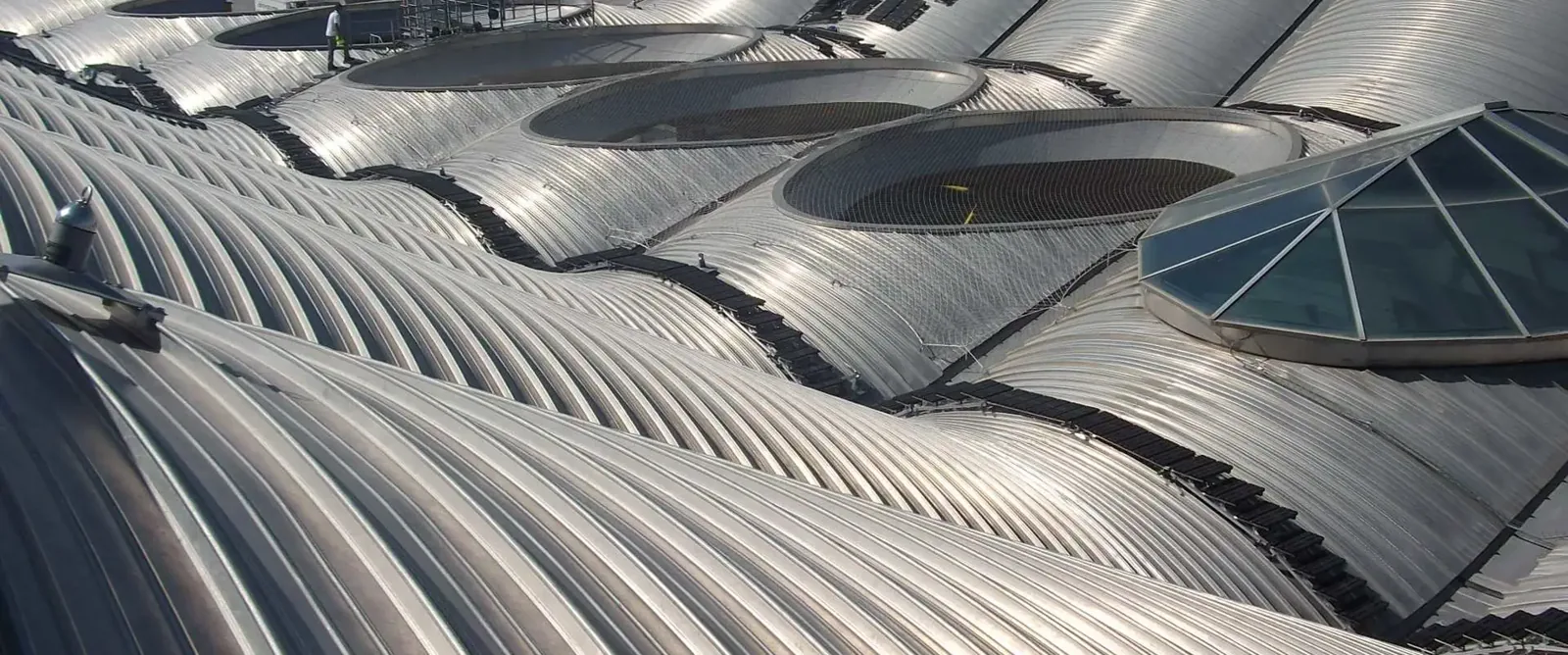
Confirm the Specified Product
KEE is a PVC-alloy membrane formulation. Product lines vary in reinforcement, thickness and approved installation details, so we use the exact specification for the proposed system. We do not assume that a name on an old roof plan identifies the sheet now in place. Field markings, samples, repair records or a test area can help confirm the membrane before a compatible repair is selected.
Chemical resistance is not a blanket answer to every exhaust condition. We ask what substance reaches the roof, where it discharges, how often it occurs and whether deposits are visible. A kitchen exhaust plume, process vent or cleaning chemical can affect nearby seams and flashing differently. If exhaust needs redirection or a duct repair, we coordinate that correction with the mechanical team before completing nearby flashing.
Old Town’s King Street business area includes retail, lodging and civic properties, while Old Town North combines commercial uses with redevelopment. We inspect exhaust routes, membrane surfaces, drains and nearby details at each property, then coordinate deliveries and maintenance access with the building contact.
Inspect Welds and Edges
KEE and PVC membranes use heat-welded seams when installed as specified. Weld strength depends on sheet cleanliness, dry surface, machine settings, temperature and technique. We check seam edges after cooling and examine corners, penetrations and curb transitions where a field sheet meets flashing. A dark mark or surface stain is not proof that the weld has failed, so we test the relevant detail.
At penetrations, we check that the membrane turns up the curb or boot and terminates above runoff. If equipment sits close to a parapet, runoff and access may be limited. A curb can move or collect grease, and a pipe support can abrade the field. We record each condition separately and identify whether repairs require HVAC coordination or a different access window.
If a seam has opened, the repair method depends on its age, material condition and contamination. Cleaning, preparing and welding compatible sheet may restore the area, but a surface coating cannot substitute for a sound seam.
Build the Supporting Layers
A KEE membrane sits above a roof assembly selected for deck, slope, insulation, attachment and the project design. We review whether the existing substrate can accept the proposed membrane and whether insulation is dry. Test openings may be needed when leak history or surface conditions suggest concealed moisture. A test opening shows the layers at its location; the report marks that roof zone and any separate area needing review.
Cover board can create a stable membrane substrate and protect insulation from construction traffic. The required board, fastening and membrane attachment come from the design documents and specified product. A roof insulation review can set the removal and replacement boundary when existing layers need work. If the assembly is stable, recover eligibility still requires height and project review.
New roof thickness changes drain bowls, scuppers, curb heights and coping relationships. We measure transitions before setting the membrane detail. Alexandria’s low elevation and Potomac proximity make overflow paths relevant during heavy rain. A drainage review can align outlets and membrane terminations with the finished assembly.
Plan for Local Weather and Operations
Alexandria’s normal July high at Washington National Airport is 89.6 degrees, while winter normals include an average low of 30.1 degrees. That range affects roof surface temperature and the timing of some installation steps. The crew follows the membrane’s preparation requirements and schedules welding when surface conditions are suitable. We check actual roof temperature and surface conditions before setting the installation window.
Rainfall and tidal flooding are different concerns. We check whether the roof has a clear drainage route and whether a detail permits water entry. After heavy rain, we inspect drains and flashing for blockage, open transitions and water marks. We document observed conditions, water marks and active leaks separately.
At Landmark, planned redevelopment includes Inova Alexandria Hospital and associated medical facilities. In North Potomac Yard, Virginia Tech’s academic campus and approved offices are part of active development. An institutional roof project needs site-specific coordination for equipment, access, escorts and work windows. The building contact confirms equipment controls, access and work windows before mobilization.
Compare KEE With Other Assemblies
KEE may be considered when the specified product and exposure align, but the whole assembly still determines suitability. We compare membrane formulation, attachment, insulation, chemical contact, seam details and repair access. A modified bitumen assembly or EPDM system may serve a different building condition. The proposal explains why the selected option fits the actual roof.
Cost and timing depend on removal depth, insulation, cover board, curb and drain work, rooftop equipment, access and preparation. If an existing membrane is unidentified or contaminated, testing may be needed before materials are priced. We list assumptions and identify any needed exhaust correction or structural review before pricing the roof work.
If moisture or repeated failure extends beyond a small detail, localized KEE repair may not be the only option. A repair assessment can define discrete work, while broader failure may warrant a replacement comparison. The owner receives separate boundaries and evidence for each option.
Keep the System Identifiable
Closeout identifies the installed KEE product, attachment, seam work, flashing details, drains and photographs. We note repairs that were completed and conditions left outside the approved scope. Keeping product records with the building plans helps future crews choose compatible materials and avoid guessing from color or texture.
A roof condition record can carry the installation, test points and remaining recommendations into future budgeting.
Provide the Alexandria address, roof plans, known membrane product, exposure details, leak history and access window. We will inspect the assembly and identify which points need testing before recommending KEE or another system. For work at Old Town North, include exhaust, loading and tenant constraints.
Roof Systems
Commercial Roofing Questions
What makes KEE different from standard PVC?
KEE is a PVC-alloy formulation; product specifications vary in composition and properties. We confirm the specific membrane and exposure before selecting repair materials or a new system. A product comparison should include assembly, seams and details, not only the membrane name.
Is KEE a good choice around restaurant exhaust?
It may be considered where the specified product suits the documented exhaust exposure. We inspect discharge, heat, grease deposits, seams and drainage, and confirm any chemical compatibility with product requirements. The exhaust system may also need service to keep discharge from affecting the new roof.
Can you weld a repair to an existing KEE roof?
A compatible weld may be possible when the sheet is identified, clean and in suitable condition. We test or inspect the material, prepare the repair area and check the seam after cooling. Contamination, coating or an unknown patch can require a different method.
Does Alexandria weather change KEE installation?
Roof surface temperature, moisture and rain affect preparation and welding conditions. We use the selected product’s installation requirements and schedule work when the membrane can be prepared correctly. Regional climate normals help plan, but actual conditions on the roof control the day’s work.
What records should we keep after KEE installation?
Retain the product specification, attachment information, photos, seam checks, flashing details and locations where testing was performed. The record helps future service teams select compatible materials. Note any chemical entry point or roof zone that remains outside the project scope.
Review KEE for Your Alexandria Roof
Send the Alexandria address, membrane records, exhaust details, leak history, plans and access window. We will inspect seams, transitions and drainage and compare KEE with other suitable assemblies.