 Services
 Roof Systems
 Property Types
 Industries
 Damage Repair
 Capabilities
 Manufacturers
 Service Areas
Emergency Commercial Roof Repair in Alexandria, VA
Commercial Roofing Services:
Heavy rain can overwhelm a low point before anyone sees water inside. At a Carlyle office or a King Street retail property, the first call is about protecting people, equipment and the space below while locating the roof condition that needs attention. Our emergency line is answered around the clock, every day, including holidays. We gather the address, active symptoms, roof access details and building contact, then plan a safe response that fits the conditions at the property.
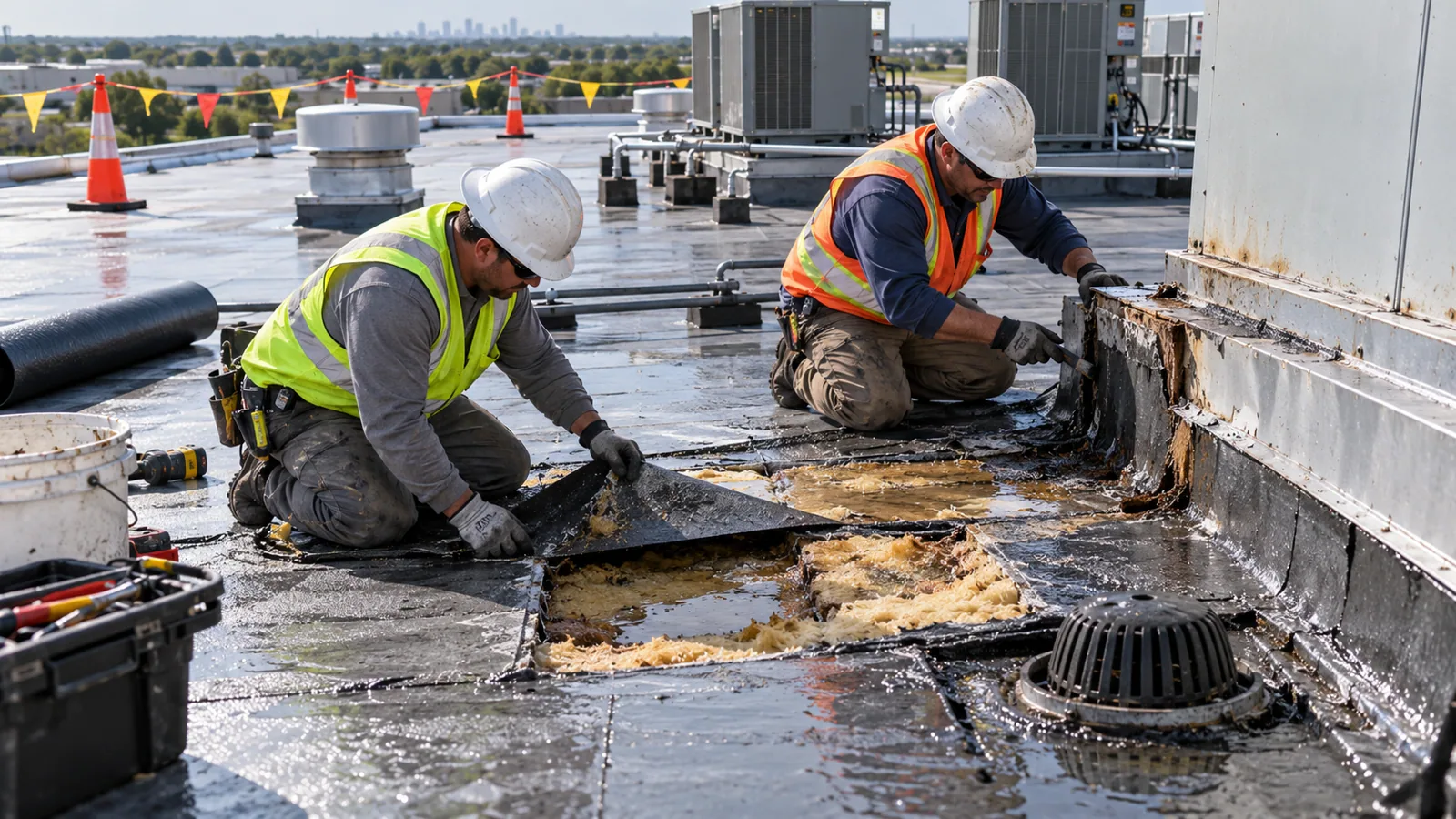
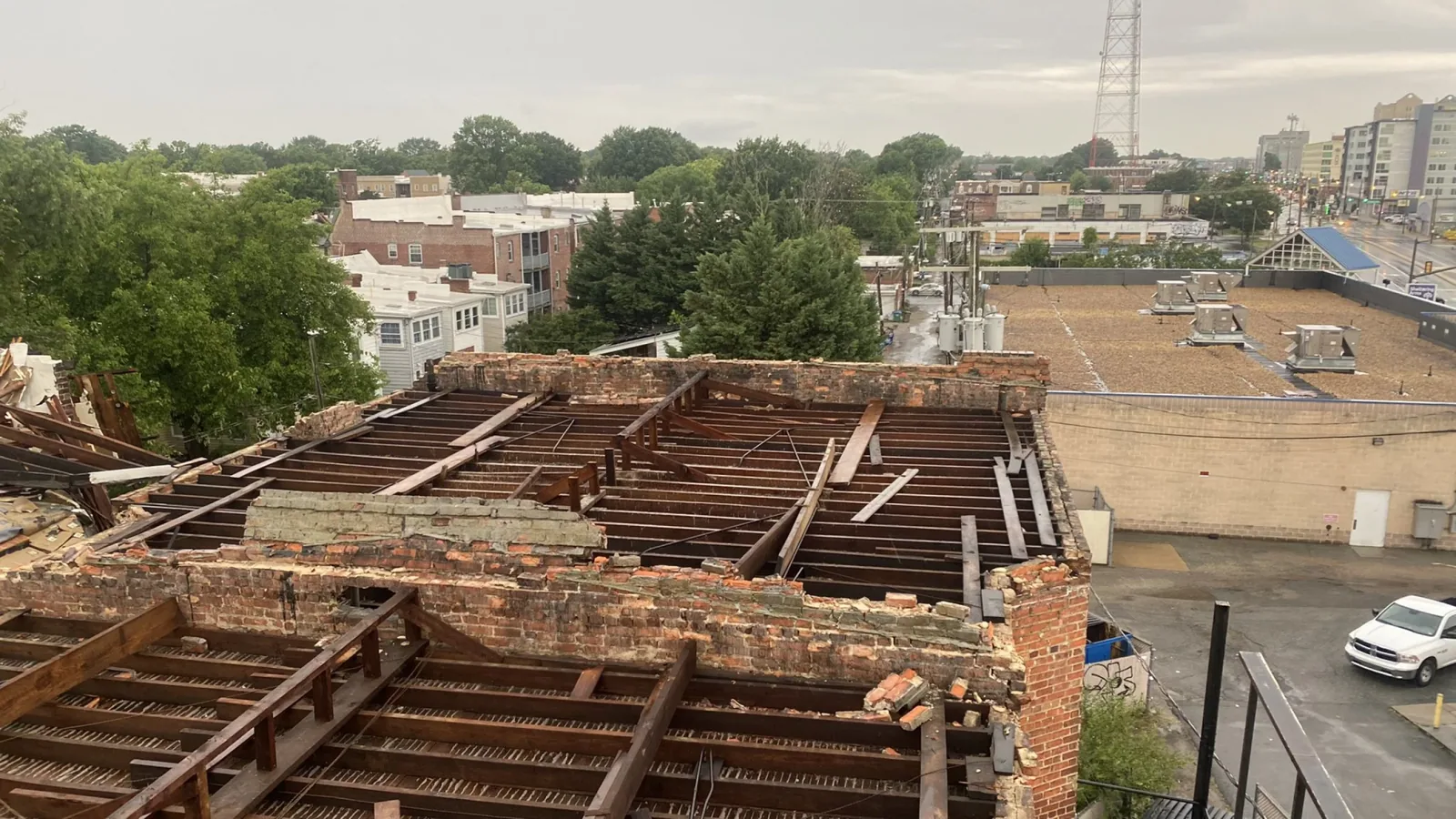
Emergency work has two distinct aims: limit ongoing water entry and establish what permanent repair will require. A temporary dry-in may reduce exposure, but it is not the same as a completed repair or proof that concealed insulation is dry. We photograph the affected area, state the temporary boundary and identify follow-up work. When the immediate condition is stable, a broader commercial roof repair can address the confirmed defect without losing the record of what happened during the response.
Emergency Commercial Roof Repair
Start With Conditions on Site
Tell dispatch whether water is active, which rooms are affected, whether equipment is exposed and who can provide roof access. Share safe interior photos, but do not send staff onto a wet roof. The site contact can isolate the room and protect equipment below.
Rain intensity, wind, lightning, darkness and roof height can change what can be done immediately. A crew may be able to protect a reachable opening while postponing work on an exposed edge or slick surface. We explain that distinction before access begins. Alexandria’s extreme heat and coastal flooding along the tidal Potomac make drainage and exposed transitions important roof checks. The crew inspects the reported building and documents what it finds.
We use the address and site contact to confirm gates, loading locations and access windows. At an occupied building, the contact should identify restricted areas and any tenant notice needed. That information keeps a fast response orderly without assuming the same entry procedure at every property.
Limit Water Entry Safely
Once access is safe, the crew checks the roof zone and nearby transitions. A ceiling drip may be several feet from an open seam, failed curb flashing or puncture. We trace water toward the likely entry point, inspect drainage and record debris or ponding. If the assembly is hidden below the surface, we identify the planned test before opening the roof.
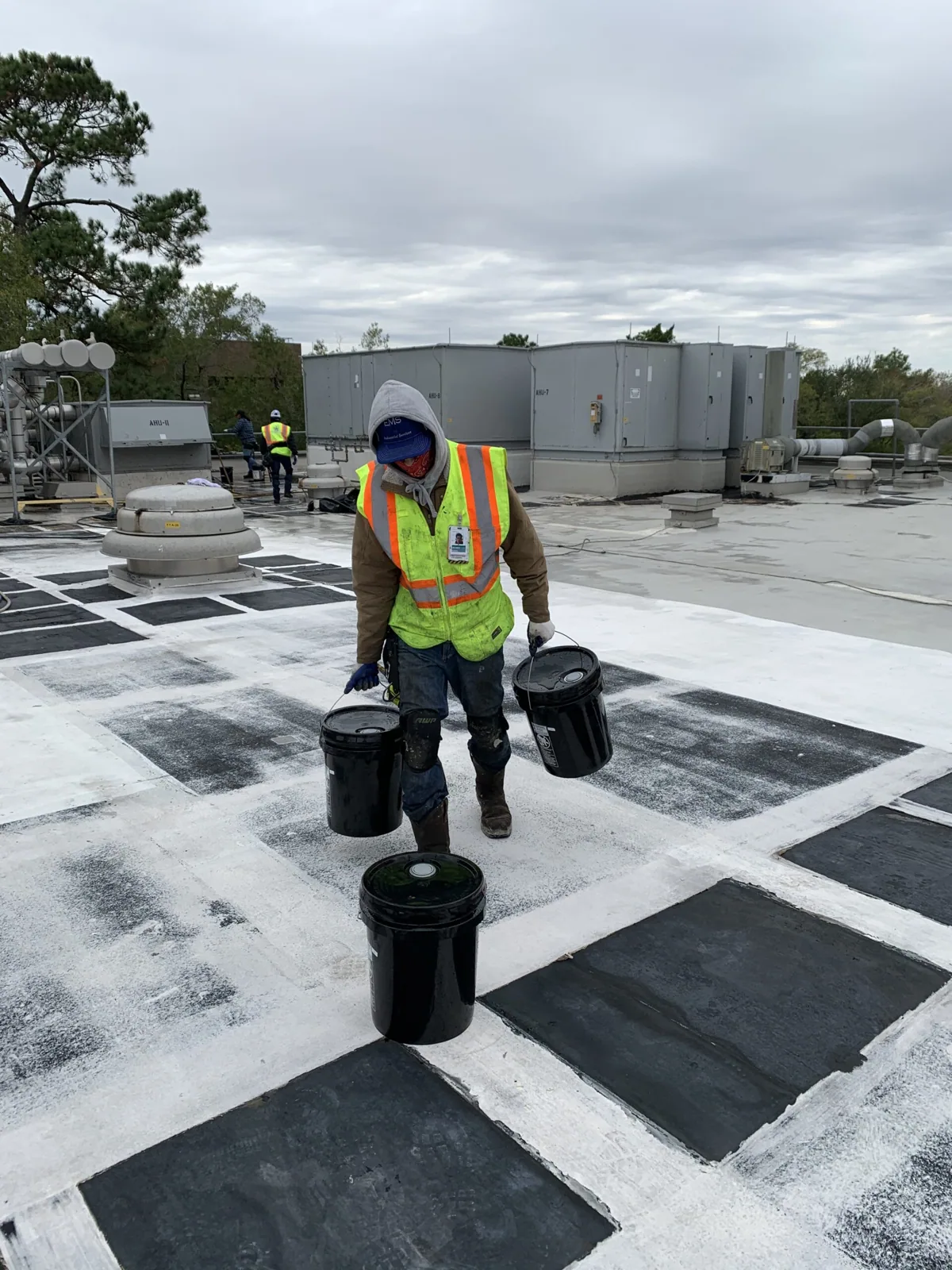
Temporary protection may involve securing a compatible patch, covering a localized opening or installing a dry-in that sheds water away from vulnerable interior areas. The right measure depends on membrane condition, wind exposure, surface moisture and the time needed to prepare a permanent repair. Loose plastic or an unweighted cover can create a hazard in wind, and an improvised seal can trap moisture. The crew documents where the temporary material begins and ends, how it is secured and what weather may require another visit.
We coordinate interior protection with the building contact, identify the affected room and clarify whether ceiling removal or drying falls outside the roof response. Temporary roof work does not replace electrical review, water extraction or restoration by the appropriate trade.
Record What the Crew Finds
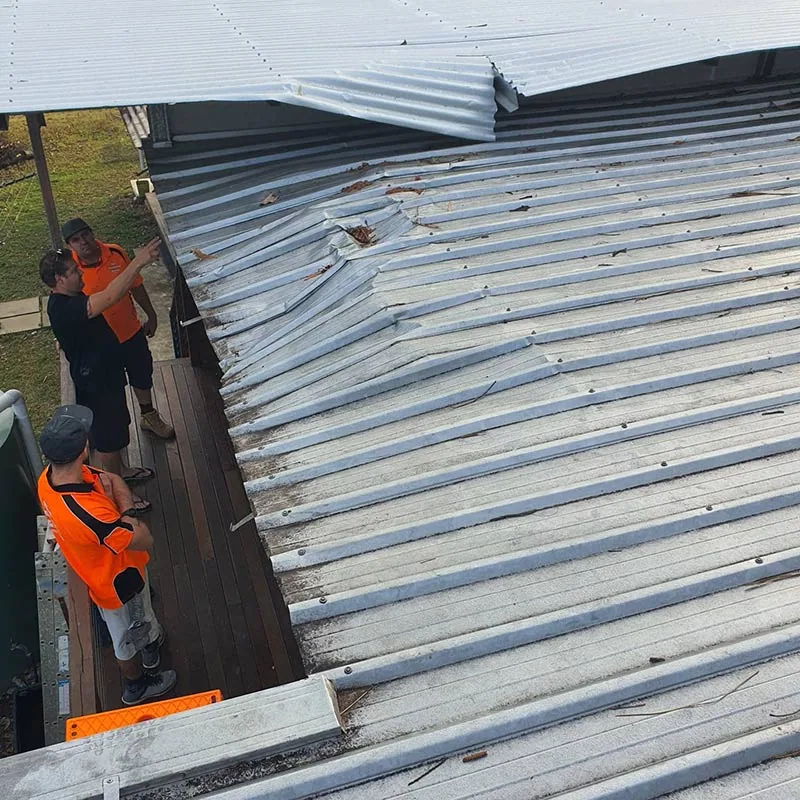
Emergency records should distinguish observed conditions from likely causes. Photos can show an open lap, displaced edge, damaged penetration flashing, blocked drain or surface puncture. We record the roof system when identifiable, visible prior repairs, moisture indicators and any area weather or access kept us from checking. That record supports a permanent scope and prevents the temporary measure from being mistaken for a complete correction.
At Washington National Airport, January normals pair a 30.1°F average low with 4.9 inches of snowfall. Cold conditions can affect a bond, weld or sealant, so the crew may protect the opening first and schedule durable work when the roof surface is ready. Summer heat also affects worker safety and material handling. The response reflects actual conditions.
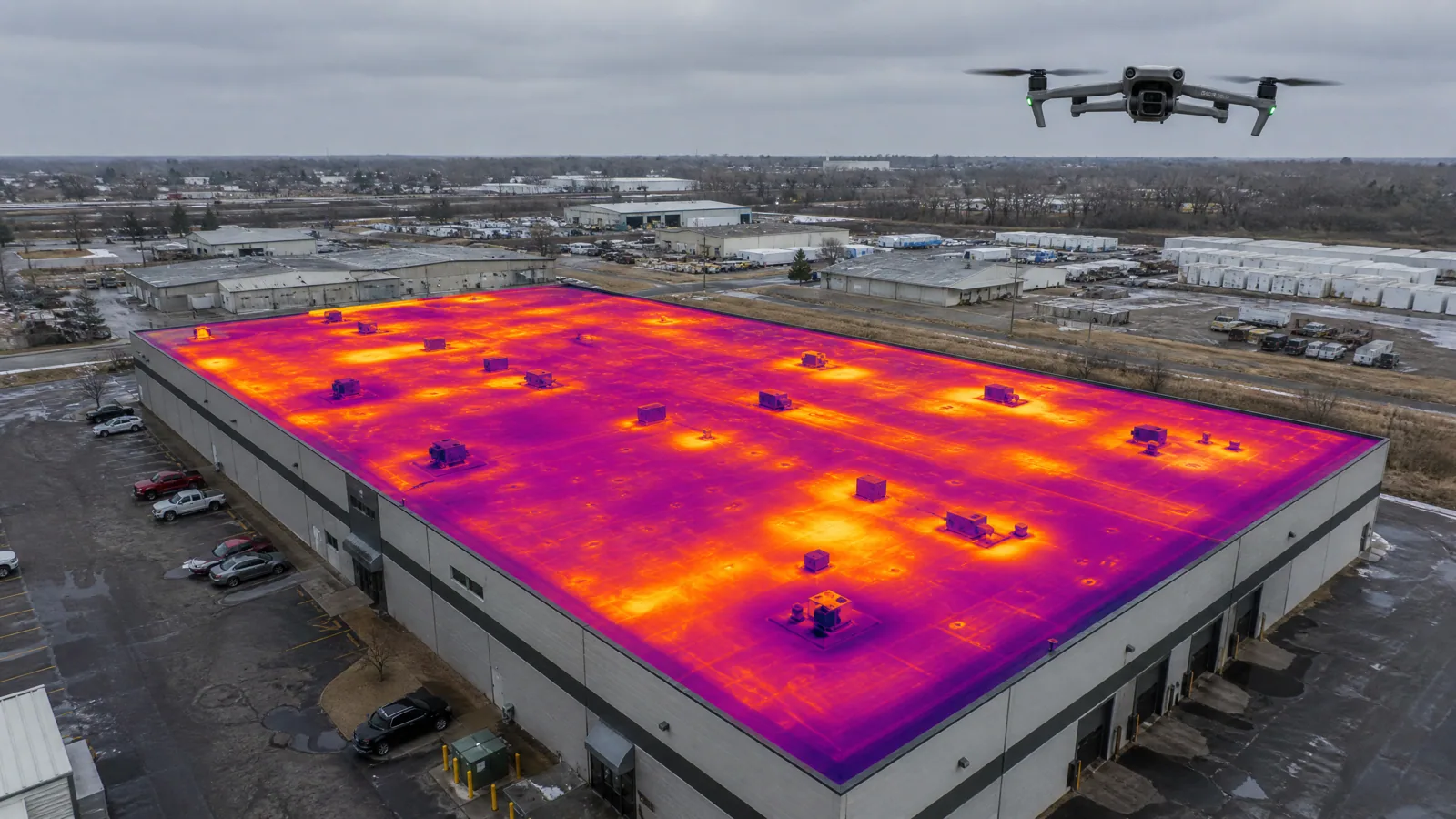
If broad roof areas or upper roof sections are inaccessible, imagery may help plan the next visit. A drone roof inspection can map visible surface conditions, while hands-on inspection is still needed to test a seam or flashing detail. If moisture appears to extend beneath the membrane, a targeted infrared moisture survey may guide test openings. Each additional check is proposed for the question it can answer, not as a substitute for a confirmed repair boundary.
Plan the Durable Correction
Permanent scope follows the damaged component. A membrane puncture may need a compatible patch with prepared edges. A separated seam needs repair appropriate to the system and its condition. A curb leak can require rebuilding flashing rather than covering the joint. If insulation is wet, we determine the removal boundary at a test opening and show that work separately. When drainage contributes to the problem, a drain or scupper correction may be needed alongside the membrane repair.
The estimate states material, access and schedule drivers, including interior access, equipment shutdown, tenant coordination, a lift or return visit. The applicable code review depends on the repair scope and project requirements.
Some incidents expose older conditions beyond the immediate opening. If multiple seams have failed or wet material reaches several areas, the owner can compare a focused repair with a larger phased scope. Replacement planning can be considered when the assembly condition supports it. A separate wind-damage assessment can document visible edge or attachment concerns. We keep each alternative tied to observed conditions so the response does not expand without a reason.
Keep the Handoff Clear
Before leaving, the crew records completed temporary work, the materials used, photos, safety or access limitations and the next recommended action. The property contact receives a direct explanation of what is protected and what remains open. If another storm arrives before permanent work, the records clarify when a follow-up inspection is needed. This handoff lets a general contractor coordinate roof repair with interior drying, ceiling work and tenant communication.
We confirm contact, work hours, staging and access with the person responsible for the address. A facility with public-facing operations needs a defined work zone and sequence. A condition report can carry findings into later maintenance or capital decisions.
Commercial Roofing Services
Commercial Roofing Questions
Can the crew come out while it is still raining?
We answer emergency calls at all hours and assess what work is safe under current conditions. Active lightning, high wind, standing water or limited visibility can restrict roof access. If a crew cannot safely reach the opening, we explain the interior protection steps available and return when conditions permit. Safety and a stable temporary measure determine the immediate sequence.
Does emergency dry-in count as the permanent repair?
A dry-in limits exposure for the area it covers and buys time for a prepared repair. Its boundaries, materials and weather limitations should be recorded. The permanent scope may require removing temporary material, preparing the roof surface, replacing wet insulation or rebuilding flashing. We identify that follow-up work separately so the temporary visit is not confused with final closeout.
What information helps you respond faster?
Give us the street address, a callback contact, where water is entering, when it began, whether it is still active, and how roof access is arranged. Photos from a safe interior location can help identify the likely roof zone. Mention sensitive equipment, tenants or restricted rooms so the crew can bring the right protection and coordinate arrival with the building contact.
Will you inspect the entire roof during an emergency visit?
The first visit focuses on a safe route to the reported condition and any nearby detail needed to stop active water. Weather, visibility and access may limit a broader survey. We record those limits and can schedule a separate inspection for remaining roof zones. An emergency response should leave a clear boundary between urgent work and a full condition assessment.
How do you handle an occupied Alexandria building?
We coordinate entry, work area, loading and interior access with the site contact. Carlyle offices, Old Town retail and institutional properties can have different operating hours and restricted areas, so the address alone does not set the schedule. The contact can identify notices or access constraints, and our scope states the sequence needed for roof protection and any return visit.
Get an Emergency Roof Response
Call with the Alexandria address, current water conditions, a site contact and any roof or interior access restrictions. We will assess safe immediate protection, document its limits and set the next repair step.