



 Services
 Roof Systems
 Property Types
 Industries
 Damage Repair
 Capabilities
 Manufacturers
 Service Areas
Commercial Roof Seam Failure Repair in Alexandria, VA
Roof Damage Repair:
- Wind Damage Roof Repair in Alexandria, VA
- Ponding Water Roof Repair in Alexandria, VA
- Commercial Roof Flashing Failure Repair in Alexandria, VA
- Commercial Roof Seam Failure Repair in Alexandria, VA
- Commercial Roof Membrane Puncture Repair in Alexandria, VA
- Commercial Roof Fire Damage Repair in Alexandria, VA
An open roof seam can admit water at the lap while the interior drip appears somewhere else. The roof plane, insulation or deck can carry moisture before it becomes visible. We inspect the seam, adjacent membrane and drainage path, then define the area that evidence supports. Alexandria, VA combines intense rain, hot summers and winter freeze-thaw. Those conditions put seam transitions, drains and perimeter laps on the inspection route.
Office and mixed-use buildings in Carlyle and Eisenhower East sit along Eisenhower Avenue and Mill Road; Route 1 serves commercial areas in Potomac West. Each roof needs a seam repair suited to its membrane, lap detail and repair history. A flashing failure or wind-exposed edge can interact with a seam leak, but each condition needs its own inspection.
Commercial Roof Seam Failure Repair
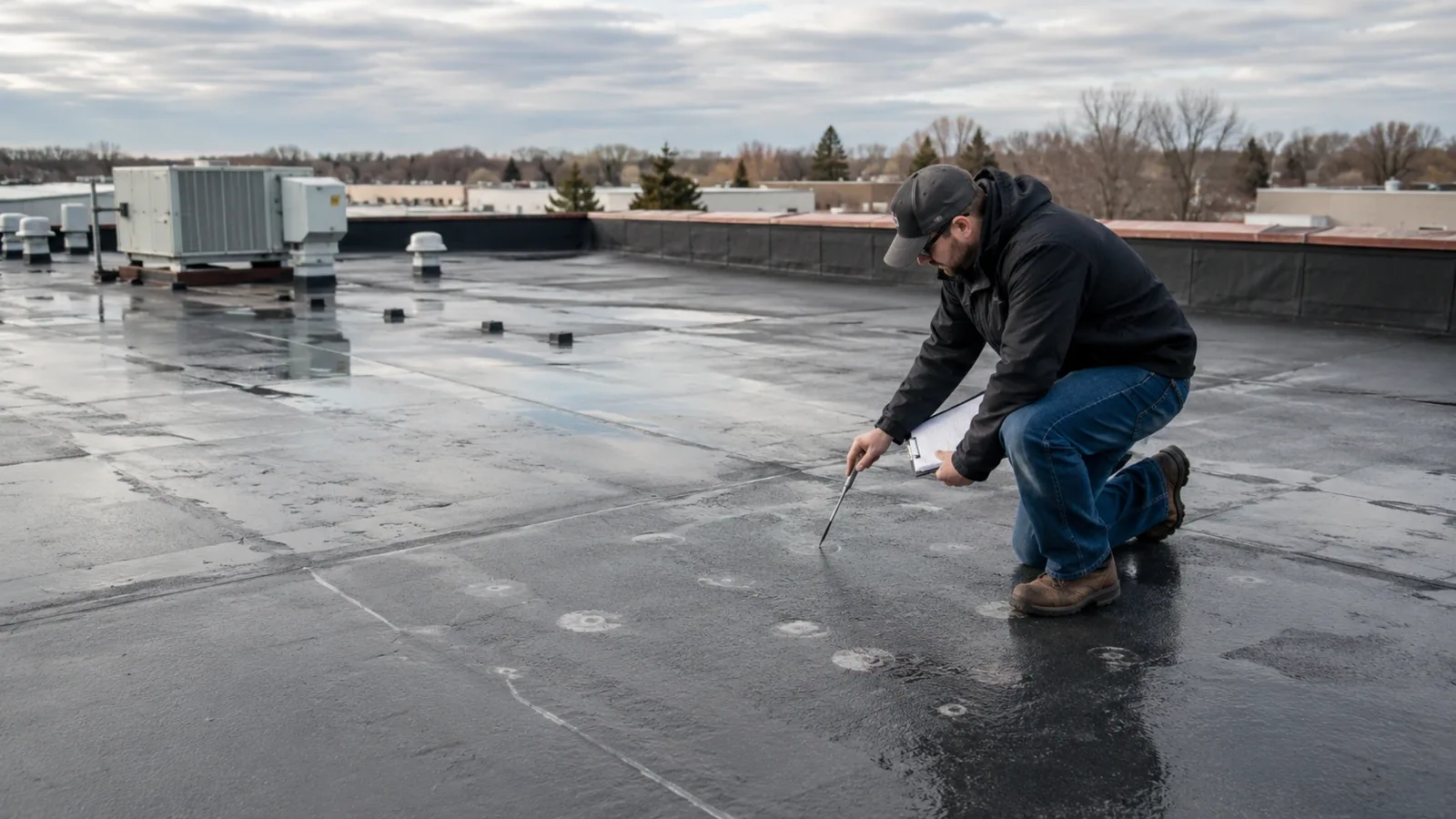
Read the Lap and Its Surroundings
The seam method follows the membrane in place. On a thermoplastic roof, we inspect weld width, contamination, wrinkles and changes in direction. For EPDM, we check the lap edge, adhesive and cover strip. Modified bitumen has its own lap and surfacing details. A commercial roof inspection records the material and condition with photographs that locate the defect within the roof zone.
Seam failure can occur near a penetration, corner, wall or previous repair. We inspect the nearby flashing and attachment, plus any water marks or wet material indicators. A seam that appears open may be a visible symptom while drainage or substrate movement contributes to the condition. The report identifies what is confirmed and whether a controlled test is needed to understand concealed layers.
If moisture below the lap is uncertain, a test opening can confirm insulation and deck at an approved point. We coordinate the opening with the owner, protect the area below and restore the roof as planned. Infrared readings can point to areas for closer inspection; a test opening shows the insulation and deck at that location. The tested location and untested boundaries stay distinct in the final record.
Use a Compatible Seam Method
Repair begins with a clean, dry surface and removal of loose or contaminated material to a stable boundary. A thermoplastic membrane can be heat-welded when the material and conditions permit; EPDM uses compatible adhesives and seam accessories; modified bitumen requires a detail matched to its construction. The repair method changes with the membrane and lap construction. The scope names the system, preparation and repair detail.
A TPO seam repair may involve probing and re-welding or installing compatible reinforcement if the membrane condition requires it. For an EPDM or other assembly, the repair may need a different patch configuration. If the substrate is soft, insulation is wet or the seam separates over a long run, the repair boundary may extend beyond the visibly open lap.
Where a seam connects to a curb, drain or wall transition, those interfaces are inspected before the repair is closed. A puncture correction may be a separate item if the surface also has a cut or impact mark. Each confirmed condition is listed by location so the owner can see whether the proposal includes one seam or a group of related defects. The repair record includes where the lap meets a drain, curb or wall and whether that junction needs separate work. A seam repair is closed only after the specified material has bonded or welded across the planned boundary and the adjacent surface is ready for service.
Limit Exposure Before Final Repair
If water is actively entering, emergency response is available at any time, including weekends and holidays. For active water, emergency response is available at any hour, including weekends and holidays. Temporary protection can limit entry until the crew can prepare a compatible permanent seam repair.
The property contact identifies rooms, inventory, equipment and routes below the seam. We coordinate barriers and any interior access before roof material is opened. If a long seam repair crosses an occupied area, the plan can divide it into sections with a weather-tight closeout at each shift. A roof opening should not be left exposed because another part of the building remains available.
For work near Potomac Yard, the contact confirms loading, roof entry and any restrictions around active development or transit access. Roof entry, deliveries and staging follow each building’s own operations and access route.
Check the Repair Over Time
At completion, we photograph the prepared lap, finished seam and nearby transitions. If testing revealed wet insulation or deck damage, the report shows what was included and what remains outside the work. The owner can keep those locations with the roof plan so later inspections return to the same seam boundaries. A thermoplastic lap also needs a clean welding path, with nearby fasteners and membrane kept clear of heat damage. For EPDM, the repair surface and cover strip need compatible adhesive and a firm bond across the prepared edge. The crew should test the repaired seam after cooling or cure, then photograph the finished lap and adjacent transitions.
Follow-up checks can look for edge lift, contamination, new wrinkles or water marks beside the repaired lap. A maintenance inspection can record change before another interior report arrives. For multiple buildings, each seam is tracked against its own membrane type and exposure. The closeout also identifies any area the crew could not reach.
Send the Alexandria address, roof plan if available, leak location and access contact. We will identify the membrane, inspect the seam and prepare a repair detail that fits the installed assembly.
A seam repair checks both sides of the lap, nearby corners, penetrations and the attachment that holds the membrane in place. Loose or wrinkled field membrane can concentrate movement beside a short patch. Moisture below the lap may require a test opening and a wider repair boundary. The scope identifies seam length, surface preparation and tie-in material, then compares a local weld or cover strip with a section repair when neighboring laps show the same wear.
Roof Damage Repair
Commercial Roofing Questions
Why do commercial roof seams open?
Movement, contamination, poor preparation, material incompatibility or a compromised substrate can affect a lap. We inspect the seam and adjacent assembly to identify the visible condition. If a concealed cause is possible, targeted testing may be needed before widening the repair.
Can an open seam be repaired without replacing the roof?
A local repair can work when the membrane and substrate around it remain serviceable. We check the seam length, nearby insulation, attachment and transitions. If the defect repeats or extends beyond a stable boundary, a larger repair or replacement comparison may be warranted.
How do you know whether a seam is TPO or EPDM?
We use roof records and field characteristics to identify the installed membrane, then confirm the repair detail against the material. If records are missing or the surface is obscured, a close inspection or test point may be needed before selecting products.
Will seam repair stop a leak immediately?
We can assess active entry and temporary protection, then complete a permanent compatible repair when the surface and weather permit. The water path may involve another detail or wet insulation, so we inspect the affected zone and identify follow-up work if moisture or damage extends beyond the lap.
What should be checked after a seam repair?
Review the repaired lap, adjacent membrane, nearby penetrations and drainage for continuity, then retain photographs by roof zone. A later maintenance visit can compare the same area for movement or water marks. Any untested boundary should remain recorded in the record.
Inspect a Split Roof Seam
Share the address, leak location, roof plan and access contact. We will identify the membrane and document a seam repair boundary supported by inspection.