



 Services
 Roof Systems
 Property Types
 Industries
 Damage Repair
 Capabilities
 Manufacturers
 Service Areas
Commercial Roof Recover in Alexandria, VA
Commercial Roofing Services:
Heavy rain on the Potomac can overwhelm a drainage route that already holds water at a low point. A recover adds another roof layer, so the new membrane must not hide moisture, weaken attachment, or leave drains and curbs too low. In Alexandria, overlay is a condition-based option. We inspect the existing assembly, test representative areas, and mark what can remain before recommending another layer.
That distinction matters in places with different building uses. Old Town includes protected buildings and commercial properties along the waterfront, while Carlyle and Eisenhower East contain office and mixed-use blocks. We compare full replacement with a recover after those details are checked, then show what the selected scope leaves in place.
Commercial Roof Recover
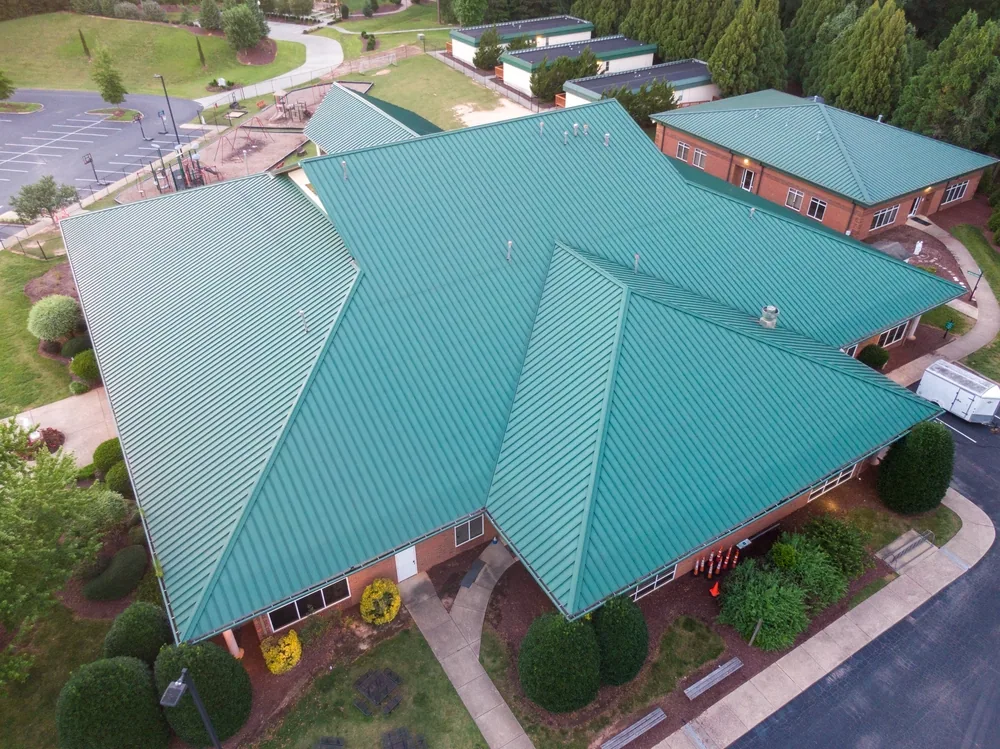
Check what stays below
A recover is appropriate only when the existing roof can support a new assembly and the concealed layers are suitable to remain. We review records and inspect seams, penetrations, edges, and repair history. Moisture readings can identify areas for closer review, but a test opening may still be needed to see the insulation and deck. Wet materials left beneath a new membrane can continue to deteriorate and may affect adhesion or attachment.
Each sample is tied to a roof zone. Additional openings can establish whether moisture continues beyond the first test. If the existing assembly has multiple layers, damaged deck, or moisture that cannot be isolated, a recover may not be a responsible choice. The proposal should name the condition that supports the decision, not simply assume that the roof is dry.
The 1991 to 2020 record at Washington National Airport includes freezing winter temperatures, occasional snowfall and regular July heat. Those cycles make moisture and attachment checks relevant before a new layer is installed, especially at laps, edges, and penetrations that move with temperature. A moisture survey can guide sampling when the roof and weather suit thermal screening and its patterns have been interpreted, and documented findings can preserve where each opening was made.
Measure height and drainage
A recover raises the finished roof surface. That change can reduce the clearance at drains, scuppers, door thresholds, expansion joints, and equipment curbs. We measure these transitions and note whether the new assembly can terminate without blocking an overflow point or creating a new low area. A detail that works at the roof field may fail at a wall, hatch, or unit curb once the total assembly height increases.
Drainage review follows the water path from the high points to its outlet. We note slope, ponding, and water crossing old repairs. Alexandria identifies tidal flooding and heavy rain as local risks. Roof runoff needs its own outlet review; tidal exposure also matters where ground-level access or discharge is affected. The record should show drain function and recover-related height or flow changes.
Old Town façade details may constrain flashing. In Eisenhower East, equipment and shared access can affect material handling. We record these as project conditions and confirm the detail before pricing. If recover compromises clearance or termination, we compare it with edge and coping work or a tear-off scope rather than masking the conflict.
Compare the actual scope
Overlay can reduce tear-off and disposal, but it does not automatically cost less once preparation, attachment, edge modifications, drainage changes, and equipment adjustments are included. The estimate should describe preparation, insulation, attachment, perimeter details, and conditions that would stop work. If moisture is discovered after installation begins, the contract should say how removal and replacement will be measured and approved.
Full removal exposes the deck, but creates more debris, weather exposure, and dry-in work. The comparison should separate verified quantities from deck or insulation allowances. We can set out a recover as the base option only when the inspection supports it, with a tear-off alternate when the decision still depends on openings or approvals.
Alexandria construction applicants use the 2021 Virginia Codes; the assembly must meet applicable requirements for the building and scope. We review attachment, insulation, wind details, and permit questions with the project team before mobilization. For broader roof planning, the same observations can feed a capital plan. An existing building in Potomac Yard needs its own layer survey before a recover is priced.
Protect the existing building
Before an overlay begins, we confirm roof access, laydown area, crane or hoist needs, occupied hours, and protection for mechanical equipment. For occupied buildings, we coordinate work zones and material routes with the general contractor. The plan should preserve required entrances and service paths while keeping debris, fasteners, and material away from occupied spaces.
Each phase needs an attachment sequence and a secure end-of-day boundary. Heat, rain, frost, or wet surfaces can delay installation. We confirm the substrate before covering it. Any surface that is wet, contaminated, or outside the material's application conditions needs correction or a pause, not concealment beneath a new membrane.
The scope should assign who disconnects, protects, and resets equipment. Curbs may need extensions to preserve flashing height, with mechanical and electrical interfaces assigned. Once installed, the roof transitions and drainage are checked before the next section covers adjacent details. If evidence requires a change from recover to removal, we stop at the defined boundary and review the finding with the owner rather than extending the work silently.
Leave a clear record
Closeout records should show where openings were made, what layers were observed, which areas were repaired before cover, and what assembly was installed. Photographs and a roof-zone sketch show changed details and future inspection points. We also identify any remaining drainage or maintenance issue that was outside the recover scope, so the handoff does not suggest that a new membrane corrected an unrelated condition.
Send the Alexandria address, existing roof records, leak locations, and access constraints. We can inspect moisture and transitions, then compare recover with tear-off. For a building in Old Town, include any façade or historic-district coordination already known. The scope should match the roof, the building's use, and the conditions confirmed before installation.
Commercial Roofing Services
Commercial Roofing Questions
How can I know whether the existing roof is dry enough to cover?
We combine records review, visual inspection, moisture readings, and test openings where the result affects the decision. A reading marks an area for evaluation; it does not by itself show every layer or define a removal boundary. We compare samples across representative roof zones and document what the openings reveal. If moisture continues beyond the first area, we expand testing or price removal to the verified boundary before approving a recover.
Will an overlay make drains or equipment curbs too low?
It can raise the roof surface, which is why we measure drain rings, scuppers, curbs, hatches, walls, and overflow points before setting the assembly. The scope identifies extensions needed to preserve drainage and flashing height. If the detail cannot be raised or terminated correctly, a recover may not fit that roof. We show the conflict and compare a tear-off or local reconstruction rather than leaving it to field improvisation.
Does a recover avoid all tear-off and disposal?
Only the layers approved to remain are left in place. Loose, wet, damaged, or incompatible materials may still need removal, and the perimeter or equipment details may require localized tear-off. We describe the preparation boundary and the handling of concealed conditions in the proposal. The owner can then compare the actual recover scope with full removal, including disposal, dry-in, attachment, and detail changes.
Can the building operate during recover work?
Often, with agreed work zones, access routes, material staging, and protection around occupied spaces. The schedule accounts for deliveries, equipment access, noisy work, and end-of-day protection. A recover still involves surface preparation and mechanical fastening or adhesive handling, so the specific assembly and building operations set the sequence. We confirm those constraints with the general contractor before mobilization.
What should the proposal say if hidden damage appears?
It should identify how we will stop, document the finding, measure the affected area, and get approval before adding work. Photographs, a roof-zone mark, and a defined unit price or allowance help the owner review the change. If testing before work shows a known wet area, the proposal should already include its removal or list it as a separate option. Concealed deck damage should not be treated as an unbounded authorization.
Verify before covering
Share the Alexandria address, known leak areas, roof records, and access requirements. We will inspect the layers and transitions, then show whether recover or tear-off fits the conditions found.