 Services
 Roof Systems
 Property Types
 Industries
 Damage Repair
 Capabilities
 Manufacturers
 Service Areas
Commercial Roofing in Arlandria-Chirilagua, Alexandria, VA
Service Areas:
- Commercial Roofing in Carlyle, Alexandria, VA
- Commercial Roofing in Landmark / Van Dorn, Alexandria, VA
- Commercial Roofing in Eisenhower East, Alexandria, VA
- Commercial Roofing in North Potomac Yard, Alexandria, VA
- Commercial Roofing in Potomac Yard, Alexandria, VA
- Commercial Roofing in Old Town North, Alexandria, VA
Arlandria-Chirilagua sits in Potomac West near the Four Mile Run corridor, where roof projects can involve occupied commercial and mixed-use properties. The small-area plan adopted in 2022 ties neighborhood planning to portions of the Four Mile Run restoration effort. We inspect the building’s drains, roof edges and access route before setting the repair boundary.
Arlandria sits in Potomac West near the Four Mile Run corridor. Del Ray is another Potomac West planning area, but its Mount Vernon Avenue commercial priorities do not define the uses or schedules at a site in Arlandria-Chirilagua. Alexandria summer heat, winter freezes and heavy rain make seams and drainage useful inspection priorities.
Arlandria-Chirilagua
Separate Watershed Planning from Roof Findings
Four Mile Run restoration work follows the corridor, while building roof work is scoped by the outlets, scuppers, parapets, penetrations and repair lines on the property. The site contact identifies the building, roof entry and any active construction affecting access. We include those conditions in the inspection and work sequence.
We record the reported room, when water appeared and what conditions preceded it, then compare those details with the roof surface. A commercial roof inspection identifies the likely path and the visible condition as separate observations. If the stain is far from an opening, a field sketch shows which seams, outlets and transitions were checked and where the inspection could not reach.
For an occupied building, we confirm tenant hours, roof-entry instructions, loading, staging and protection below with the property manager or GC. If nearby Four Mile Run work affects the route, the current site representative identifies the active boundary and safe approach before roofing material is delivered.
Trace Water to an Inspectable Detail
Water can move under a membrane or along the roof deck before reaching the interior. We compare the reported location with drains, wall transitions, equipment curbs and prior repairs, then record which route is supported by evidence. A leak investigation follows the ceiling report to the likely roof entry, maps water travel and identifies any test needed to inspect concealed layers.
At a parapet, we inspect the membrane turn, termination and cap. At a drain, we review the bowl, surrounding sheet and overflow point together. A curb or pipe penetration has its own flashing transition. If two possible openings are close, each is recorded separately. Flashing work and a drain correction may solve different parts of the same water route.
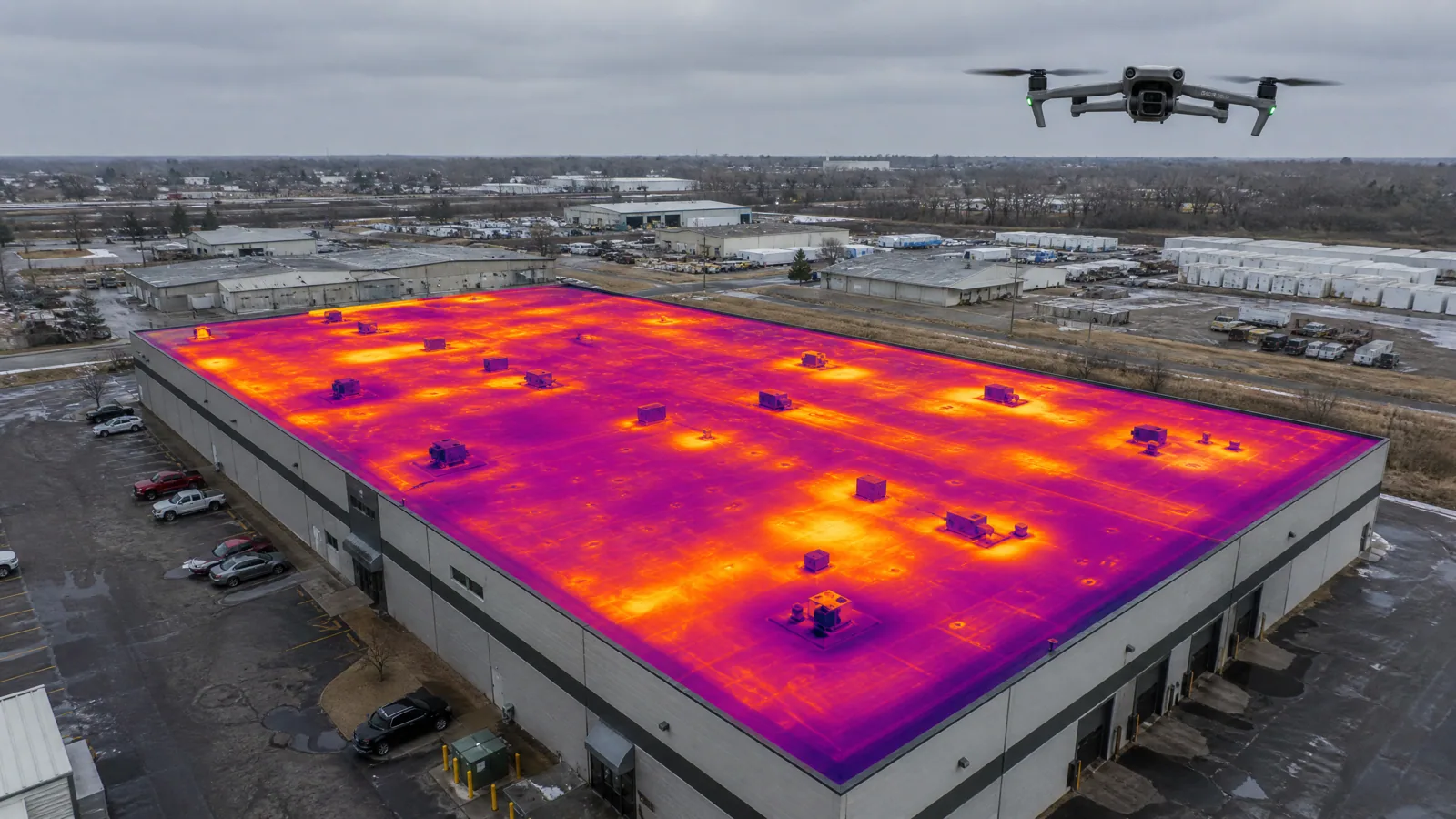
Moisture beneath the membrane may change the amount of material that needs removal. Infrared readings can suggest where a test opening may be useful, but they do not directly confirm wet insulation. With owner approval, we coordinate interior protection, open a defined area and photograph the layers. The report states what that opening shows and keeps untested zones distinct.
Keep the Repair Compatible
A localized correction can fit when the defect is bounded and the surrounding assembly remains sound. We identify the roof system, prepare the surface and install compatible material. The edge of a patch or flashing correction must tie into material that can hold it. If the substrate is soft, wet or detached, that condition is recorded rather than covered by a new surface layer.
Recurring leaks or broad deterioration may call for comparison with recover or replacement. The decision uses the existing layers, insulation, deck, drainage, perimeter height and project requirements. A recover evaluation checks whether an additional layer is feasible and how it will terminate at drains and edges. Replacement may allow concealed deck review but brings tear-off, disposal and daily dry-in needs.
Cost and schedule depend on material, access, testing, staging, protection, repair depth and weather. We separate measured quantities from allowances and explain how opened conditions are reviewed before additional work proceeds. If another trade affects a curb or penetration, the estimate identifies that coordination point and the detail that must be completed before the roof can close.
Use Climate as Context
Alexandria’s extreme heat, tidal Potomac flooding, winter freezes and occasional snow put seams, cold-weather details and drainage on the inspection list for Arlandria-Chirilagua properties. We check the roof’s own water paths and exposed transitions before selecting a repair.
We inspect outlet capacity, scupper flow, overflow routes and water marks at the actual building. Four Mile Run restoration planning concerns the corridor. We inspect roof drains and overflow routes at the property as a separate part of the scope. If a roof outlet, grade or concealed slope cannot be reviewed safely, the report names the missing access or information and avoids claiming more than the inspection shows.
Weather also affects repair sequence. We check surface dryness, temperature and the selected product's installation requirements before work. If an opened section cannot be completed, the crew secures a defined temporary closure. A response can be arranged after hours, on weekends or during holidays when water is entering, with permanent repairs scheduled once conditions support a lasting tie-in.
Confirm the Work Sequence on Site
The current project contact confirms roof entry, loading, lift placement, quiet hours, deliveries and any area below that needs protection. If work must occur in stages, we define a roof zone that can be opened, completed and secured within each agreed window.
For an occupied building, phased roof work can limit disruption when safe tie-ins and weather protection are available. We set material staging, crew access, noise periods and a daily closure point. Equipment service, interior access or another trade's work may affect the sequence, so we confirm that interface before removing the existing flashing.
Potomac West also includes Oakville Triangle on the Route 1 corridor, where redevelopment includes a planned Inova Healthplex. For an Arlandria-Chirilagua project, the property contact confirms current access windows and operating constraints.
Document the Conditions We Reached
The closeout record identifies the address, inspected zone, system observed, repair detail, photos and limits on access or testing. A sketch ties the interior report to the roof transition reviewed. Test results stay tied to their opening location, with other zones evaluated separately.
A maintenance inspection can revisit seams, outlets and prior repairs after later weather. Keep the report with the roof documents and record any access change or equipment alteration that could affect a future water path.
For a roof in Arlandria-Chirilagua, send the address, reported condition, roof plans and access contact. We will map the affected zones and set repair or replacement options around the building’s assembly and operating hours.
Service Areas
Commercial Roofing Questions
Does the Four Mile Run restoration plan tell you whether a roof has flooded?
No. It is watershed planning context, not an inspection of a specific roof. We review the property's outlets, overflow paths, water marks and interior report before identifying any roof condition.
How do you trace a leak in Arlandria-Chirilagua?
We compare the affected room and timing with roof slope, drains, seams, parapets and penetrations. Water may travel before it appears indoors. The report separates likely path from confirmed opening and identifies whether a test is warranted.
What access details should be ready before roof work begins?
The owner or GC should identify roof entry, delivery limits, lift placement, security, work hours and protection below. We record those instructions in the sequence and flag any constraint that may change duration or staging.
Can you repair a roof without knowing the exact membrane?
We first identify the material from records and field evidence. If it remains uncertain, we state what needs confirmation before selecting a repair component. Using a generic patch without matching the assembly could leave the tie-in unreliable.
When should the owner consider a larger reroof scope?
Repeated failures, widespread moisture, weak attachment or deck concerns may make a larger comparison useful. We inspect the assembly, identify tested and untested areas, then compare local repair, recover and replacement options against the confirmed conditions.
Inspect a Roof in Arlandria-Chirilagua
Share the property address, reported water condition, roof records and site contact. We will trace the relevant roof zones and prepare a scope tied to inspected conditions and current access requirements.