 Services
 Roof Systems
 Property Types
 Industries
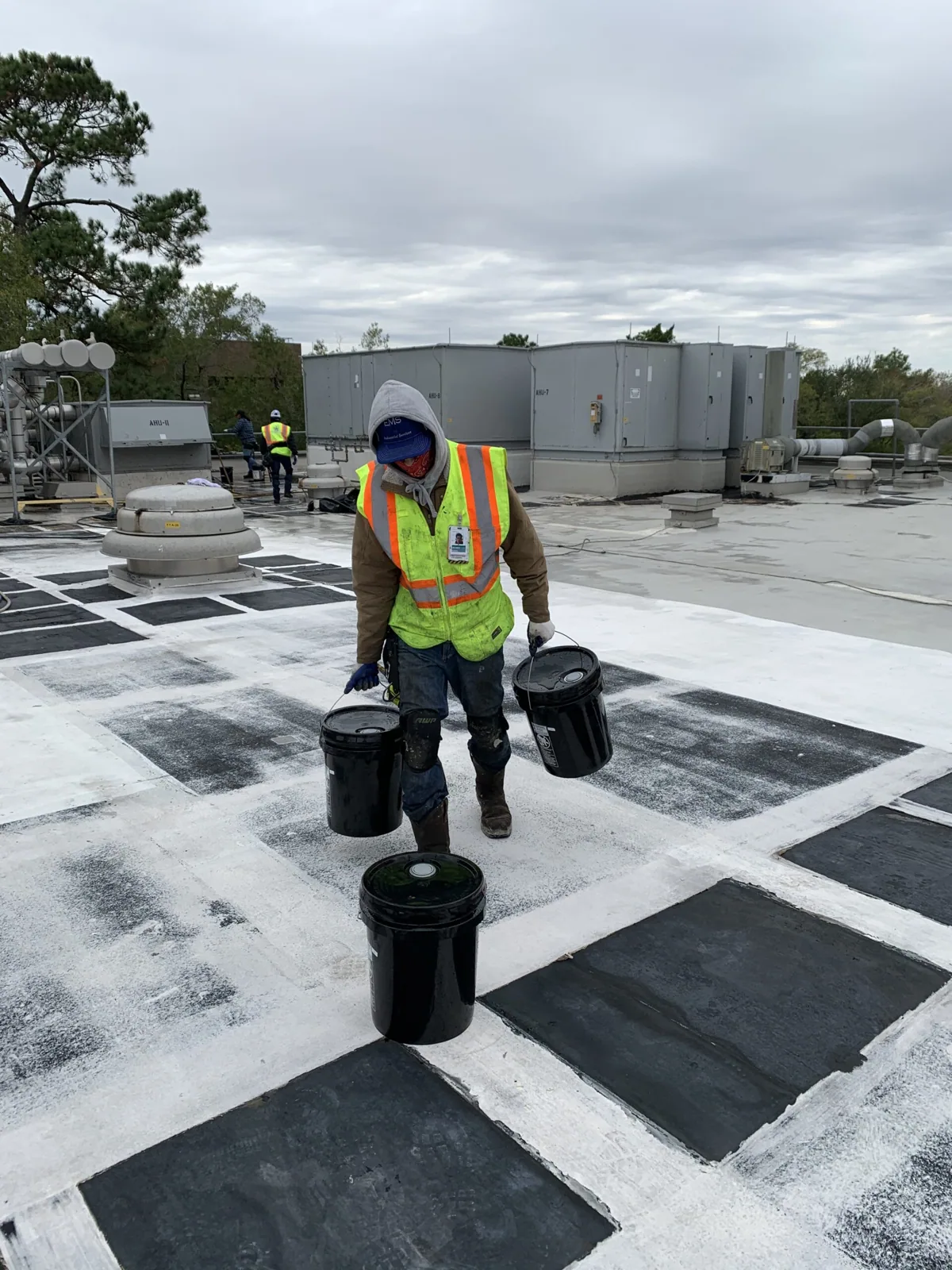 Damage Repair
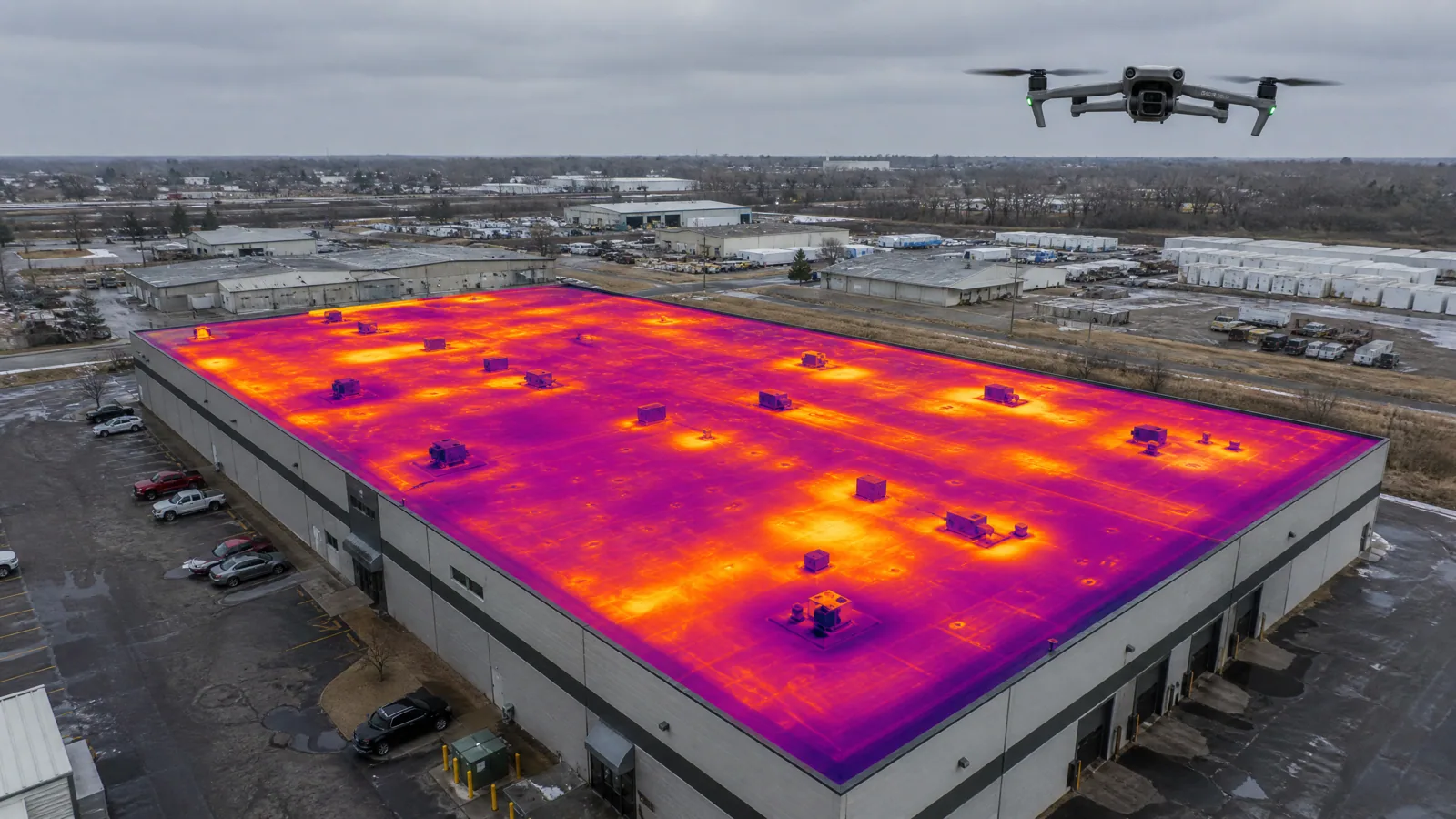 Capabilities
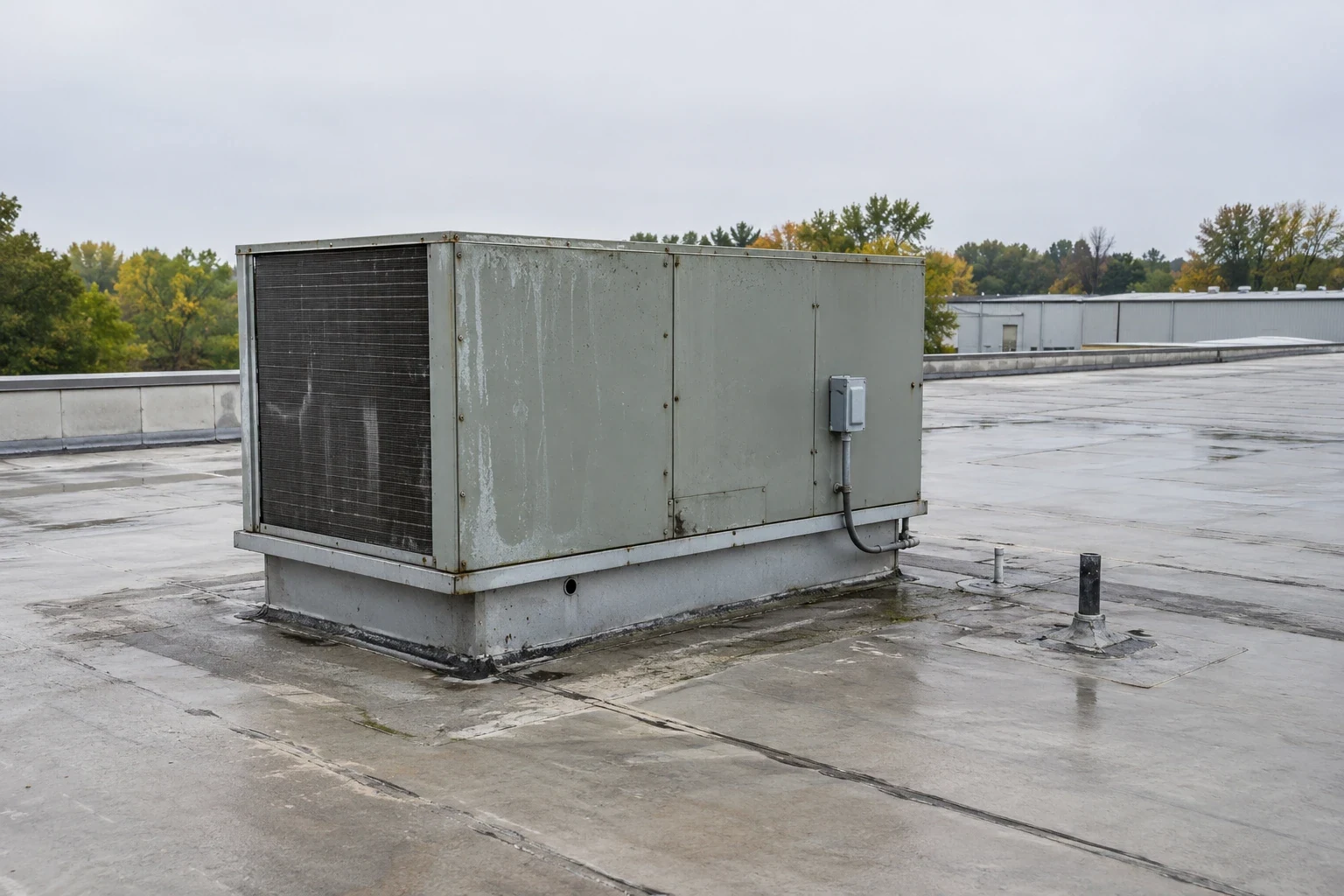 Manufacturers
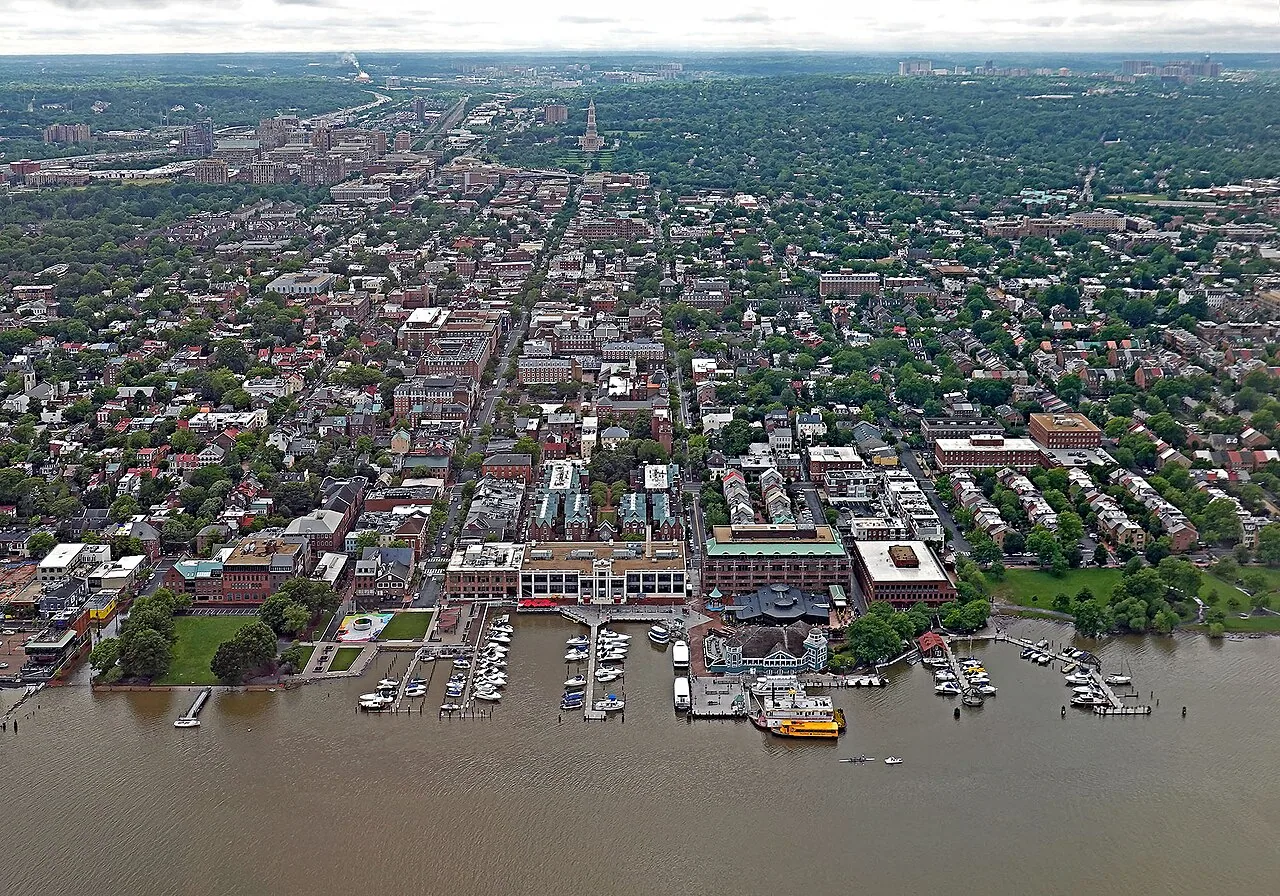 Service Areas
Commercial Roofing for Logistics and 3PL Operators in Alexandria, VA
Industries We Serve:
- Commercial Roofing for Property Management Companies in Alexandria, VA
- Commercial Roofing for Real Estate Investors and REITs in Alexandria, VA
- Commercial Roofing for Healthcare Systems in Alexandria, VA
- Commercial Roofing for Manufacturers in Alexandria, VA
- Commercial Roofing for Logistics and 3PL Operators in Alexandria, VA
- Commercial Roofing for School Districts in Alexandria, VA
A leak near a loading bay can disrupt inventory handling even when the water entered at a roof seam several spans away. We trace the route from the reported area to drains, edges, curbs and transitions, then define what the inspection can confirm. Alexandria, VA experiences heavy rain, summer heat and winter freeze-thaw, all useful context for checking drainage and exposed joints. The property condition, not the regional exposure alone, determines whether a repair is needed.
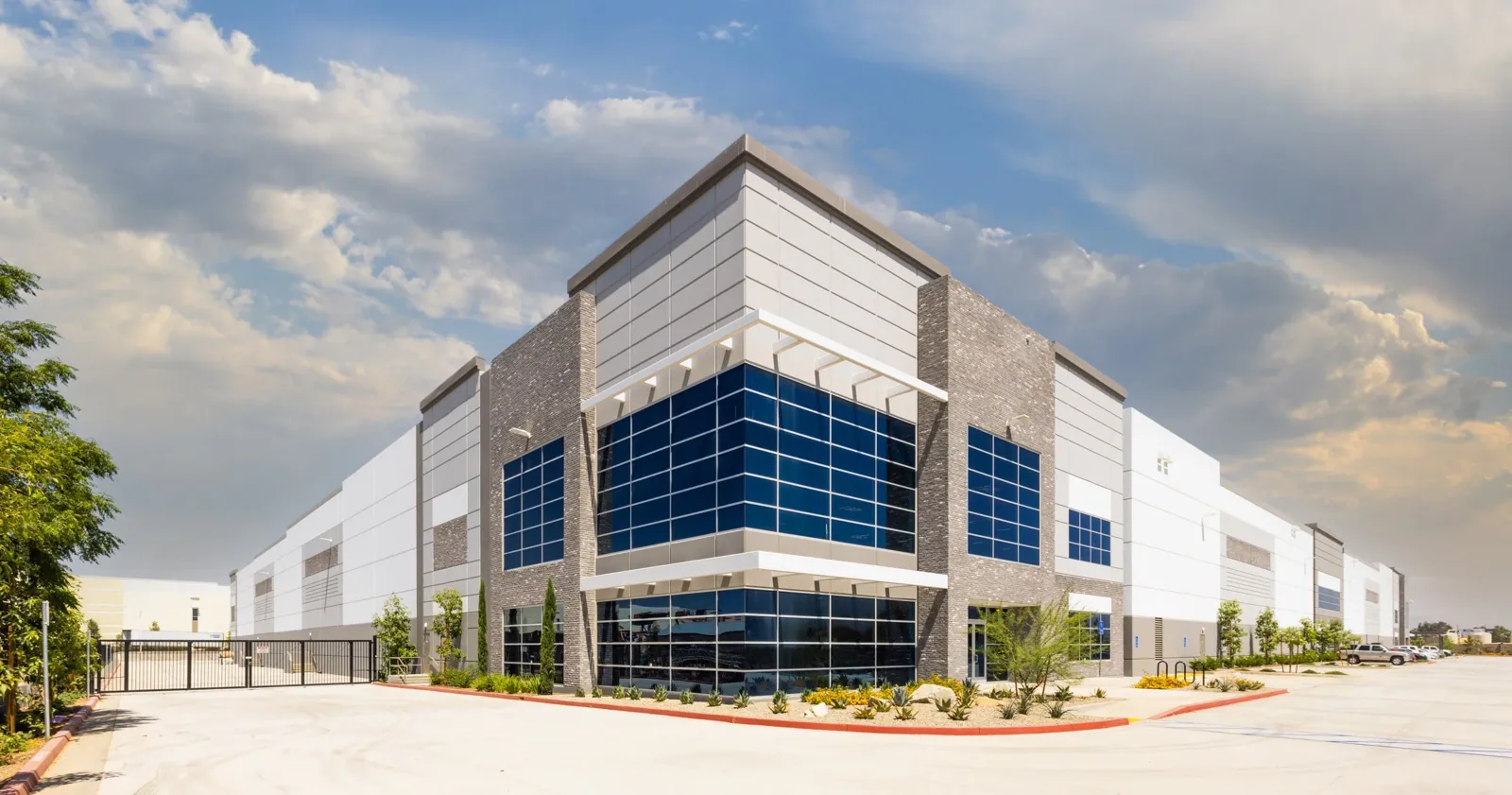
Office and redevelopment properties in Eisenhower East extend along Eisenhower Avenue and Mill Road, while the Route 1 corridor connects commercial areas through Potomac West. These corridors do not establish the type or condition of a particular distribution building. We confirm the address, roof assembly, dock schedule and site access with the operations contact. Manufacturers may share receiving constraints, and retail chains can have inventory-sensitive spaces below a roof repair.
Logistics and 3PL Operators
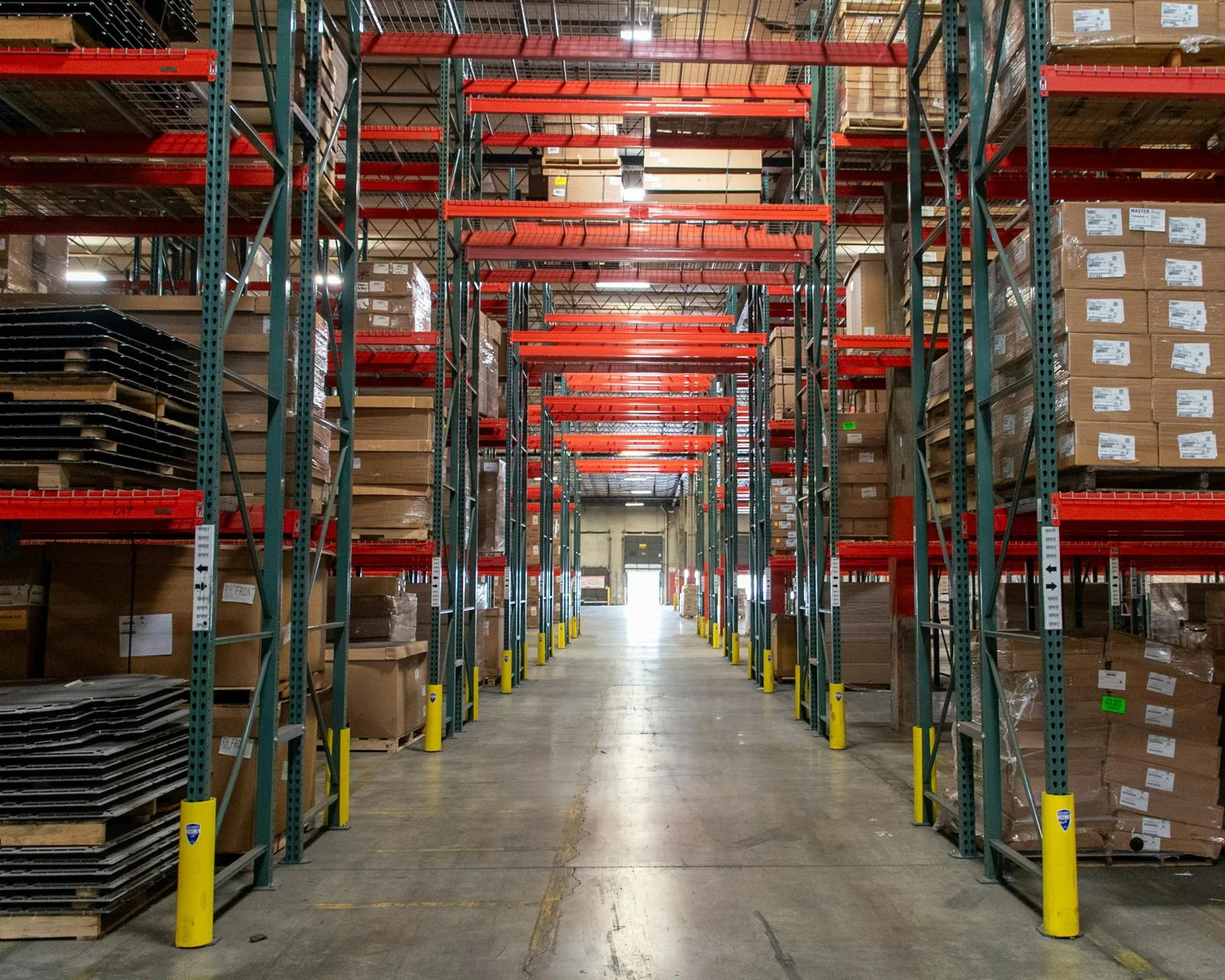
Keep Loading and Dispatch Routes Open
The facility contact identifies dock hours, truck routes, yard circulation, forklift lanes, fire access and inventory that needs protection. We plan material delivery and waste removal around those operating limits. If a leak is active, emergency response is available any time of day, including weekends and holidays, while the permanent scope is organized. The route for roof crews and equipment should be agreed before mobilization so a repair does not block the movement the building depends on.
Roof work may require a lift, crane, temporary barrier or debris container. We mark the proposed location and vehicle path for review, then confirm overhead clearance and ground conditions with the site. If a dock must remain in use, work can be staged away from that bay or arranged for a different shift when the roof and schedule allow. The plan names the access window rather than assuming that nights or weekends are automatically available.
Inventory below an active roof area may need temporary covering or a change in location. The operations contact identifies sensitive goods, packaging and routes that cannot be obstructed. We plan removal against the prepared closing detail, available crew and suitable weather, including temporary protection where needed at an unfinished area. Any interior restriction or protection is described by zone, giving warehouse staff a clear boundary to work around.
Locate the Leak Across the Roof Plane
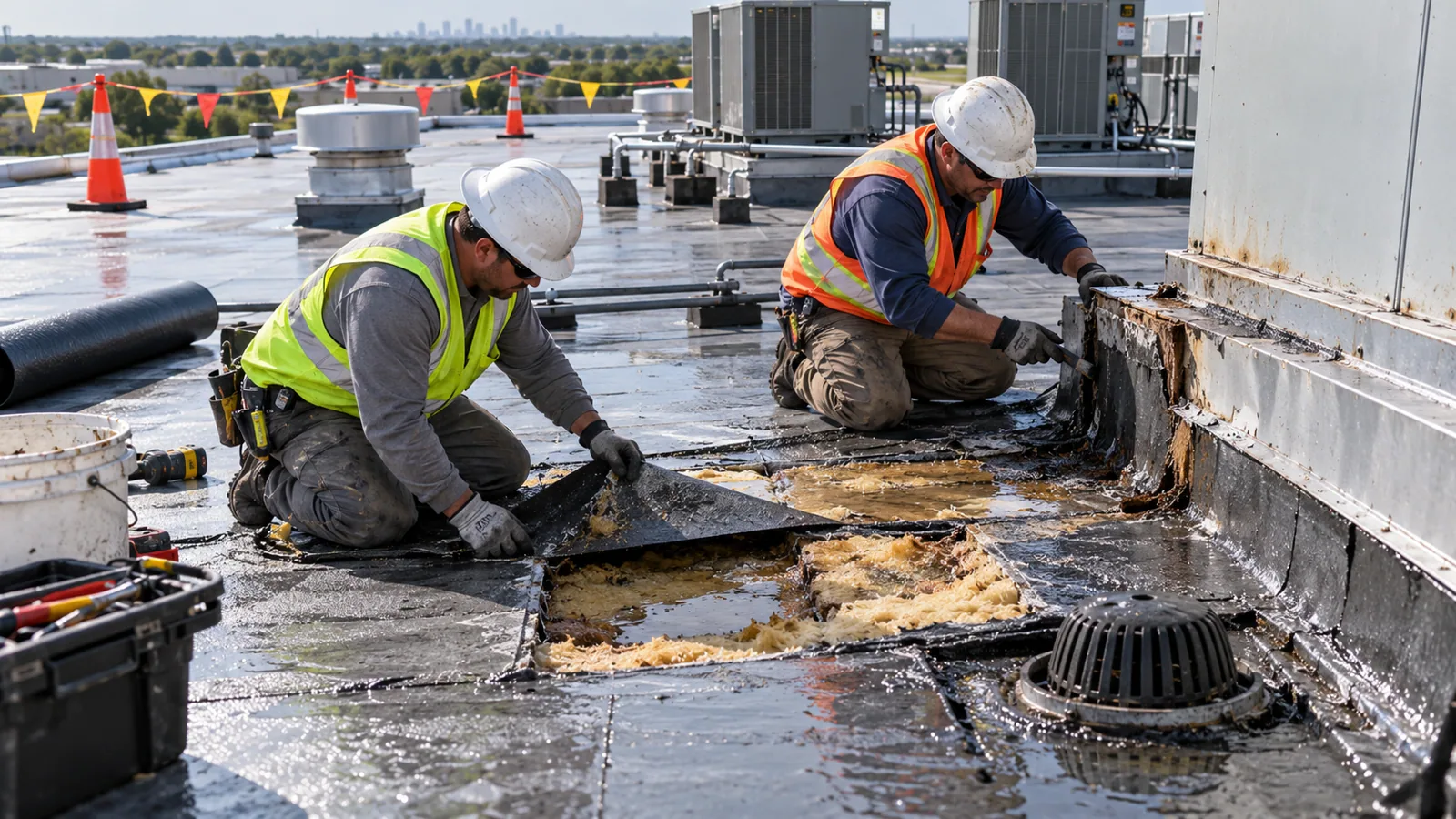
Water can travel over a deck or along a structural member before dripping into a pick aisle or dock office. We compare the interior location with roof slope, drain paths, wall joints, expansion joints and penetrations. A commercial roof inspection records the possible entry point separately from where moisture was seen below. Photos and a field sketch help the operations team identify which bay and roof section were checked.
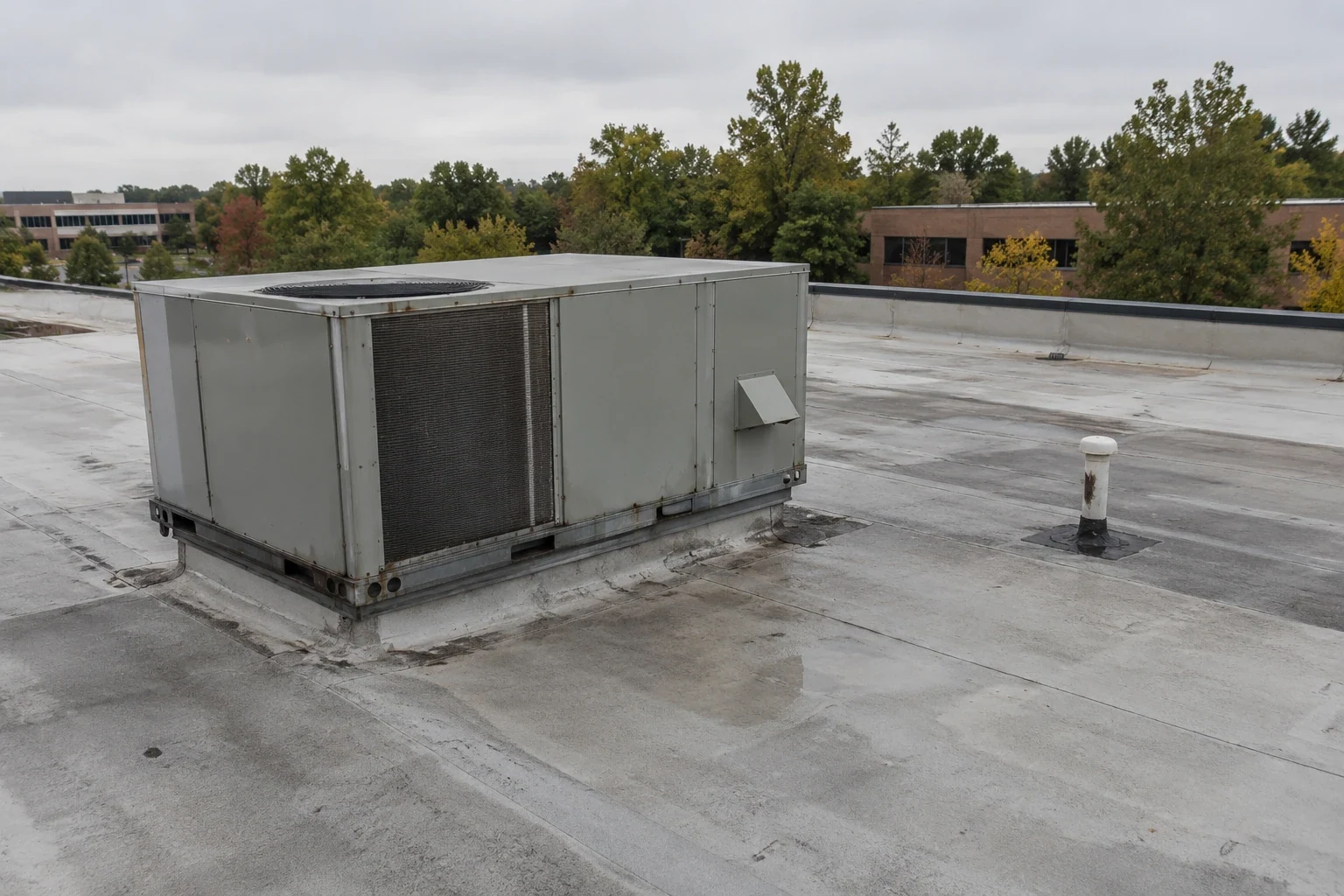
At seams, we look for separation, puncture and previous repair edges that have lifted. At equipment curbs, we inspect flashing and support details for movement. Drains and scuppers are checked for obstruction and visible ponding marks. A ponding-water correction may involve drainage as well as membrane work if both conditions are present.
Where moisture beneath the membrane is uncertain, an infrared survey conducted under suitable conditions can guide a test location after interpretation, with material confirmation needed before wet-layer quantities are established. A controlled test opening can show the layers and deck at one point, with the opening and observation area approved by the facility. We record what testing establishes and leave untested roof zones clearly identified rather than applying one finding across a distribution center.
Choose a Repair That Matches the Roof
Facility function does not tell us whether the roof is TPO, EPDM, built-up or metal. We identify the assembly, attachment, insulation, deck and edge conditions from plans and inspection. A compatible patch may be enough where the roof around the defect remains sound. If testing shows moisture beyond the entry point, the repair boundary can expand and the proposal should show the added area distinctly.
Thermoplastic seams, EPDM laps, modified-bitumen transitions and metal panel joints need different preparation and materials. A TPO repair differs from an EPDM repair, and the right method depends on the installed system. If rooftop equipment or exhaust penetrations are involved, a curb inspection can be coordinated with the mechanical contractor.
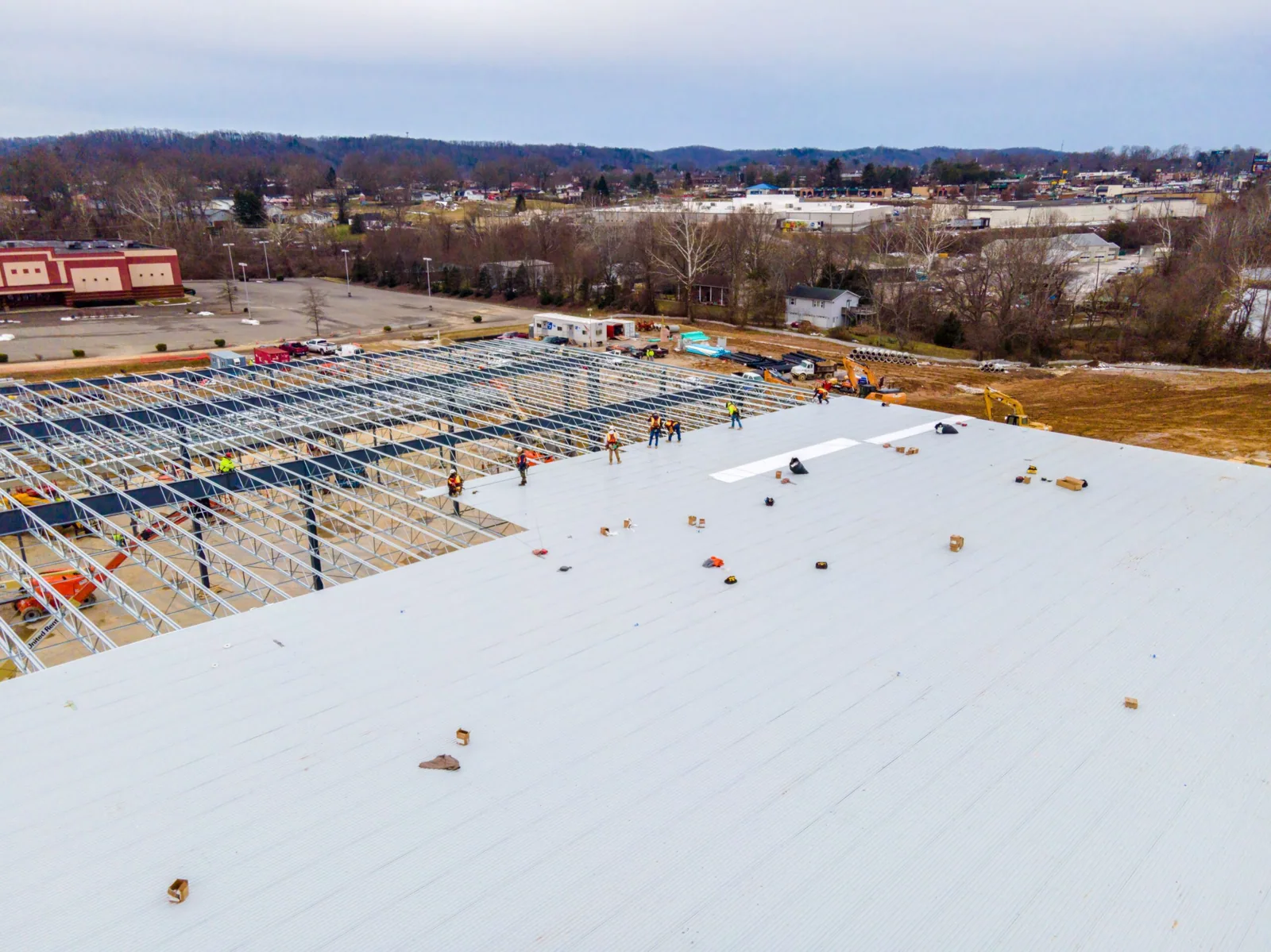
For a larger area, we compare repair, recover and replacement based on deck condition, remaining assembly, drainage and operational disruption. A recover is considered only when the existing materials can support it and project criteria permit. The scope identifies removal, staging, disposal, temporary protection and how dock or inventory zones stay accessible during each phase.
Schedule for Rain and Surface Conditions
Intense rain tests the roof's outlets, overflow paths and low points. Hot roof surfaces may move at seams or flashing transitions; repeated freezing can stress a joint that holds moisture. We look for those mechanisms on the actual property and connect them to a repair only when visible or tested evidence supports it. A weather pattern can guide inspection but cannot establish a defect at a particular loading bay.
Materials require suitable conditions for preparation, welding, adhesion or coating. When removal leaves a section open, the crew plans a temporary cover and a safe end-of-shift closure. A staged reroof may keep portions of the operation running if access, weather and roof conditions allow a controlled sequence.
At a site near Eisenhower East, roadway and redevelopment context does not answer where trucks can stage or when deliveries are accepted. The facility contact confirms the current route, security requirements and dock schedule. We use that site information to set arrival and removal windows around dispatch rather than writing a generic logistics schedule.
Leave a Clear Shift-to-Shift Record
We document repaired details, tested locations and remaining limits with photos tied to roof zones. If the project is phased, the report shows what is complete and what still requires access or testing. This gives maintenance staff a usable handoff between shifts and lets operations compare the active work boundary with dock and inventory plans.
Follow-up maintenance can revisit drains, seams, penetrations, edge metal and previous repairs. The schedule should reflect roof condition and operating access. A maintenance visit can identify a changed drain condition or lifted repair edge before the next leak reaches stored goods.
Send the facility address, affected bay or aisle, dock schedule and contact for roof access. We will inspect the relevant zone and prepare a repair or phased replacement scope that includes the operational details needed for review.
Industries We Serve
Commercial Roofing Questions
Can a roof repair avoid shutting down a loading dock?
It may be possible to work in another roof zone or use an approved off-shift window. We confirm truck movement, equipment clearance and staging with operations before scheduling. If the repair is directly above a dock, the contact decides whether a temporary restriction is needed while that area is protected.
What should the warehouse team do about inventory below a leak?
The facility should identify the affected stock and any route or storage restrictions. We can coordinate a roof boundary and temporary protection with the operations contact, but the site team controls inventory moves and handling. The inspection then traces the roof path and documents what needs repair.
How can a roof inspection distinguish a drain problem from a membrane leak?
We inspect the outlet, surrounding membrane, overflow route and nearby seams. Water marks and ponding can point to a drainage condition, while a separated lap or penetration may show a separate entry path. If the evidence does not settle the cause, we recommend targeted testing before broad repair.
Does standing water mean the warehouse roof needs replacement?
Standing water calls for a drainage and membrane review, not an automatic replacement conclusion. We check how long water remains, whether outlets are clear and whether the assembly shows moisture or deterioration. The repair can address a local drain or broader condition depending on what the inspection confirms.
Which operating details help plan a reroof?
Provide dock hours, dispatch peaks, truck routes, forklift paths, inventory sensitivity, roof access and any fire lane requirements. We can use them to stage deliveries, waste removal and work zones. Weather and material requirements then determine which shifts are feasible.
Coordinate a Logistics Roof Repair
Share the address, affected bay, loading schedule and roof access contact. We will map the water path and prepare a scope coordinated with operations.