 Services
 Roof Systems
 Property Types
 Industries
 Damage Repair
 Capabilities
 Manufacturers
 Service Areas
Versico Commercial Roofing in Alexandria, VA
Roofing Manufacturers:
Versico identifies a manufacturer, not a complete description of what is installed on a roof. Its commercial product families include EPDM, TPO and PVC membranes, with fleece-backed choices also available. We confirm the sheet and attachment before selecting a repair. Alexandria, VA brings hot summers, winter freeze-thaw and heavy rain to that review, but weather exposure is not proof of damage at one property.
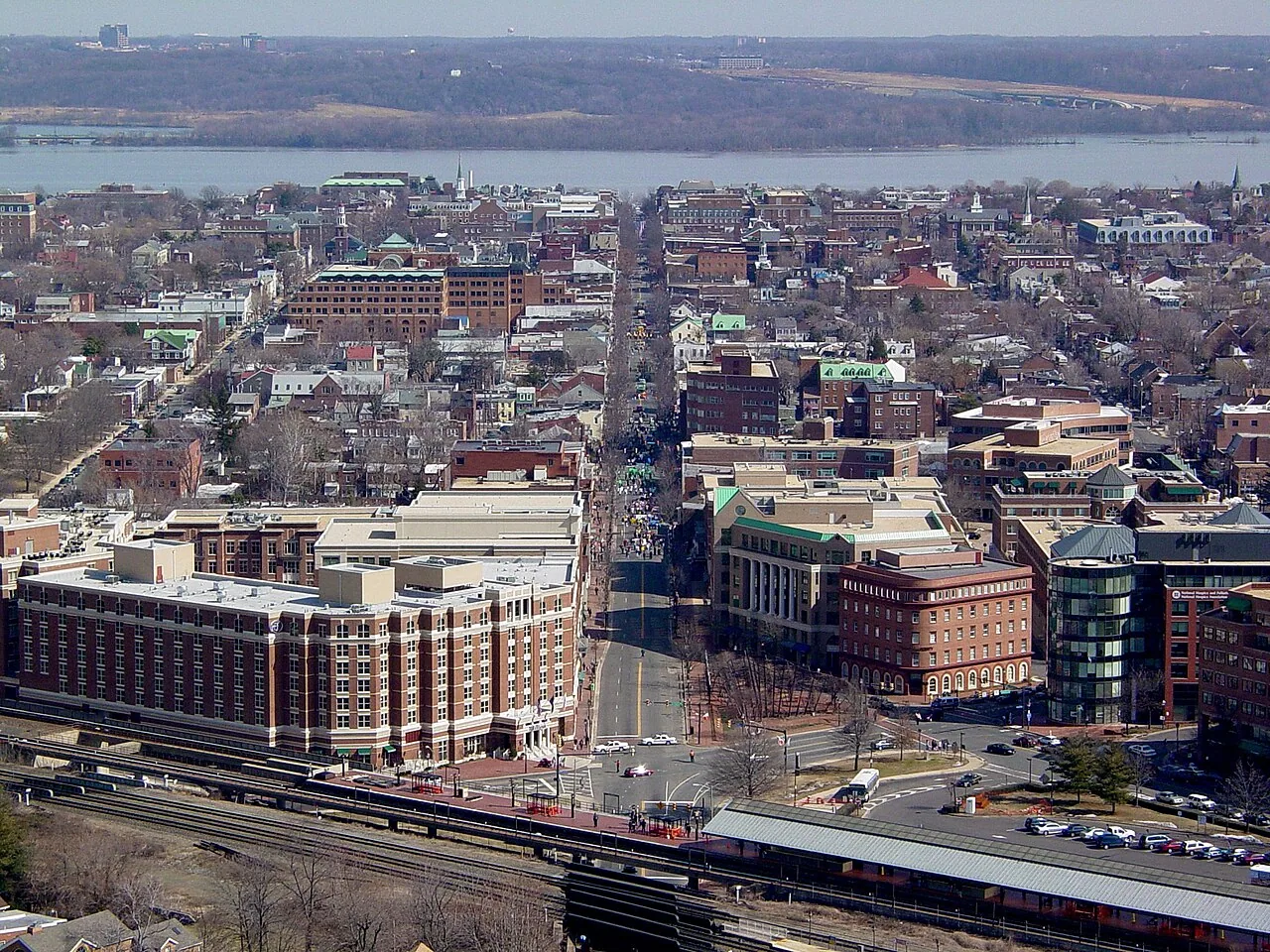
Carlyle's office and mixed-use blocks and the commercial areas around Old Town North face different access and operating conditions. Their neighborhood names do not tell us which Versico assembly sits overhead. We inspect the roof, compare available records and identify the work boundary. GAF systems and Carlisle products include other membrane options, so an old proposal or color alone is not enough to specify a compatible patch.
Versico Commercial Roofing
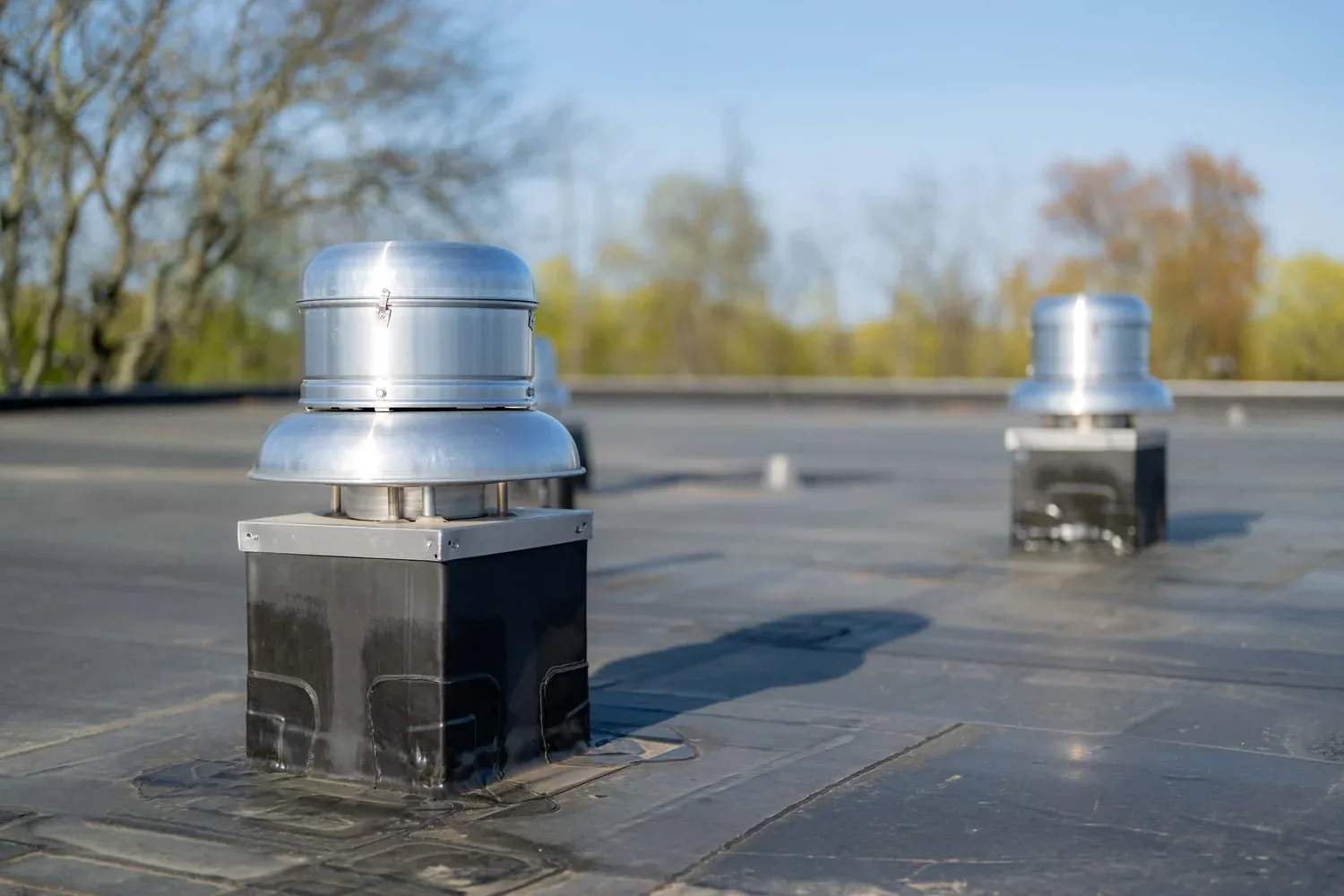
Separate Membrane Families
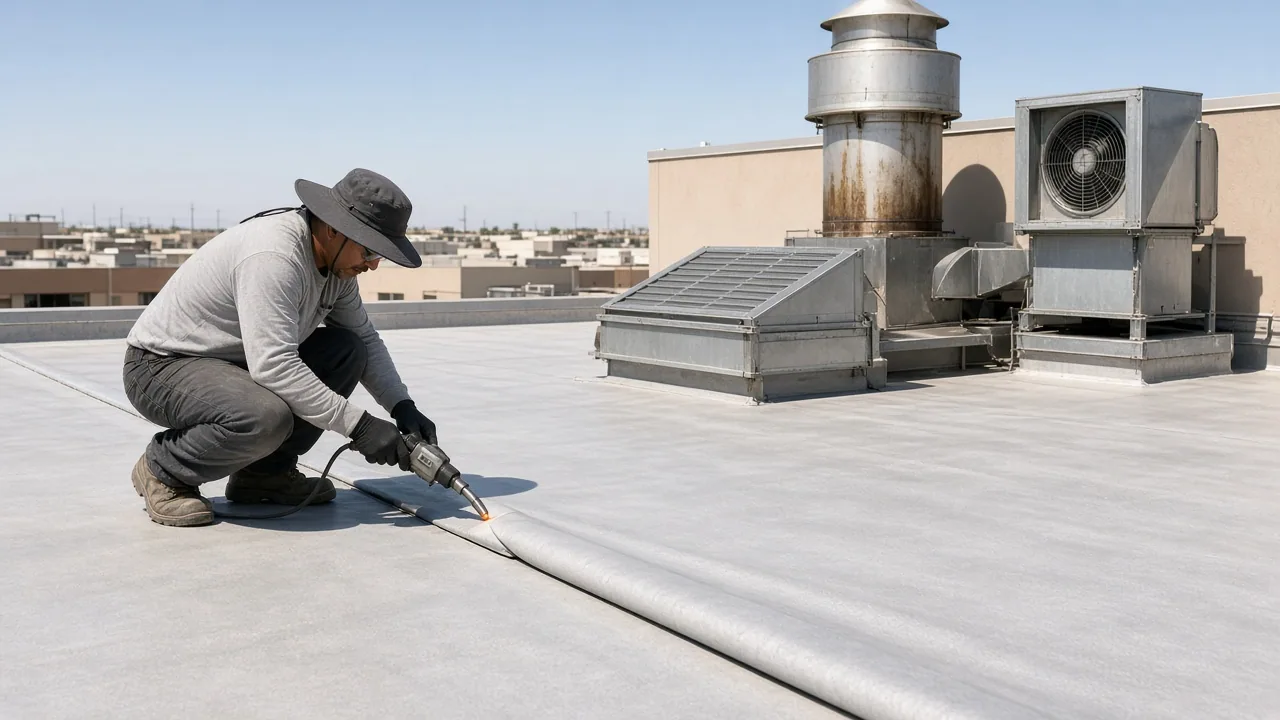
Versico's product range includes thermoplastic membranes such as TPO and PVC, along with EPDM. These materials differ in how seams are joined and how field repairs are prepared. TPO and PVC seams are heat welded when the sheet and conditions permit. EPDM typically relies on compatible seam tape, adhesive and flashing components. We identify the installed membrane instead of relying on a manufacturer label alone.
Versico also offers fleece-backed products, including VersiFleece. A fleece surface changes the way adhesive bonds to the membrane and how a repair or transition is prepared. A product family does not establish the exact attachment, insulation, cover board or deck. We check project records and field evidence, then note any mismatch or missing detail that may affect the scope.
For a TPO roof, we inspect welds, sheet condition and edge terminations. On an EPDM assembly, we examine tape laps and flashing edges. A PVC system needs compatible sheet and welding practice. Identifying the system first prevents a repair material meant for one membrane from being used on another.
Map the Roof Before Opening It
A leak report gives us a place to start, not a repair boundary. We compare the affected room and weather timing with roof slope, outlets, parapets, curbs and penetrations. The commercial roof inspection records the likely water path, visible membrane condition and limits of access. Photos and a field sketch let the general contractor review findings without treating an interior stain as proof of the exact entry point.
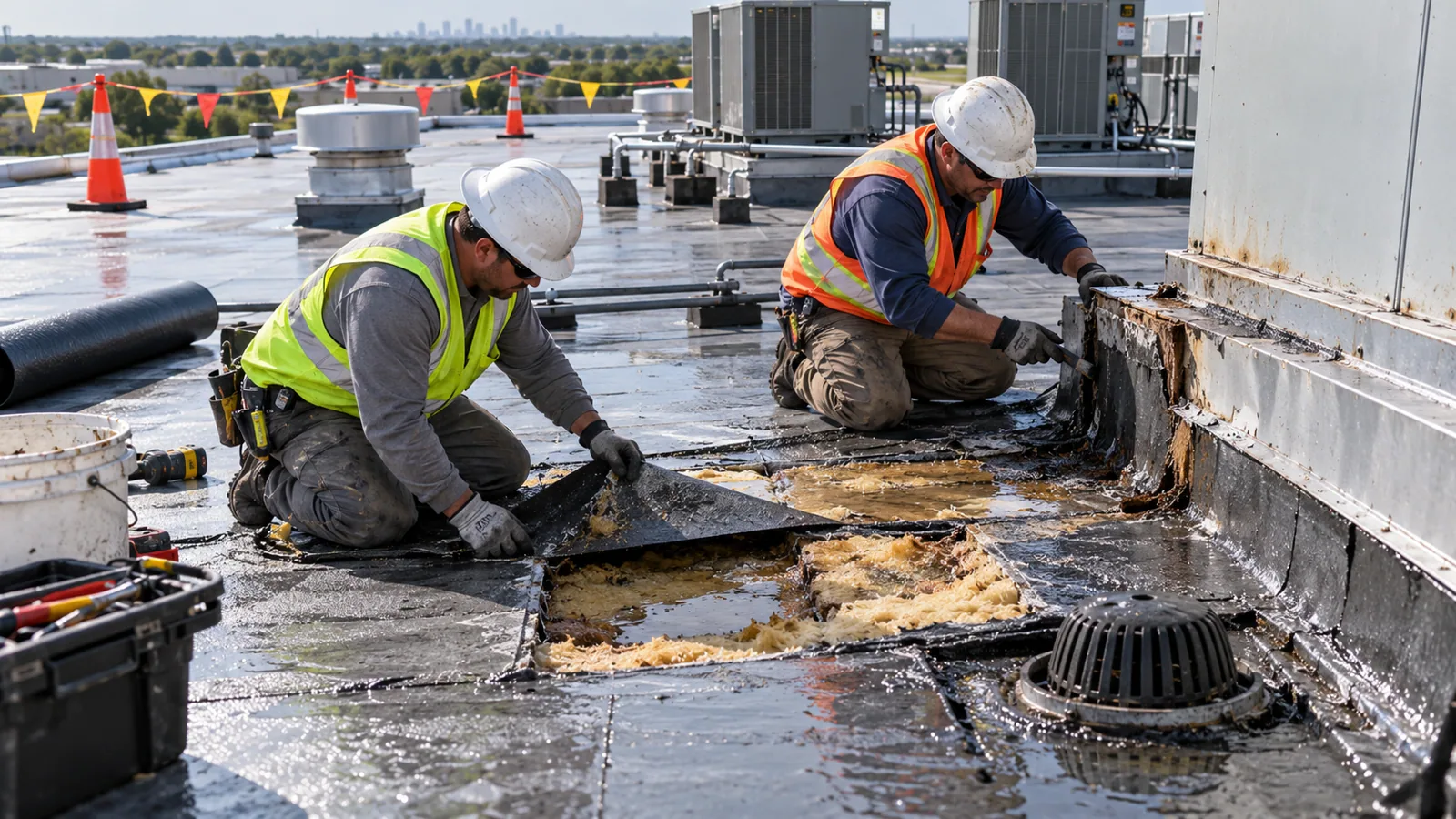
At seams, we check adhesion or weld continuity according to the identified membrane. At drains, we look at the bowl, clamping area, nearby sheet and overflow route. Wall transitions and rooftop equipment curbs can introduce movement at corners. A flashing repair may be needed even where the membrane field remains sound, so we record each transition as its own roof detail.
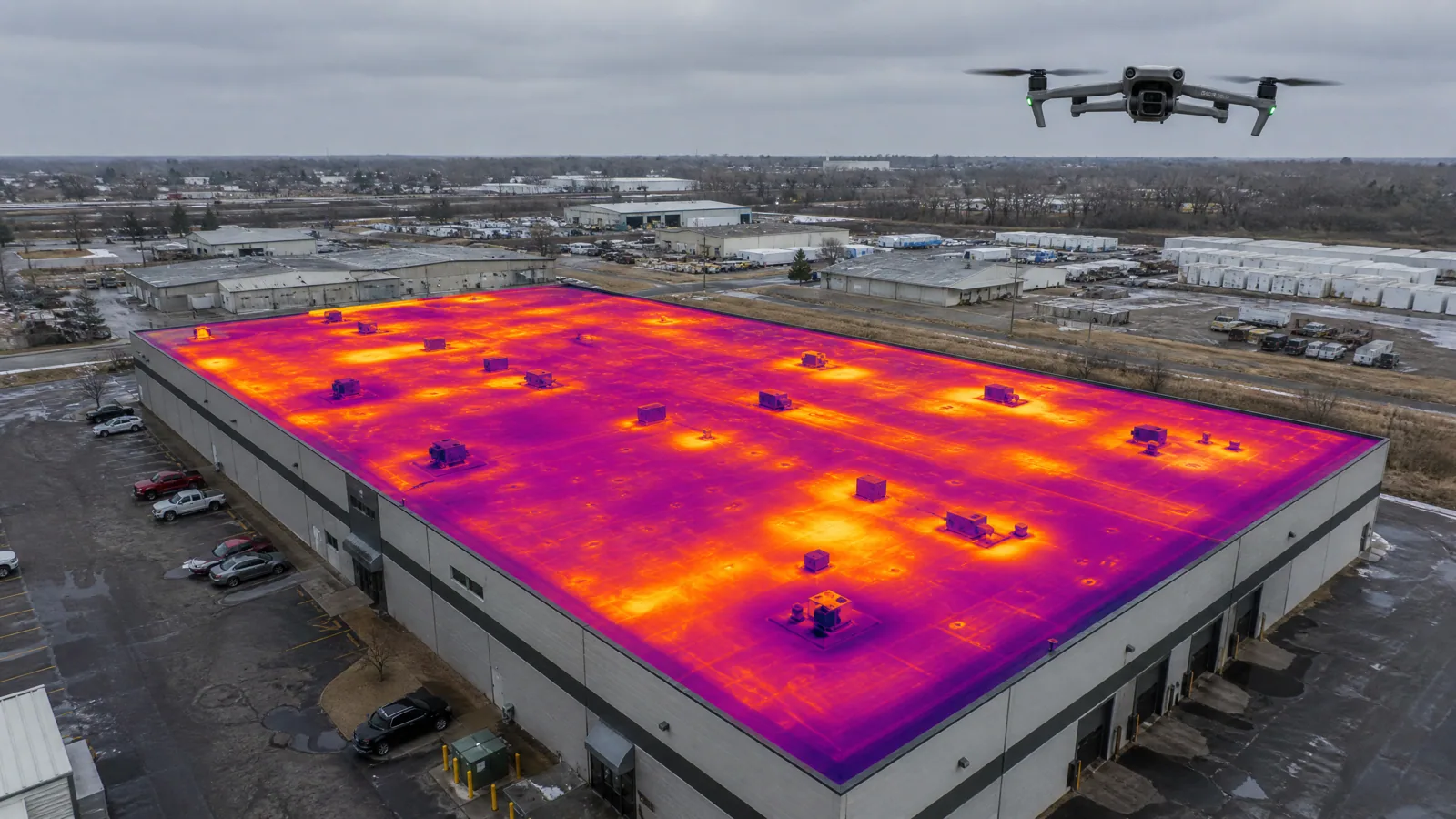
When moisture below the membrane could change the quantity of removal, we consider a test opening. Infrared observations collected under suitable conditions require interpretation and relevant material confirmation before they support a moisture-removal quantity. We coordinate the opening with the property contact, protect the space below, and record the layers present. The estimate can then distinguish a localized membrane correction from additional wet material that needs separate removal.
Match the Repair to the Sheet
Repair preparation follows the material found. Thermoplastic sheet needs a compatible patch and a sound weld; EPDM requires suitable cleaning, primer or adhesive and seam components for that assembly. A fleece-backed membrane may need a different bonding detail from smooth sheet. We expose enough of the damaged edge to inspect it and avoid closing over loose material or moisture without addressing the underlying cause.
Attachment matters beyond the patch itself. Loose plates, adhesive failure, edge movement or a damaged cover board can allow a local seam to reopen. We inspect the surrounding roof zone and identify whether the correction includes membrane, flashing, insulation, edge metal or substrate. A seam failure repair should state which lap was tested and what adjacent conditions were visible.
When damage repeats across a broad area, we compare repair with recover or replacement. Existing layers, drainage, wet insulation, perimeter height and project requirements affect that choice. A recover scope should state the preparation and corrections required before new material goes down. The team can compare the options by boundary and sequence instead of assuming that a new layer resolves every hidden condition.
Use the Weather as Context
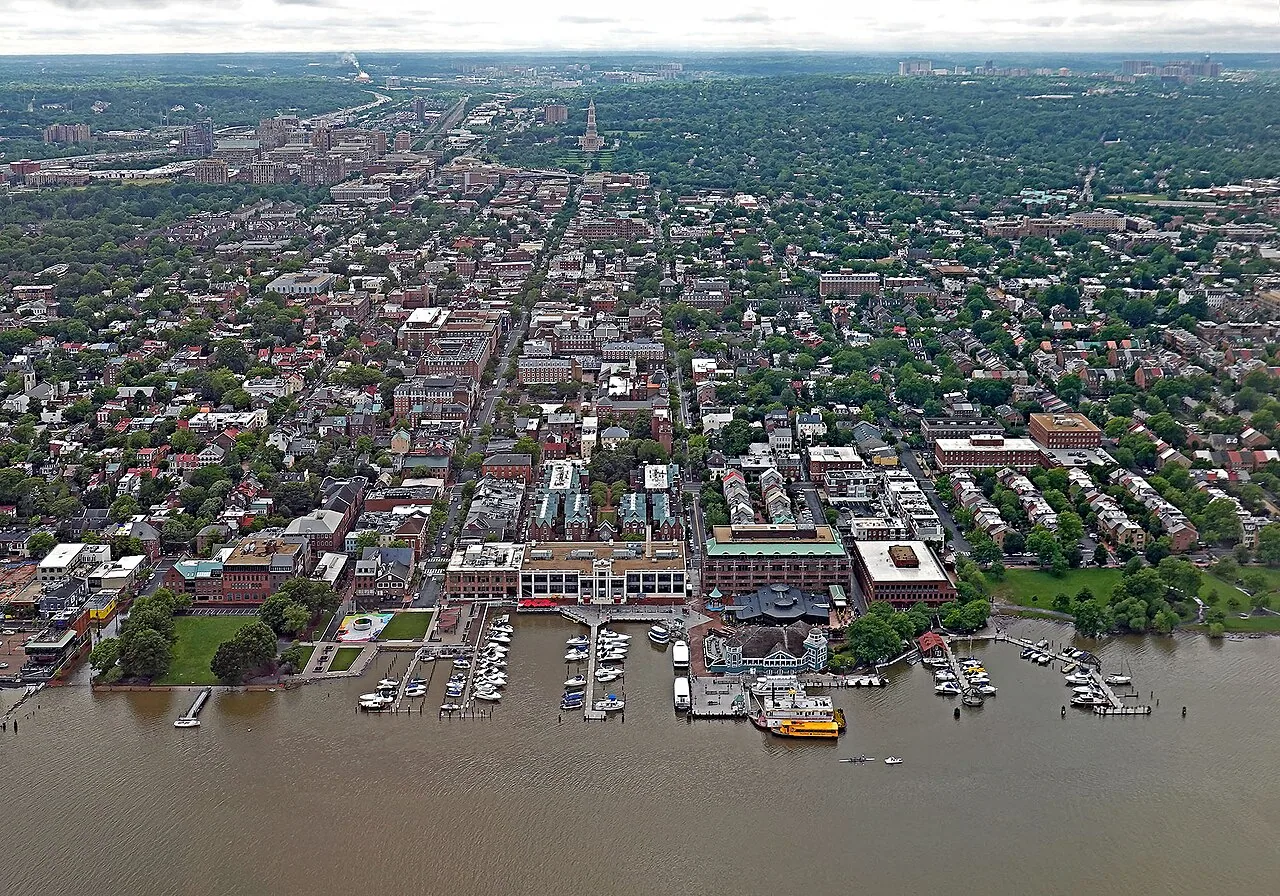
Alexandria's summer heat can increase movement in exposed membranes, while winter freezes and occasional snow make drainage and seams worth revisiting. Heavy rain tests outlets and overflow points. The city's low elevation and Potomac setting add flood context, but those facts do not show that a particular Versico roof has ponding or water entry. We record the roof's actual slope, drain condition and repair history before connecting a finding to exposure.
In Carlyle, occupied office and mixed-use properties may require a different staging plan from a building near Old Town North's commercial and redevelopment areas. We confirm roof entry, delivery windows, tenant hours and lift placement with the site contact. A nearby corridor helps locate a project, but it does not establish the property's access route or working schedule.
If active water is entering, our emergency response is available around the clock, weekends and holidays included. The first visit may focus on containment, interior protection and a safe temporary measure. A permanent membrane repair requires compatible material and suitable surface conditions. We identify what was made weather-tight during the response and what remains for a scheduled repair, so the closeout does not blur the two scopes.
Record What Was Verified
The repair record should name the membrane confirmed, attachment evidence, roof zone, materials used and photographs of the completed detail. It should also identify any area that remained inaccessible or untested. That distinction matters when a facility team receives old plans that do not match the sheet in the field. The general contractor can retain the report with submittals and use it when the roof is altered later.
Follow-up should revisit the repaired edge, adjacent seams, drainage and penetrations rather than only the original interior stain. A maintenance visit can record movement or debris before it obscures the detail. For a building with a capital project underway near Old Town North, the roof notes can inform access planning while leaving the specific construction sequence to the project team.
Send the address, reported condition, roof documents and access contact. We will verify the Versico membrane as far as the available evidence allows, inspect the relevant transitions and prepare a repair, recover or replacement scope. If a test opening could change the area, the scope identifies that decision point instead of including unconfirmed removal as settled work.
Roofing Manufacturers
Commercial Roofing Questions
Does a Versico label tell you whether the roof is TPO, PVC or EPDM?
It points to the manufacturer but may not identify the installed membrane or later alterations. We compare product records, sheet markings, seams and attachment evidence. When those checks do not settle the assembly, we identify the record or test needed before choosing repair materials.
Can Versico fleece-backed membrane be repaired like smooth sheet?
The surface affects preparation and bonding, so we confirm whether fleece is present and select a compatible detail. We inspect the surrounding sheet and attachment as well. The repair description should identify preparation and material rather than simply call it a membrane patch.
Why can water appear away from the damaged Versico detail?
Water can move below a membrane or along a deck before it reaches the interior. We compare the stain with roof slope, drains, curbs, seams and penetrations, then document likely path separately from confirmed entry. Testing may be needed if hidden moisture changes the repair area.
What changes the price and schedule of a Versico repair?
The membrane type, access, weather window, amount of wet material, substrate condition and perimeter or flashing work all affect scope. We inspect those conditions and separate confirmed tasks from testing that may change quantities. The proposal can then show the repair boundary and access assumptions.
Can a Versico roof be recovered instead of replaced?
That option depends on existing layers, moisture, attachment, drainage and project requirements. We inspect the assembly and determine whether preparation or removal is needed. Any uncertainty about concealed conditions stays visible until a test confirms what lies below the sheet.
Review a Versico Commercial Roof
Send the Alexandria property address, roof records, reported condition and access constraints. We will identify the membrane and prepare a scope for the affected roof zones.