 Services
 Roof Systems
 Property Types
 Industries
 Damage Repair
 Capabilities
 Manufacturers
 Service Areas
Duro-Last Commercial Roofing in Alexandria, VA
Roofing Manufacturers:
A Duro-Last roof record may refer to PVC membrane, a fleece-backed product, a KEE-modified PVC sheet or a TPO system. We identify the installed assembly from membrane markings, seams, records and visible layers. We confirm the roof and inspect its seams, flashing and drainage before recommending a repair. Alexandria, VA brings summer heat, winter freezes and heavy rain to that work, but only the field condition can establish what has failed.
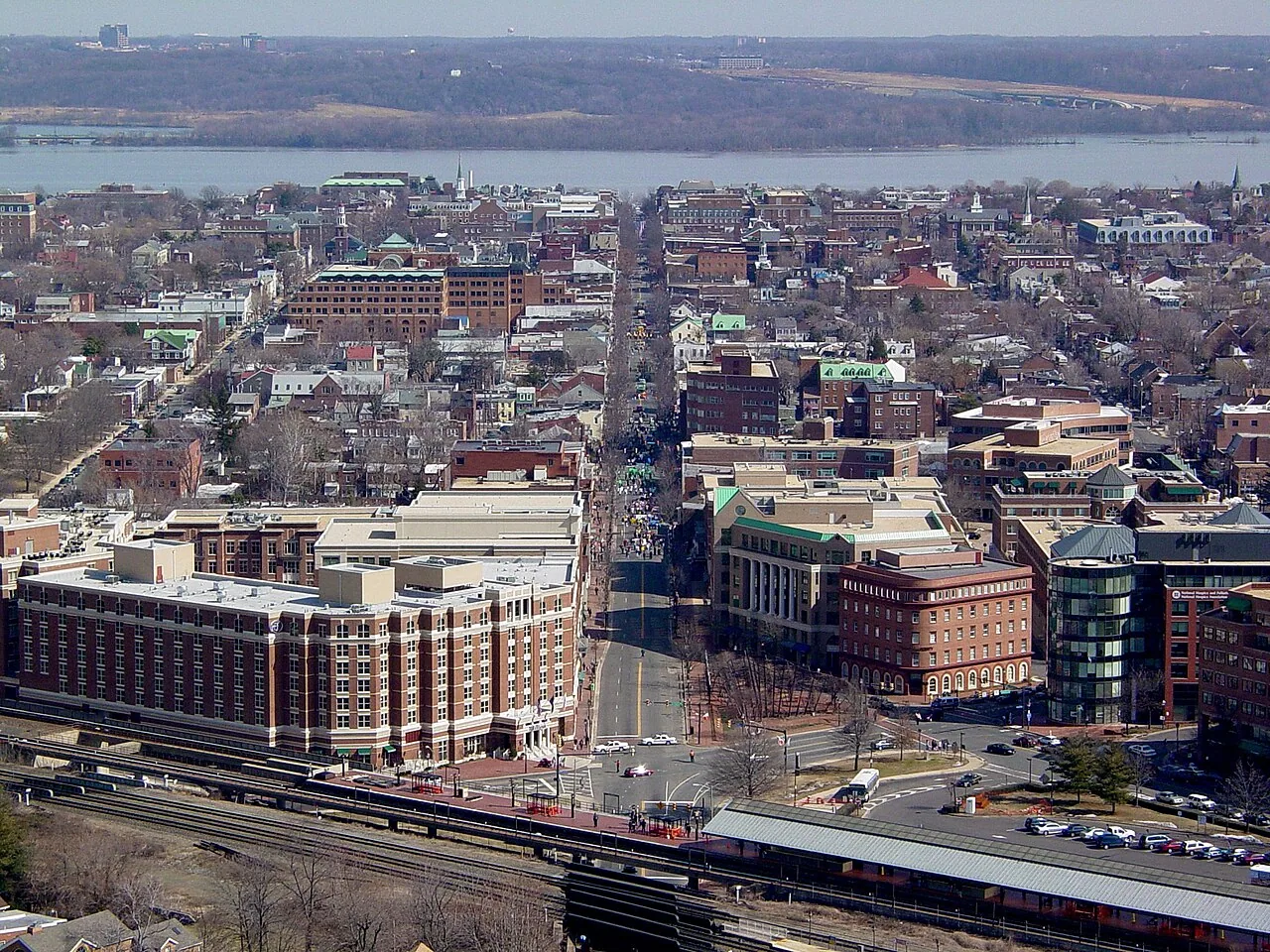
Commercial properties around Eisenhower East and Carlyle include office and mixed-use buildings, each with its own access and operating requirements. We confirm roof entry, staging and operating restrictions with the property contact. GAF systems and Carlisle assemblies offer other product lines, so the exact material matters whenever an old repair or specification is being reviewed.
Duro-Last Commercial Roofing
Confirm the Product in the Field
Duro-Last's commercial range includes PVC products such as Duro-Last, Duro-Tuff and Duro-Fleece, an EV product with KEE-modified PVC, and Duro-TECH TPO. These product names indicate different membrane constructions. We compare plans and submittals with membrane markings, seams, surface and attachment evidence. If a roof was coated, recovered or partly replaced, we record which zones match the original installation and which show later work.
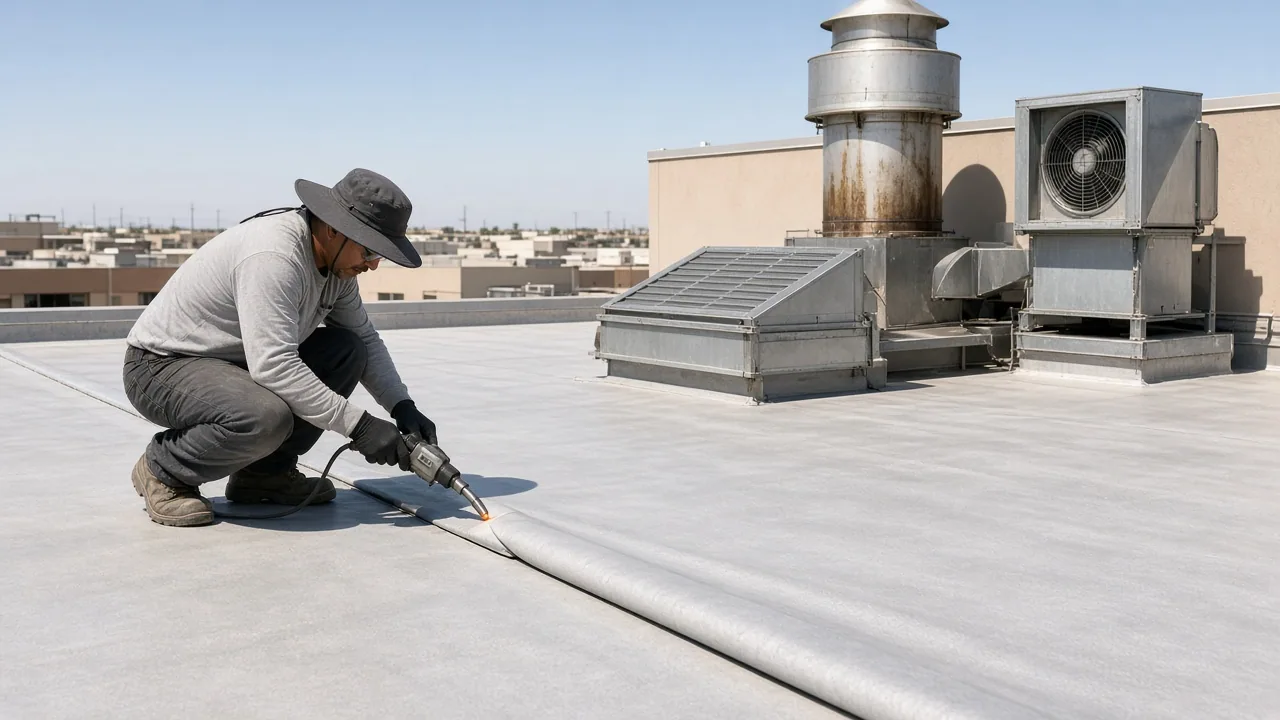
PVC seams are heat welded, so inspection checks weld continuity, laps, corners and transitions. A fleece-backed surface can change preparation, while a KEE-modified sheet has its own material identity. Duro-TECH uses TPO rather than PVC. Those distinctions affect the patch sheet and procedure; a repair should follow the installed membrane, not whichever product name appears first in a file.
Attachment and underlying layers also matter. We inspect fastener patterns or adhesive evidence, cover board, insulation and perimeter terminations where accessible. A PVC roof system and a TPO assembly can both have welded laps but are not interchangeable. If the assembly remains uncertain after field review, we identify what additional record or test would answer the question.
Check the Path and the Point of Entry
Interior water marks can be separated from their entry point by a deck, curb or long membrane lap. We map the reported room and weather timing against drains, slope, parapets, equipment and previous repairs. A commercial roof inspection documents the suspected path, confirmed defect and accessible roof zones separately. That record gives the facilities contact and general contractor a common location for reviewing scope and interior protection.
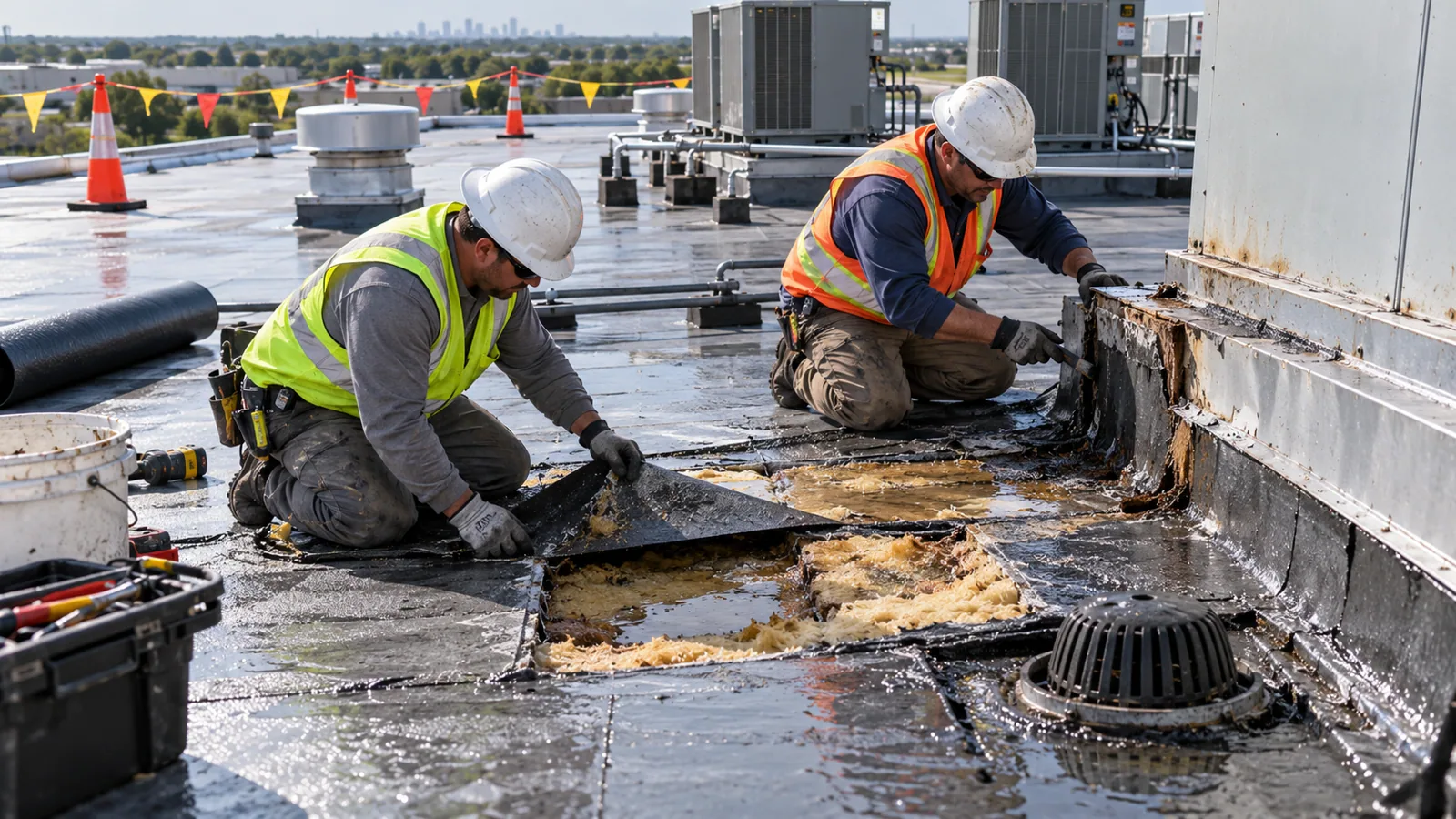
At a PVC or TPO lap, we inspect welds for open edges and contamination. At curbs and pipe penetrations, flashing turns and termination must remain secure as equipment moves. Drains and scuppers need a clear route, including the overflow point. A visible wrinkle is recorded with its location and surrounding details rather than labeled a leak without testing. Seam repair and flashing work address different points in the water path.
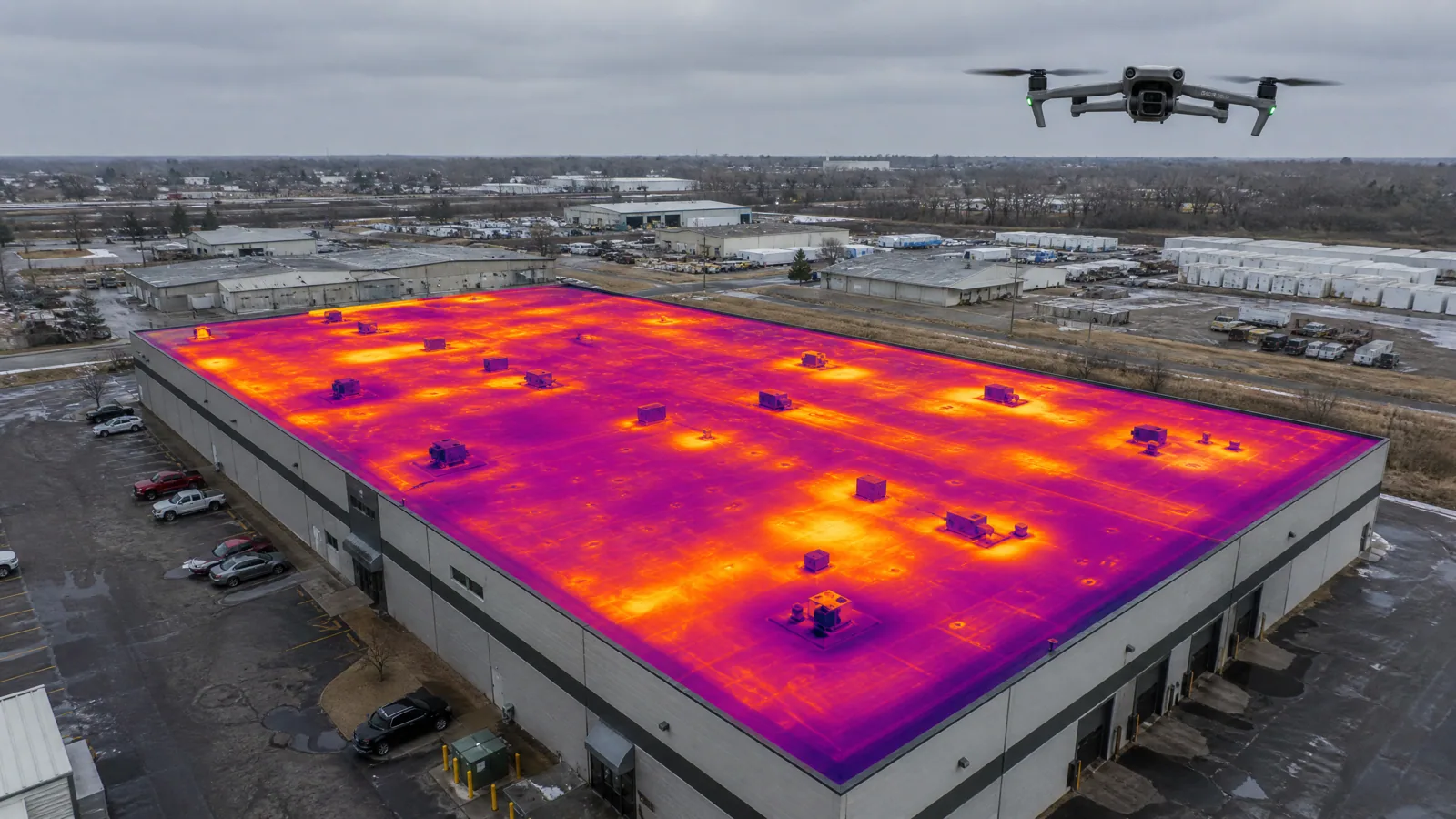
Moisture testing becomes useful when concealed insulation could enlarge the removal area. Infrared readings guide candidate locations, but an opening confirms only the layers exposed at that point. We agree on access and interior protection, then document the assembly, moisture finding and limits. The estimate can show a confirmed repair boundary and any additional test or removal as a separate decision.
Use the Correct Welding and Flashing Detail
Once the membrane is identified, we clean and prepare it for a compatible repair sheet. Thermoplastic welding depends on a sound surface, suitable heat and an even tie-in to existing material. Fleece-backed and smooth sheet require attention to how the patch bonds. We inspect adjacent laps and repair edges so the work does not stop at a loose termination or leave a second opening beside the first.
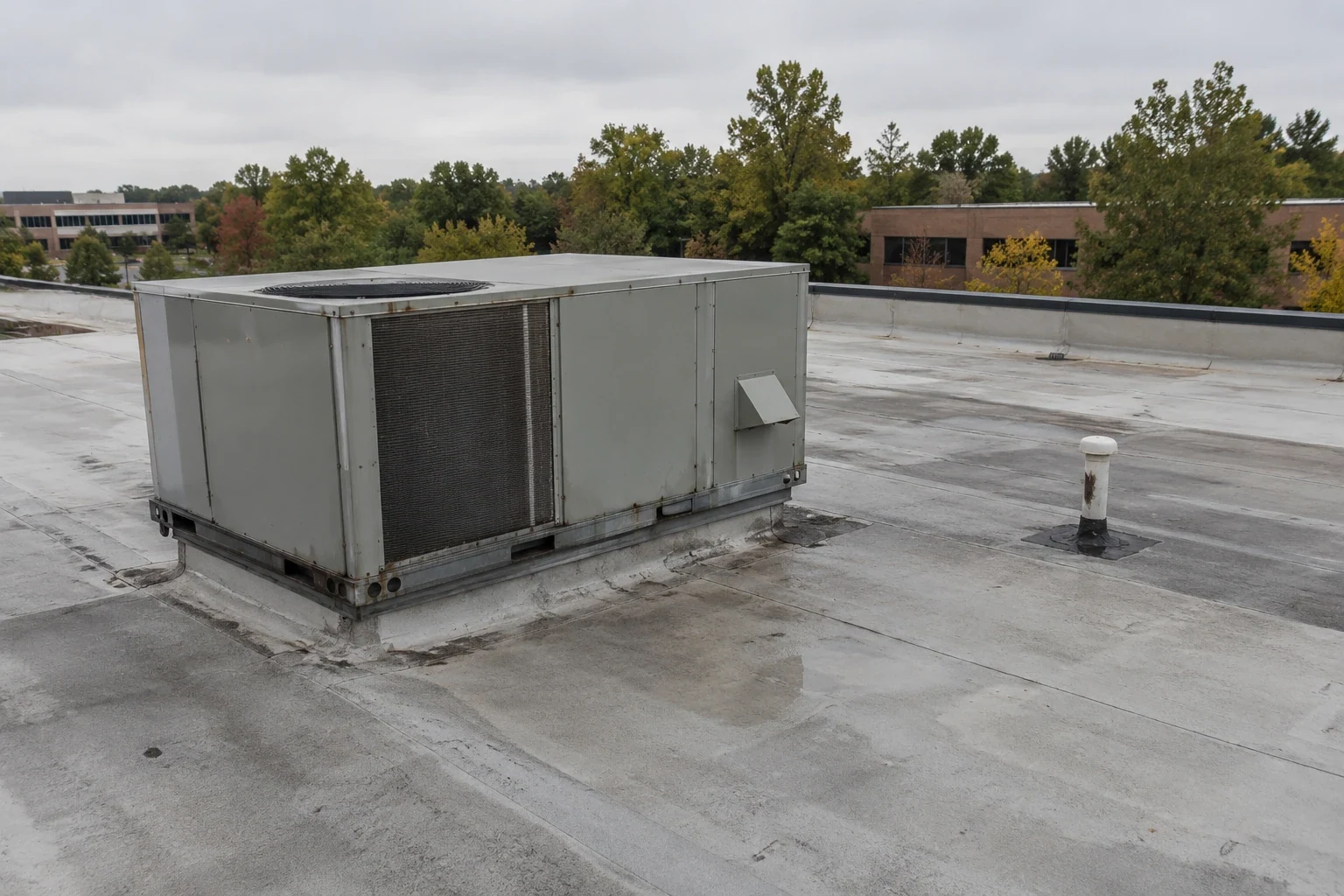
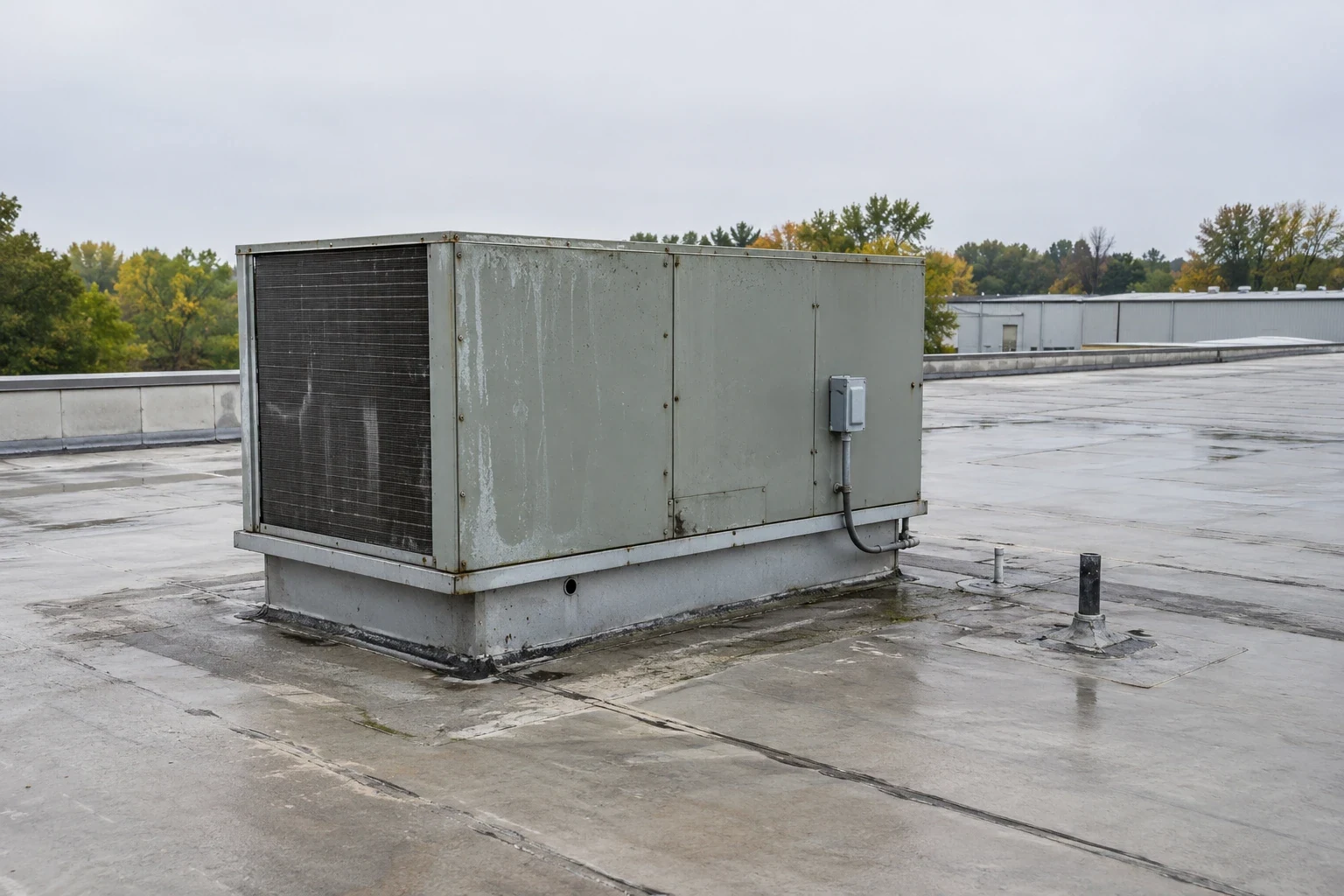
Equipment curbs, skylights and wall transitions can need a new flashing detail even if the field membrane is repairable. We check the metal, termination and substrate, then coordinate with the equipment contact if a recent change affected the roof. Penetration flashing should turn cleanly at corners and meet the membrane without a gap that can collect water or move under service loads.
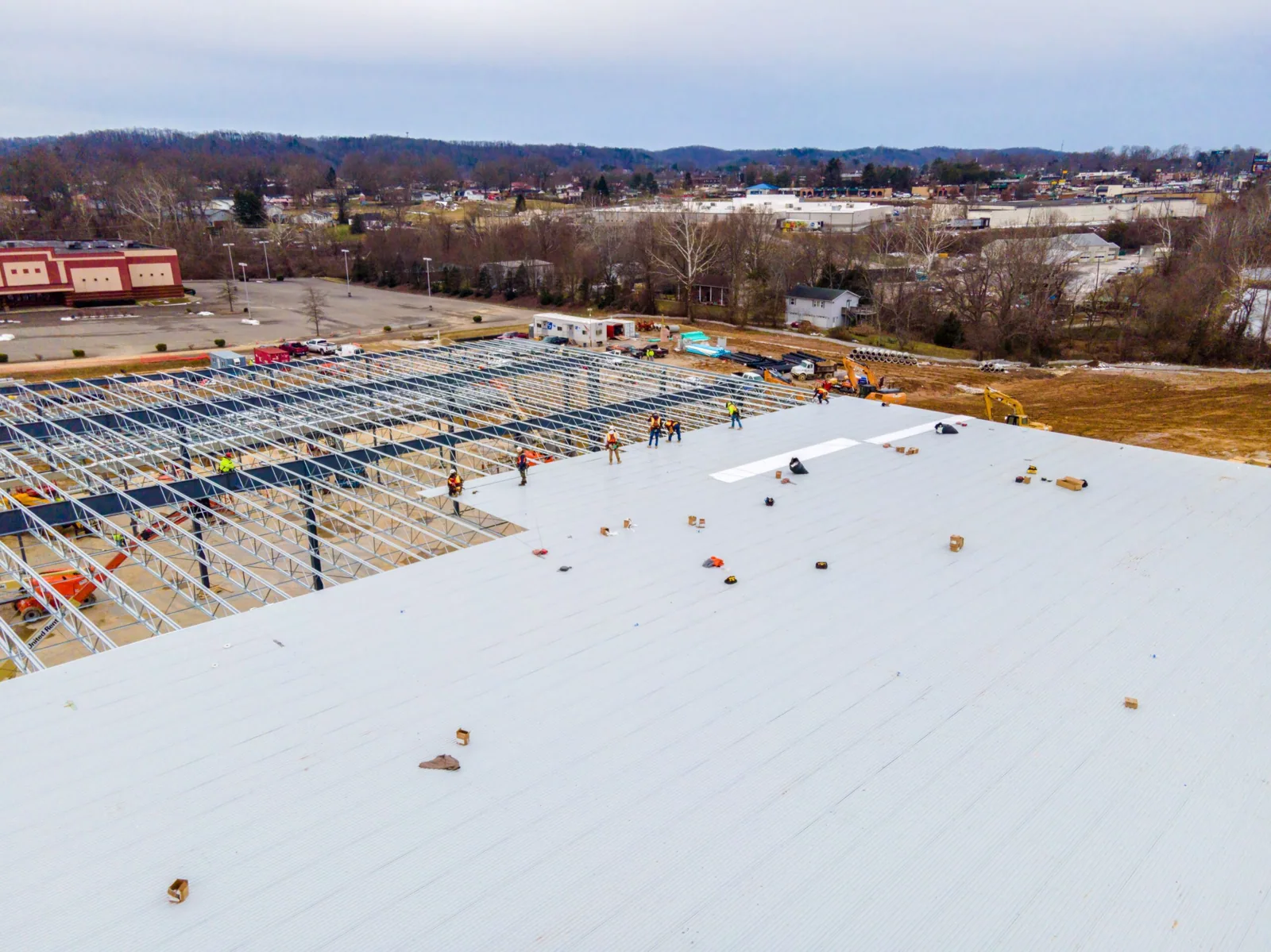
A repair remains local only when adjacent attachment and layers support that boundary. Repeated seam failures, wet insulation or a deteriorated deck may require a broader comparison. A recover evaluation considers existing layers, drainage, perimeter height and project requirements. The proposal identifies preparation, edge work, drains, access and staging, allowing a construction team to compare repair, recover and replacement without assuming hidden conditions.
Account for Heat, Freezing and Rain
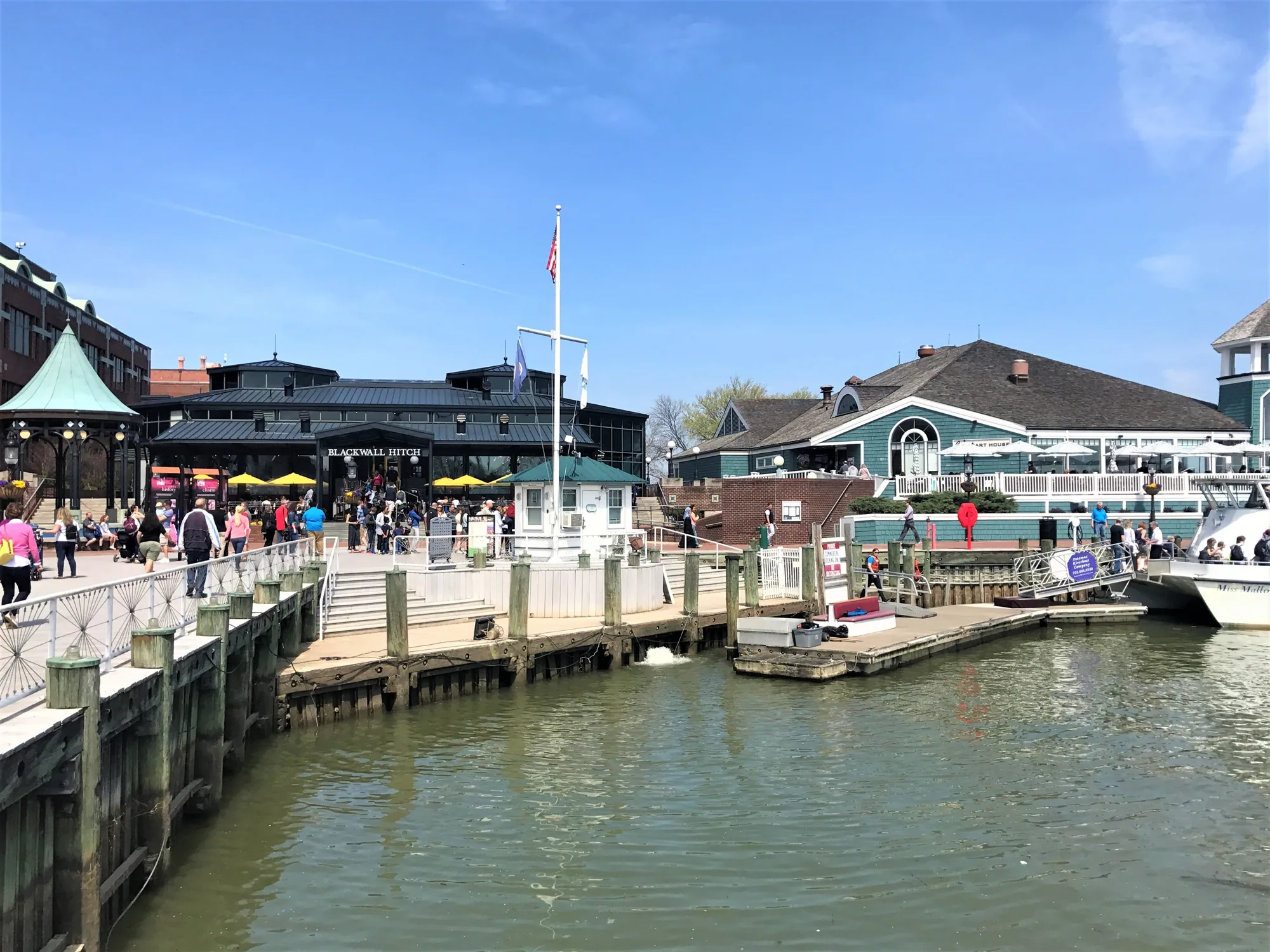
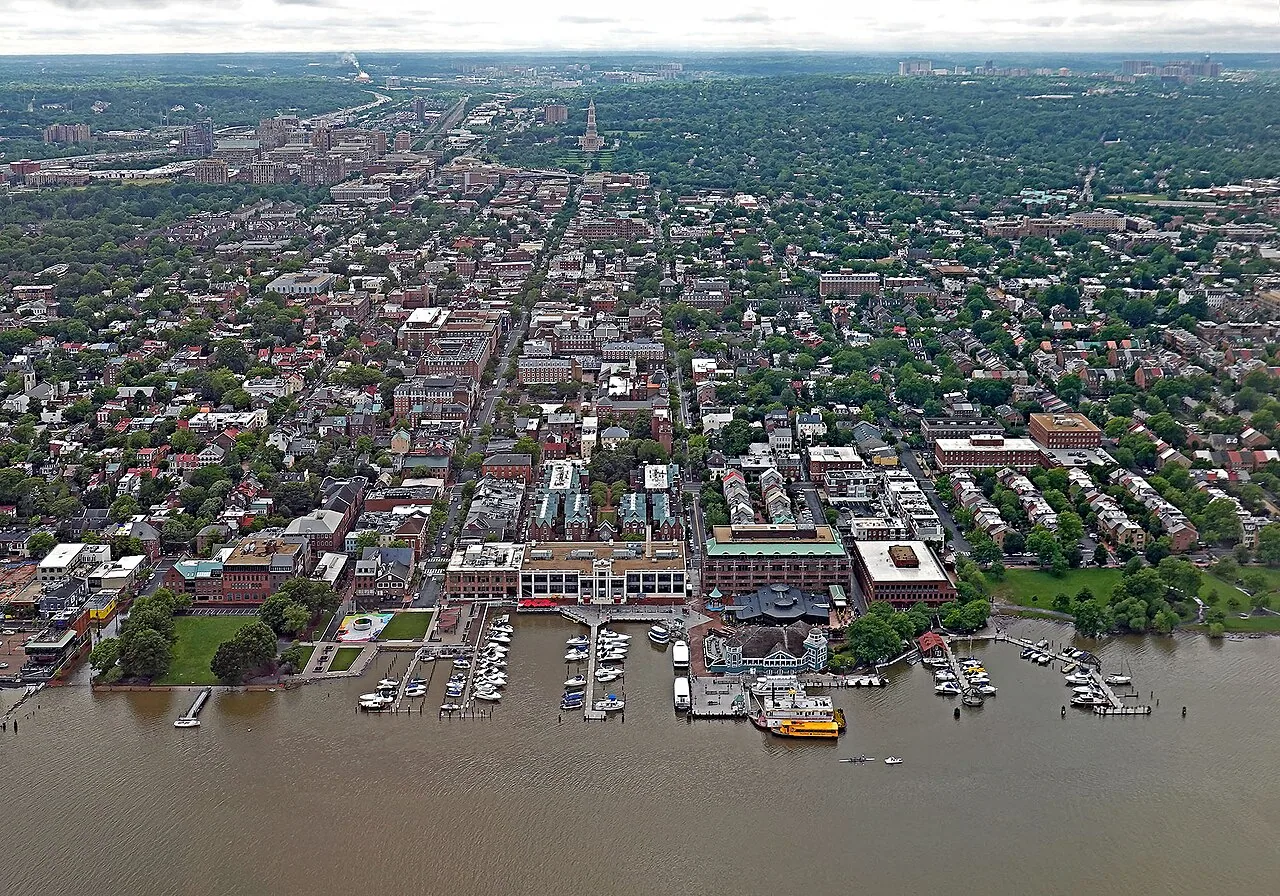
Alexandria's summer heat and winter freeze-thaw expose roof details to repeated temperature change. Intense rain tests drainage paths and overflow points. Alexandria’s Potomac setting makes drainage and overflow checks especially useful; the roof’s slope, outlets and membrane condition set the repair scope. We record the roof's slope, outlets, edge details and membrane condition before linking a repair to any particular exposure.
In Eisenhower East, office and mixed-use properties may have loading, tenant and lift constraints. At Carlyle, the contact can confirm building entry and a work window before materials arrive. We plan deliveries, protection below and a safe stopping detail with the site representative. The property contact confirms truck access, staging and work windows at the address.
Emergency response is available through nights, weekends and holidays when water is entering. An initial visit can trace the entry, protect occupied areas and install a suitable temporary measure. Permanent welding follows when the roof surface and weather permit. We report the temporary work separately from the lasting repair, including any open question that must be resolved before the roof can be closed permanently.
Make the Repair Record Specific
At closeout, we identify the product confirmed, its roof zone, repair materials, preparation and photographs. If the records say PVC but the field markings are incomplete, the report states how far identification went. It should also note whether insulation or deck was tested and any area that remained inaccessible. That detail prevents a future scope from treating an assumption as a confirmed assembly.
Maintenance can revisit drains, seams, curbs and previous repair boundaries after later weather. A planned maintenance visit records new movement and surface changes before they become interior reports. The property team can retain those photos with product submittals and use them when planning equipment work or capital replacement.
Send the Alexandria address, roof documents, reported condition and site contact. We will confirm the membrane as far as available evidence allows, inspect the related roof zones and prepare a measured scope. If a test opening could change the work area, we will identify that decision before including additional removal in the proposal.
Roofing Manufacturers
Commercial Roofing Questions
How do you distinguish Duro-Last PVC from Duro-TECH TPO?
We compare product records, membrane markings, surface and seam construction. A PVC and TPO sheet can both have heat-welded seams, so the product must be confirmed before selecting a patch. If records and field evidence differ, the report identifies what remains uncertain.
Does Duro-Fleece require a different repair approach?
Fleece changes the surface and bonding detail, so preparation and patch selection must suit the installed product. We check the sheet, attachment and adjacent laps. The scope records the repair method and any substrate condition that could affect the bond.
Can you repair a Duro-Last roof while occupants remain in the building?
Work can often be staged, subject to safe access, noise, deliveries, weather and interior protection. We coordinate hours and affected areas with the site contact. If a test opening or equipment movement is planned, the work sequence will identify those steps in advance.
When is a Duro-Last roof a candidate for recover?
The existing assembly, moisture, attachment, drainage and edge height determine whether another layer is feasible. We inspect those conditions and identify required repairs before recommending an overlay. A test may be needed when concealed moisture could change the scope.
What should I send before a Duro-Last inspection?
Send the address, leak location, timing, product submittals, repair records and access contact. Roof plans and photos can help select areas to inspect, but field conditions confirm the assembly. We will record access or testing limits with the findings.
Review a Duro-Last Roof in Alexandria
Send the property address, product records, reported condition and access limits. We will confirm the membrane, inspect the related details and prepare a repair or replacement scope.