
 Services
 Roof Systems
 Property Types
 Industries
 Damage Repair
 Capabilities
 Manufacturers
 Service Areas
Commercial Roof Warranty Management in Alexandria, VA
Roofing Capabilities:
- Commercial Roof Asset Management in Alexandria, VA
- Commercial Roof Capital Planning in Alexandria, VA
- Commercial Roof Condition Reports in Alexandria, VA
- Commercial Roof Warranty Management in Alexandria, VA
- Commercial Roof Due Diligence Surveys in Alexandria, VA
- Multi-Site Commercial Roofing Programs in Alexandria, VA
A warranty file is only useful when a building team can connect its terms to the roof, repairs and inspection record. We help organize available documents, identify roof conditions that need review and record maintenance or repair work by location. Alexandria’s hot summers, winter freezes and tidal flooding put attention on seams, drains and edge transitions. A roof review checks those details alongside the applicable warranty terms and repair history.
Office and mixed-use properties around Carlyle and Eisenhower East differ from academic and approved office development in North Potomac Yard. Each address has its own system, records and access requirements. A condition report documents current findings, while asset management can retain those records alongside inspection and repair history.
Commercial Roof Warranty Management
Gather the Documents That Govern the Roof
We begin with the property address, roof plans, installation or repair documents, maintenance history and any available manufacturer paperwork. The facility team should identify which roof sections the documents cover and whether later alterations occurred. We compare the available plans with visible conditions, paying particular attention to areas changed by later equipment, repairs or reroofing.
Warranty language can specify inspection, maintenance, notification or repair procedures. The owner or manufacturer confirms the terms that apply to a particular roof. We organize relevant roofing records and identify questions for the responsible party without representing ourselves as the issuer or interpreter of a warranty.
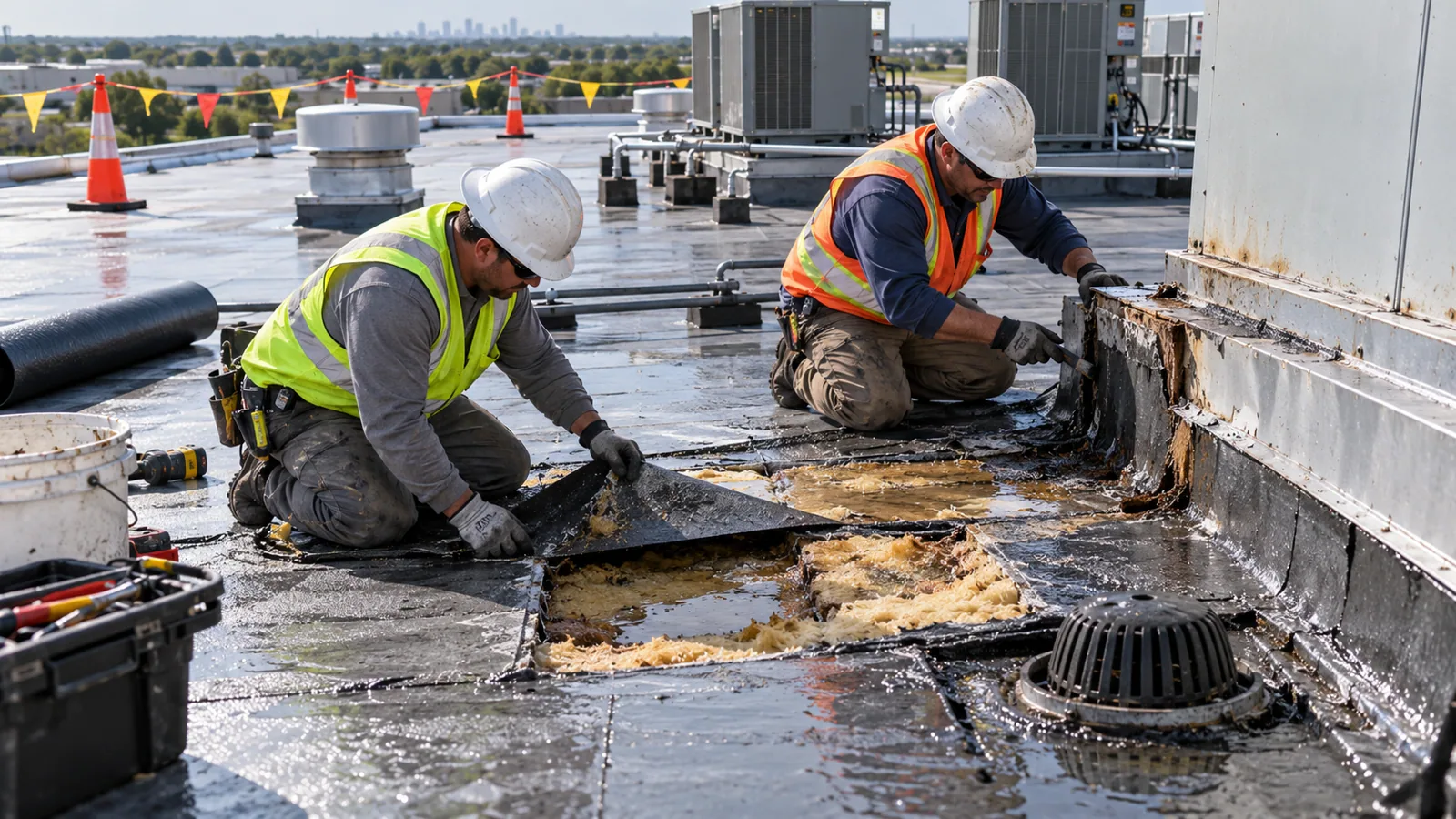
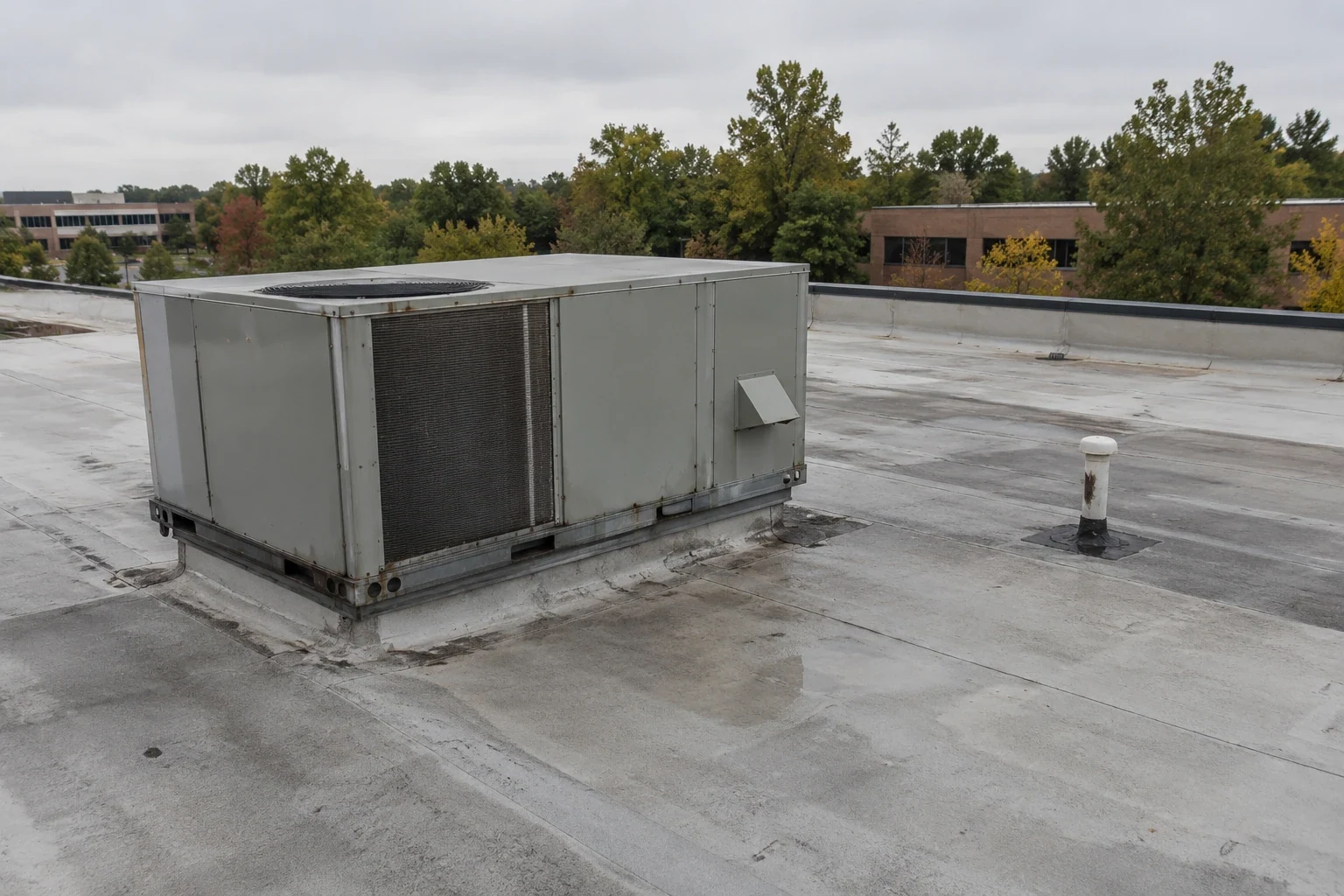
A roof inspection can document seams, drains, flashings, penetrations and previous repairs. Photographs and roof-zone references show where the observation occurred. When a condition is concealed, a test opening can show whether insulation or deck work belongs in the repair scope. That record helps the property team prepare a complete discussion with the manufacturer or its representative.
Track Work Without Losing the Roof History
Service tickets often name a room or a leak date but omit the roof detail repaired. We record the location, materials, preparation and limits of work, then retain photographs with the property file. If a repair affects a roof area subject to specific requirements, the owner can review the proposed procedure against its documents before work proceeds.
Maintenance visits can revisit drains, seams, perimeter details and prior repairs. The inspection interval and required records depend on the specific document and roof condition. In a multi-site program, we organize dates and findings by address and roof section so each building keeps a separate maintenance history.
If the roof is altered by new equipment, a curb, solar installation or another project, the owner should retain the revised plans and closeout details. We can inspect the new penetration or transition and document the roofing scope. Manufacturer or warranty questions are referred to the responsible party for direction before the assembly is changed.
Coordinate Before Corrective Work
When a leak or visible defect appears, the owner should review notification and repair procedures in the available documents. We can inspect the roof and provide a measured scope, then coordinate the timing and detail with the property contact. When water threatens the building, emergency crews can respond at all hours, on weekends and holidays. Temporary protection is described separately from the permanent correction.
Material selection follows the installed roof system and the detail being repaired. A Carlisle roof system and a GAF system can carry different repair instructions and warranty terms, so the applicable document should guide the proposed detail. The owner confirms manufacturer requirements for that assembly. Our proposal describes preparation, materials and location so the responsible party can review the detail.
If repair could affect a larger warranted area, we separate the work boundary and explain what testing or authorization is still needed. We confirm any required owner or manufacturer approval before opening the roof for that procedure. That keeps the service record accurate and gives the project team a clear decision point before material is removed.
Keep Local Exposure in Context
Alexandria's July normals reflect regular summer heat; winter temperatures cross freezing, and the Potomac's tidal setting adds flood context. These conditions put exposed seams, drains and edges high on an inspection route. The roof’s physical condition and the applicable warranty document guide any corrective work.
At an office in Carlyle or an academic or office property near North Potomac Yard, roof access and staging follow the building’s operating needs. Keep system dates, repairs and warranty terms with that property’s roof history.
For Alexandria construction, the 2021 Virginia Codes provide a baseline, while project design and permit review determine requirements for the specific repair. The project team can review those requirements alongside the applicable warranty terms.
Maintain a Complete Warranty File
A closeout record can include dates, roof zones, photographs, materials, repair boundaries, testing and any manufacturer direction supplied by the owner. The file should show unresolved roof conditions and any area that could not be reached. If a follow-up inspection is recommended, the record states which detail should be revisited and what observation would close the question.
Maintenance information is easier to use when the building can retrieve it by address and roof section. A capital plan can use the same history to compare future repairs, while warranty records remain connected to the applicable document. The owner controls retention and determines who may submit information to a manufacturer.
When a leak or alteration occurs, record the date, roof zone, weather, work performed and any materials replaced. Photos before, during and after the repair help show how the detail changed. Note any area left unopened, blocked from view or outside the approved scope, so the next inspector can distinguish a known limit from a newly observed condition. If the manufacturer supplies written direction, retain it with the related service record so later maintenance follows the same approved procedure.
Share the address, available warranty paperwork, prior repair records and current concern. We can inspect the roof, organize the roofing findings and identify the documents or approvals the owner should confirm before proceeding.
Roofing Capabilities
Commercial Roofing Questions
Can you tell whether a particular repair is covered by a roof warranty?
Coverage is confirmed by the issuer under the applicable document. We can inspect the roof, describe the condition and organize repair records for that review. The warranty issuer determines coverage under the terms that apply to the roof.
What should a property keep after roof maintenance?
Retain the date, roof zones inspected, photographs, drains or seams serviced, materials used and limits on access. Keep those records with the applicable roof documents. This helps the owner reconstruct the maintenance history when a condition appears later.
Should a manufacturer be contacted before an emergency repair?
The owner should follow any notification procedures available in the warranty documents. If active water threatens the building, emergency protection can be assessed while the owner contacts the responsible party. We document temporary measures separately and coordinate permanent work with the authorized contact.
Can new equipment affect warranty records?
A new curb, conduit or solar attachment changes the roof detail, so add its location and repair materials to the building’s roof file. The owner should confirm requirements with the manufacturer or warranty issuer before work. We can inspect and record the roofing scope and keep the new transition linked to the property file.
How do you manage warranty records across multiple buildings?
We organize documents and service history by address and roof section. Each file should identify its system, dates, repairs and any manufacturer instructions. A shared portfolio index can make retrieval easier without transferring terms or findings from one building to another.
Organize Roof Warranty Records
Send the property address, current roof concern and available warranty or repair documents. We will inspect the relevant details and prepare an address-level roofing record.