
 Services
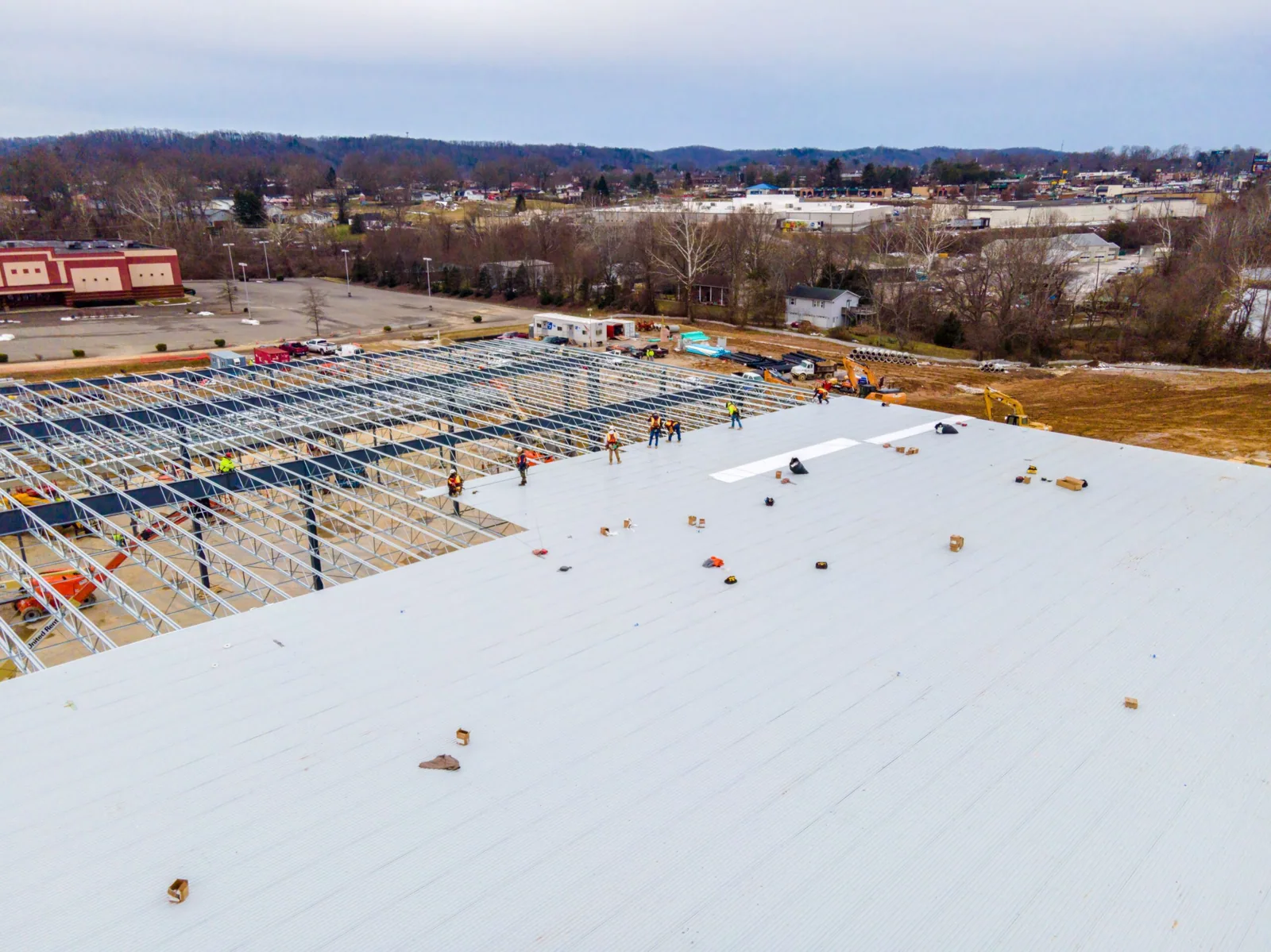 Roof Systems
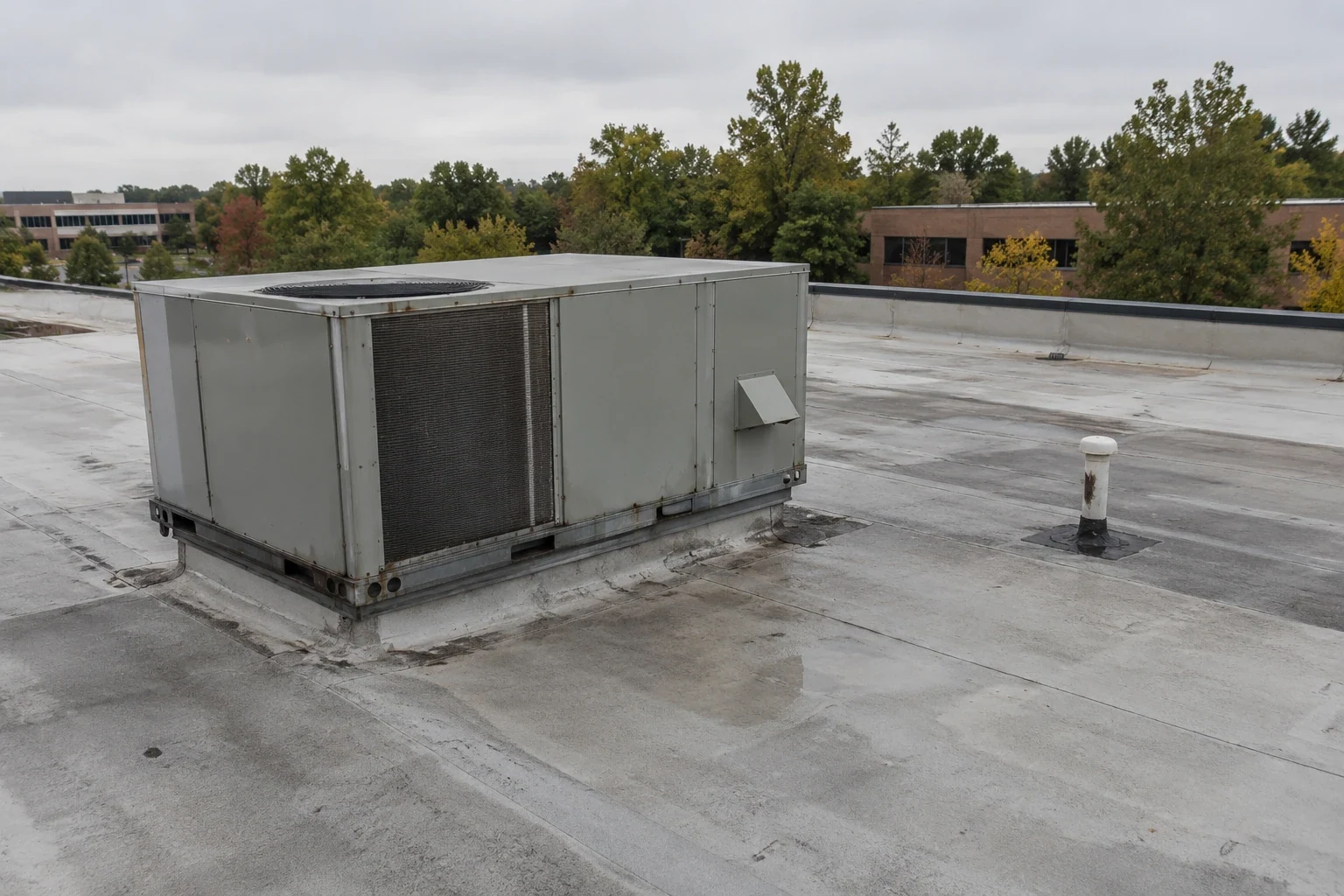 Property Types
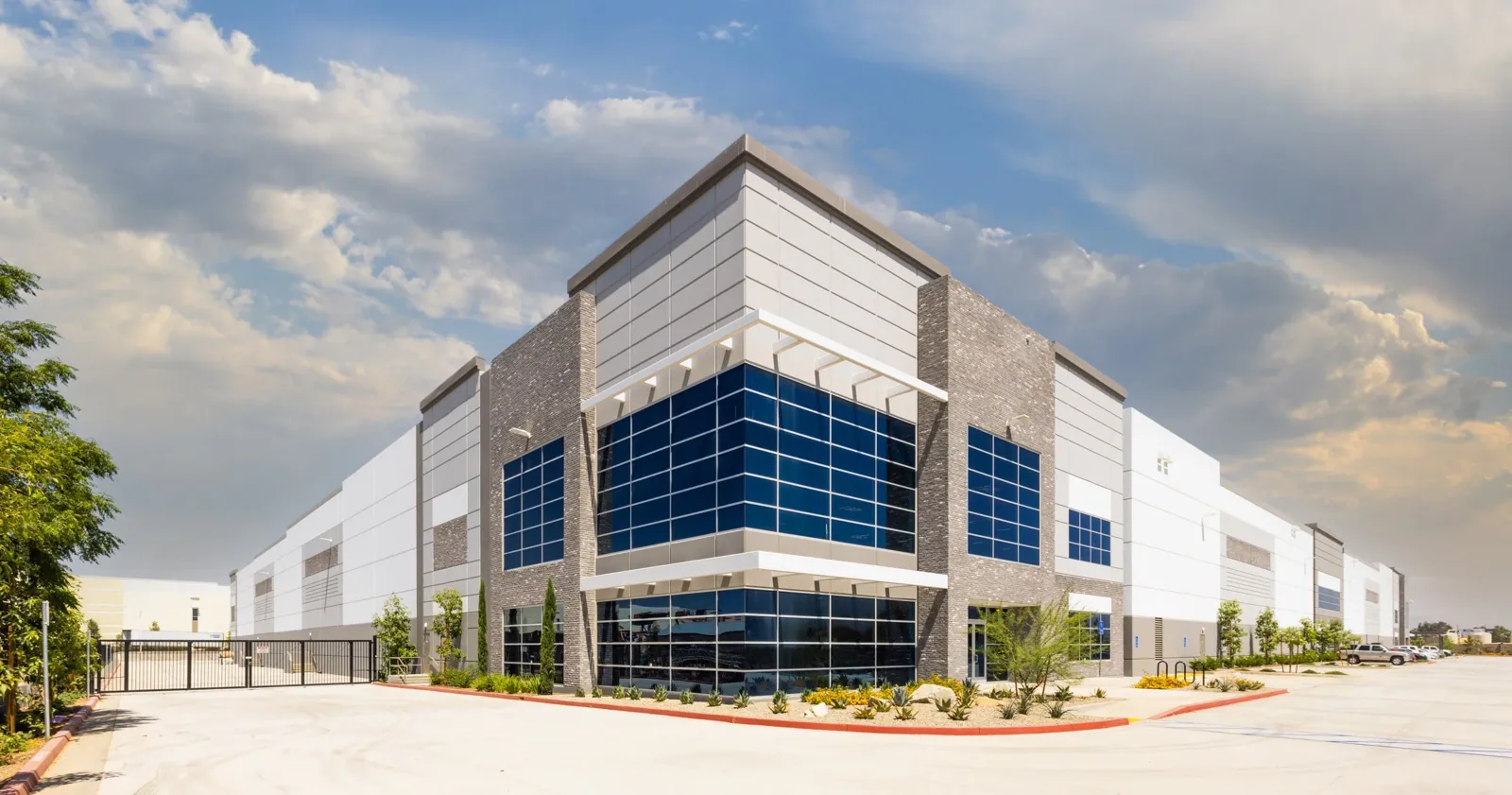 Industries
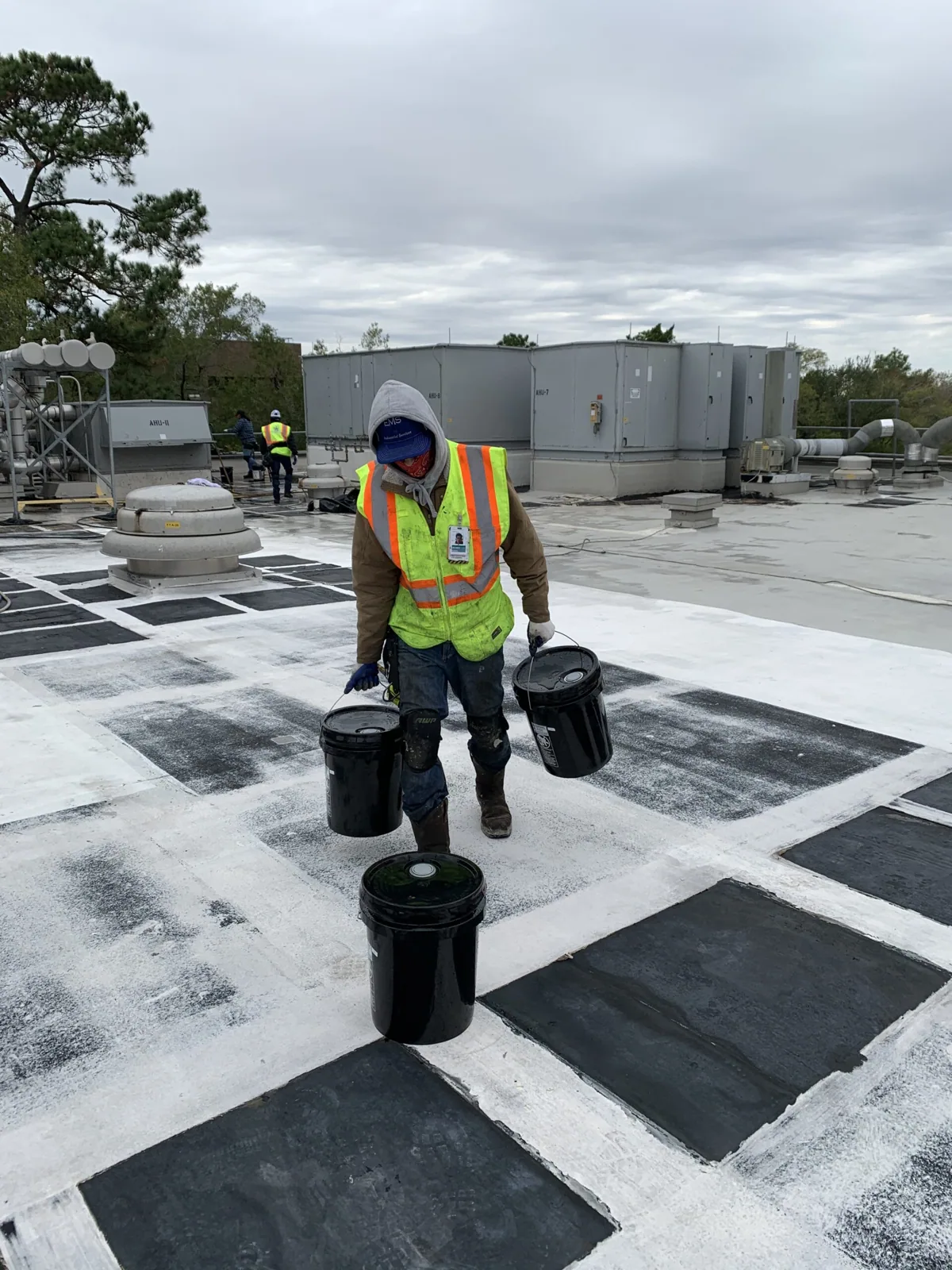 Damage Repair
 Capabilities
 Manufacturers
 Service Areas
Commercial Roof Asset Management in Alexandria, VA
Roofing Capabilities:
- Commercial Roof Asset Management in Alexandria, VA
- Commercial Roof Capital Planning in Alexandria, VA
- Commercial Roof Condition Reports in Alexandria, VA
- Commercial Roof Warranty Management in Alexandria, VA
- Commercial Roof Due Diligence Surveys in Alexandria, VA
- Multi-Site Commercial Roofing Programs in Alexandria, VA
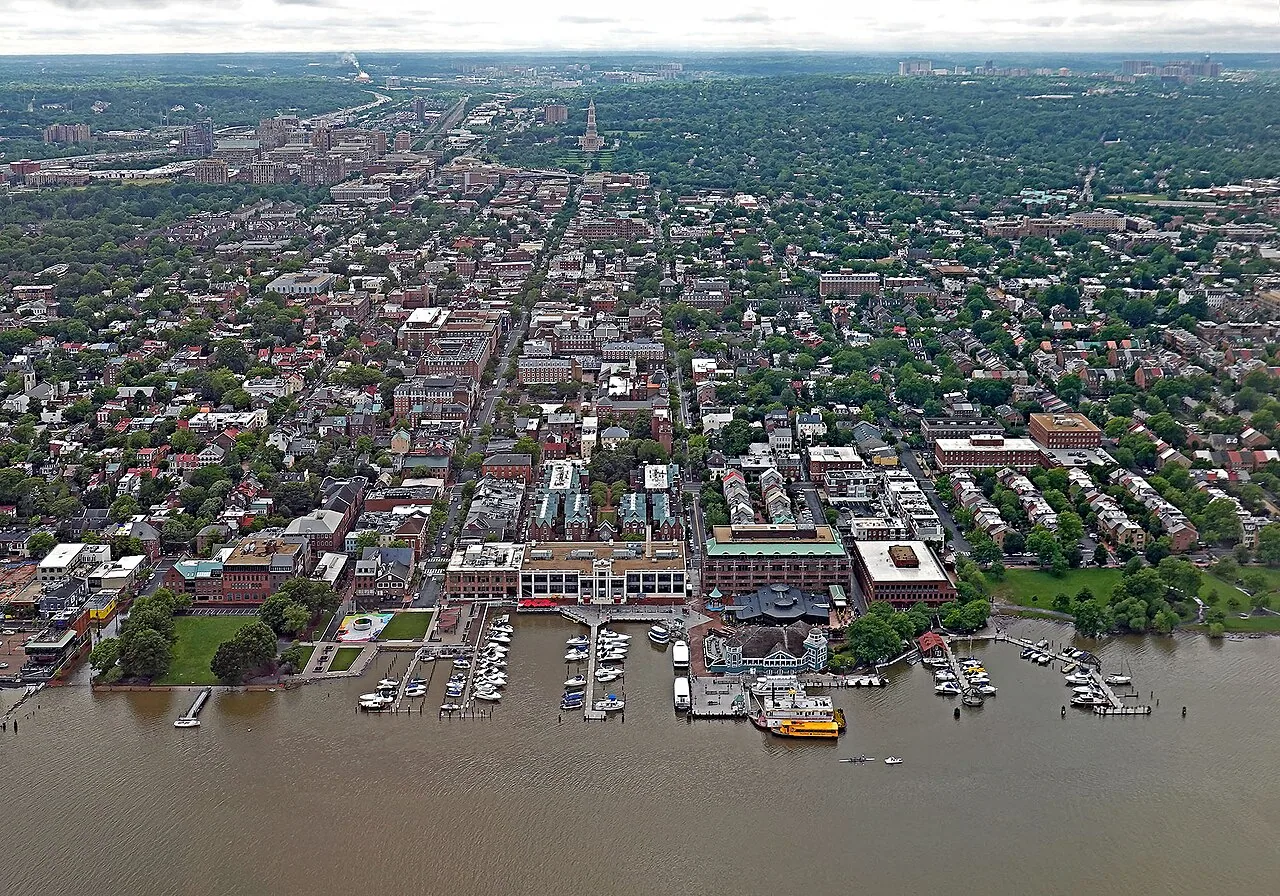
A roof portfolio becomes harder to manage when one building's repair history is mixed with another's condition. We organize inspections by address, roof zone, assembly, photographs and unresolved questions so a facilities team can see what was actually checked. Alexandria’s hot summers, winter freezing and Potomac flood exposure make drainage and attachment useful inspection priorities.
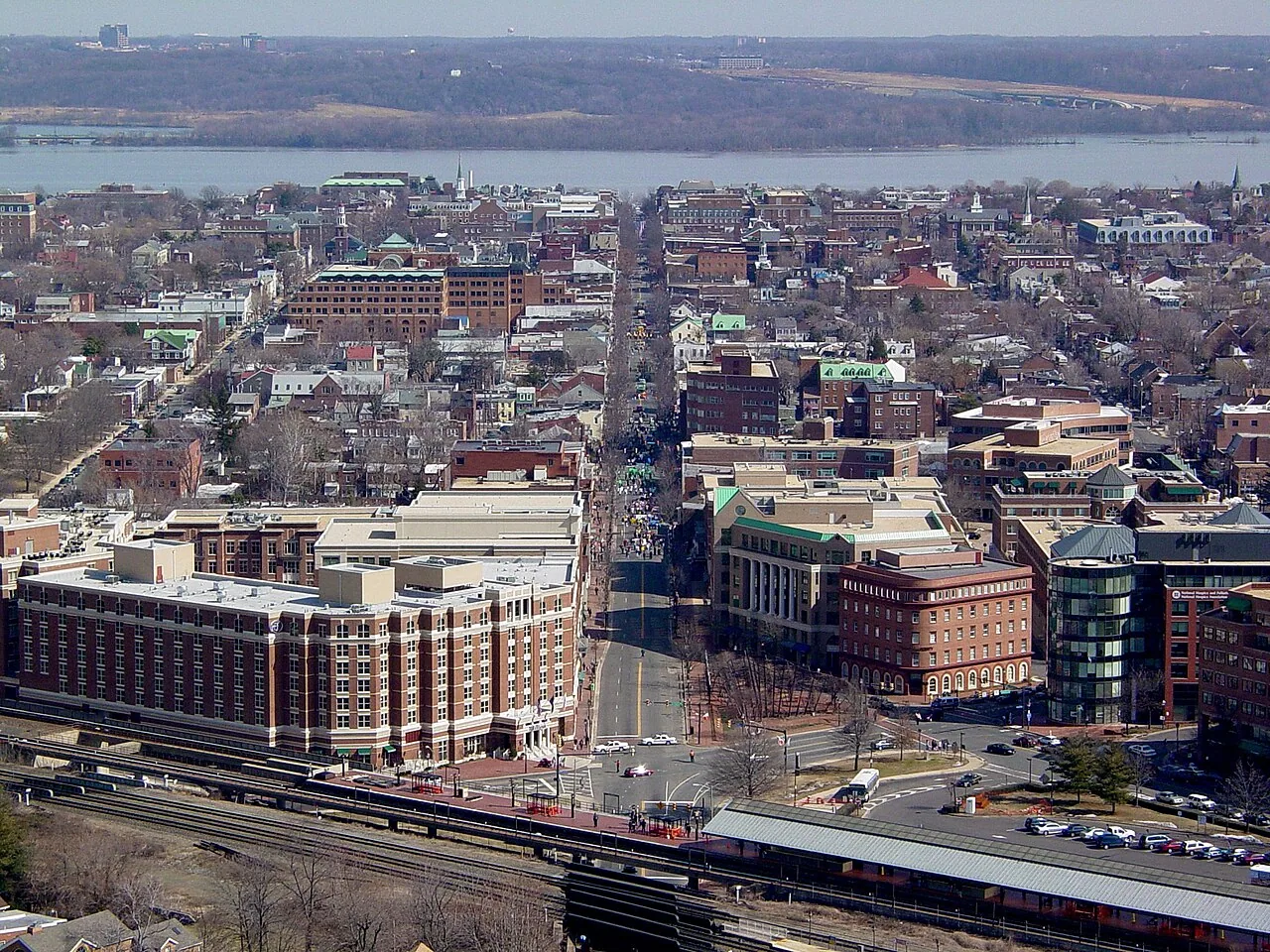
Carlyle and Eisenhower East include office and mixed-use properties. North Potomac Yard has Virginia Tech’s campus and approved offices, while Landmark is a redevelopment area. Each property has its own roof, access and operating details. A condition report records site findings, while capital planning can place larger work in a sequence tied to evidence.
Commercial Roof Asset Management
Build a Reliable Roof Record
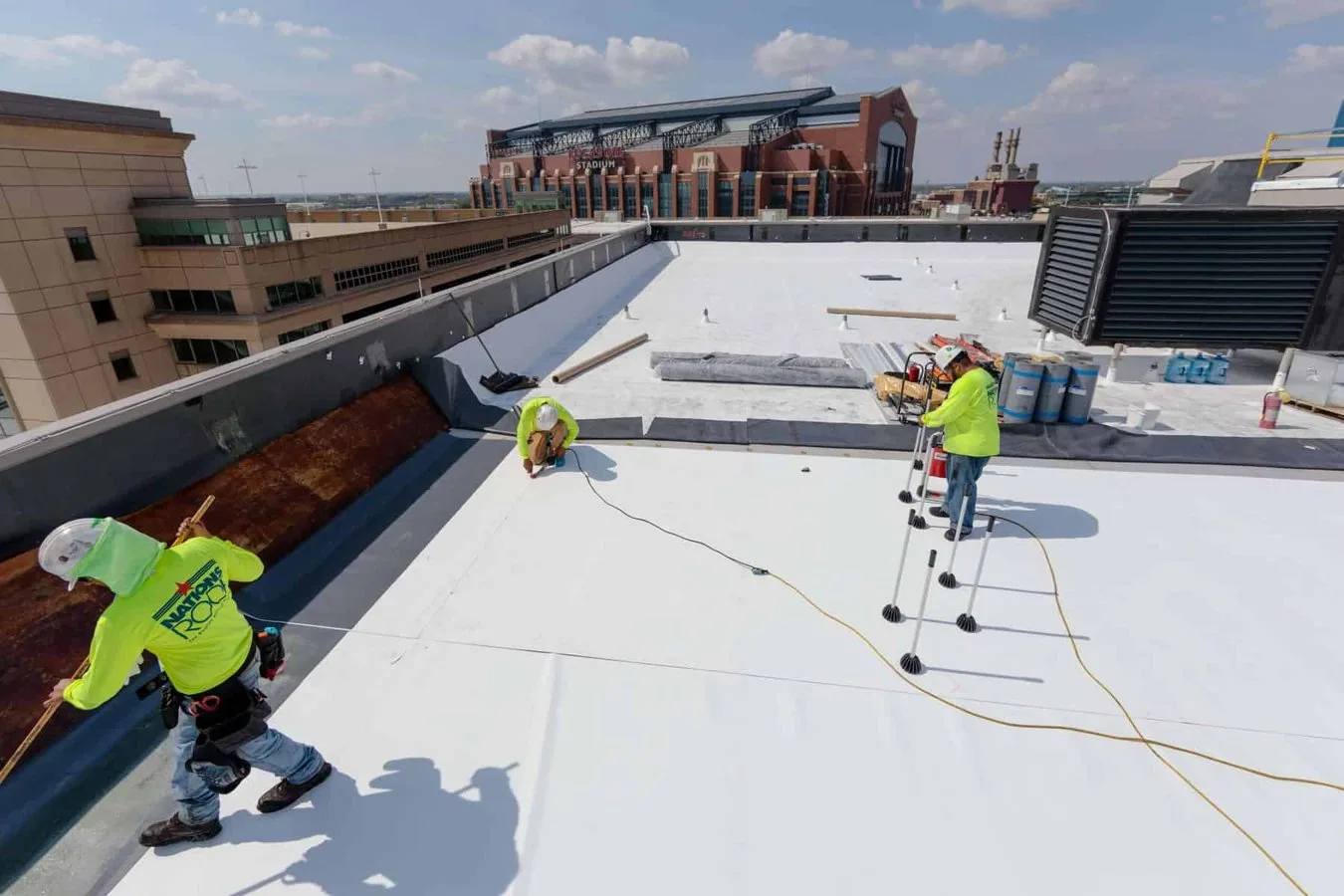
We start with the portfolio list and confirm which addresses, buildings and roof zones are included. Available plans, prior repair notes and maintenance records help, but current field observations remain necessary. We identify membrane or metal system where visible, roof access, drainage, transitions, equipment and any areas the inspection could not reach. Each fact is associated with its property rather than copied across similar buildings.
A useful record gives the asset manager an address, roof zone, inspection date, photos, observed condition, repair boundary and next action. If a test opening confirms insulation or deck condition, we record the location and result. A temperature reading or single test point does not establish a condition across an entire roof. The record keeps verified findings separate from questions that need further access or investigation.
For portfolios with mixed uses, access and operations belong in the same record as roofing details. A clinic, office, retail building and warehouse can have different roof entry rules and work windows. We note the contact, staging limits and any occupied areas that affect future repair. Those details make the record useful for project planning rather than only a catalog of roof materials.
Use Inspections to Update the Portfolio
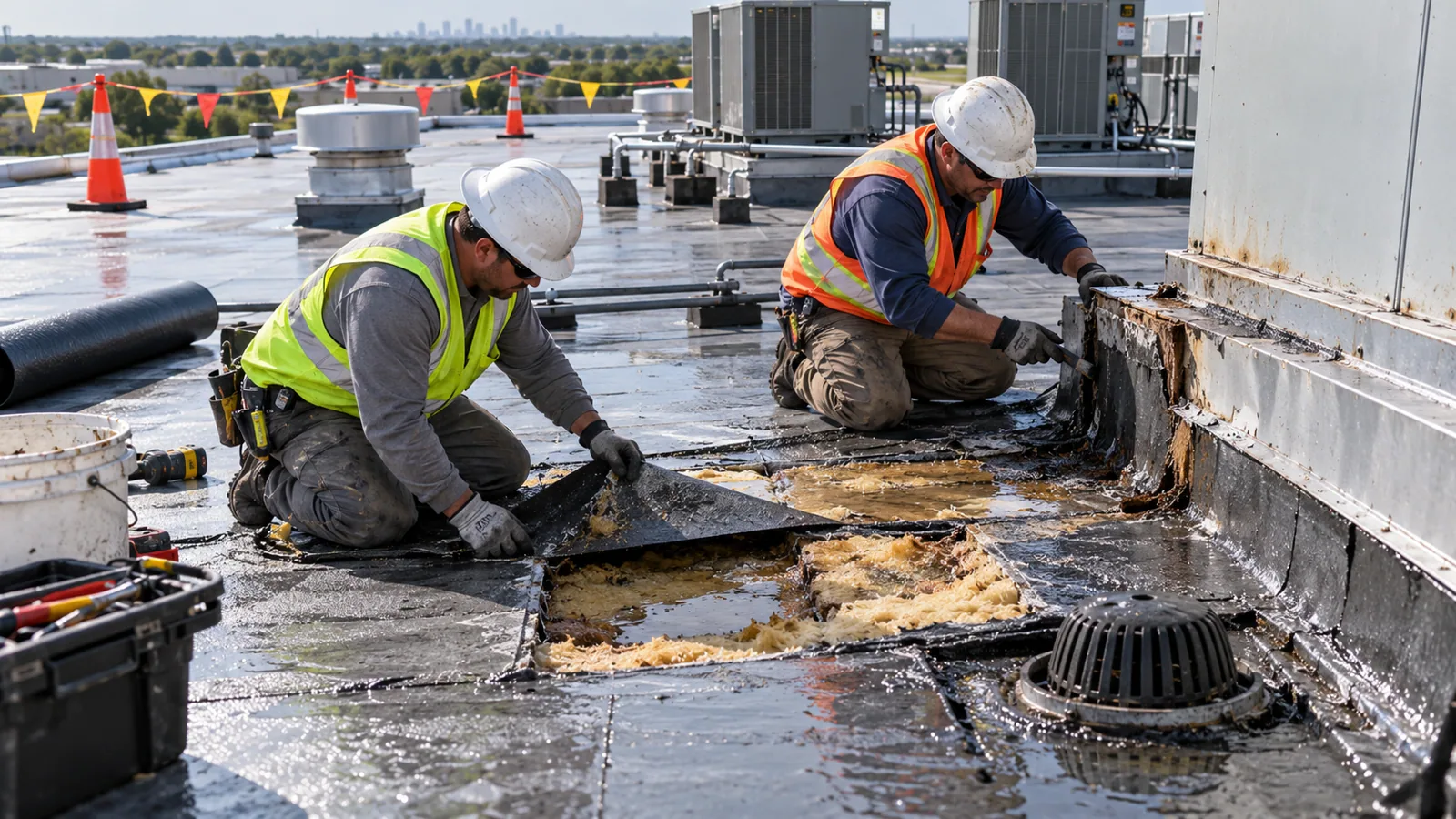
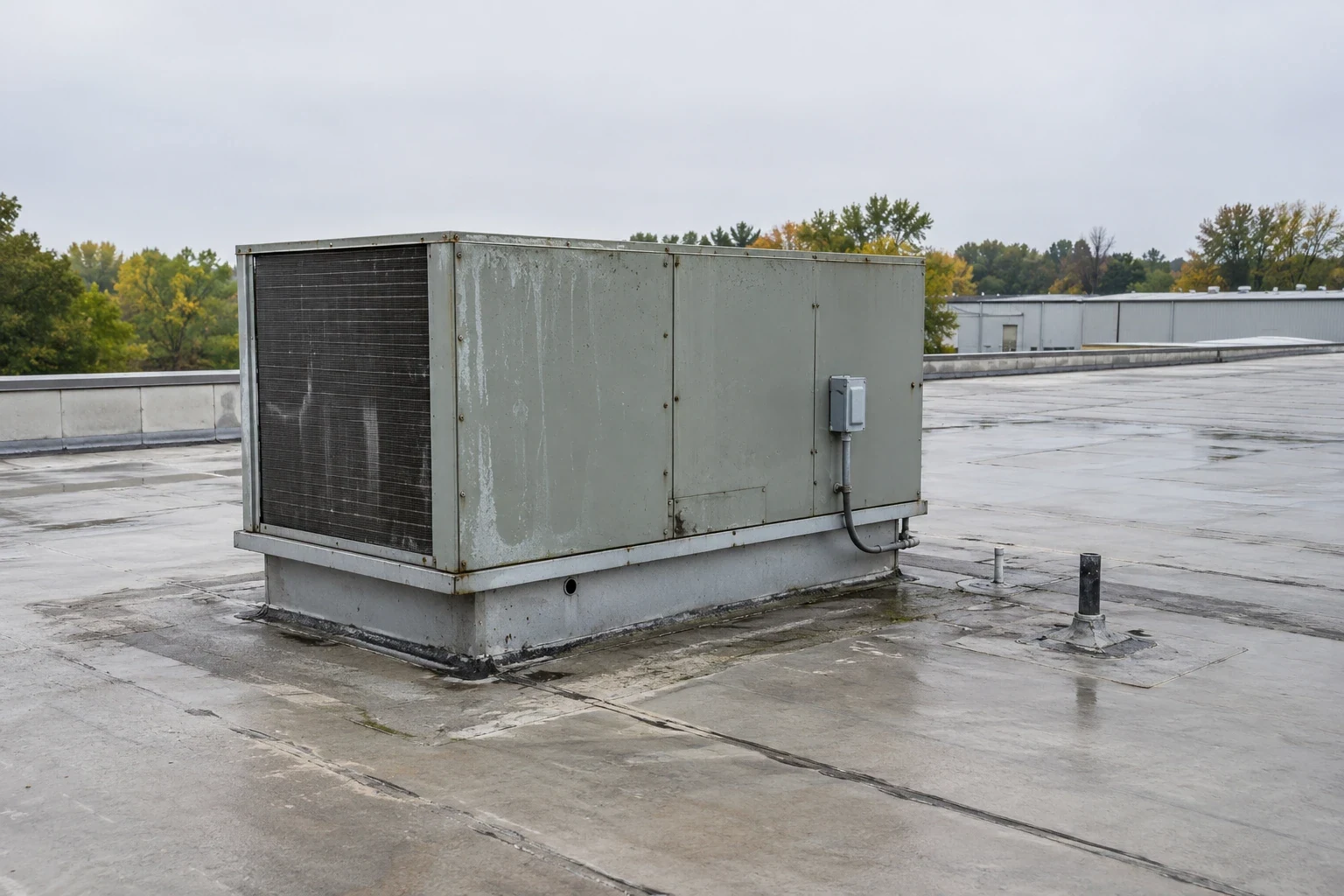
Inspection begins at the property, with drains, seams, flashing, penetrations, edges and visible attachment checked by roof zone. A commercial roof inspection provides photographs and a field sketch that connect findings to the plan. Where water entry is active, emergency response is available at any hour, including weekends and holidays, while the full repair scope is developed.
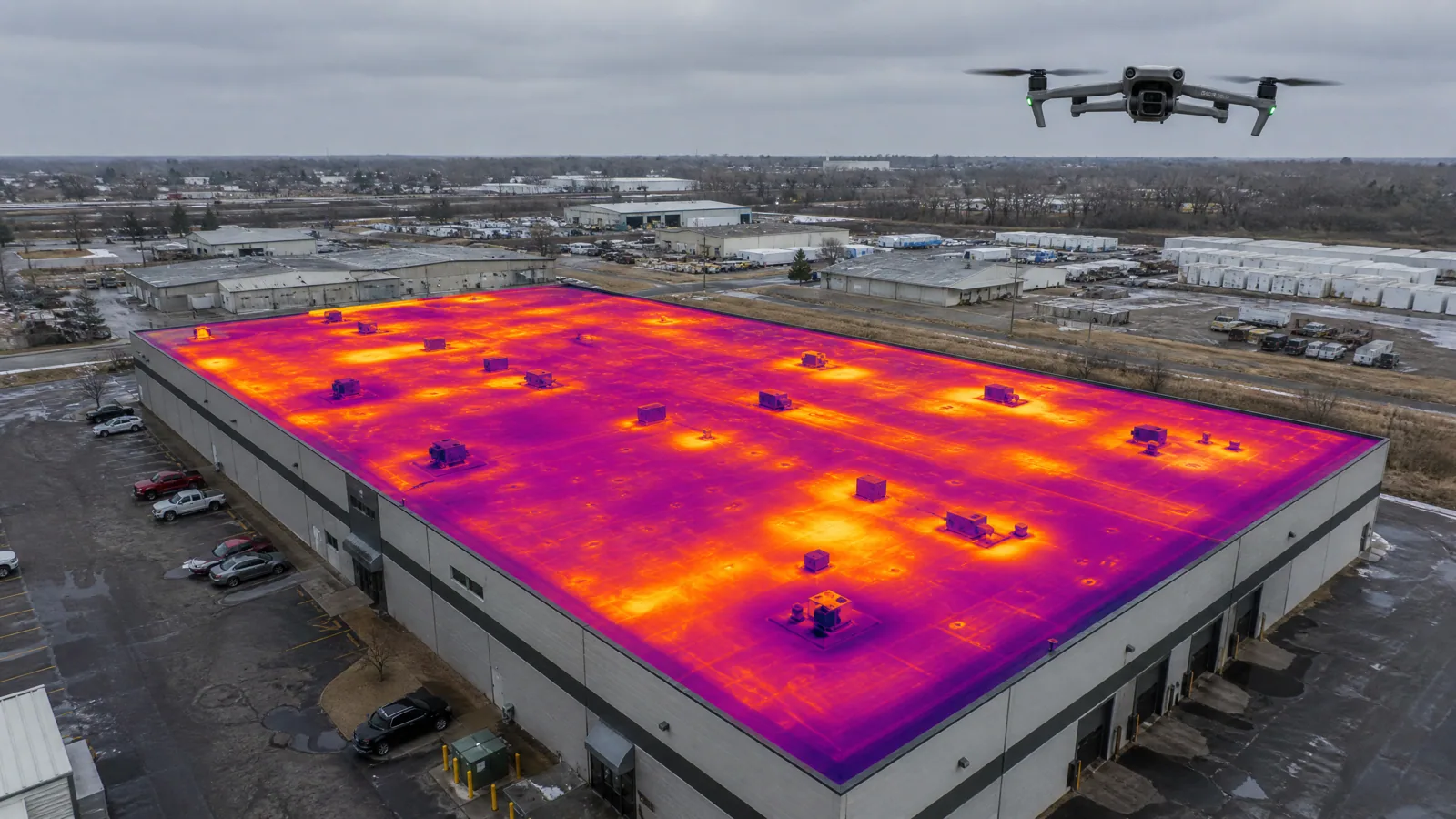
We compare current conditions with prior records and note what changed. A repaired seam may remain stable, a drain may have accumulated debris or a new penetration may have altered the water route. When moisture beneath the membrane is uncertain, testing can be recommended before removal. A moisture survey can help direct sampling, but observations require suitable collection conditions, interpretation and relevant material confirmation before they support a moisture quantity.
Local weather helps set inspection questions. Alexandria summers bring regular heat, and winter temperatures can cross freezing. Alexandria's low elevation and Potomac proximity add flood and heavy-rain context. We use these conditions to review exposed details and drainage, then report the property-level findings without converting regional exposure into a defect claim.
Rank Work by Evidence and Use
We separate active water control, repair, further testing and longer-term replacement planning. Each item has a roof zone, evidence, operational consequence and access requirement. An open flashing transition over an occupied area can have a different urgency from a surface condition that needs monitoring. The owner can review priorities without treating all observed issues as equivalent.
For properties near Eisenhower Avenue or Potomac Yard, local development and transit context may matter to access, but the manager confirms the current site route. A building in Eisenhower East can have different staging conditions from one near North Potomac Yard. We record the verified logistics for each property, including truck access, roof entry and public or tenant routes.
A repair should be connected to the observed assembly. We identify TPO, EPDM, modified bitumen or metal before specifying materials. A localized leak correction can remain separate from a capital replacement discussion. If wet insulation, failed attachment or broad deterioration is confirmed, we explain how that changes the proposed work and what assumptions remain.
Coordinate Maintenance and Projects
Asset records are most useful when they inform recurring maintenance and project scopes. We can revisit drains, seams, perimeter transitions and previous repairs at a schedule that fits observed conditions. The facility contact confirms access, tenant hours and restrictions before visits. A maintenance program can record changed conditions without assuming every roof needs the same interval.
When a larger project is needed, the owner can compare repair, recover and replacement options using the same roof-zone information. A recover is considered only when the assembly can accept another layer and project requirements permit it. The scope identifies materials, drainage, edge work, staging and protection below. This lets an asset team compare proposals by equivalent areas and known assumptions.
For an occupied building, work can be divided into phases if the roof and schedule allow. We identify the work area, temporary protection and closeout point for each shift. A portfolio plan can include those constraints beside budget and condition priorities so sequencing reflects how the properties operate.
Keep Changes Traceable
After work, we add photographs, material details, repaired zones and remaining limits to the property record. If testing changed the repair boundary, the new evidence and scope are stored together. If an area remained inaccessible, that limit stays visible for the next review. The record becomes more useful when later observations can be compared with a clear baseline.
We can prepare a multi-site program that organizes addresses, recurring visits and project handoffs. Owners keep control of priorities and approvals; our role is to inspect, document and execute the roofing scope that is authorized. A replacement project can then be planned from address-specific evidence rather than a portfolio-wide assumption.
Share the property list, known roof records, access contacts and any active leak reports. We will confirm the buildings in scope, identify evidence gaps and create a usable sequence for inspection, maintenance and repair.
Roofing Capabilities
Commercial Roofing Questions
What information belongs in a roof asset record?
Include the property address, roof zones, assembly, inspection date, photographs, observed issues, repairs, access limits and next action. Keep tested points separate from untested areas. That makes it possible to compare visits without implying a finding across the whole roof.
How often should a portfolio be inspected?
The interval depends on observed condition, previous repairs, access and the property's use. We can recommend a schedule after reviewing the records and inspecting the roofs. A uniform calendar may overlook a building with active drainage concerns or restricted entry.
Can asset management identify which roof to replace first?
A condition record can show evidence, water risk, operational impact and access needs for each roof. The owner weighs those findings against budget and use. We explain the roofing implications and identify where more testing is needed before a replacement boundary is set.
Do similar buildings share the same roof condition?
No. Even buildings with similar use can have different systems, repairs, drainage and access. We inspect and record each property on its own. Portfolio comparisons are useful when they preserve the address-specific evidence instead of treating resemblance as proof.
Can maintenance and capital work use the same records?
Yes. Dated inspections and repair notes can inform both routine maintenance and larger project planning. We identify which conditions need immediate attention, which can be monitored and which require more investigation. Each recommendation remains connected to the roof zone and evidence.
Organize Your Roof Portfolio
Send the property list, available roof records and active condition reports. We will confirm the inspection scope and create address-level findings for maintenance and capital review.