 Services
 Roof Systems
 Property Types
 Industries
 Damage Repair
 Capabilities
 Manufacturers
 Service Areas
Commercial Roofing in Rosslyn, Arlington, VA
Service Areas:
- Commercial Roofing in Carlyle, Alexandria, VA
- Commercial Roofing in Landmark / Van Dorn, Alexandria, VA
- Commercial Roofing in Eisenhower East, Alexandria, VA
- Commercial Roofing in North Potomac Yard, Alexandria, VA
- Commercial Roofing in Potomac Yard, Alexandria, VA
- Commercial Roofing in Old Town North, Alexandria, VA
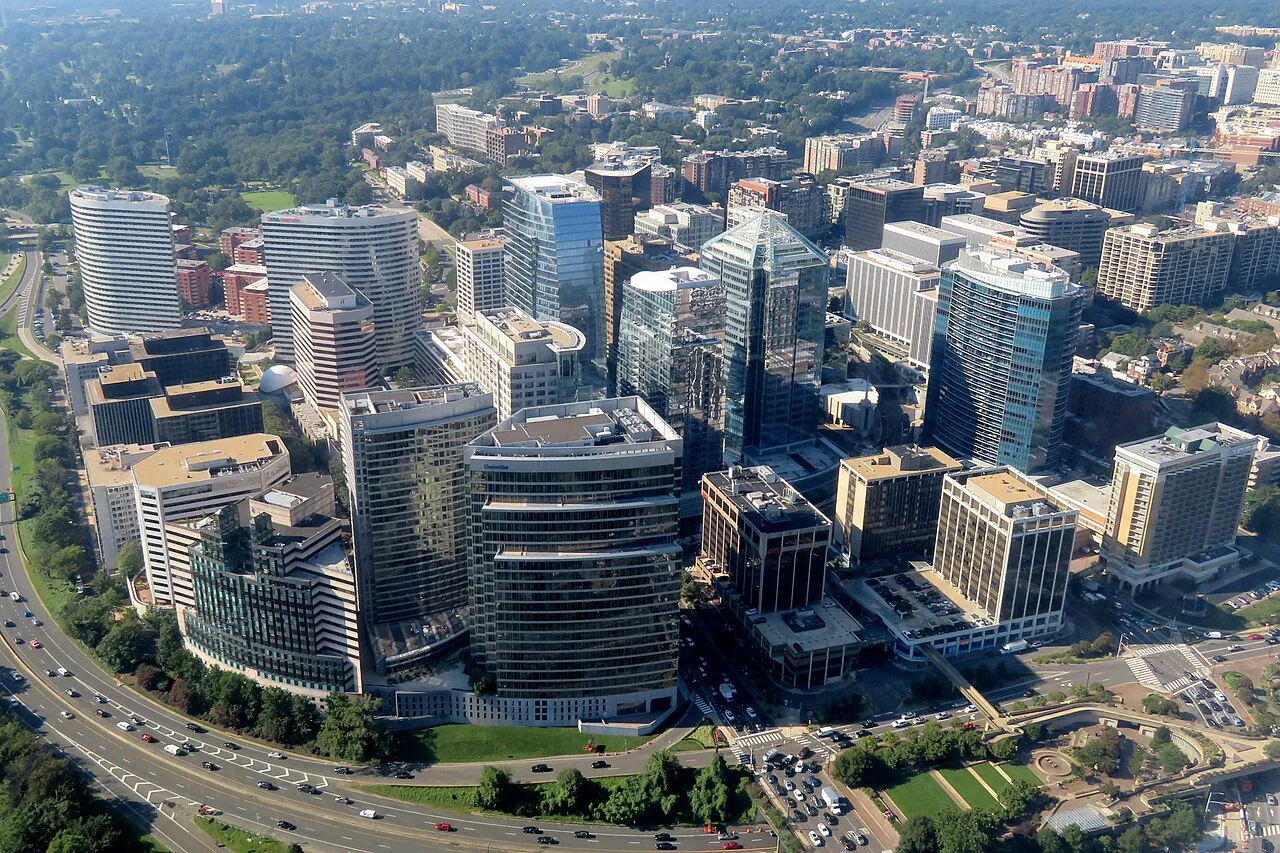
Rosslyn is an Arlington office and business center at the Potomac end of the Rosslyn-Ballston corridor. Office, hotel, retail and residential buildings cluster near transit, which makes roof access and occupied-building coordination central to commercial work. The corridor description does not reveal the assembly, access rules or maintenance record at a specific address. We verify those conditions before drawing a repair boundary.
Rosslyn shares a close-in business context with Crystal City and Pentagon City, but each Arlington property has its own work constraints. We verify roof condition at each Rosslyn address, tracing the reported leak through its own seams, drainage paths, equipment and edge details.
Rosslyn
Start with the Building Contact
Before inspecting, we confirm the property address, roof entrance, access hours, security procedure, delivery route and contact who can authorize a test or repair. Transit-oriented development does not tell us where a lift may stand or whether a hotel, residence or office has separate service rules. The owner or GC supplies those details so the scope can account for material handling and protection below.
We record the room, time and circumstances of any leak report, then compare it with drains, parapets, seams, curbs, penetrations and repair lines. A commercial roof inspection documents the likely path and the details confirmed. A field sketch or photos help a building engineer and property manager review the same roof area without relying on a ceiling stain alone.
If a building has multiple occupants, the site contact identifies guest, tenant or retail routes that must remain open. We can plan noisy work and interior protection around those requirements. The corridor's office and business role does not establish an individual property's hours, access route or priority; those constraints are verified for the actual address.
Follow the Water Path Upward
A leak does not always enter directly above the room where it appears. Water can move under a membrane, along a deck or behind a flashing before reaching the interior. A leak investigation maps the report to slope, drains, edge transitions and penetrations, separating probable travel from confirmed damage.
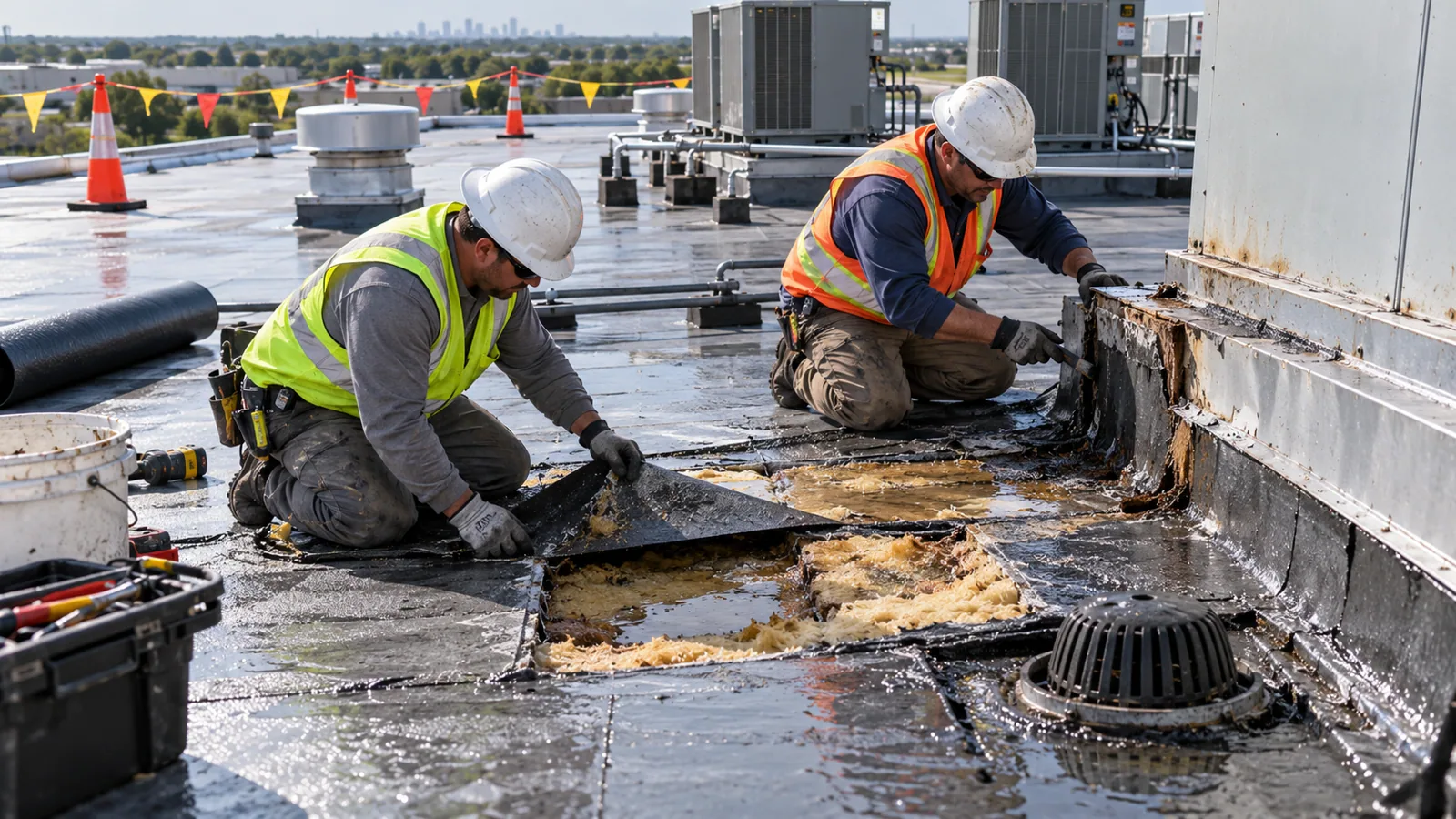
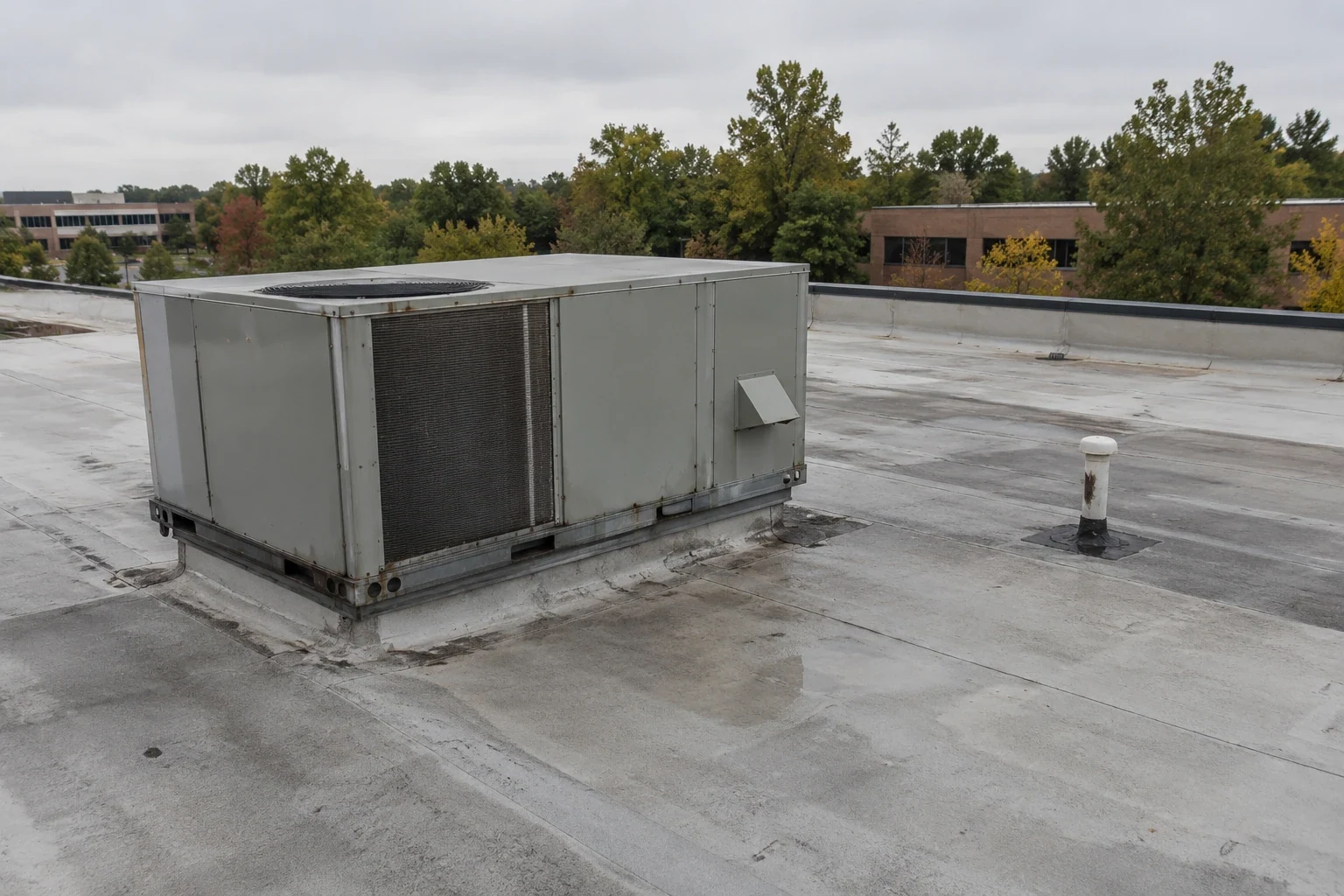
At a drain, we inspect the bowl, surrounding membrane and overflow path. At a parapet, the cap and flashing termination need review together. Equipment curbs and pipes have their own corners and seals, which can move after service work. A drainage assessment addresses outlet flow; it does not replace testing of a separate membrane or wall detail.
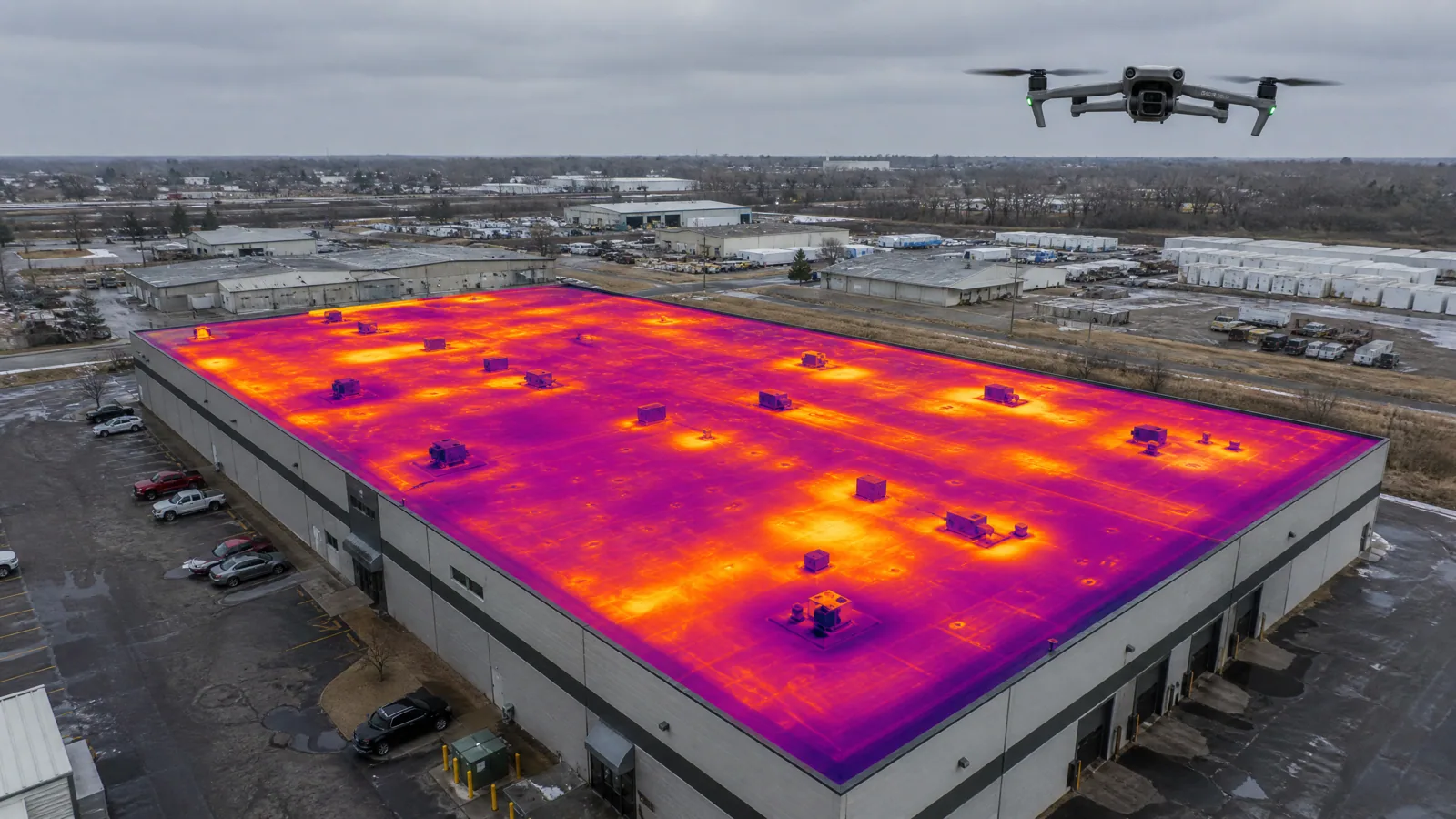
Moisture below the surface matters if it changes the amount of insulation or deck to remove. A thermal survey requires suitable roof and weather conditions, followed by interpretation and material checks before suspected moisture becomes a removal quantity. If testing is warranted, we coordinate interior protection, expose a defined area and photograph the layers. The report distinguishes the opening's findings from zones that remain closed.
Set Options from the Roof Condition
A local repair is an option when the defect is confined and surrounding attachment remains sound. We identify the system, prepare compatible material and inspect the completed tie-in. If moisture reaches insulation, if metal has loosened or if the deck is affected, those corrections are separated from the surface patch. That boundary should be visible in the estimate and closeout record.
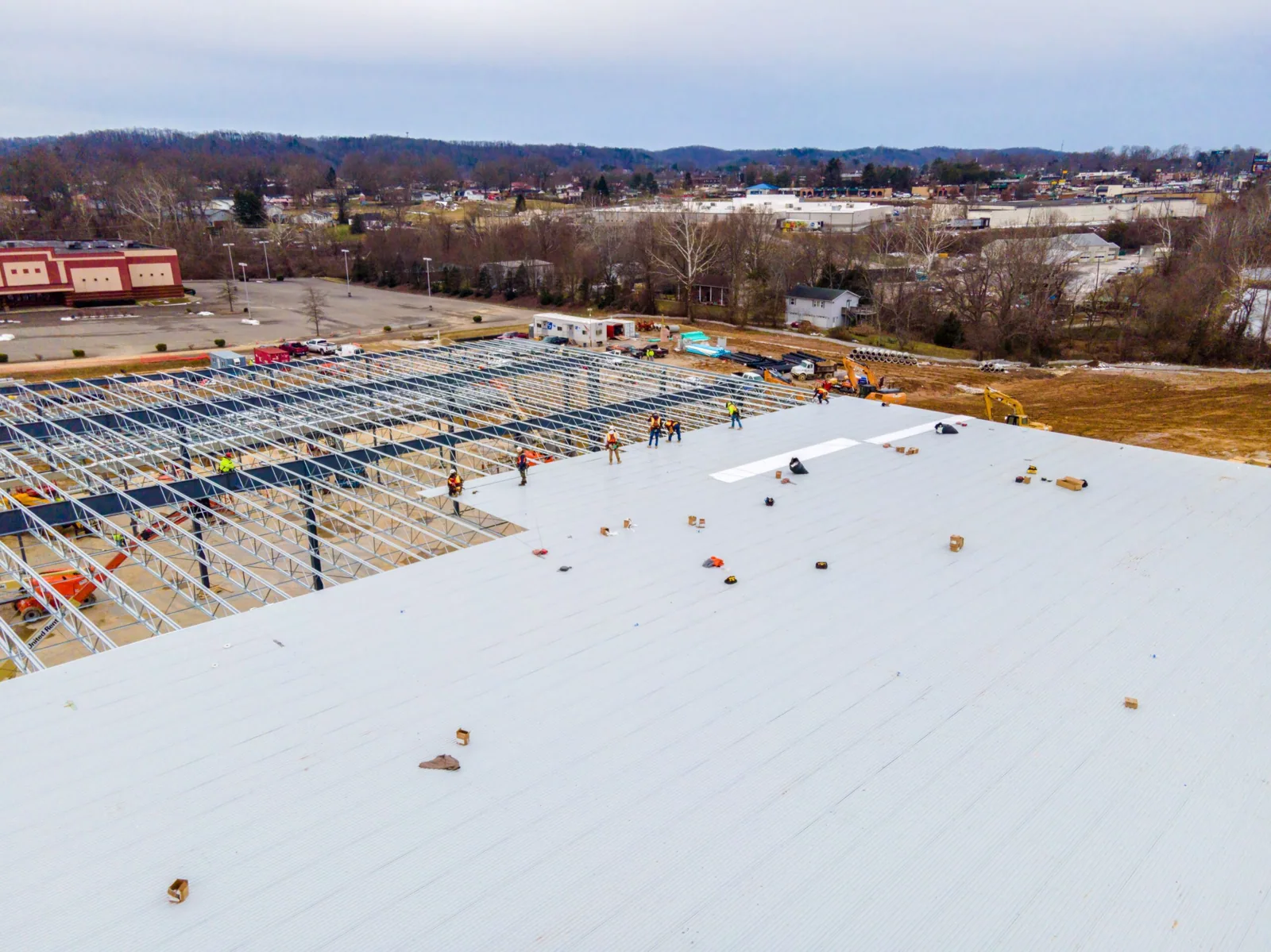
Multiple failures or widespread wear may justify comparing recover and replacement. The existing layers, moisture, drainage, curb heights, edge details and access affect whether another layer is workable. A recover review examines whether the base is dry and stable and whether transitions can remain properly finished. Tear-off can expose concealed conditions but requires debris handling and weather protection.
Cost and duration also reflect site logistics, material movement, testing, security, roof height and work-hour limits. The proposal states access assumptions and explains how hidden conditions will be reviewed before extra work proceeds. A roof condition report can retain those findings by address for future project planning.
Trace Drainage Before Repair
Rainwater follows the roof slope toward outlets, but it can enter an open seam or flashing transition along the way. We inspect primary outlets, scuppers and edge transitions for retained water, debris and water marks, then compare those details with the leak report. The roof's own records and field findings guide the repair boundary.
A marked photo shows the drainage detail and route observed at the address. Repairs require suitable substrate and material conditions, so we check the forecast and surface moisture before applying or welding. Any opened section gets an agreed closure point; active water can be protected after hours while permanent work waits for a suitable window.
At a low point, inspect both the drain connection and the neighboring seam. Clearing a basket will restore an obstructed outlet, but an open membrane joint needs its own compatible repair. Record those tasks separately so the owner can confirm what each correction addresses. Emergency crews remain available overnight, weekends and holidays; safe access and the selected materials determine what can be completed during that visit.
Keep Occupants and Trades Coordinated
On an occupied office, hotel, retail or residential property, roofing can affect access, noise, loading and spaces below. We confirm who will issue notice, where protection is needed and how deliveries reach the roof. The site contact identifies any guest or tenant schedule and what public routes must stay clear before equipment arrives.
A phased reroof plan can divide larger work into sections that can each be closed safely. It lists the daily tie-in, material staging, equipment coordination and interior safeguards. If mechanical work changes a curb or rooftop unit, that interface is coordinated before the flashing is removed so neither trade closes over an unfinished transition.
The corridor includes transit-oriented properties, but actual staging may depend on site rules rather than proximity to a station. We document the assumptions and review changes with the owner or GC. If active work crosses a property boundary, each building contact confirms access and authority for the roof zone being inspected.
Make the Next Inspection Easier
The work record names the address, roof zone, assembly observed, repair method, photographs and any area left untested. A drawing can show the relation between the reported room and the roof transition checked. If the field does not match available plans, the report identifies the discrepancy for follow-up rather than substituting a guess.
A maintenance inspection can revisit seams, drains, curbs and earlier repairs after later weather. For another close-in Arlington center, Pentagon City has its own mixed-use and Metro context; findings remain attached to the address visited.
Send the Rosslyn address, leak report, building contact, roof plans and access limits. We will inspect the relevant zones, explain confirmed conditions and prepare repair or replacement options with any remaining test identified.
Service Areas
Commercial Roofing Questions
Does Rosslyn's corridor plan show what roof a building has?
No. It describes an office and business center with multiple uses near transit, not specific roof systems. We review the property's drawings and inspect the roof details that are accessible.
How should hotel or residential access affect roofing work?
The manager confirms guest or tenant routes, work hours, security, loading and interior protection needs. We use those constraints to select staging and phase work so the building can remain in service where conditions allow.
Can roof water travel far from a leak opening?
Yes. It can move under the membrane or along the deck before it appears in a room. We document likely travel separately from the defect confirmed at the surface and identify any test needed to check concealed layers.
When should we test below the membrane?
Testing helps when moisture could change repair quantities or the choice between patch and replacement. We agree on a location, protect the occupied space and report what the opening confirms. Other areas remain untested until reached.
Can a commercial roof repair be completed outside office hours?
The timing depends on safe access, material, weather and building restrictions. We coordinate a permitted work window and end-of-shift closure. For active water, response can be arranged after hours to protect interiors before permanent work.
Inspect a Rosslyn Commercial Roof
Share the building address, reported condition, plans, access contact and operating limits. We will inspect accessible roof zones and prepare a scope grounded in field evidence.