



 Services
 Roof Systems
 Property Types
 Industries
 Damage Repair
 Capabilities
 Manufacturers
 Service Areas
Commercial Roofing in Crystal City, Arlington, VA
Service Areas:
- Commercial Roofing in Carlyle, Alexandria, VA
- Commercial Roofing in Landmark / Van Dorn, Alexandria, VA
- Commercial Roofing in Eisenhower East, Alexandria, VA
- Commercial Roofing in North Potomac Yard, Alexandria, VA
- Commercial Roofing in Potomac Yard, Alexandria, VA
- Commercial Roofing in Old Town North, Alexandria, VA
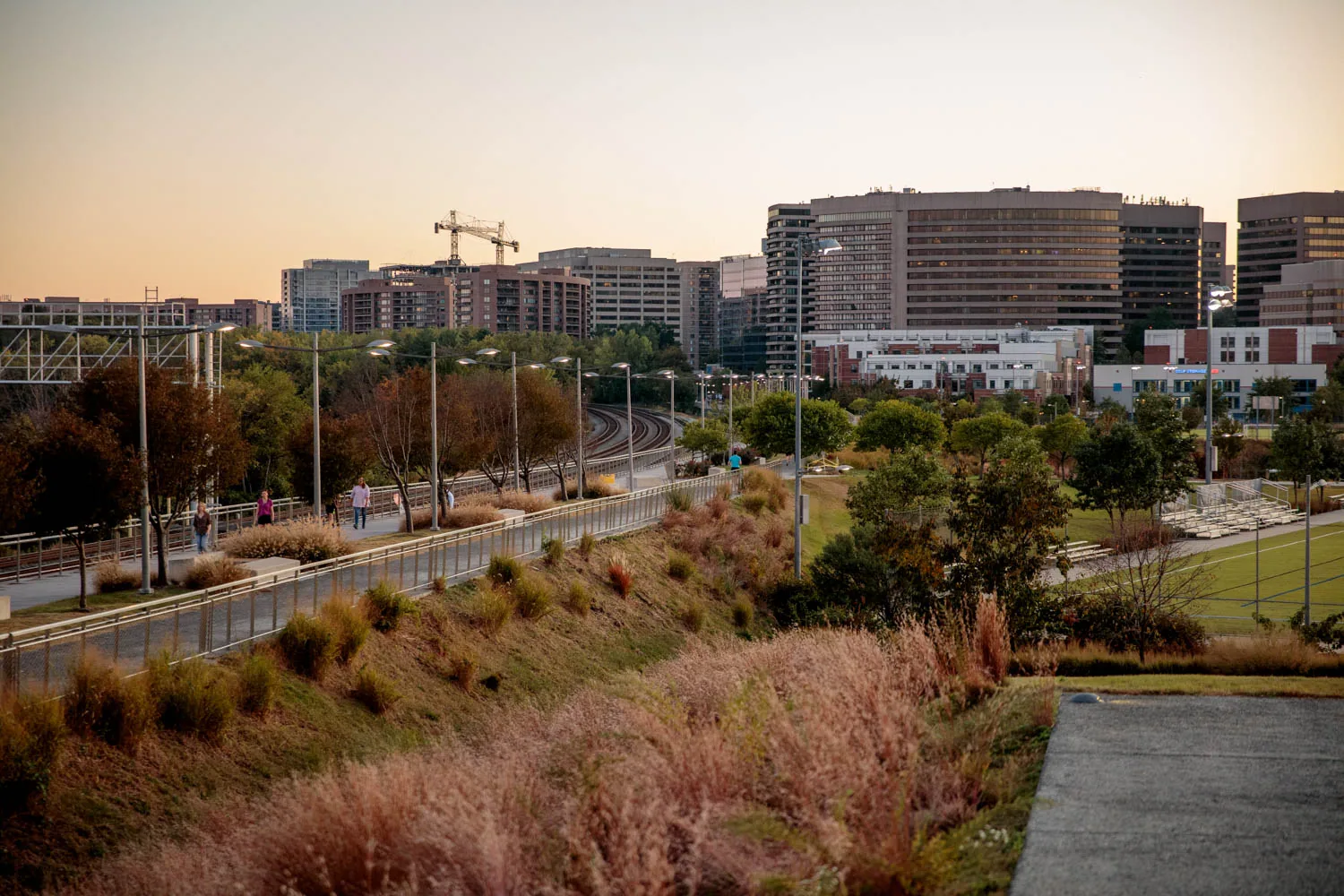
Office, hotel, retail and housing clusters near Metro shape the commercial roofing context in Crystal City, a close-in Arlington center within National Landing. The office, hotel, retail and housing mix calls for building-specific coordination of roof access, tenant hours and delivery routes. We confirm the address, inspect the roof zones and confirm the operating contact before setting a repair boundary.
For a Crystal City property, we inspect its own roof records and field details before specifying the assembly or repair. For the Alexandria market, summer heat, winter freezing and tidal Potomac flooding make drainage and perimeter details worth checking. At a Crystal City address, field conditions still decide what needs work. Pentagon City is another Arlington commercial center with its own Metro-oriented planning context.
Crystal City
Plan for an Occupied Commercial Setting
We start by asking which property is affected, who can provide roof entry, what operating hours apply and whether loading or security rules affect the visit. Offices, hotels, retail and housing share the Arlington corridor; each building requires its own operating schedule and roof inspection. The site representative confirms access, lift placement, deliveries, noise limits and protection below.
On the first walk, we compare the interior report with slope, drains, parapets, equipment curbs, penetrations and prior repair lines. A commercial roof inspection marks visible evidence and the route water may have followed. It also records inaccessible zones rather than extending a finding into parts of the roof that were not seen.
Metro-area circulation can affect timing, but the contact for a specific building gives the current delivery and work rules. If another contractor needs access to a curb or rooftop unit, we coordinate the flashing boundary before work begins. Those steps help the property manager compare immediate leak protection with permanent correction without blending separate trade responsibilities.
Map the Roof Detail Behind the Report
Water can cross the roof deck or membrane before becoming visible inside. We log where it appeared, when it started and whether it followed rain or equipment work. A leak investigation compares that history with drains, seams, parapets and penetrations. The suspected path and confirmed opening remain separate until inspection or testing connects them.
At a drain, we examine the bowl, nearby membrane and overflow route. At a wall, we check the membrane termination and flashing turn. At a curb, movement or equipment work can affect the corner detail. A flashing repair should address a transition shown to be open; a nearby stain alone does not prove that is the entry point.
Infrared readings can help select a test location; an opening reveals the insulation condition at that point. If wet insulation could change the removal area, we discuss an opening with the owner and protect the occupied space. The report identifies what layers were exposed, where the test was made and what remains untested so the estimate reflects the actual evidence.
Compare Repair and Reroof Options
A local repair may fit when a puncture, seam or flashing defect is bounded and adjacent material remains secure. We identify the membrane, prepare a compatible patch and inspect the tie-in. If the substrate or insulation is damaged, that work is measured separately. The scope follows the roof layer affected rather than the size of an interior stain.
Repeated leaks or broader deterioration can support a recover or replacement comparison. A recover comparison starts with moisture, edge clearance, drainage and the planned assembly. It asks whether the existing build-up can remain and how a new system would meet drains and perimeters. Tear-off adds disposal and dry-in coordination but can reveal deck conditions hidden by the current assembly.
Cost and timing depend on height, access, materials, staging, security, occupant protection, testing and weather. We state assumptions and how the scope can change if concealed conditions appear. A condition report can help an owner compare the current issue with later capital work while keeping the inspected property and evidence clearly identified.
Use Alexandria Climate as Market Context
Washington National Airport climate normals describe regular summer heat and winter freezing for the Alexandria market. Alexandria faces extreme heat and tidal Potomac flooding. For a Crystal City roof, we inspect membrane movement, outlets and edge details to set property-specific priorities. We check membrane movement, outlets and edge details where they exist and state the building-specific conditions found.
Heavy rain tests drainage routes, while heat and cold can change how roof materials move. The inspector looks for blocked outlets, ponding evidence, open laps and failed flashing rather than assuming a defect from the season. If the roof is not accessible or the slope is hidden, we identify that limit and the record or test needed to evaluate the question.
Application timing follows the roof surface, product and forecast. Before opening a section, the crew sets a secure close for the shift. When active water reaches an occupied room after hours, a response can be arranged overnight, weekends or holidays to protect the interior and trace entry. Permanent work follows when the substrate and access support the repair method.
Set Access with the Building Contact
Crystal City's Metro-oriented corridor model clusters several kinds of property, but the work route and restrictions remain address-specific. The manager confirms roof entry, loading, staging, lift permission, tenant or guest notice and any areas that must remain open. We include those instructions in the estimate before committing to crew, material or equipment timing.
For occupied work, phased roofing can separate the job into roof zones when each stage can be closed safely. The plan names the daily tie-in, interior protection, equipment coordination and any temporary route change. If another trade alters a penetration, we agree on the flashing transition before membrane installation resumes.
Rosslyn is the Potomac end of Arlington's Rosslyn-Ballston corridor. That planning framework differs from the Crystal City area context, so roof access, schedule and material findings from one should not be transferred to the other.
Retain the Findings by Address
The property file records which roof zone was reached, how the system was identified, repair steps, photos and limits on testing or entry. A marked plan connects the interior report with the roof detail inspected. If records and field conditions do not match, the report says what needs confirmation instead of carrying an unsupported system name forward.
A maintenance inspection can revisit drains, seams, edge transitions and earlier repairs after later weather. If the owner also manages Alexandria West properties, each roof remains documented by its own address, phase and operating contact.
Send the Crystal City address, reported condition, roof documents and access contact. We will inspect the relevant roof zones, describe confirmed findings and prepare a repair or project scope that shows remaining tests and operating assumptions.
Service Areas

Commercial Roofing Questions
Does the National Landing corridor plan identify a Crystal City roof system?
No. It describes a commercial center and Metro-oriented mix of uses, not the membrane on an individual building. We check available submittals and field evidence before specifying a repair material.
How do you schedule roof work around hotels or retail operations?
The property's contact confirms hours, guest or customer routes, loading, lift placement and interior protection needs. Those details set the staging and closure plan for the property.
Can water appear in a Crystal City room far from the roof defect?
Yes. Water can travel beneath the membrane or along a deck before reaching an interior space. We compare the report with roof slope, drains and transitions, then document likely path separately from confirmed opening.
What would make you recommend replacement rather than a patch?
Repeated failures, wet insulation, weak attachment or broader deterioration can change the scope. We inspect the affected layers and explain whether a local correction remains supportable or whether recover and replacement should be compared.
Can you respond when an occupied building has an active leak at night?
A response can be arranged outside ordinary work hours to trace entry and protect the interior. We record temporary measures separately, then schedule a lasting repair when the roof surface and access permit the method.
Review a Crystal City Commercial Roof
Provide the property address, reported condition, roof records and access constraints. We will inspect the relevant details and prepare a scope from field findings.