 Services
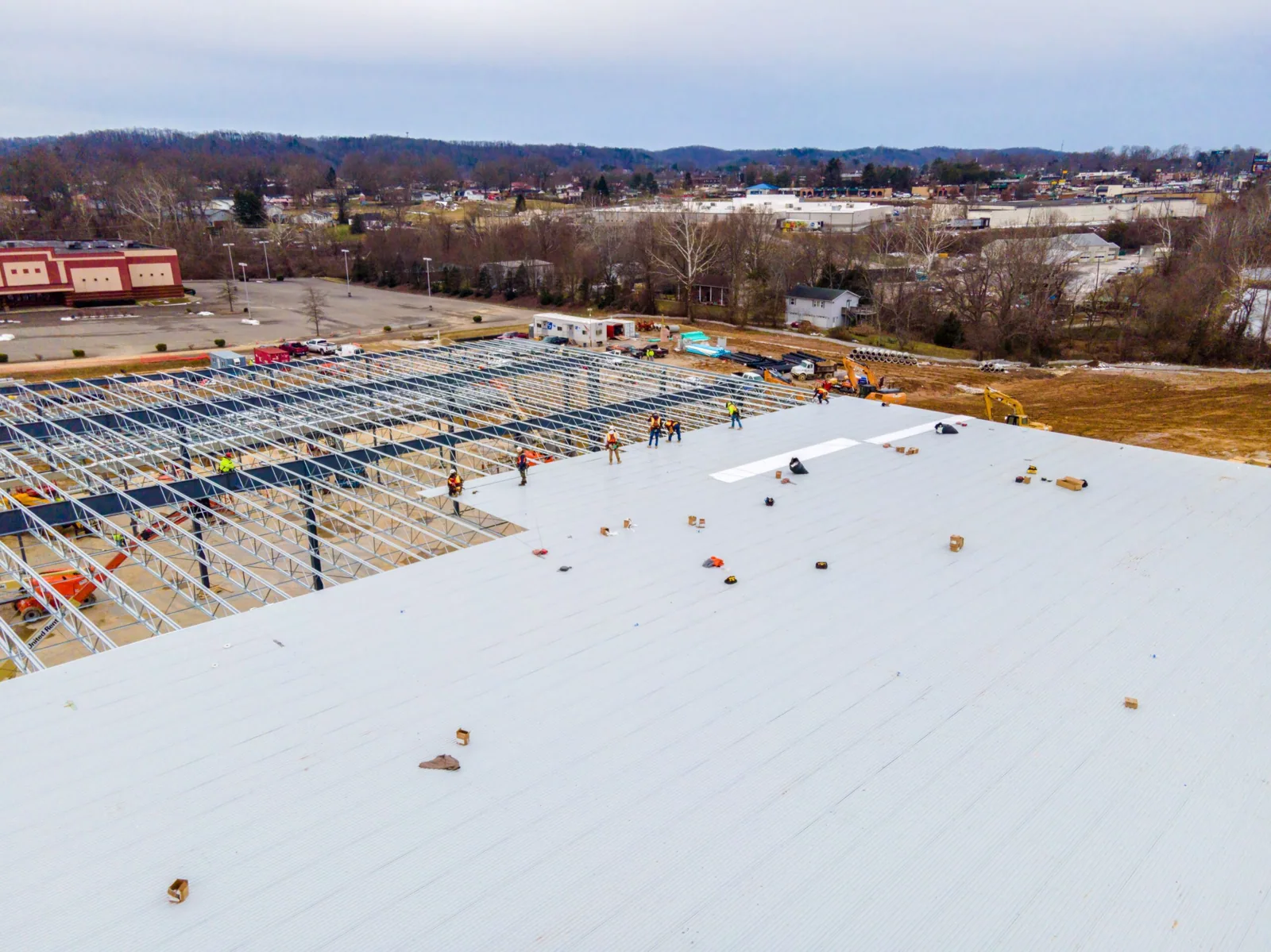 Roof Systems
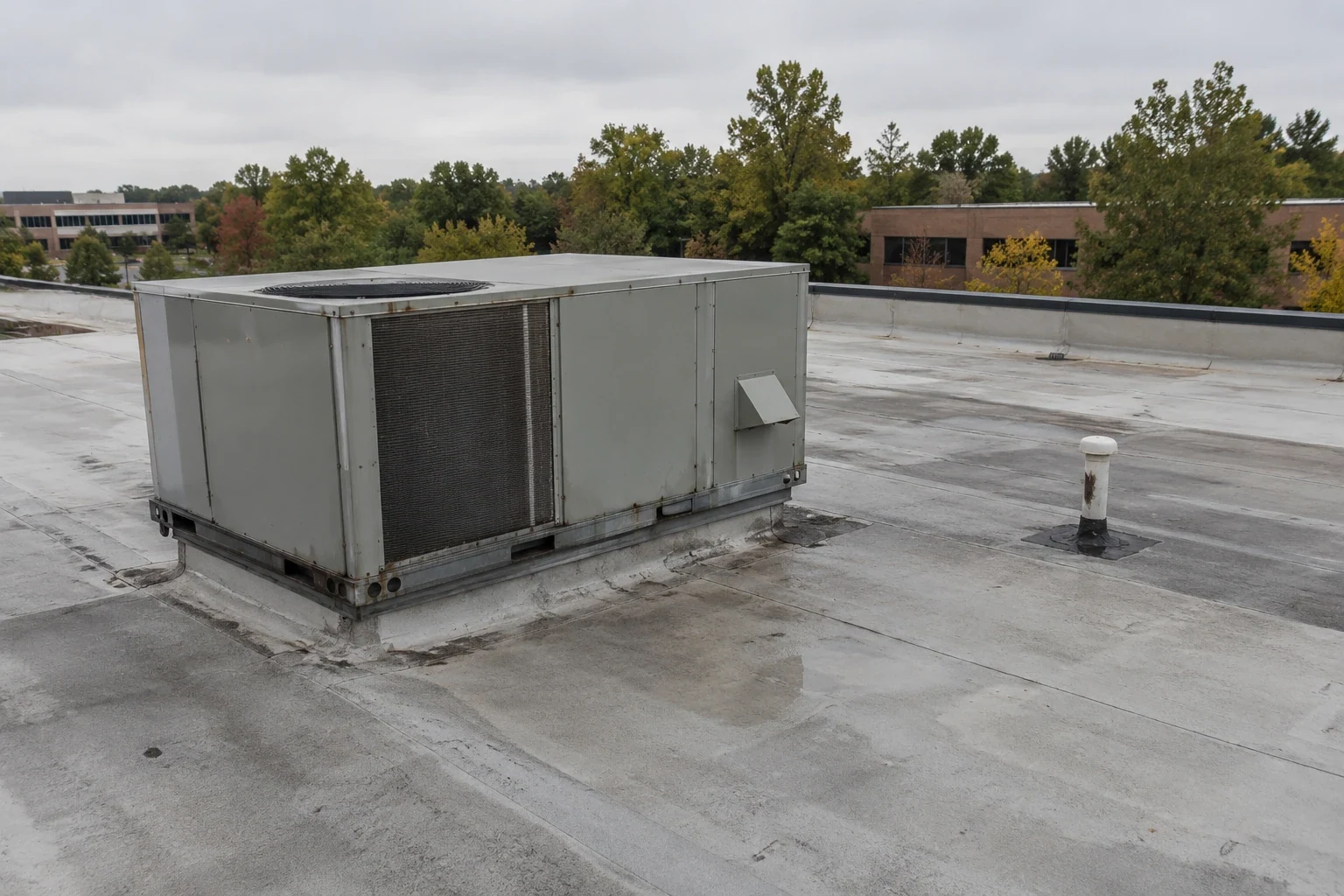 Property Types
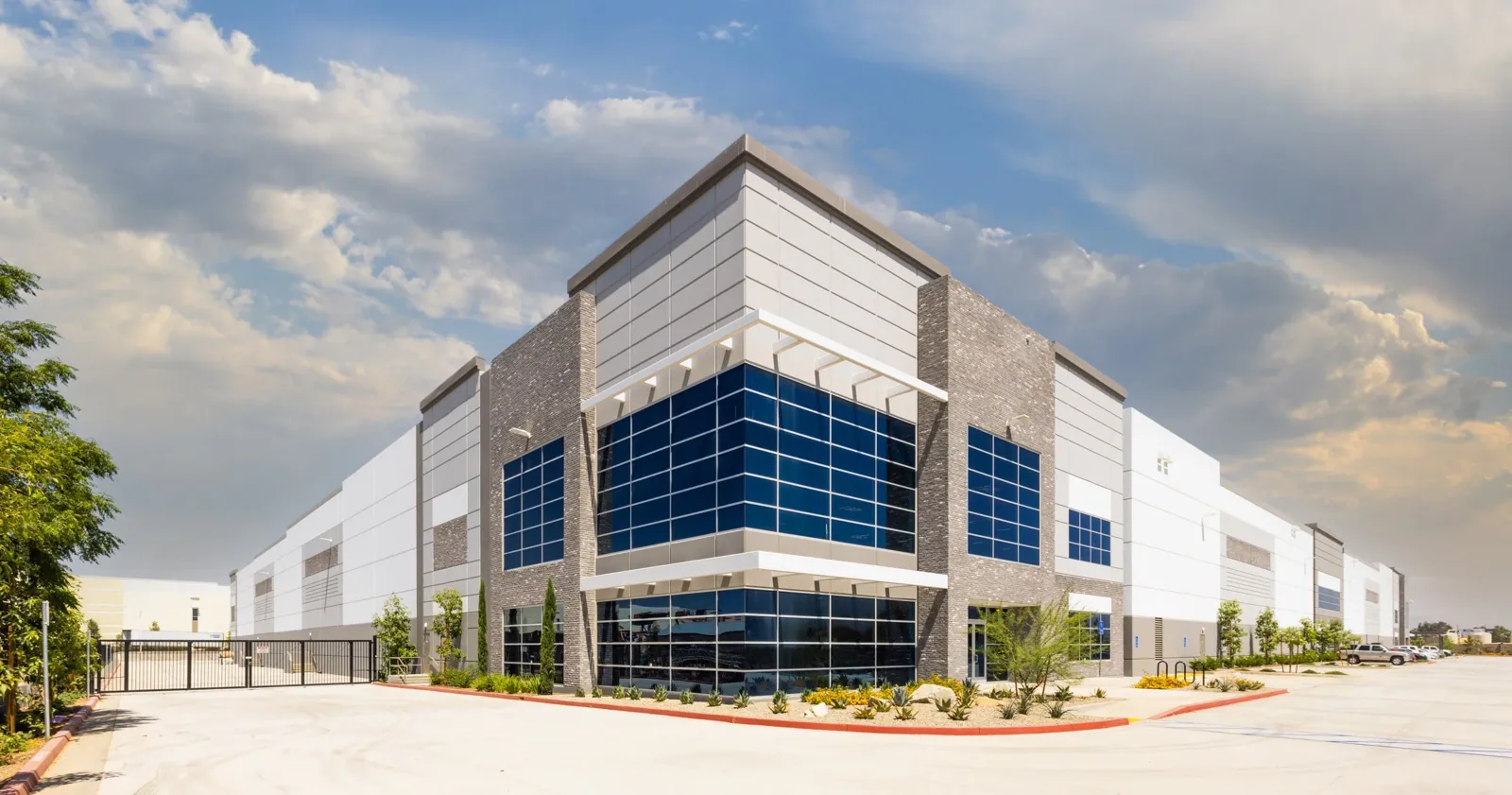 Industries
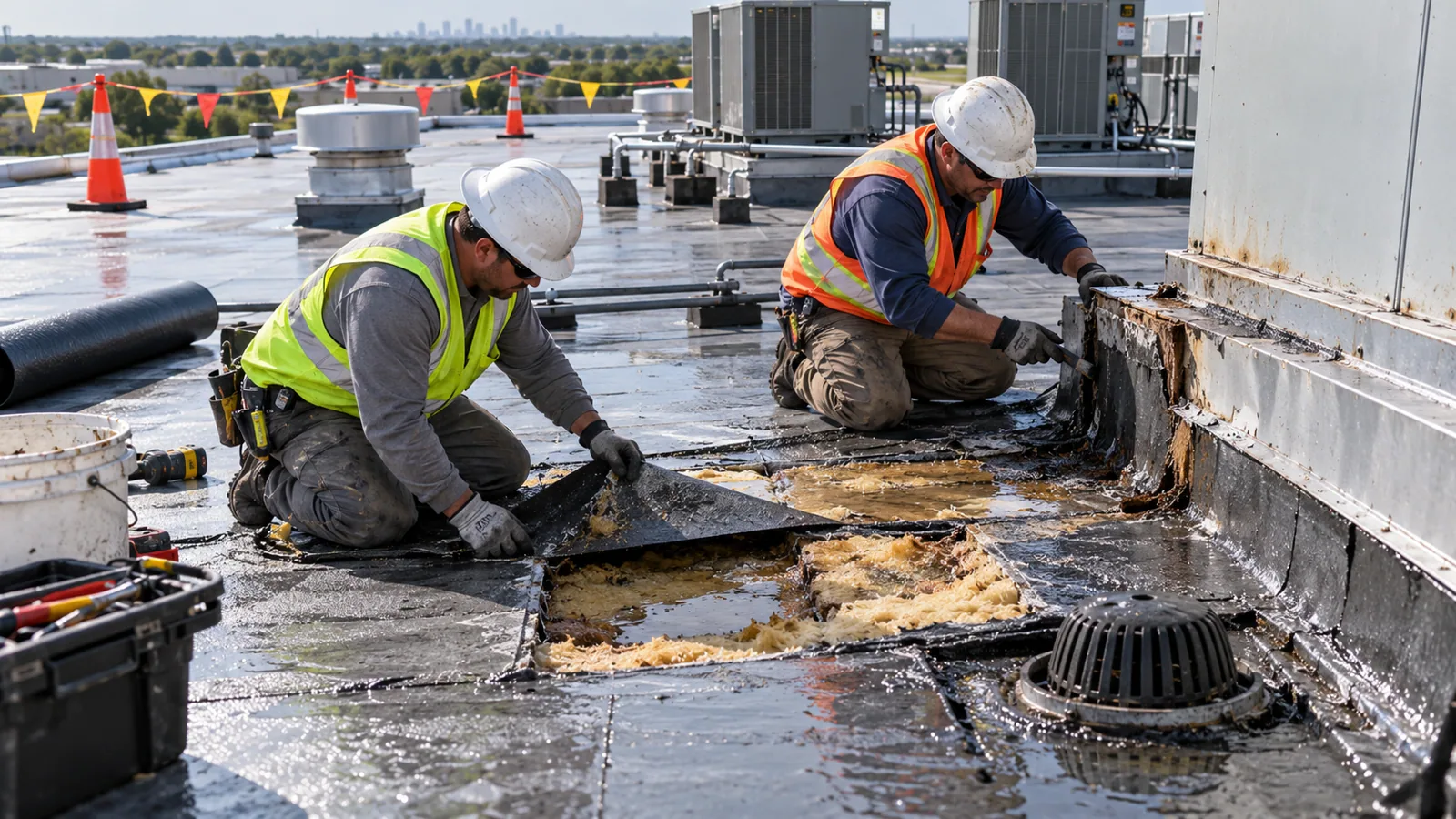
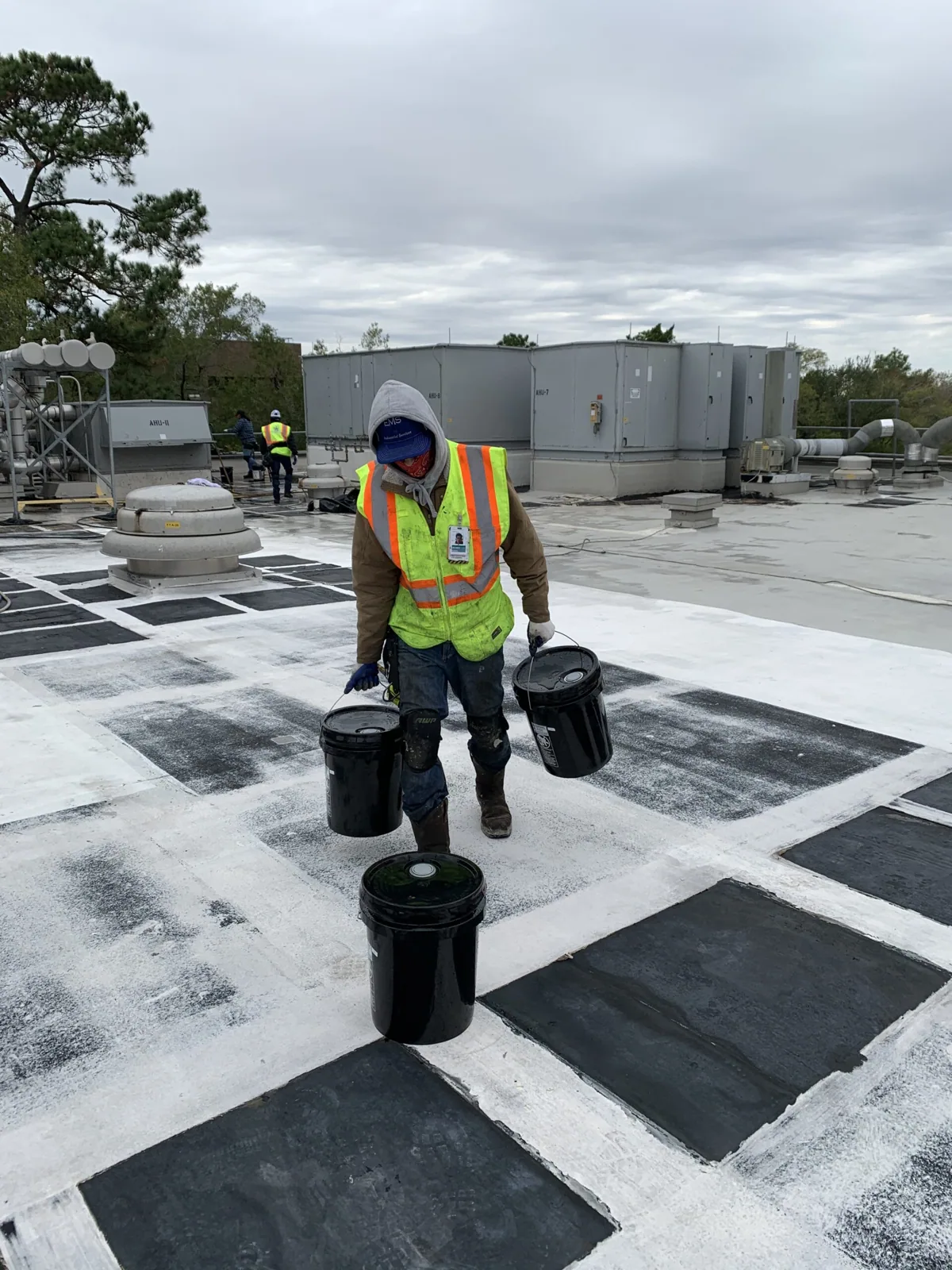 Damage Repair
 Capabilities
 Manufacturers
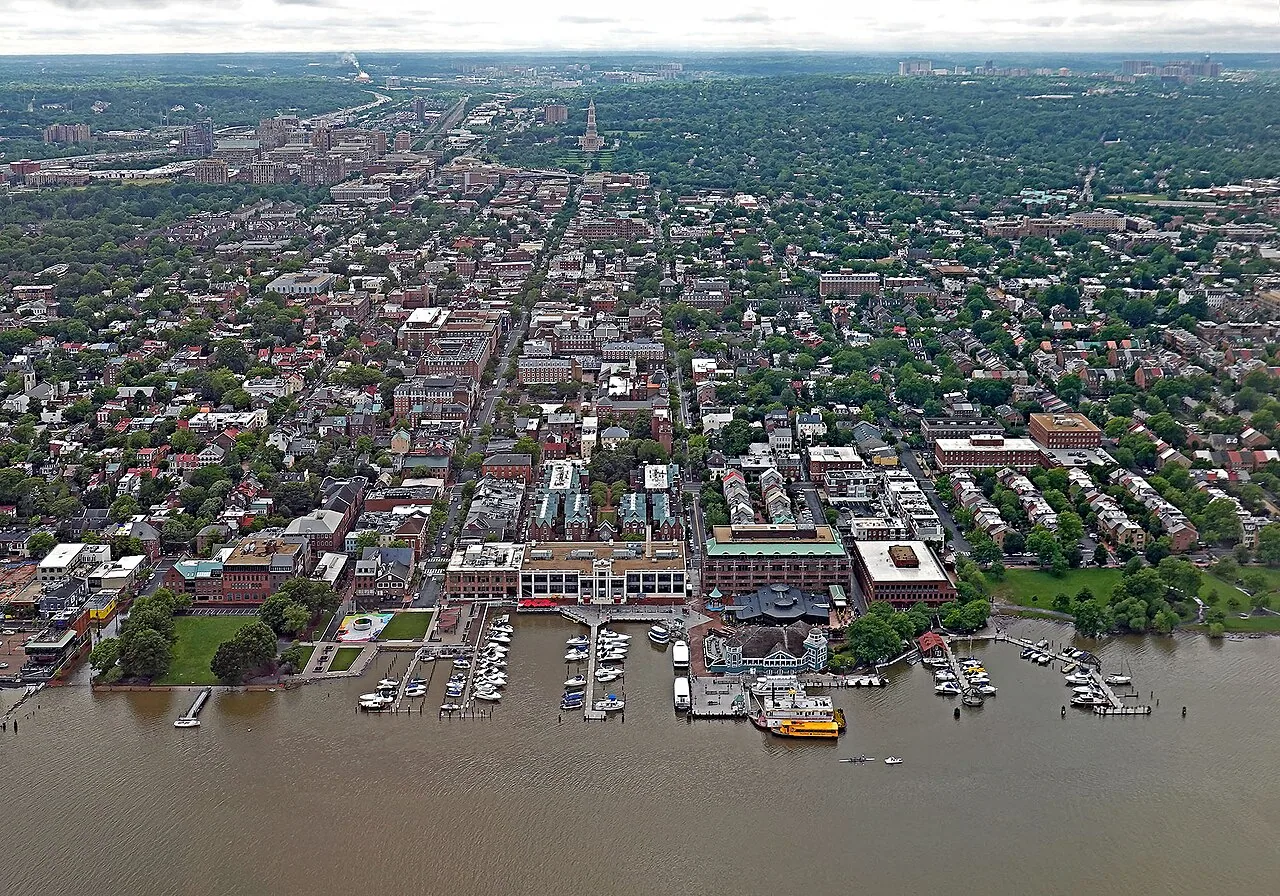 Service Areas
Commercial Roofing in Falls Church, VA
Service Areas:
- Commercial Roofing in Carlyle, Alexandria, VA
- Commercial Roofing in Landmark / Van Dorn, Alexandria, VA
- Commercial Roofing in Eisenhower East, Alexandria, VA
- Commercial Roofing in North Potomac Yard, Alexandria, VA
- Commercial Roofing in Potomac Yard, Alexandria, VA
- Commercial Roofing in Old Town North, Alexandria, VA
A leak on a Route 7 or I-66 commercial property can surface away from its roof opening. We trace the reported room to drains, seams and flashing at the address, then set a boundary the inspection can verify. Falls Church is an independent Northern Virginia city near Alexandria, and its commercial market follows those routes. We confirm the roof assembly, access point and work constraints before setting a repair scope.
Annandale connects through Route 236 and the I-495 network, with separate property conditions. For either address, the inspection records the actual roof rather than transferring assumptions along a regional route.
Falls Church
Locate the Property and Confirm Access
We ask for the street address, affected room, timing and current site contact. Route 7 and I-66 connect the local commercial market, but neither corridor tells us where material can stage or how a crew enters a particular roof. The owner or manager confirms loading, parking, deliveries, work hours and any protection needed below before setting an inspection window.
On the first walk, we compare the interior report with roof slope, drains, scuppers, parapets, penetrations and prior patches. A commercial roof inspection documents the visible membrane and likely path separately from the room where water appeared. Photos and a field sketch identify the zone checked and any area that could not be accessed safely.
Falls Church's independent-city status distinguishes the jurisdiction from Alexandria, even when a property shares the wider Northern Virginia business environment. Permit or design requirements should be confirmed for the address and project scope. We review the available documents and flag any assembly or code question for the responsible design or building official rather than infer it from the market relationship.
Follow the Water Path
Water may move beneath a membrane or along a deck before becoming visible indoors. We record when the stain appeared and compare it with roof slope, drains, wall transitions, curbs and repair history. A leak investigation separates probable travel from the opening confirmed at the surface, limiting the scope to evidence that can be supported.
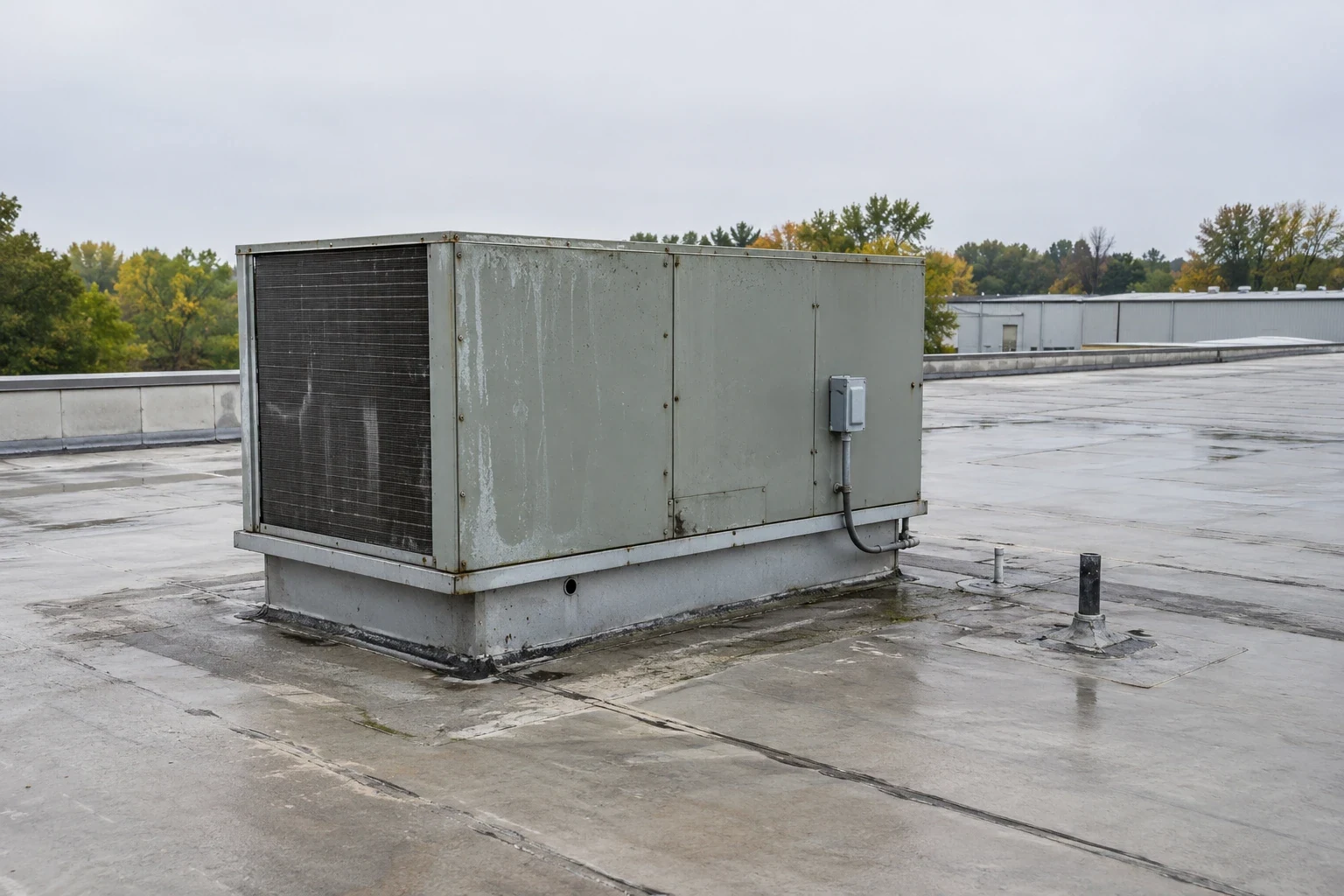
At a drain, we check the bowl, nearby membrane and overflow. At the perimeter, the edge termination and flashing turn need review. At equipment, the curb corners and prior penetrations can be affected by service work. A flashing correction fits when inspection finds an open transition; a blocked outlet or wet insulation may require separate work.
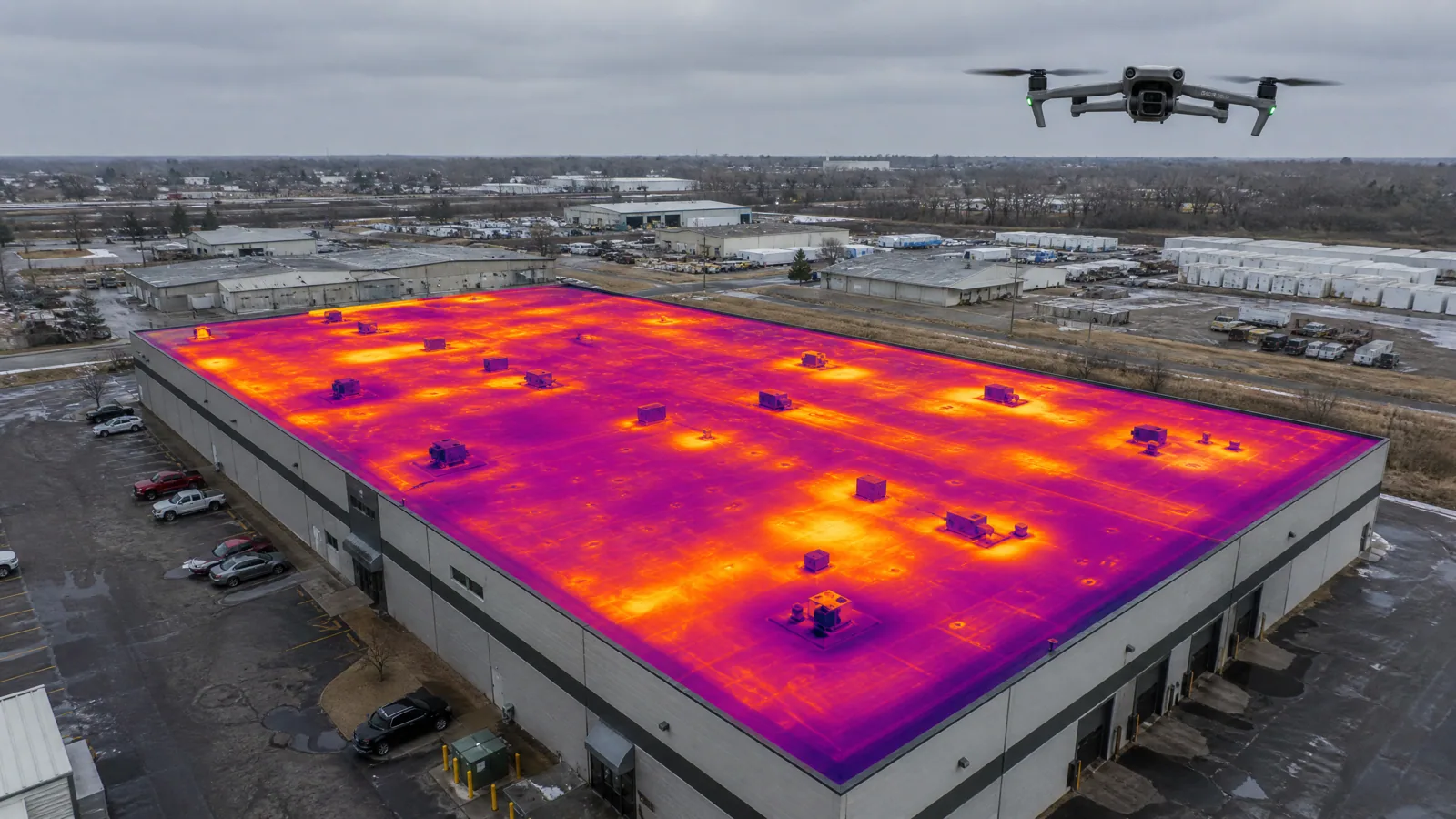
Interpreted thermal readings collected under suitable conditions can guide sample selection without directly exposing the concealed layers. If moisture could change removal quantities, we discuss a test opening with the property contact, protect the space below and photograph what is found. The report names the layer and location exposed and keeps all adjacent untested areas distinct.
Compare Repair and Replacement
A local patch can work when the defect is limited and surrounding membrane and attachment are sound. We identify the assembly, prepare compatible material and inspect the completed tie-in. If a test shows moisture in insulation or damage to the deck, those layers become separate scope items. The visible ceiling area alone does not define roof removal.
Repeated failures or broad surface wear may lead to comparison with recover and replacement. Existing layers, moisture, drainage, perimeter height, access and project requirements affect whether an overlay is feasible. A recover assessment looks at whether the roof can support another layer and whether drains and edge details can still terminate properly. Tear-off adds disposal and weather protection but may expose concealed conditions.
Cost and schedule depend on roof height, access, material, staging, protection below, testing, crew hours and weather. We show base tasks and allowances separately and state how unplanned material conditions will be reviewed. If a business serves the wider Northern Virginia region, keep estimates and condition records attached to each property rather than carrying quantities from one city to another.
Keep Regional Context in Its Lane
Falls Church is an independent city with commercial connections along Route 7 and I-66. We check its roof seams, edges, drains and overflow routes against the reported condition, while the project address and scope guide code questions.
Heavy rain can test outlets and overflow routes. We look for debris, retained water, water marks and flashing gaps. If roof access is limited or an outlet is concealed, the report identifies the missing information or further access needed before the condition can be resolved.
Installation timing follows the material, substrate dryness and forecast. Before opening an area, the crew defines a safe closure point and interior protection. If water is actively entering, response can be arranged on nights, weekends or holidays to limit damage and trace the entry. Permanent work follows when the surface and access allow a lasting repair detail.
Sequence Work Around Regional Access
Route 7 and I-66 provide regional connections, but the site representative sets actual access, loading and staging. We confirm whether a lift is permitted, when materials can arrive and what parking or public routes must remain clear. Those assumptions are documented with the estimate because they affect crew time and delivery method.
For an occupied commercial property, phased roofing can break a larger project into sections that are secured independently. The plan identifies the daily weather-tight boundary, noise periods, equipment coordination and protection below. If another trade needs a curb or penetration, the flashing transition is coordinated before the roof is closed.
Springfield is another Fairfax County place with planning around the Franconia-Springfield station and a community business center. That station-area project context differs from Falls Church's Route 7 and I-66 commercial connections. We confirm operating schedules and site rules at each address.
Keep Findings with the Property
The closeout record lists the address, roof zone, assembly observed, repair materials, photos, test results and access limits. A sketch can show how the reported room relates to a drain or transition. If the available plan differs from the field, the report identifies that discrepancy and what would be needed to resolve it.
A maintenance inspection can revisit seams, drains and prior work after later weather. If a property manager also owns a site in Annandale, keep its history separate; the town's Route 236 and I-495 context does not establish Falls Church roof access or condition.
Send the Falls Church address, leak report, roof documents, access contact and any project schedule. We will inspect the reachable areas, identify verified conditions and prepare repair or replacement options with remaining tests and assumptions stated.
Service Areas
Commercial Roofing Questions
Does a Route 7 or I-66 address establish a Falls Church roof type?
No. The corridors describe regional commercial connections, not the roof at a particular property. We verify membrane, attachment, drainage and access from the address and available project records.
Is Falls Church part of Alexandria for permit purposes?
Falls Church is an independent city. The applicable building requirements should be confirmed for the project address and scope. We review available plans and identify code questions that need direction from the responsible authority.
How do you decide where a Falls Church leak entered?
We compare the interior timing and location with roof slope, seams, drains and flashing transitions. Water can travel before showing indoors. The report separates suspected route from visible defect and calls for testing if hidden layers could change the boundary.
Can roof work continue while a business remains open?
It can when access, work hours, protection below and daily closure are coordinated. We confirm loading, noise and occupant constraints with the property contact and phase work only when each section can be made weather-tight.
When should a roof owner consider recover instead of a patch?
A recover may be feasible if the existing roof is dry, secure and suitable for another layer. We inspect moisture, attachment, drainage and perimeter height. Broader deterioration or wet materials can make replacement a better option to compare.
Inspect Commercial Roofing in Falls Church
Share the Falls Church address, reported condition, roof documents and access contact. We will inspect the relevant details and prepare a scope supported by field evidence.