 Services
 Roof Systems
 Property Types
 Industries
 Damage Repair
 Capabilities
 Manufacturers
 Service Areas
Soprema Commercial Roofing in Alexandria, VA
Roofing Manufacturers:
A Soprema label can point to more than one kind of commercial roof. The manufacturer offers modified bitumen, PVC membranes and liquid-applied products, so we identify the installed system before choosing a repair. Alexandria, VA brings summer heat, winter freezing and heavy rain to the inspection. Those conditions help set priorities for seams, flashing and drainage; they do not establish which material is on a particular building or where water entered.
Office and mixed-use buildings in Carlyle and Eisenhower East, along with redevelopment around Landmark/Van Dorn, make access and occupied operations part of the plan. We confirm the property address and assembly from records and field conditions. GAF and Johns Manville cover different product families, so manufacturer names alone do not establish compatible material for a patch.
Soprema Commercial Roofing
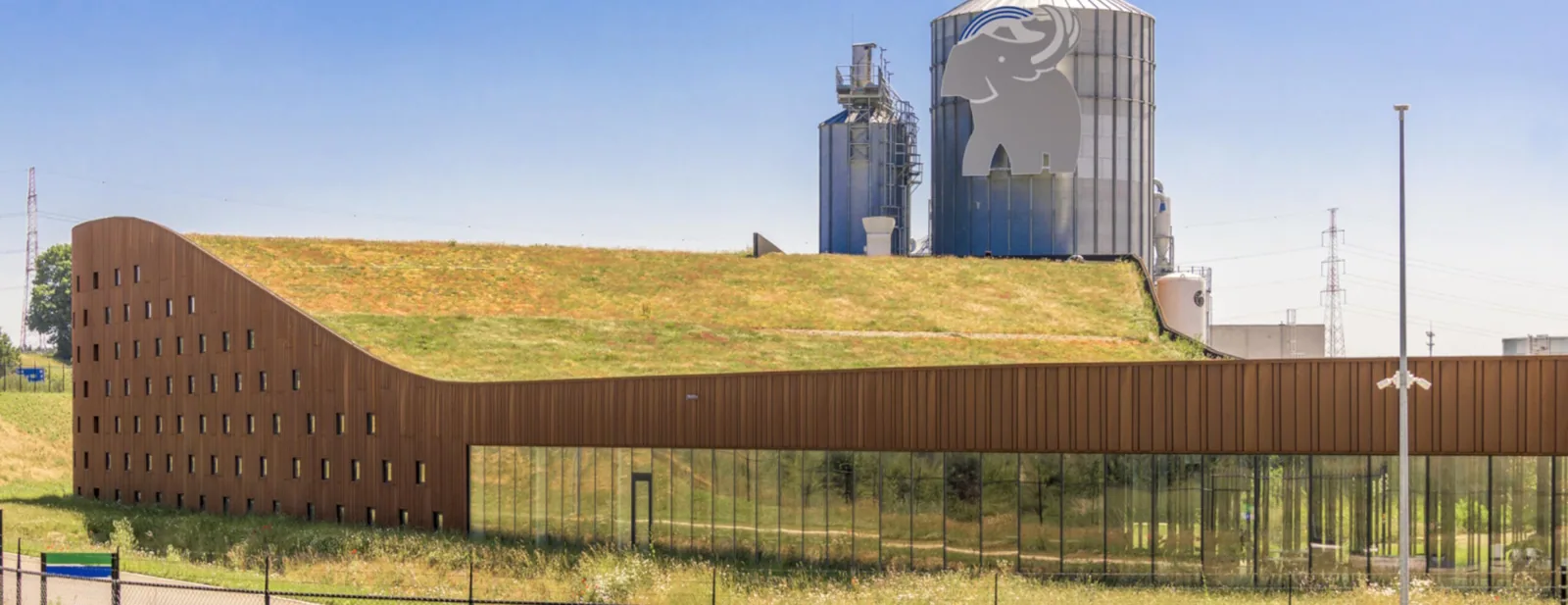
Determine Which Soprema System Is Present
Soprema commercial roofing includes SBS-modified bitumen sheets, PVC single-ply membranes and PMMA or PMA liquid-applied systems. Each has a different surface, seam or transition detail. Modified bitumen may use layered sheets with heat-welded or adhesive-applied laps depending on the assembly. PVC seams are heat welded. Liquid-applied resin forms a continuous coating or flashing when installed over suitable, prepared surfaces. We identify the actual materials rather than infer them from a roof color.
Records can name a product, but later repairs or coatings may change what is visible. We compare submittals with membrane markings, lap construction, surface texture and flashing. A liquid-applied layer over an older membrane does not by itself prove the condition of the layers below. Where the system identity remains uncertain, the report names the open question and what evidence could resolve it.
A modified bitumen roof needs inspection of laps, granule condition, base transitions and penetrations. A PVC assembly requires compatible sheet and weld practice. Coating work starts with adhesion, substrate and drainage checks. These distinctions change preparation and repair limits, so we specify by installed system rather than broad product category.
Trace the First Open Detail
Water can travel below a roof surface before it appears inside. We map the room, timing and weather against slope, drains, parapets, equipment curbs and previous work. A commercial roof inspection records the likely water path separately from confirmed damage. At a large property, roof-zone labels and photographs help the owner and general contractor compare observations without mistaking an interior stain for the exact membrane opening.
On modified bitumen, we review lap edges, blisters, splits, flashing turns and transitions to metal. On PVC, we check welds, wrinkles, patches and corners. At a liquid-applied area, we examine pinholes, cracks, thickness changes and how the coating meets penetrations or drains. Flashing failure repair may be required even when a membrane field appears intact.
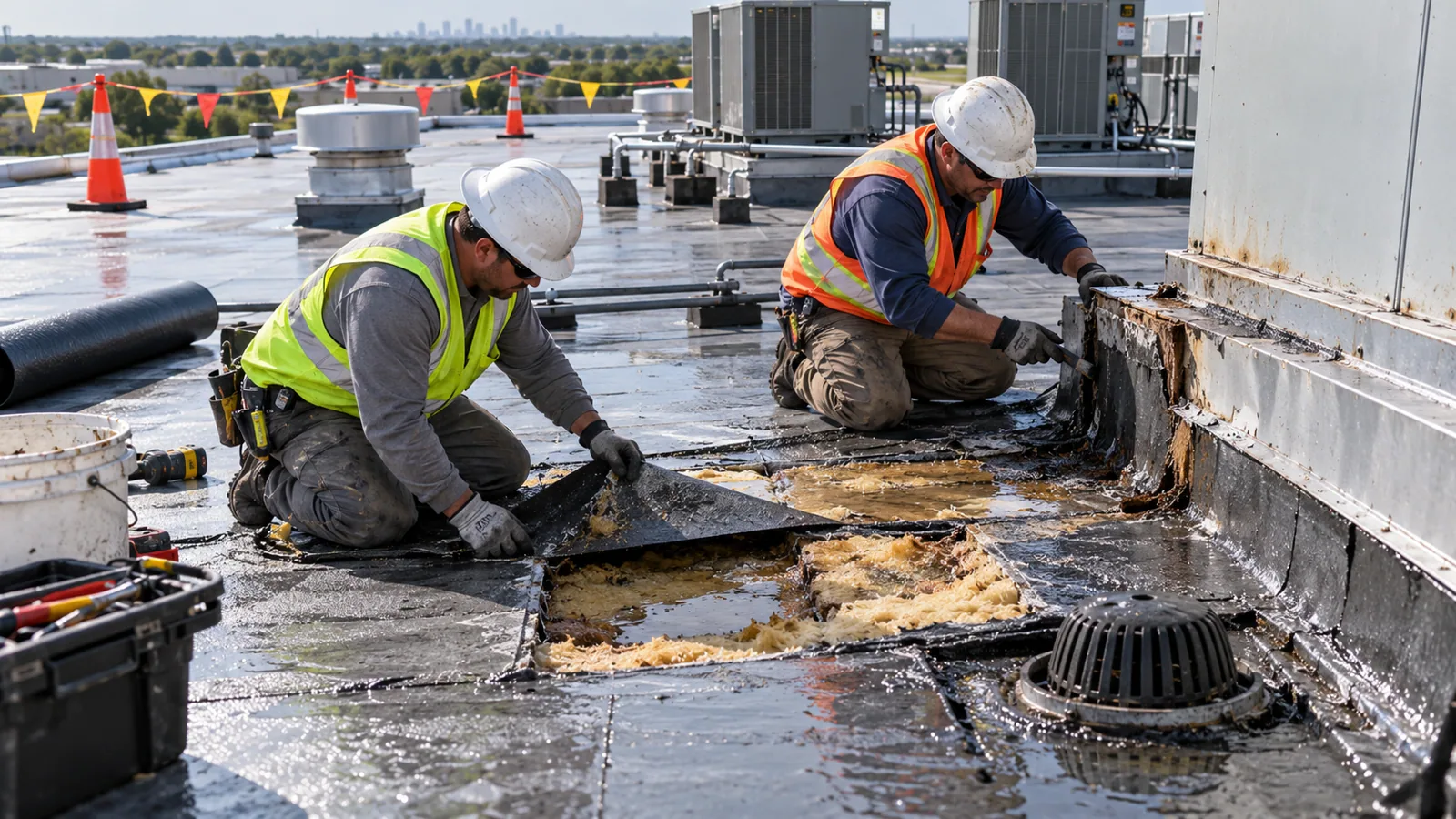
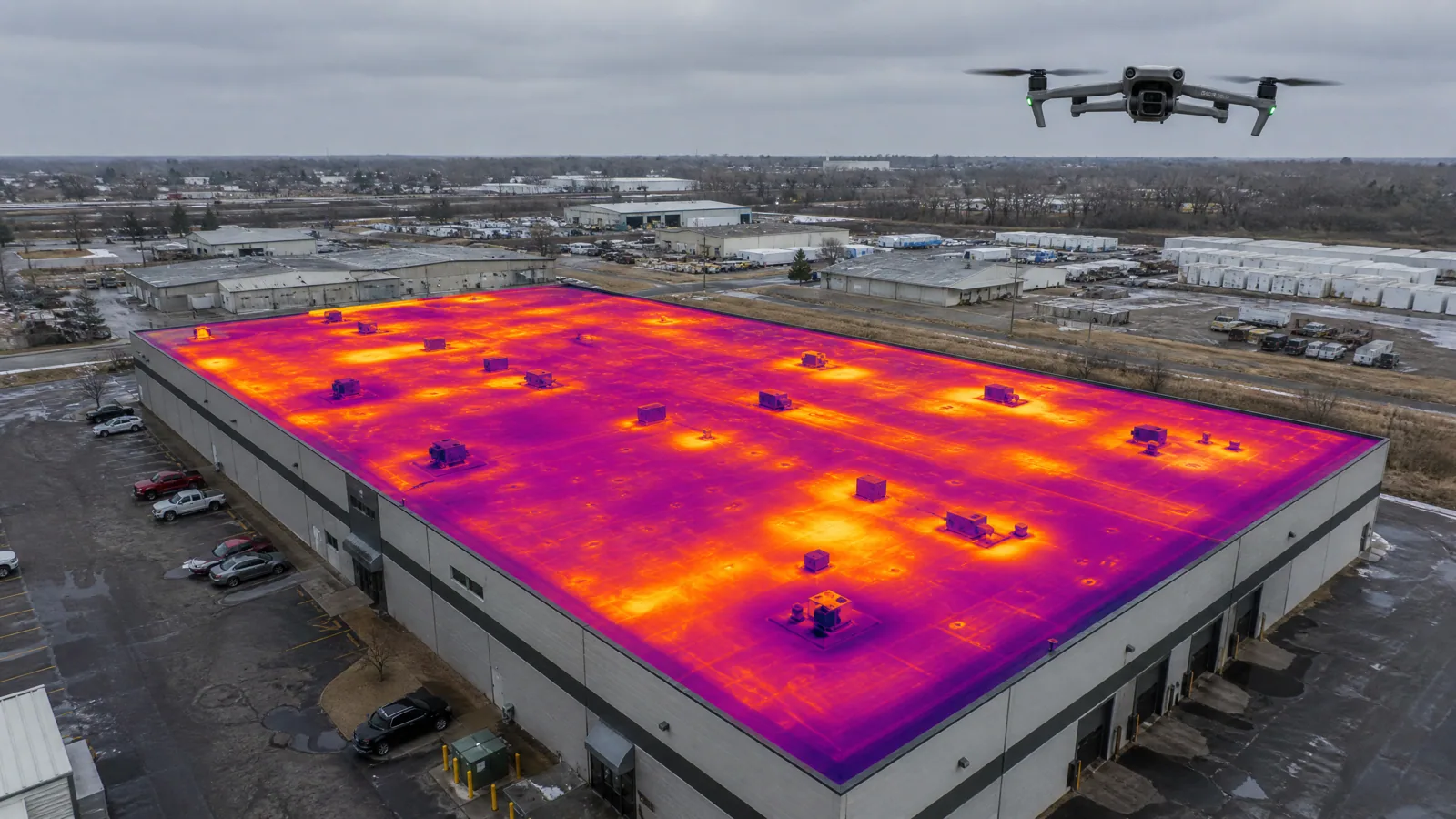
Moisture below the surface may change how much material must be removed. Under suitable collection conditions, interpreted infrared patterns can guide sampling; openings then establish the materials and moisture present at the sampled locations. We coordinate testing with the building contact, protect the occupied space and document insulation, cover board and deck. A measured boundary makes it possible to distinguish verified removal from optional investigation.
Prepare the Surface for the Right Method
Modified bitumen repairs depend on sheet type, lap construction, surface condition and the selected application method. A PVC patch requires compatible sheet and heat welding. A PMMA or PMA flashing detail depends on prepared substrate and the system's resin and reinforcement approach. Those methods cannot be swapped based on appearance. We identify the product and adjacent layers, then define the repair sequence before opening the detail.
Preparation matters at a roof edge as much as in the field. Dirt, loose granules, aged coating, moisture or movement can prevent a repair from tying into sound material. We check the transition beyond the visible crack and note whether insulation or deck is affected. If the roof includes multiple layers, the proposal identifies the layer being repaired and any test that could expose a broader condition.
Repeated leaks or widespread deterioration may warrant comparing repair with recover or replacement. Drainage, existing material, moisture, edge height, access and project requirements affect that choice. A recover option should not conceal wet or unstable layers. We describe removal, preparation, tie-ins, drains and staging so a project team can compare the work and schedule with the observed roof condition.
Plan Around Alexandria's Exposure and Access
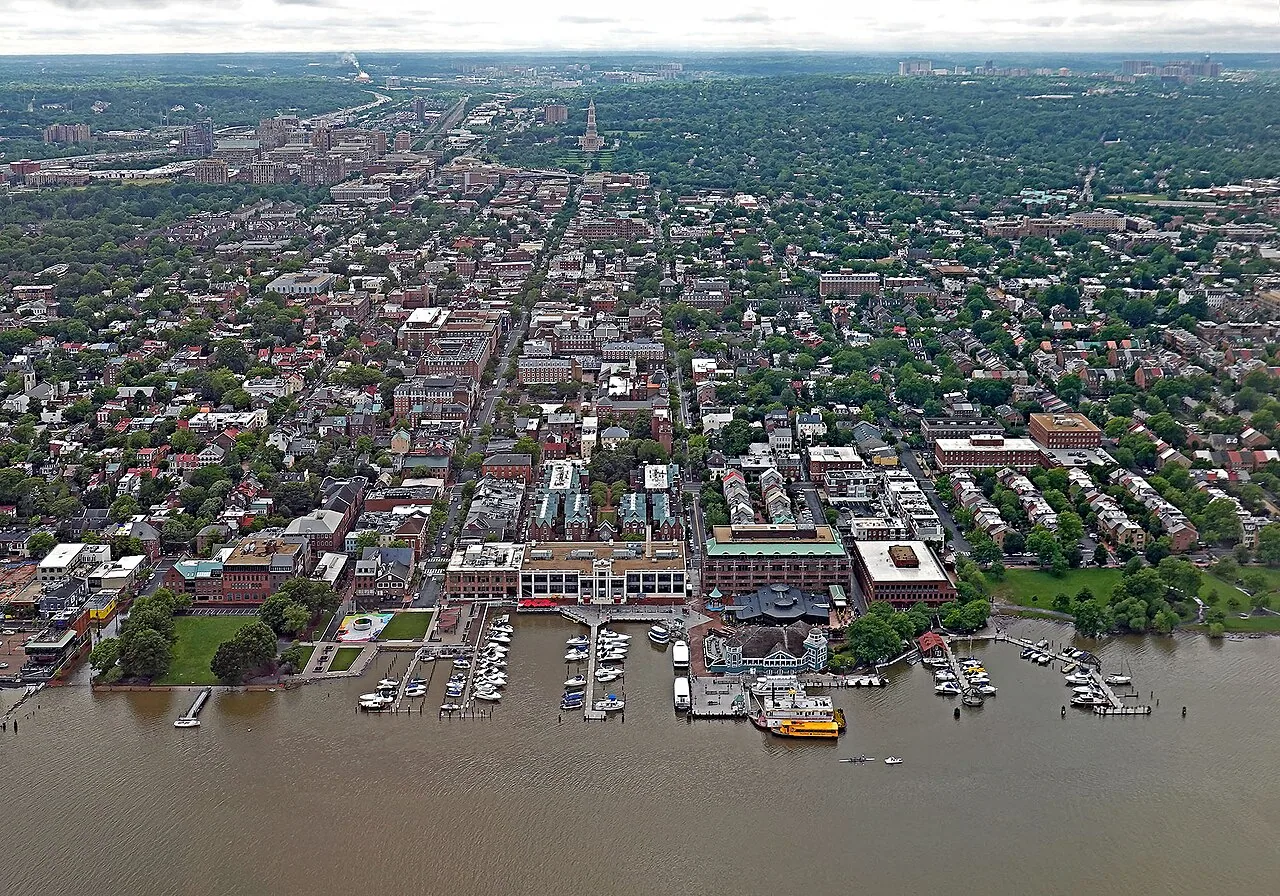
Alexandria's hot summer conditions and winter freeze-thaw cycles can stress seams and transitions through repeated movement. Rainfall calls for a clear path through primary outlets and emergency overflows; tidal flooding also affects ground-level access and discharge where the property is exposed. The inspection still has to establish whether a drain is blocked, a lap is open or insulation is wet. We use regional exposure to prioritize checks, not to claim a failure that the roof has not shown.
At Eisenhower East, office and mixed-use properties may require coordination around tenant access and deliveries. Landmark/Van Dorn includes approved redevelopment with Inova Alexandria Hospital and related medical facilities planned, so an active project may involve changing site logistics. The building contact confirms roof entry, staging, occupied zones and work hours; the neighborhood context cannot substitute for property-specific access instructions.
For active water entry, we can dispatch outside ordinary work hours, including weekends and holidays. The first visit assesses safe access, the suspected entry detail and the protection that can be installed under current conditions. Permanent application follows when the substrate and weather are suitable. The scope keeps temporary containment distinct from the lasting repair and gives the crew a safe stopping point if weather interrupts the shift.
Leave a Clear Record for the Next Repair
The closeout should state which Soprema system was verified, the repair location, preparation, materials and photographs. It should also record any uncertainty about concealed layers or prior coatings. That information helps the general contractor compare the field condition with drawings and keep the repair tied to the correct assembly. If the roof identity could not be confirmed, the record should say what would settle it.
Future maintenance should revisit drains, laps, flashing edges, coating transitions and previous repair boundaries. A maintenance inspection can document movement or new surface changes before water reaches the building interior. For work near Carlyle, the site contact can align recurring roof access with building operations and note any change in delivery or safety constraints.
Send the property address, interior report, available submittals and access contact. We will confirm the visible system, inspect the roof zones connected to the report and prepare a repair, restoration or replacement scope. If additional testing could change the boundary, we will state the decision point and keep unverified work separate from the confirmed findings.
Roofing Manufacturers
Commercial Roofing Questions
Which Soprema commercial roofing systems can you inspect?
We inspect modified bitumen, PVC and liquid-applied systems when those materials are present. The exact product and assembly are confirmed from records and field evidence before a repair is selected. A brand name alone does not identify the roof's layers or attachment.
Can a liquid-applied Soprema product go over any existing roof?
No. Substrate condition, compatibility, moisture, adhesion, drainage and project requirements all matter. We inspect the existing surface and identify any test needed before recommending an application. The scope should identify preparation and repairs required to create a suitable base.
How do you decide whether to repair or replace a Soprema roof?
We map the damage, inspect adjacent details and determine whether moisture or attachment problems extend beyond the visible opening. A local repair may fit a bounded defect; repeated failures or broader deterioration may support comparing recover and replacement. Confirmed and untested areas remain distinct in the scope.
Does a roof coating repair a leak by itself?
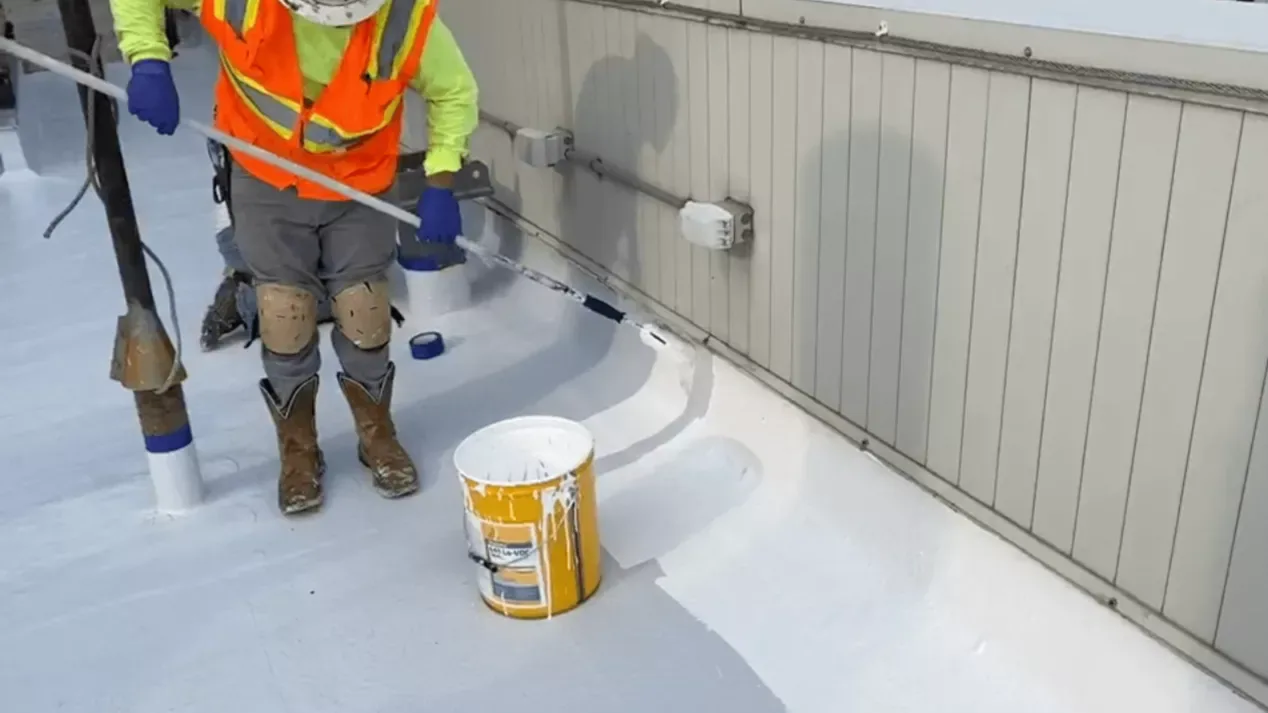
A coating is not a substitute for locating the water path or preparing the substrate. We identify the entry detail, check the layers and drainage, and determine whether the selected coating system suits the surface. The proposal states the preparation and flashing work included.
What should a Soprema roof repair report include?
It should identify the system observed, affected roof zone, material and preparation, photos, any test opening and limits on access. Those details help a later crew revisit the same seam, flashing or coating transition without guessing which assembly was repaired.
Inspect a Soprema Commercial Roof
Share the Alexandria address, roof records, reported condition and access limits. We will identify the system and document a repair or restoration scope tied to the inspected details.