 Services
 Roof Systems
 Property Types
 Industries
 Damage Repair
 Capabilities
 Manufacturers
 Service Areas
Commercial Roofing in Woodbridge, Prince William County, VA
Service Areas:
- Commercial Roofing in Carlyle, Alexandria, VA
- Commercial Roofing in Landmark / Van Dorn, Alexandria, VA
- Commercial Roofing in Eisenhower East, Alexandria, VA
- Commercial Roofing in North Potomac Yard, Alexandria, VA
- Commercial Roofing in Potomac Yard, Alexandria, VA
- Commercial Roofing in Old Town North, Alexandria, VA
Retail, medical and logistics properties in Woodbridge place different demands on roof access, drainage and daily operations. The commercial center lies south of Alexandria and connects through I-95, U.S. 1 and the Potomac transport corridor. I-95 and U.S. 1 connect Woodbridge with the region. The property contact provides loading and roof access details; we confirm the assembly and reported condition before recommending work.
At a Woodbridge property, we inspect how roof seams, drains, flashings and outlets handle the conditions present at the site. They help frame questions about membrane movement, water discharge and freeze-thaw details; the roof walk establishes what exists at the building. The property contact also confirms whether retail hours, patient access, shipping or other operations control the work window.
Woodbridge
Set the Work Boundary
A ceiling mark, a dock report and a maintenance ticket may describe different symptoms of one roof problem. We record where water appears, when it happens, what area is affected and whether equipment or envelope work preceded it. On the roof, we check slope, drains, seams, curbs, parapets and prior repairs. A commercial roof inspection sets out observed conditions, access limits and the details that need testing.
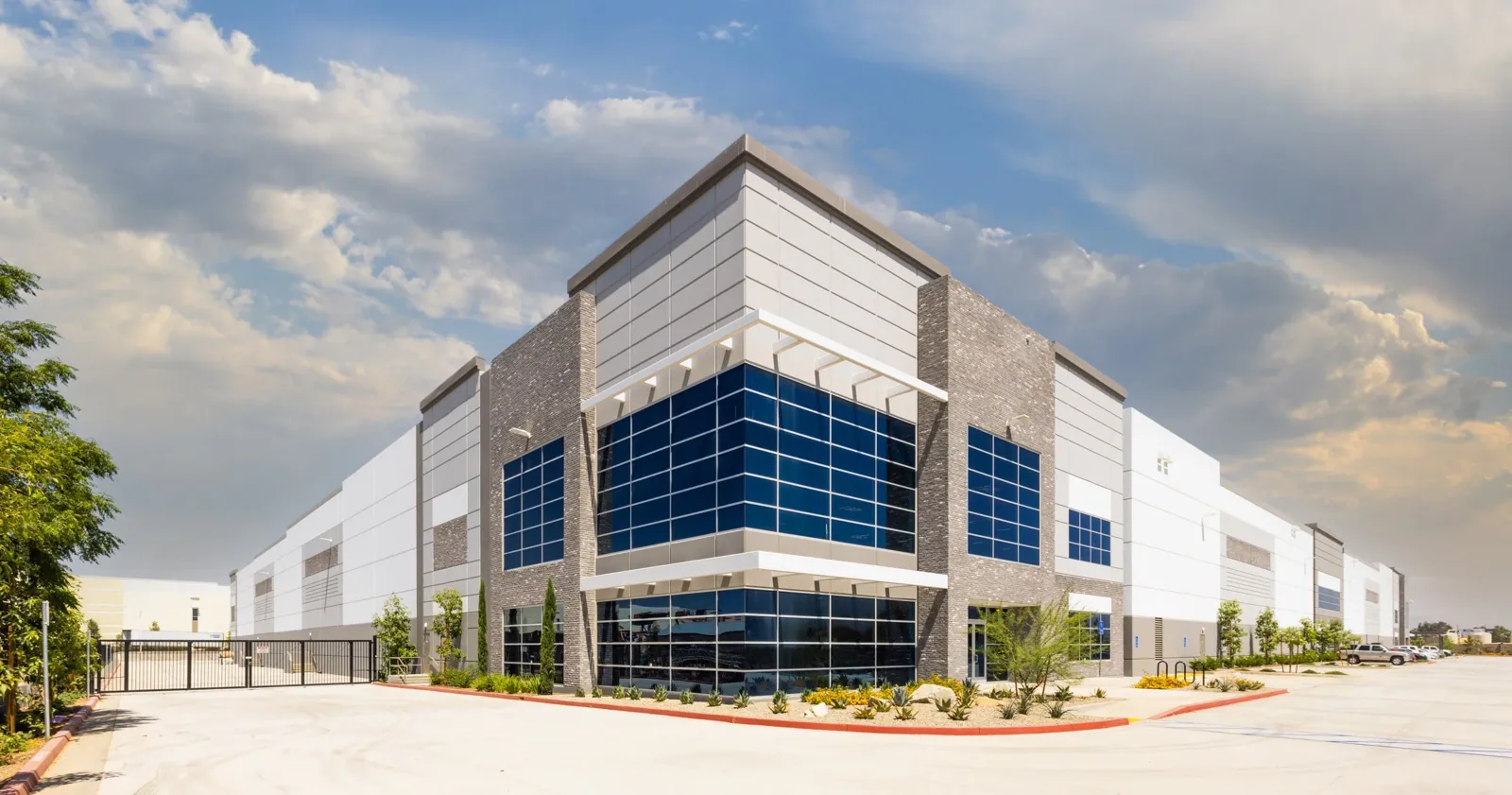
Property type helps shape the visit without deciding the assembly. At a retail site, we confirm customer routes and delivery hours. At a medical property, we coordinate roof access and protection with the facility contact. At a logistics building, the manager identifies dock operations, staging and mechanical restrictions. We identify each system from roof records and field details before choosing compatible materials.
We photograph each roof zone and relate observations to the reported interior area. If a plan is incomplete, if a previous coating obscures the surface, or if equipment prevents access, that limit goes in the report. The estimate can then separate inspected work from an assumption that still needs confirmation.
Check Drainage and Transitions
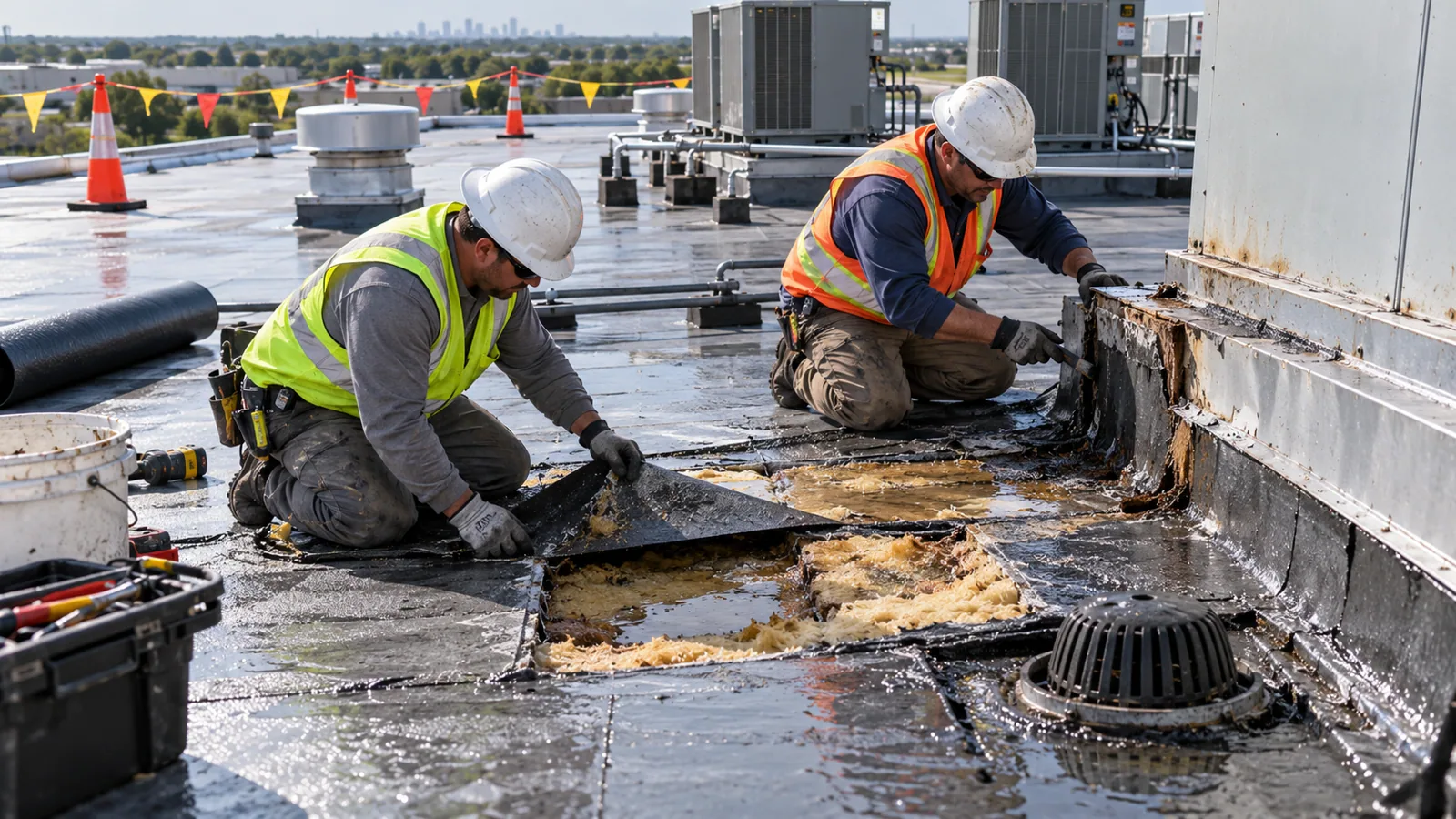
On a low-slope roof, the path from field membrane to drain must remain continuous. We inspect the drain bowl, membrane turn, clamping detail and overflow route, then look for debris, standing water, open seams or a low area that changes flow. We scope correction to the obstruction or roof detail found, then inspect other wet areas separately.
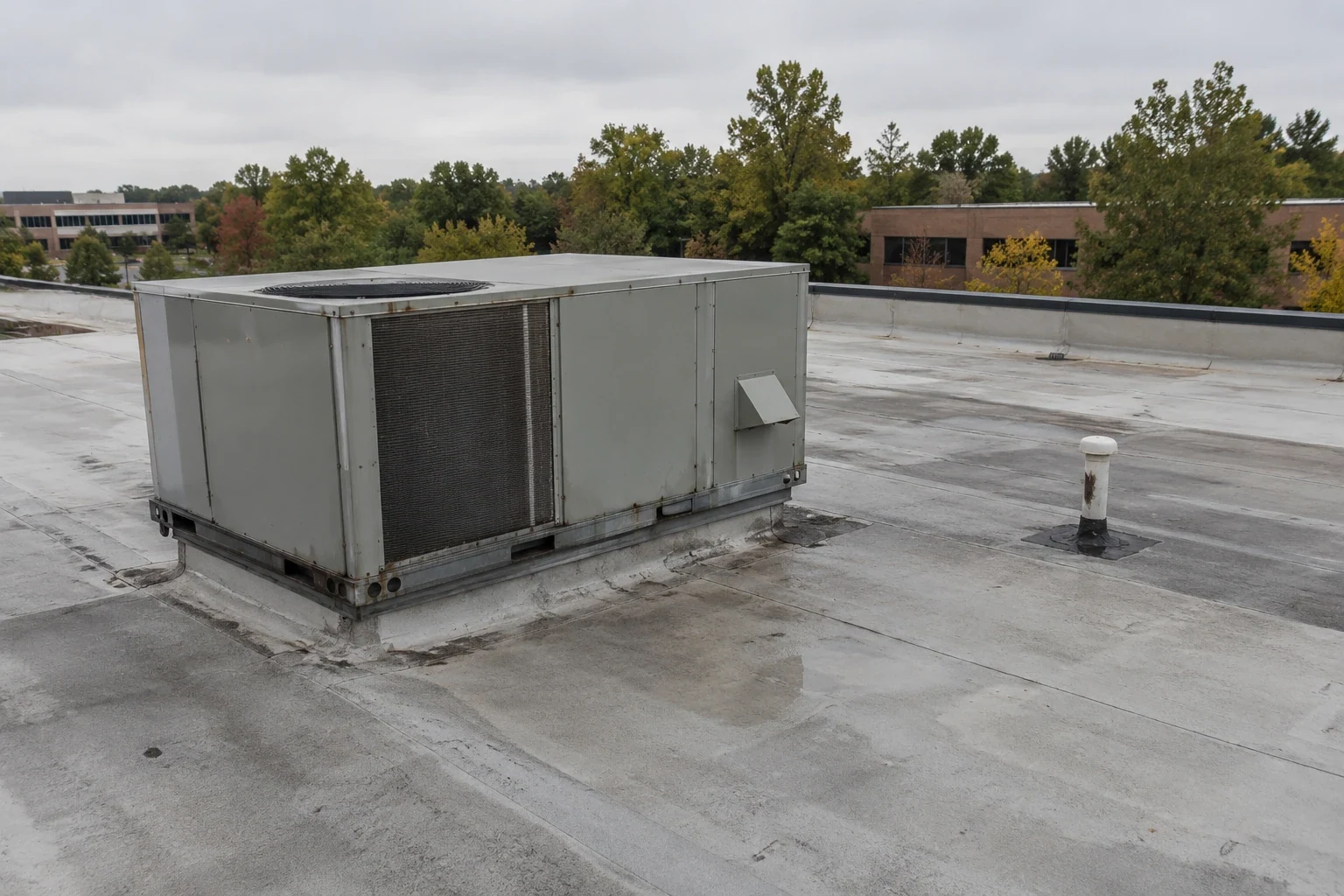
At a curb or wall, the flashing transition can open after movement, service work or repeated wetting. At an edge, coping and termination details need a separate look from the field membrane. A perimeter inspection establishes whether water is reaching the assembly at the edge. We compare that evidence with the interior report instead of assigning the stain to the nearest defect.
Where the entry point remains uncertain, a leak investigation can include testing or an agreed test opening. If it finds wet insulation or deck deterioration, we photograph the layers and mark the added area before changing scope. Untested zones remain outside that finding.
Choose the Repair Path
A repair is strongest when the failure boundary is known and adjacent material remains sound. We remove loose or incompatible material, prepare the surface, install a compatible patch or flashing and inspect the tie-in. The written scope identifies the zone, material and limits. If investigation finds damage beyond the visible opening, the owner receives the finding and quantity before that work is added.
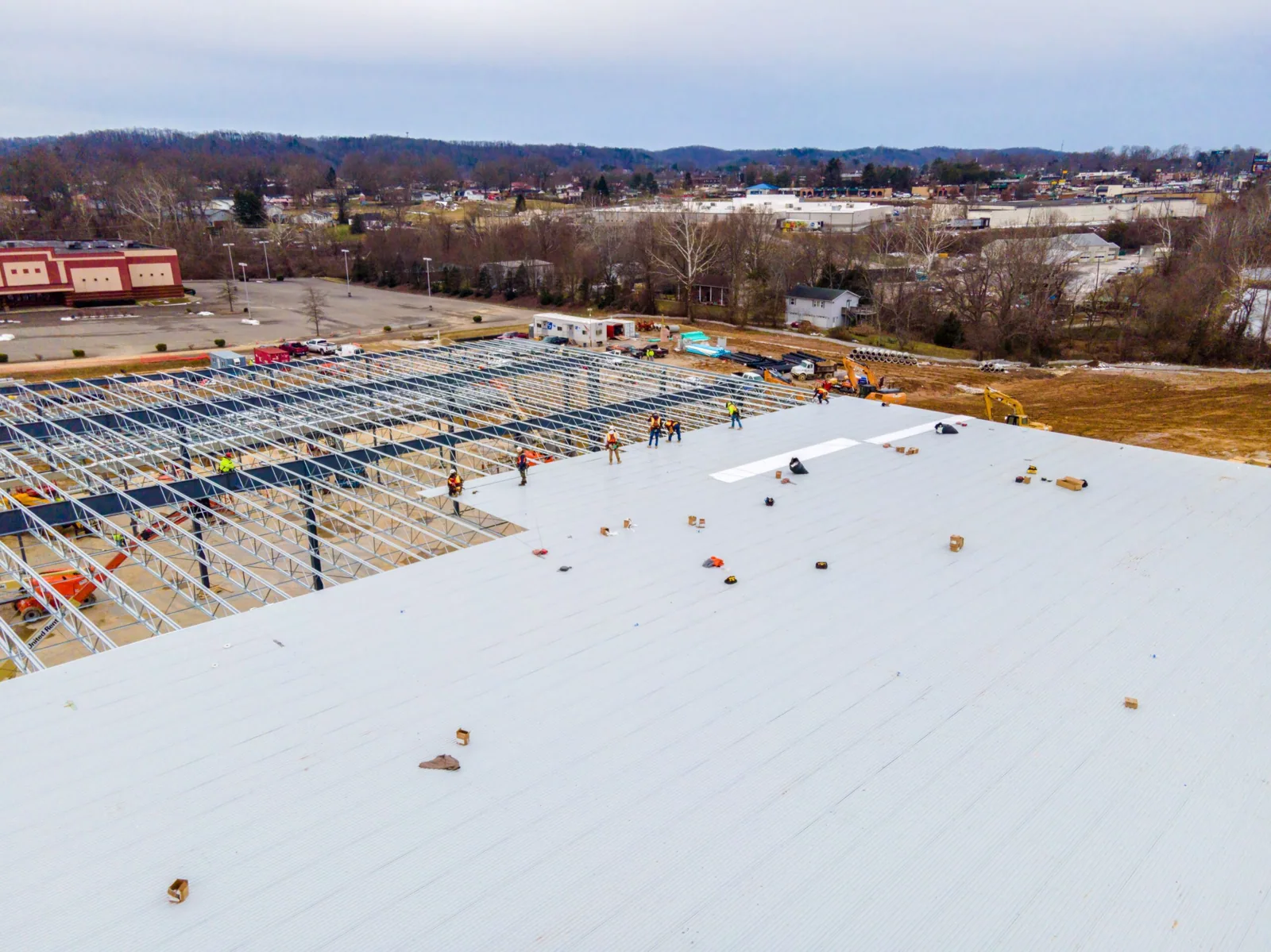
Repeated failures or broader deterioration may support a recover or replacement comparison. Existing layers, moisture, attachment, drainage, edge height and penetrations influence what can be retained. A recover evaluation checks whether another layer can be installed without trapping wet material or compromising drains and transitions. Replacement allows review of the deck as layers are removed, but it needs a broader protection and disposal plan.
Cost and schedule respond to system type, roof access, material staging, testing, weather protection and the operating window. A logistics property may need a defined loading path; a medical or retail facility may need additional separation below. We list those assumptions in the estimate. For longer-range work, capital planning can keep an immediate leak repair distinct from a later replacement decision.
Use Climate as an Inspection Prompt
We inspect drainage, seam movement and cold-weather transitions at the Woodbridge address, then set the repair boundary from field findings.
Heat can increase movement at a membrane lap or penetration. Freeze-thaw works on water retained at a crack, open termination or blocked outlet. Heavy rain tests drains and overflow points. We compare water marks with the contact’s account, then use inspection or a test opening to establish whether water is active and how far it has affected the assembly.
Work timing depends on dry substrate, compatible materials and a secure way to close the roof at shift end. Emergency response is available around the clock, including holidays, when water is entering. Permanent work follows when conditions support a sound tie-in.
Coordinate Around the Property
I-95 and U.S. 1 connect Woodbridge with regional routes; the property contact confirms the approved delivery and roof-entry path. The property contact confirms gate procedures, deliveries, lift position, roof access, escorts and work hours so equipment and protection can be planned before mobilization.
For an occupied facility, phased reroofing can keep work to defined zones, with daily dry-in and protection below. The manager identifies mechanical shutdowns and critical routes. If removal reveals concealed damage, the crew documents it and obtains direction before extending the approved boundary.
Franconia is another service-area location with its own access and staging needs. Woodbridge and Springfield receive separate work sequences based on the property contact’s directions, not a logistics assumption carried between markets.
Keep Findings With the Address
The closeout identifies roof zones, confirmed assembly, repair details, photographs, test locations and access limits. Notes show what a test opening exposed and what remained covered. A field sketch can connect the interior report with a drain, seam or penetration.
A maintenance program can revisit drains, flashing and previous repairs after later weather, recording new conditions and any access limits.
Share the Woodbridge address, property use, reported condition, roof records and access contact. We will inspect relevant areas and prepare measured options that identify the work boundary and unresolved conditions.
Service Areas
Commercial Roofing Questions
Does a Woodbridge property’s use tell you what roof system it has?
No. Retail, medical and logistics uses help us plan access and protection, but they do not identify the membrane or roof layers. We check available records and field details before selecting a compatible repair.
How do I-95 and U.S. 1 affect a roofing project?
They provide regional connections, while site-specific deliveries, gate rules, loading and lift placement come from the property contact. We confirm that route and list staging assumptions before scheduling material and crew access.
Can one test opening determine the condition of the whole roof?
It confirms the layers at the tested location. We document the opening and compare it with visible conditions elsewhere, but the result does not establish that concealed layers are identical in every zone.
What makes a recover a workable option?
The existing layers, moisture, attachment, drainage, edge height and flashing transitions have to support another assembly. We inspect those conditions and compare recover with replacement when concealed damage or incompatible details limit the first option.
Can roofing proceed while a medical or retail building remains open?
Often the work can be sequenced by roof zone, with access, protection, noise and operating hours set with the facility contact. We define daily dry-in points and coordinate any mechanical or interior restrictions before a section is opened.
Scope Commercial Roofing in Woodbridge
Send the property address, roof concern, access contact and current operating constraints. We will inspect the relevant roof details and return a measured scope tied to field findings.