



 Services
 Roof Systems
 Property Types
 Industries
 Damage Repair
 Capabilities
 Manufacturers
 Service Areas
Commercial Roofing in Tysons, Fairfax County, VA
Service Areas:
- Commercial Roofing in Carlyle, Alexandria, VA
- Commercial Roofing in Landmark / Van Dorn, Alexandria, VA
- Commercial Roofing in Eisenhower East, Alexandria, VA
- Commercial Roofing in North Potomac Yard, Alexandria, VA
- Commercial Roofing in Potomac Yard, Alexandria, VA
- Commercial Roofing in Old Town North, Alexandria, VA
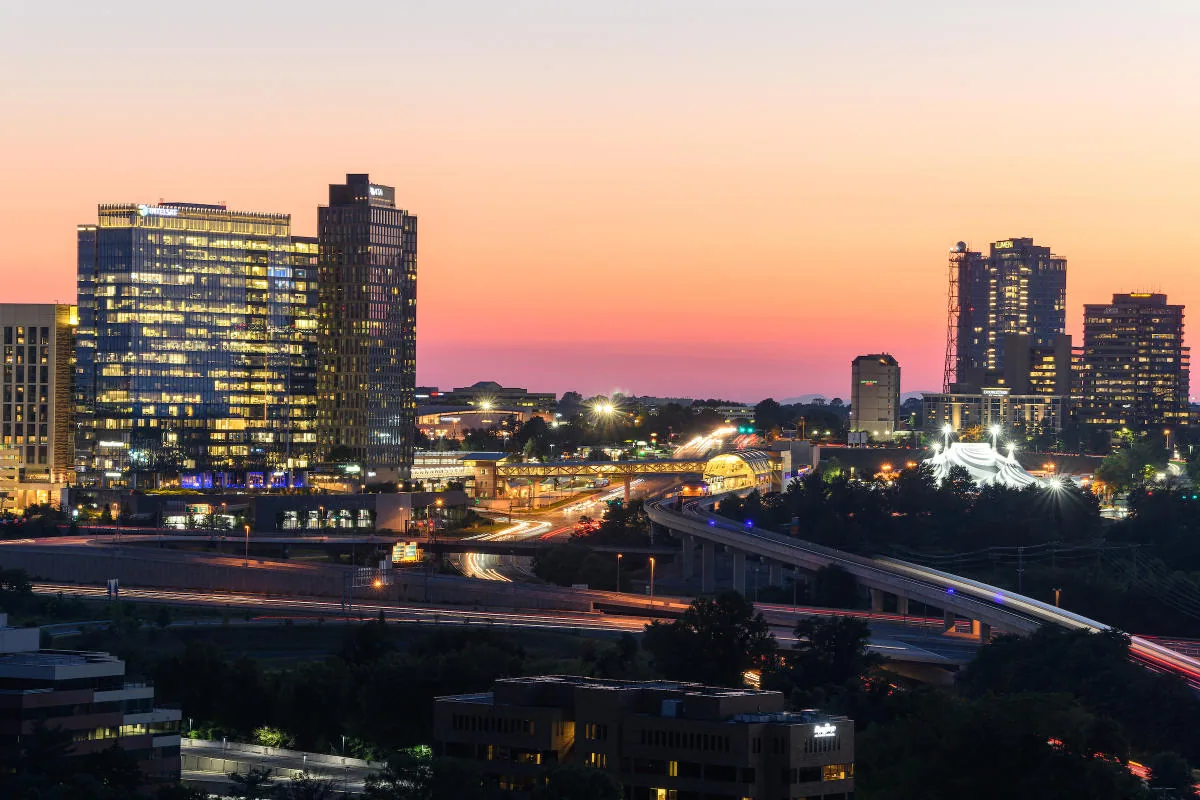
Office, retail and mixed-use development make Tysons an urban center where commercial roof work must start with the specific building and its operating contact. The area spans parts of Fairfax County's Hunter Mill and Providence districts, and the county supports commercial activity centers. Those planning facts describe a broad market, not an individual roof system or work schedule. We inspect the address and verify its access and assembly before preparing options.
For seasonal roof planning, the 1991-2020 Washington National Airport record offers a regional reference for summer heat and winter freezing and snowfall. The Tysons inspection establishes the actual roof condition at its Fairfax County address. A Reston property has its own business and transit center context; we keep system, access and repair findings tied to the address where they were observed.
Tysons
Inspect the Property, Not the District Label
A city-scale center includes many parcels and operating teams. We ask which building is under review, who controls roof entry, whether the property is occupied and what drawings or repair records are available. The site contact confirms lift staging, material delivery and equipment shutdown needs before a visit.
We note the room or suite reporting water, the time it appeared and any weather or trade work that preceded it. On the roof, we compare that report with slope, drains, parapets, curbs, penetrations and previous repairs. A commercial roof inspection records the suspected route, observed details and limits on access so the owner can review the scope against field evidence.
For an office, retail or mixed-use property, protection below may involve different occupants and routes. We coordinate notice, noise, deliveries and work windows with the manager or GC. We record the tenant, rooftop equipment and construction status at the property.
Trace Water Across the Roof
Water can travel under a membrane or along a deck before it reaches an interior ceiling. We map the report against drains, seams, parapet transitions and rooftop equipment. A leak investigation identifies probable travel separately from the opening confirmed on the roof. If the suspected source remains hidden, we explain which access or test could resolve it.
At a drain, the bowl, membrane and overflow route are examined together. At a parapet, the cap, flashing turn and termination deserve a separate check. At a curb, movement after mechanical service can affect the tie-in. A roof-edge assessment addresses the perimeter connection but does not substitute for inspection of a separate outlet or penetration.
Thermal observations are useful only where collection conditions suit the assembly and the pattern can be interpreted; relevant material confirmation then supports the moisture finding. If insulation or deck condition could expand removal, a test opening can verify the material at one point. We coordinate interior protection, photograph the layers and note untested areas so a limited result is not interpreted as a whole-roof condition.
Compare the Viable Work Paths
A local correction may suit a bounded puncture, open seam or failed flashing when surrounding attachment and membrane remain sound. We identify the system, prepare compatible material, complete the tie-in and inspect it. If the substrate or insulation is affected, that quantity is scoped separately. The owner can see which layer the repair covers and what remains unverified.
Where repeated failures or broad wear appear, recover and replacement may be compared. Existing layers, drainage, moisture, edge height, access and project requirements shape the choice. A recover review evaluates whether the assembly can accept another layer and keep drains and perimeters properly detailed. Tear-off requires disposal and weather protection but may expose deck conditions that cannot be confirmed otherwise.
Price and schedule depend on material, staging, roof height, security, testing, occupant protection and work windows. We name assumptions and the approval process for additional removal. If a property has a capital plan, roof planning can keep immediate water control distinct from broader project timing.
Put Climate in the Right Place
Heavy rain and seasonal temperature changes can stress roof details. A Tysons field walk establishes whether seams, outlets and flashing need repair. We document actual roof conditions and connect the recommendation to the address.
Heavy rain tests outlet flow and overflow routes. At the Tysons property, we inspect drains, scuppers, low areas, water marks and flashing to determine whether ponding is present. If an outlet is hidden or roof slope cannot be assessed, the report identifies the additional access or design record required.
Permanent installation also depends on material, substrate dryness and forecast. We plan a secure stopping point before opening a roof. If active water is entering, a response can be arranged after hours or on a holiday to protect the interior and locate entry; permanent repair follows when the surface and access allow a proper tie-in.
Coordinate Work in an Active Center
Before mobilization, the manager confirms roof entry, loading, deliveries, lift placement, security and work hours. Those details can vary within the Tysons center. We list the approved route and any restrictions that affect material or crew timing. If the project shares access with another contractor, the GC identifies work zones and handoffs before the roofing crew arrives.
For occupied buildings, phased roofing can divide a larger job into zones that can be secured independently. The plan specifies noise, protection below, equipment coordination and the daily dry-in. If removal uncovers wet insulation or damaged deck, the crew documents the condition and seeks direction before adding quantities.
Springfield is tied to Fairfax County planning for the Franconia-Springfield station and a community business center. That work context differs from Tysons' Hunter Mill and Providence districts. We confirm phase and access for each site separately.
Retain the Evidence by Property
Closeout lists the address, roof zone, observed assembly, repair detail, photographs and testing limits. A marked plan can connect the interior report to the drain or seam reviewed. If the drawings and field conditions diverge, we preserve the discrepancy and state which record or opening could settle it.
A maintenance visit can revisit drainage, flashing and prior repairs after later weather. Keep condition notes with the property record so future work can distinguish completed details from remaining questions.
Send the Tysons address, affected area, current plans, reported condition and site contact. We will inspect accessible zones and prepare a measured scope with options tied to confirmed findings and current project constraints.
Service Areas
Commercial Roofing Questions
Does the Hunter Mill or Providence district label identify a roof system?
No. Those district boundaries do not show what membrane or assembly is installed at a parcel. We check project records and visible field details at the property before choosing repair materials.
How do you plan roof work in a mixed-use Tysons building?
The manager confirms tenant routes, work hours, loading, security, lift placement and interior protection. We use those instructions to sequence the work and include access assumptions in the estimate.
What if a Tysons leak appears far from a drain or curb?
We compare the interior report with roof slope, seams, flashings and penetrations. Water can travel below the sheet. The inspection records likely route separately from verified entry and recommends testing where concealed layers could affect removal.
When does a roof need a test opening?
An opening can confirm insulation or deck condition when that information may change the repair boundary. We agree on location, protect the building below and document the layers exposed. Nearby sections remain untested until reached.
Can a Tysons roof be recovered instead of replaced?
That depends on existing layers, moisture, attachment, drainage and edge conditions. We inspect the assembly and determine whether a new layer can be terminated correctly. If concealed damage is broad, replacement may be a better comparison.
Inspect Commercial Roofing in Tysons
Share the building address, roof concern, project phase, plans and access contact. We will inspect the relevant details and prepare repair or replacement options tied to field findings.