 Services
 Roof Systems
 Property Types
 Industries
 Damage Repair
 Capabilities
 Manufacturers
 Service Areas
Metal Roof Retrofit in Alexandria, VA
Roof Systems:
A loose washer can admit rain long before a metal panel looks badly worn. On an exposed-fastener roof, each screw passes through the panel, so movement and weather act at multiple small sealing points. Alexandria’s hot summers and winter freeze-thaw cycles can stress washers, seams and edge details. We inspect the fastener pattern, panel condition and water route, then separate routine repairs from areas where the substrate or attachment needs a broader retrofit review.
Commercial properties occur along Route 1, while the Eisenhower Avenue area includes office and mixed-use buildings. We identify the panel profile and compare it with roof records before specifying a compatible detail. We document each roof zone and compare targeted repair with a new standing seam assembly or a coating when the conditions suit it.
Metal Roof Retrofit
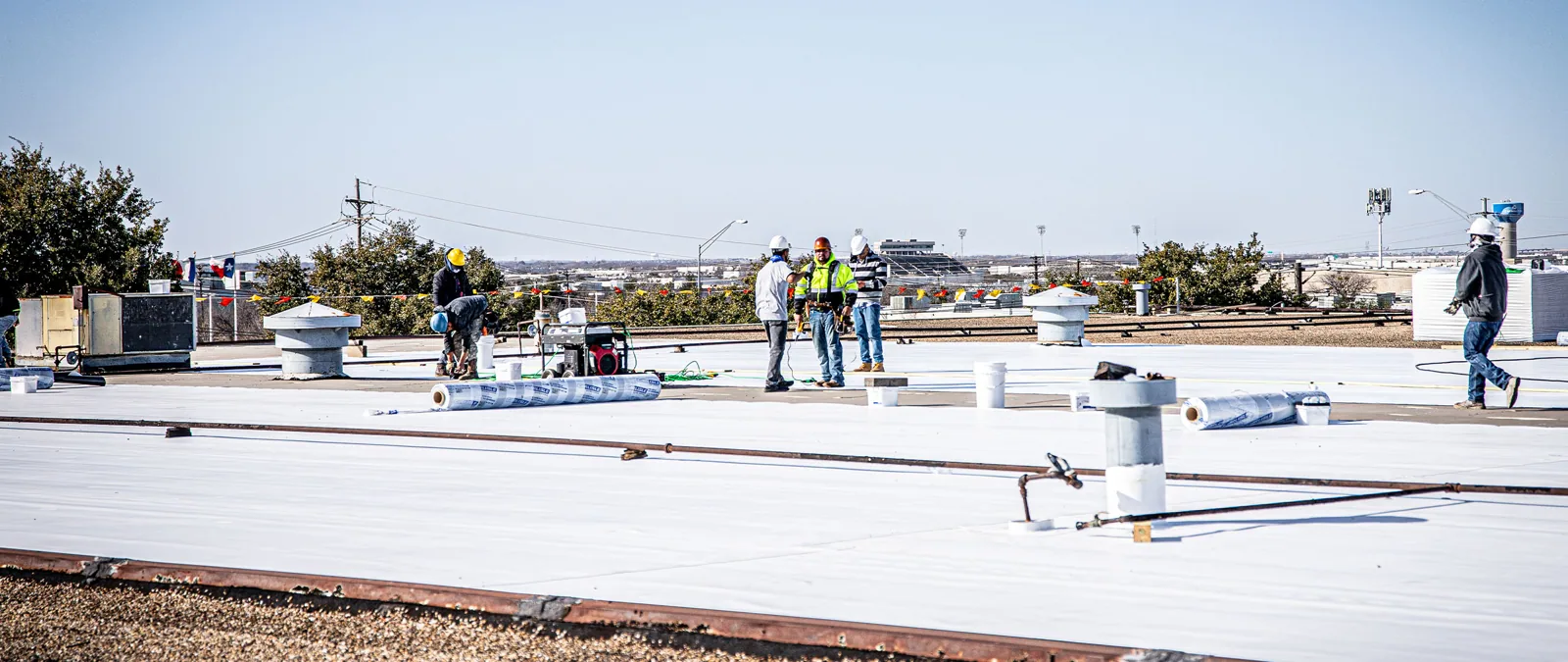
Read the Fastener Pattern
Exposed screws usually sit at panel ribs or in a specified fastening pattern. We look for backed-out heads, cracked or flattened washers, rust staining, enlarged holes and screws that sit at an angle. A washer that has lost compression may no longer seal; overtightening can distort the panel or damage the washer. The repair plan identifies the affected rows and checks whether the problem repeats across several roof zones.
Panel movement can enlarge holes around fasteners, especially where long sheets expand and contract but have no room to move. We follow a loose screw pattern toward ridges, eaves, laps and penetrations. If panels have shifted or torn, replacing fasteners alone may leave the underlying movement problem in place. We record the condition of panel ribs and attachment before setting a quantity or boundary.
Fastener replacement works only when the new screw suits the panel and engages sound support. If the deck or purlin cannot hold it, we flag that condition. An approved opening can check for hidden corrosion or wet insulation.
Follow Leaks Past the Screw
Rain can enter at a washer, ridge cap, side lap, valley, curb or wall transition, then travel along the panel or support before appearing indoors. We compare the reported room location with roof-level evidence and mark the likely path. A leak investigation can separate the entry point from the place where water becomes visible. We do not set a repair boundary from a ceiling stain alone.
Heavy rainfall makes the roof overflow and outlet paths worth checking, particularly where metal roofing drains into gutters or meets a low-slope section. We inspect the eave, gutter connection, downspout and adjacent membrane transition for blockage or backflow marks. A drainage review can address outlets that share the roof’s water route, but it does not substitute for checking panel laps and fasteners.
Penetration boots and curb flashing must accommodate panel movement. New sealant over a failed flange can hide rather than correct the defect. We inspect the edge, fasteners and overlap, then specify component replacement or a prepared seal repair.
Separate Surface Wear from Failure
Scratches, cut edges and trapped debris can break a protective finish and start corrosion. We distinguish surface staining from metal loss by checking coating condition, panel edges, valleys, fasteners and places where water remains. Corrosion at a fastener hole or seam can compromise attachment and sealing; confirmed metal loss or an unsuitable repair boundary can require panel rebuilding or replacement rather than a new finish. Photos and measured locations make the difference visible to the owner.
A coating can help protect compatible, sound metal after rust is removed and the substrate is prepared. It cannot rebuild a corroded panel, correct loose attachment or dry concealed insulation. A coating restoration scope identifies preparation, rust treatment, detail reinforcement and adhesion checks. A silicone roof coating is suitable only where the substrate and drainage details support it.
Debris held behind equipment or at a valley can keep metal wet and hide a developing defect. We check whether the material can be safely removed and whether drainage resumes afterward. Where damage appears below the visible finish, an approved opening can help assess underlayment, insulation and deck. The report makes clear which conclusions come from direct observation and which remain unconfirmed.
Compare Retrofit and Replacement
A metal retrofit may add a new assembly over the existing panels, but the old roof must be suitable for that approach. Attachment, substrate strength, existing layers, added height, edge transitions, roof drainage and equipment clearances all affect feasibility. A recover assessment records the proposed attachment and what remains below; it should not assume that a stable-looking panel confirms a sound deck.
Replacement becomes a stronger option where panels are split, corrosion is widespread, fastening is failing or prior repairs have left no reliable boundary. A replacement scope can compare removal depth, deck repairs, underlayment, new panels and trim. We separate verified conditions from items concealed until removal and provide a decision point if the deck differs from what the inspection could see.
Construction applicants in Alexandria work under the 2021 Virginia Codes. Project criteria depend on roof geometry, building use and permit review, so the general contractor coordinates drawings and details with the design team. We do not infer a particular panel’s wind capacity from a district or property type. Existing documents and field conditions need to be reconciled before attachment design is finalized.
Stage the Repair
Metal repair requires safe access, panel-compatible parts and suitable conditions for the planned connection and protection at the work section. We confirm ladder or lift locations, material staging, interior protection and access restrictions with the contact. In a mixed-use setting near King Street, deliveries and tenant movement may differ from a warehouse along Route 1. The plan follows the address and building operations, not a generic district assumption.
Where conditions allow, work proceeds by zone. We replace failed fasteners or flashing, check the substrate and close the repair as specified. A tear, soft deck or wet insulation is documented for an owner decision. Emergency leak response is available any hour, including holidays.
Price and duration depend on panel access, screw quantity, corrosion, trim fabrication, interior protection, roof height, disposal and the scope of concealed repairs. We describe those drivers in the estimate and identify the work that would require separate approval. A roof condition report can keep the findings, photos and unresolved questions organized by zone.
Record What Changed
After work, photos should show replaced fasteners, repaired seams, flashing transitions and the drainage route around the treated area. We list material type, locations, test openings and any panel or substrate condition left for future attention. That record helps the next manager distinguish a completed repair from an area that was inspected but not opened.
For an Alexandria property near Eisenhower East or Old Town, keep the address, roof plan and repair history with the closeout. Periodic maintenance can check fastener movement and finish wear. Share the access window and any recurring leak locations when arranging the inspection.
Roof Systems
Commercial Roofing Questions
Can I replace the screws without replacing the panels?
Often, when panel holes and supports remain sound. We verify screw type, length and substrate engagement, then check movement and corrosion. Quantity follows the observed pattern.
Why do metal roof screws keep loosening?
Panel movement, enlarged holes, weakened support or incorrect fasteners can cause repeat loosening. We inspect the surrounding ribs and support, then determine whether compatible replacement fasteners will hold. If the panel has torn or the substrate is deteriorated, the repair boundary has to include that condition.
Can a coating stop corrosion on an exposed-fastener roof?
A coating can protect sound metal after proper preparation. It cannot restore lost metal or tighten failed attachment. We identify panel replacement, fastener repairs, rust treatment and adhesion checks before defining suitable areas.
Is a retrofit roof possible over my existing metal panels?
Feasibility depends on panel attachment, substrate, roof height, drainage and the proposed system’s requirements. We review records and inspect representative areas; test openings may be needed. The scope names retained layers and concealed conditions that remain unknown.
What should I send before an inspection?
Provide the address, roof plans if available, leak locations, prior repairs and access rules. Photos of the interior mark a starting point, while roof access confirms the panel and flashing condition. We can then focus the visit on the affected zones and related drainage.
Evaluate a Metal Roof in Alexandria
Send the Alexandria address, roof history, leak locations and access limits. We will check fastener condition, trace water routes and compare a measured repair with retrofit or replacement.