
 Services
 Roof Systems
 Property Types
 Industries
 Damage Repair
 Capabilities
 Manufacturers
 Service Areas
Military Hangar Roofing in Alexandria, VA
Property Types We Roof:
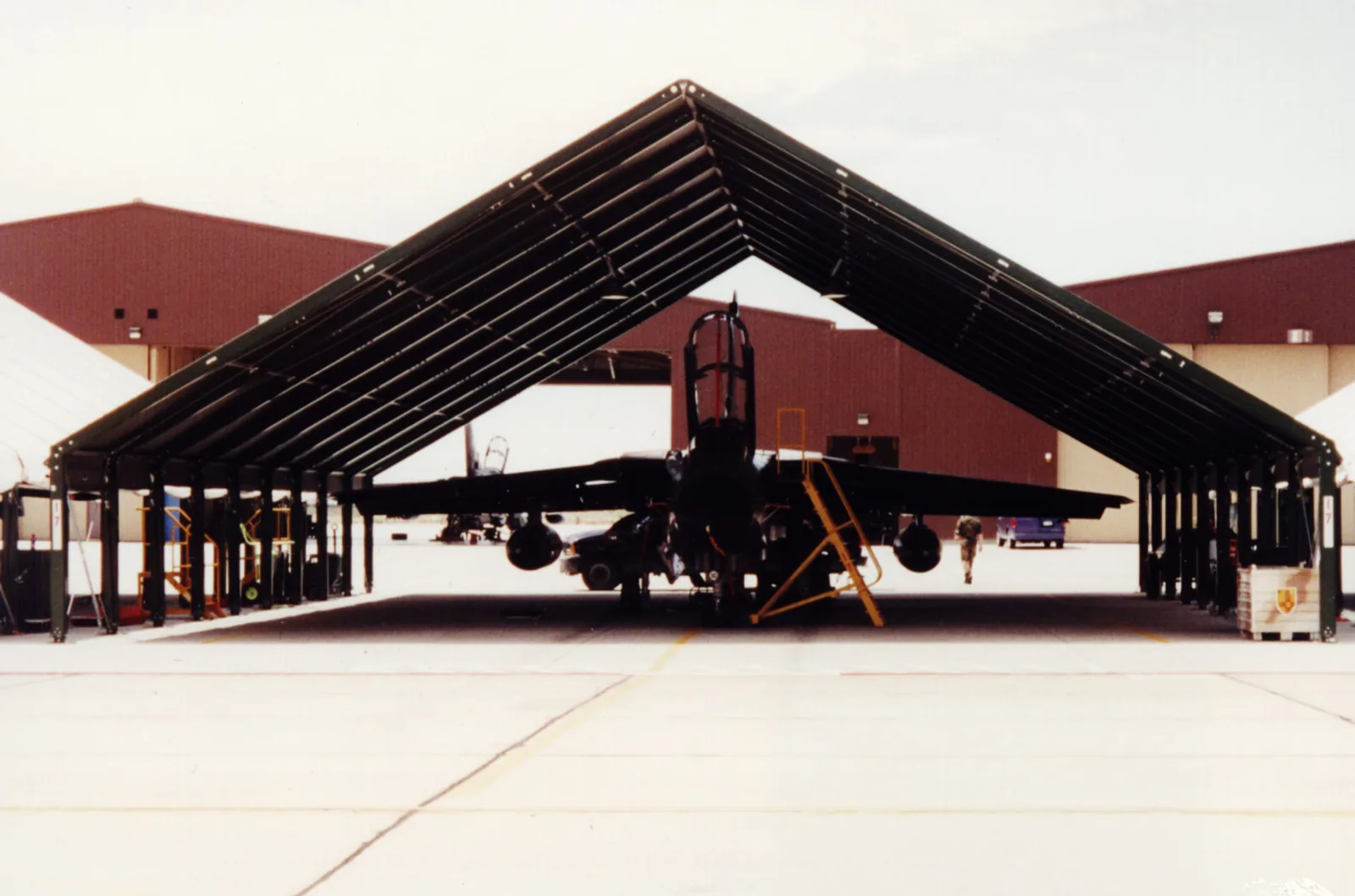
A hangar roof has to shed water without disrupting the movement of aircraft or maintenance crews below. A leak over a work bay can travel along deck or framing before it reaches the floor, while an open seam at a curb can admit water far from the observed drip. We map the roof zones, drainage routes and interior report before selecting a repair. Alexandria, VA brings heavy rainfall, summer heat and freeze-thaw into that inspection, but the roof condition must be established at the address.
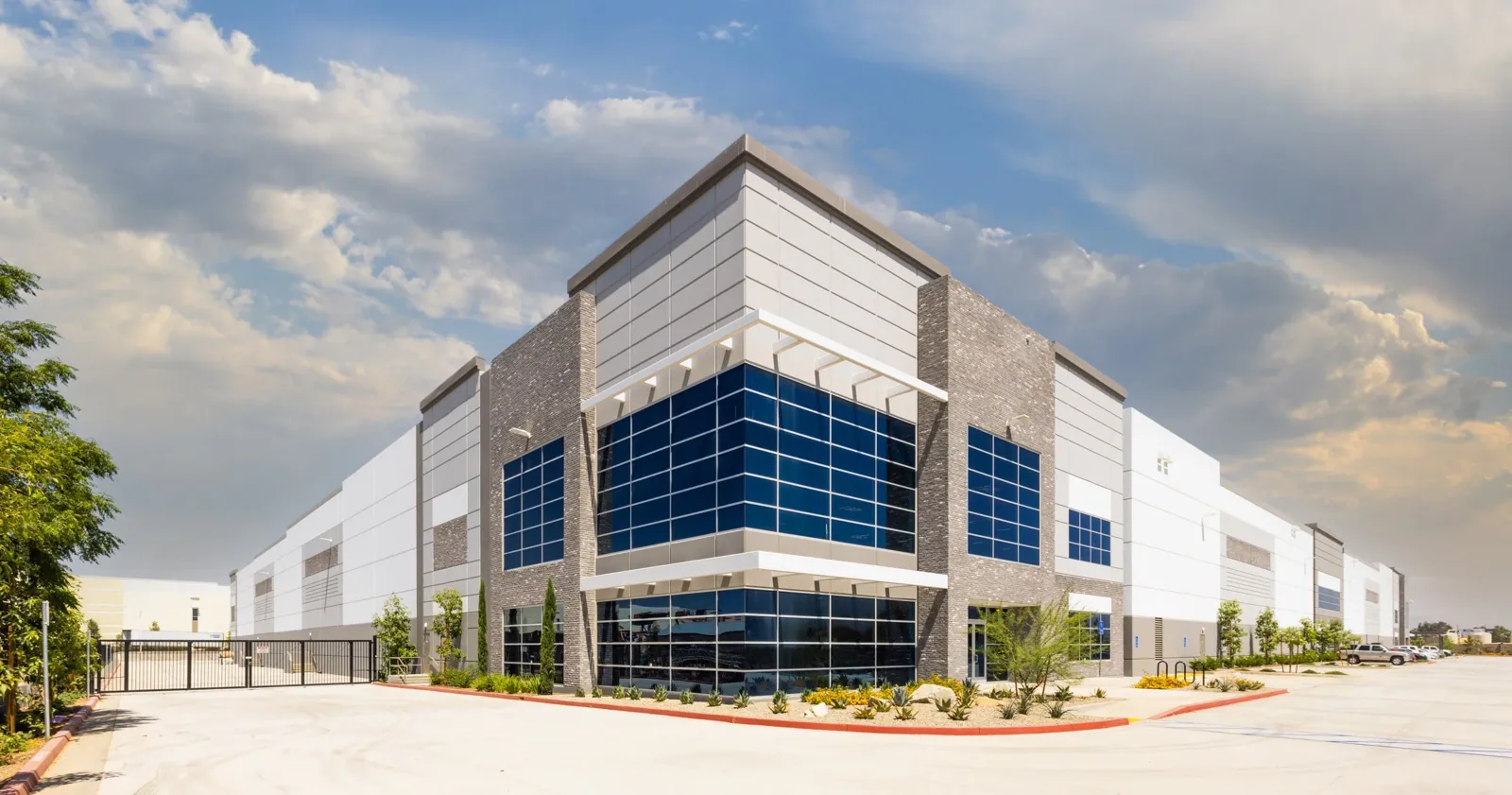
Joint Base Andrews supports flight-line operations and includes multiple hangars; Joint Base Anacostia-Bolling also serves regional Air Force and Navy missions. At Joint Base Andrews and JBAB, the installation contact sets access and operating windows; drawings and roof inspection establish the assembly for each hangar. We confirm plans, equipment clearances, access rules and the facility contact’s operating window. Nearby warehouse roofs can share broad spans, while an manufacturing plant may have different process and occupancy limits.
Military Hangar Roofing
Plan Around Aircraft Movement
The facility contact defines where roofing crews, lifts and material deliveries may travel. We confirm gate procedures, escorts, badging, airfield boundaries, vehicle dimensions and areas that need to stay clear. Hangar doors, apron access and maintenance operations can narrow the safe work window, so the sequence is approved with the person managing the facility. Emergency response is available at all hours, including weekends and holidays, when a roof opening or active leak needs immediate attention.
We review lift clearance, ground conditions, material staging and debris routes with the site representative. The facility sets aircraft and bay restrictions, and the roofing sequence follows those limits.
Inspect the Span and Its Details
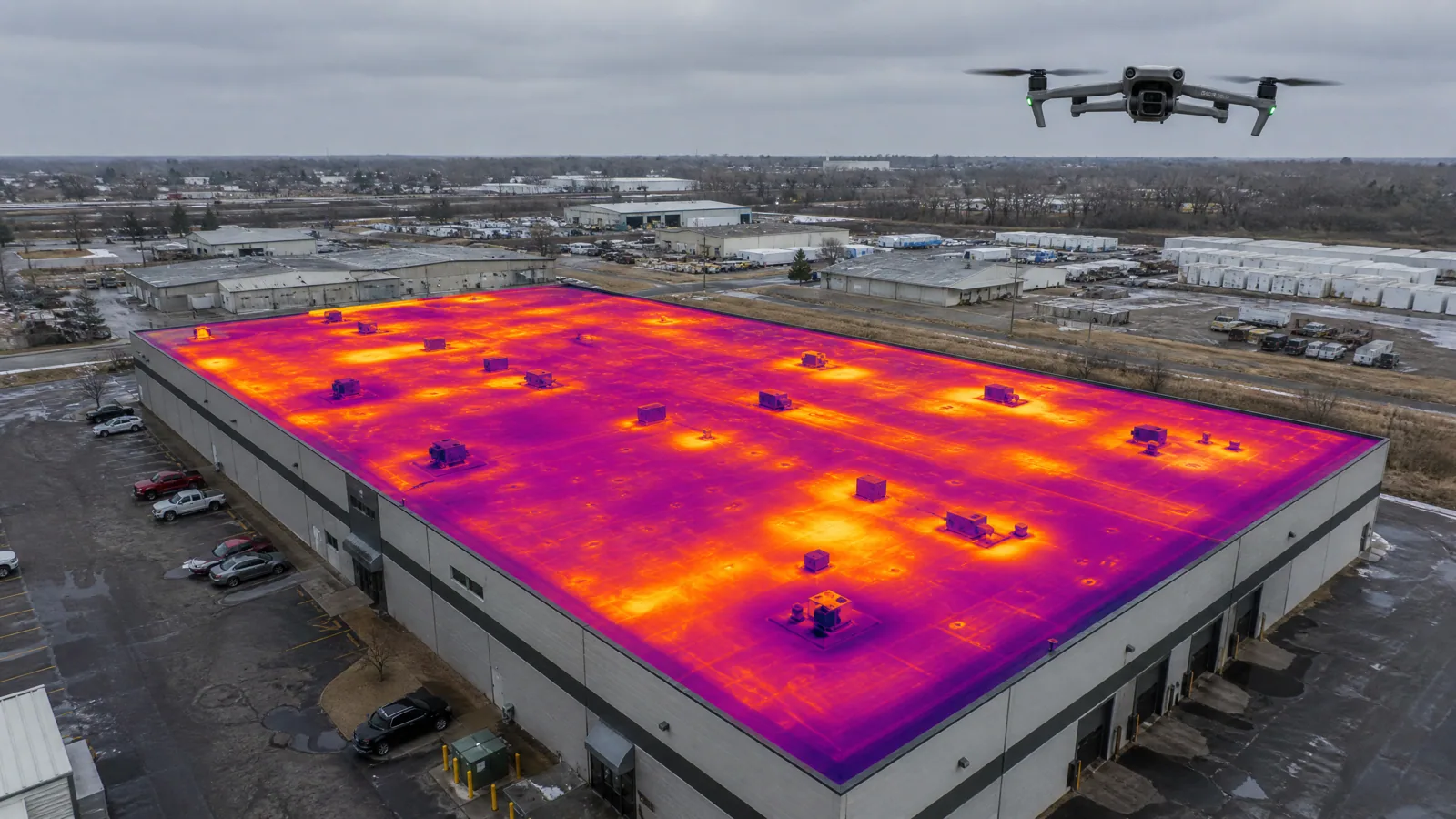
We start with roof plans if available and compare them with visible framing, drains, parapets, expansion joints and penetrations. On a large uninterrupted area, the nearest interior drip may not point to the entry location. A commercial roof inspection records the possible water path and marks the boundaries that can be confirmed. The inspection may also use a drone survey where site rules, weather and flight restrictions allow it.
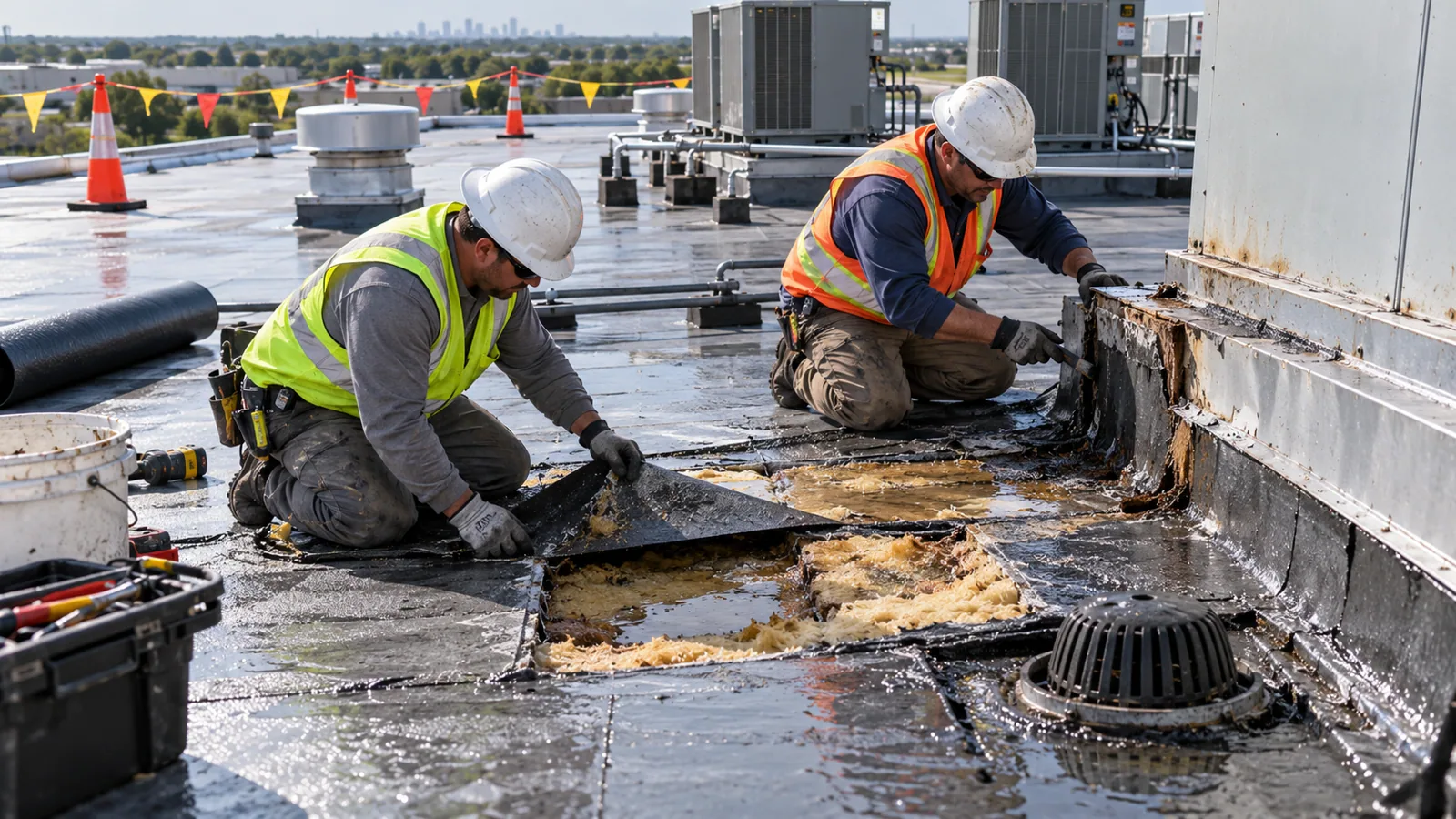
At roof level, we examine seam continuity, flashing at walls and curbs, attachment at edges, and the condition of expansion-joint covers. Drain bowls, scuppers and overflow points are checked for blockage or signs of prolonged ponding. A drainage review can distinguish a membrane defect from a problem in the water route. Findings are tied to roof zones and photographed so a facilities manager can compare the record with drawings or prior repair notes.
If moisture may extend beneath the surface, infrared indications can help select a test location. We interpret infrared patterns against the roof composition, temperature and recent weather. An approved test opening can confirm the layers and deck condition at one selected point. We coordinate the opening, observation beneath and restoration with the facility contact, then keep that evidence separate from areas that were not tested.
Use a Repair That Fits the Roof
Drawings and roof-level details identify whether a hangar has a membrane, metal-panel or other assembly. We identify the existing system, attachment, insulation and deck before writing a repair. A separated thermoplastic seam, a torn single-ply membrane and a loose metal panel require different materials and preparation. Matching the detail reduces the chance that a repair creates a new stress point beside the original condition.
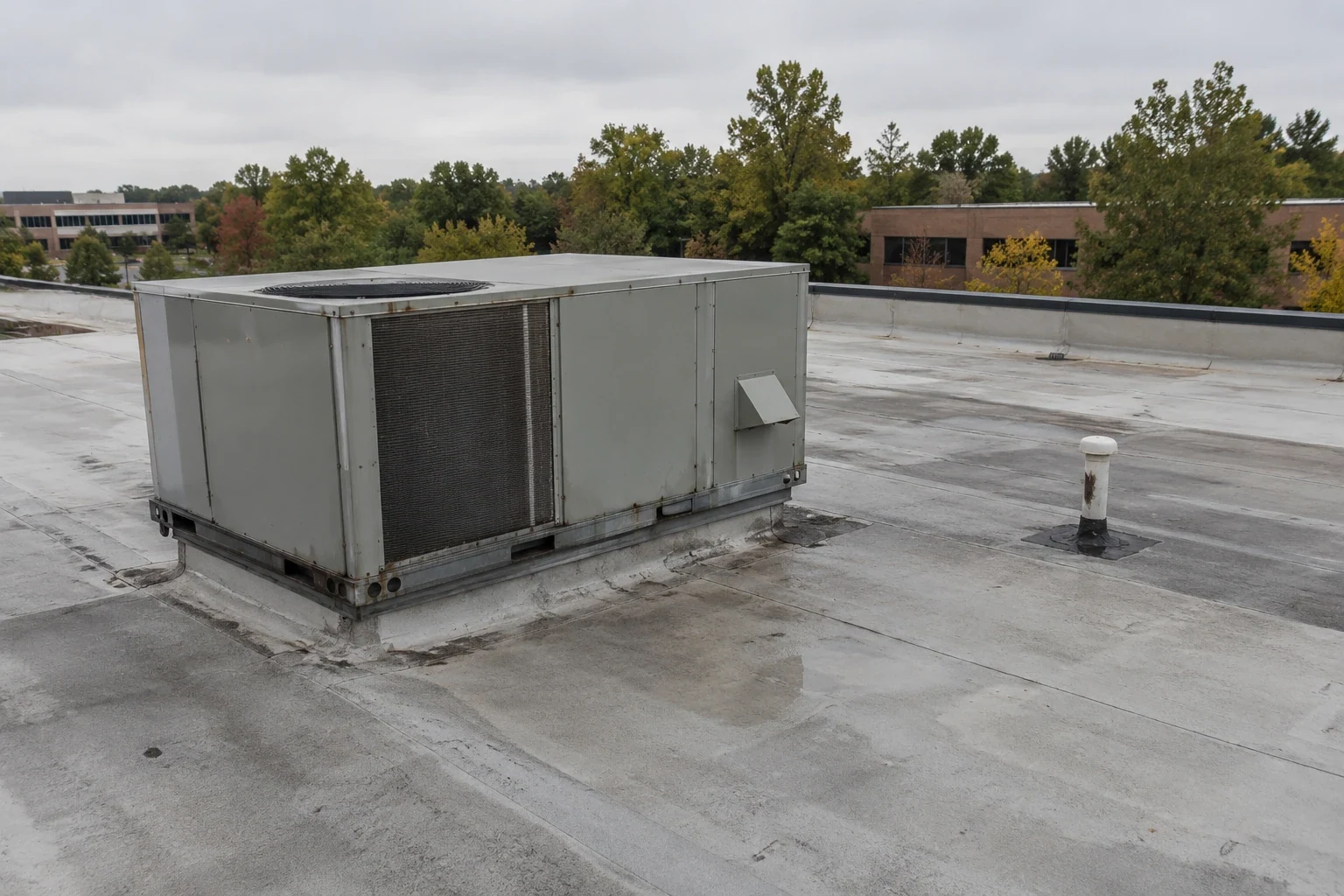
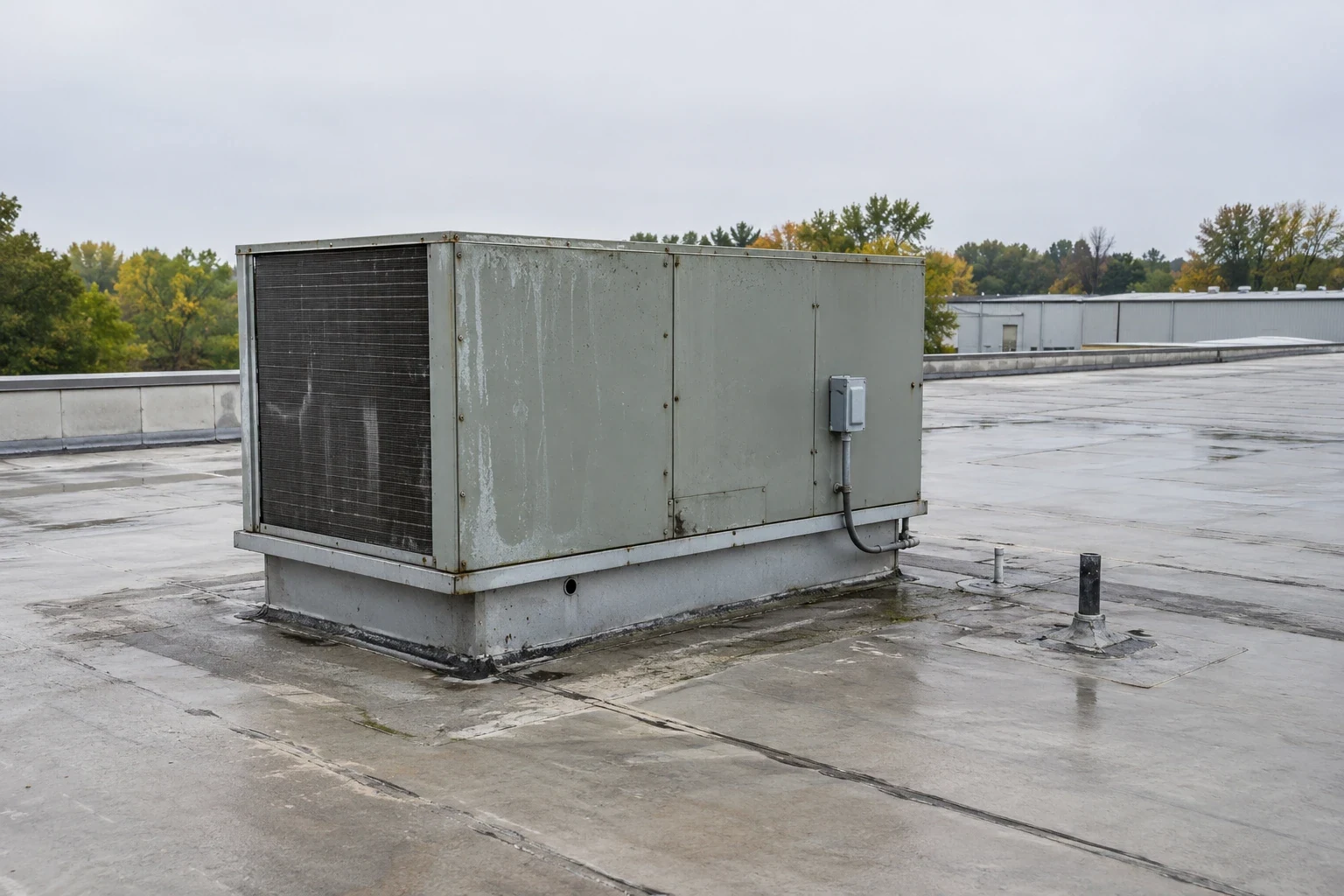
For membrane roofs, we check whether the surrounding material can accept a compatible patch or heat-welded repair. At metal systems, panel movement, fasteners and transitions deserve attention, especially where equipment or roof edges interrupt the plane. A TPO membrane and a standing-seam roof call for distinct details. If a broader scope is needed, we compare a localized repair with replacement or a recover option based on assembly condition, drainage and project requirements.
Hangar maintenance may require approval for work that affects smoke-control, ventilation or other roof-mounted systems. We document interfaces and coordinate with the facility’s designated trades. The scope describes the roof work and the limits of our responsibility at adjacent equipment so those handoffs are clear before a shift is scheduled.
Keep Water and Heat in the Plan
Summer heat changes roof-surface temperatures and can increase movement at seams, metal joints and flashing. Intense rain tests the drainage route, while freeze-thaw can work on joints that remain wet. We inspect these mechanisms at the property, looking for open laps, water marks, blocked discharge and movement at transitions. We inspect roof seams, drains and edges for the effects of heat, rain and freeze-thaw at the building.
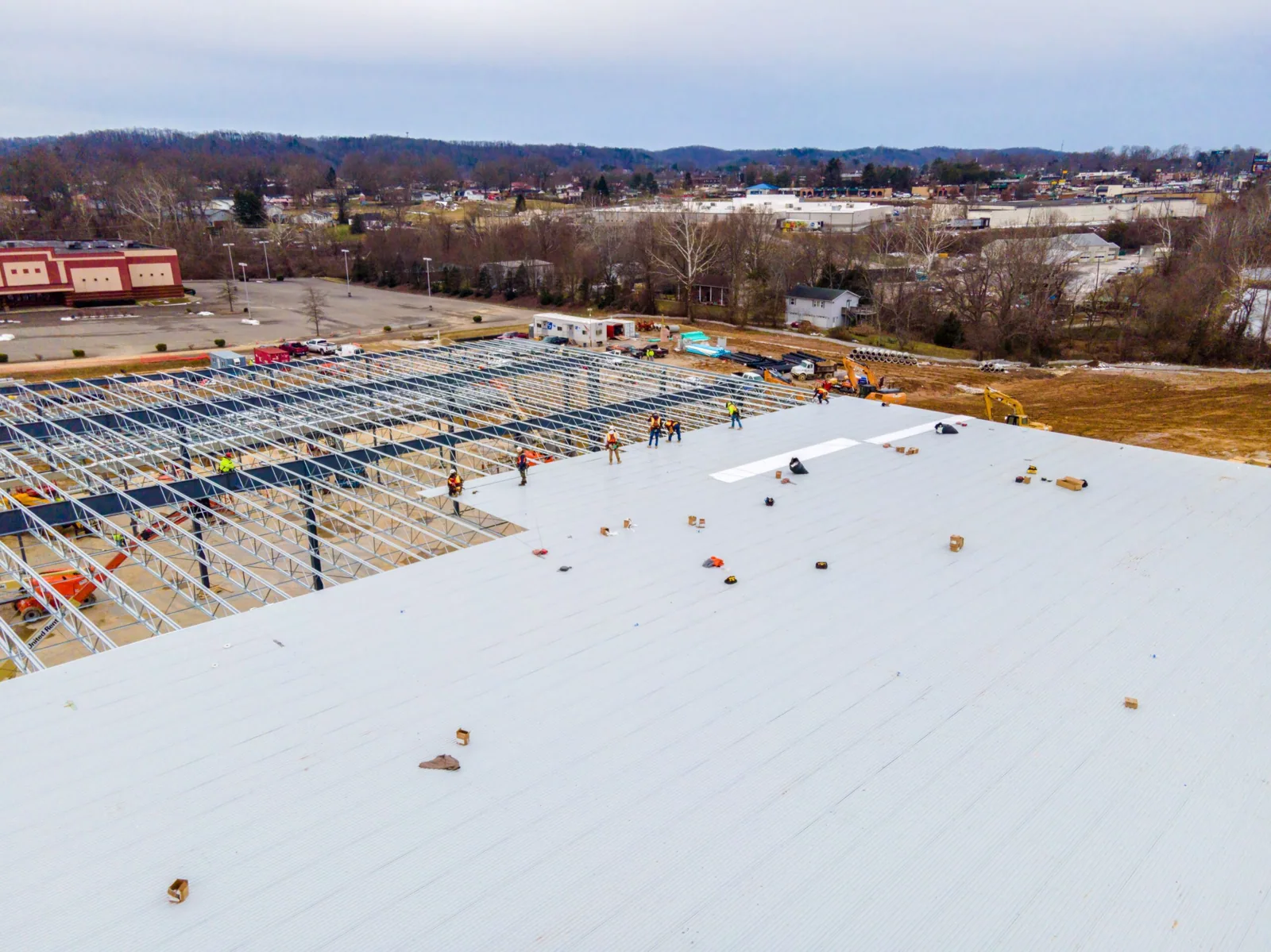
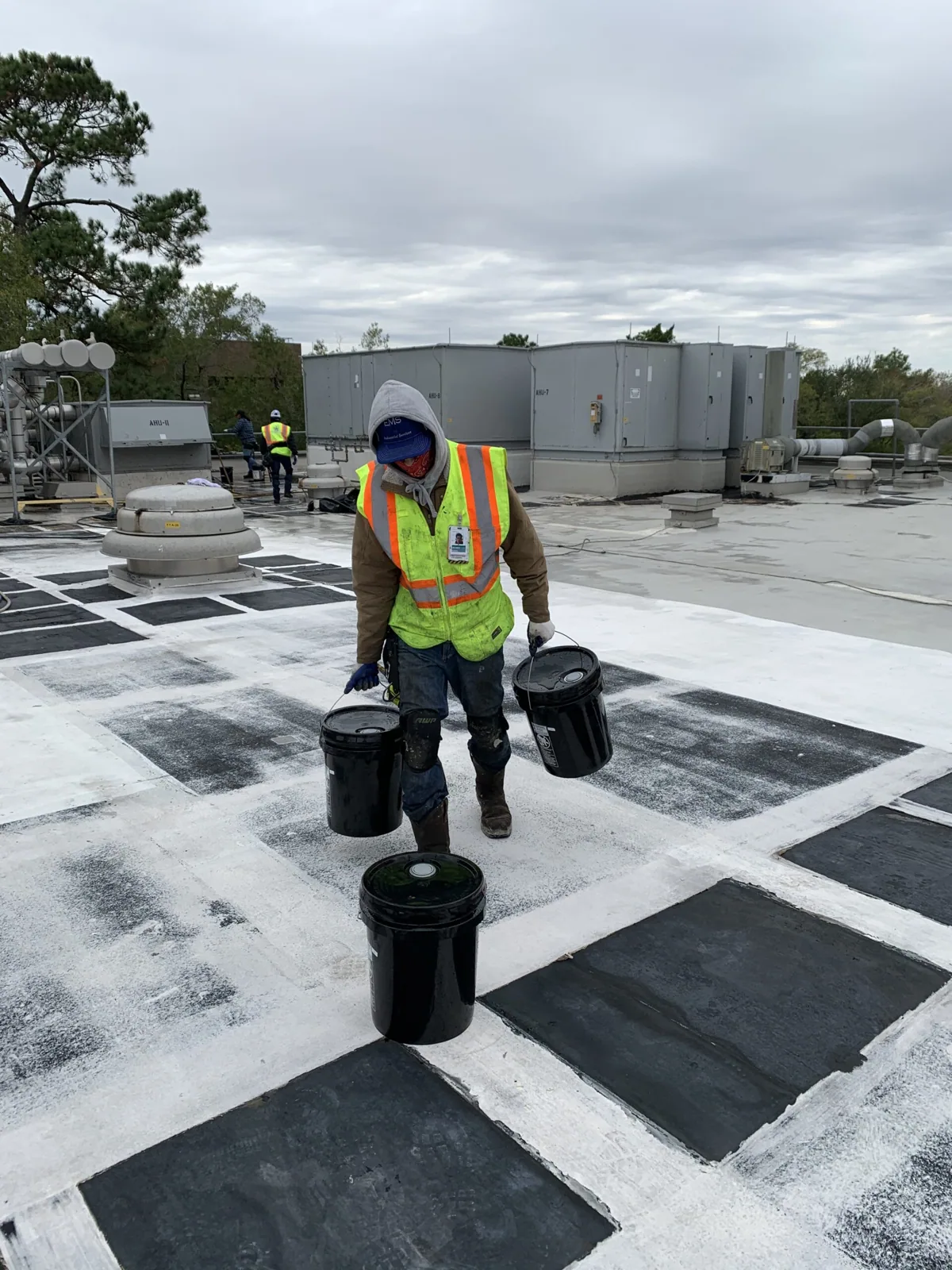
Work timing depends on the chosen material, surface preparation and a suitable weather window. When a section is opened, we protect it during the shift and inspect the weather-tight closure before leaving. A staged reroof can limit the area out of service when the roof and facility conditions permit. The plan identifies each zone, aircraft or equipment clearance needs, and how the building will stay protected between phases.
Daily coordination confirms that the route, lift position and area below remain available. If flight-line or maintenance activity changes, work can pause until the approved zone is available.
Make the Scope Verifiable
The completed work is recorded by location and detail: seams repaired, drains cleared or corrected, transitions rebuilt, and any test points restored. Photos connect the finished condition to the inspection sketch. If access limitations prevented examination of a roof zone, that boundary remains visible in the report. The facility team can then decide whether additional access, testing or a separate phase is needed.
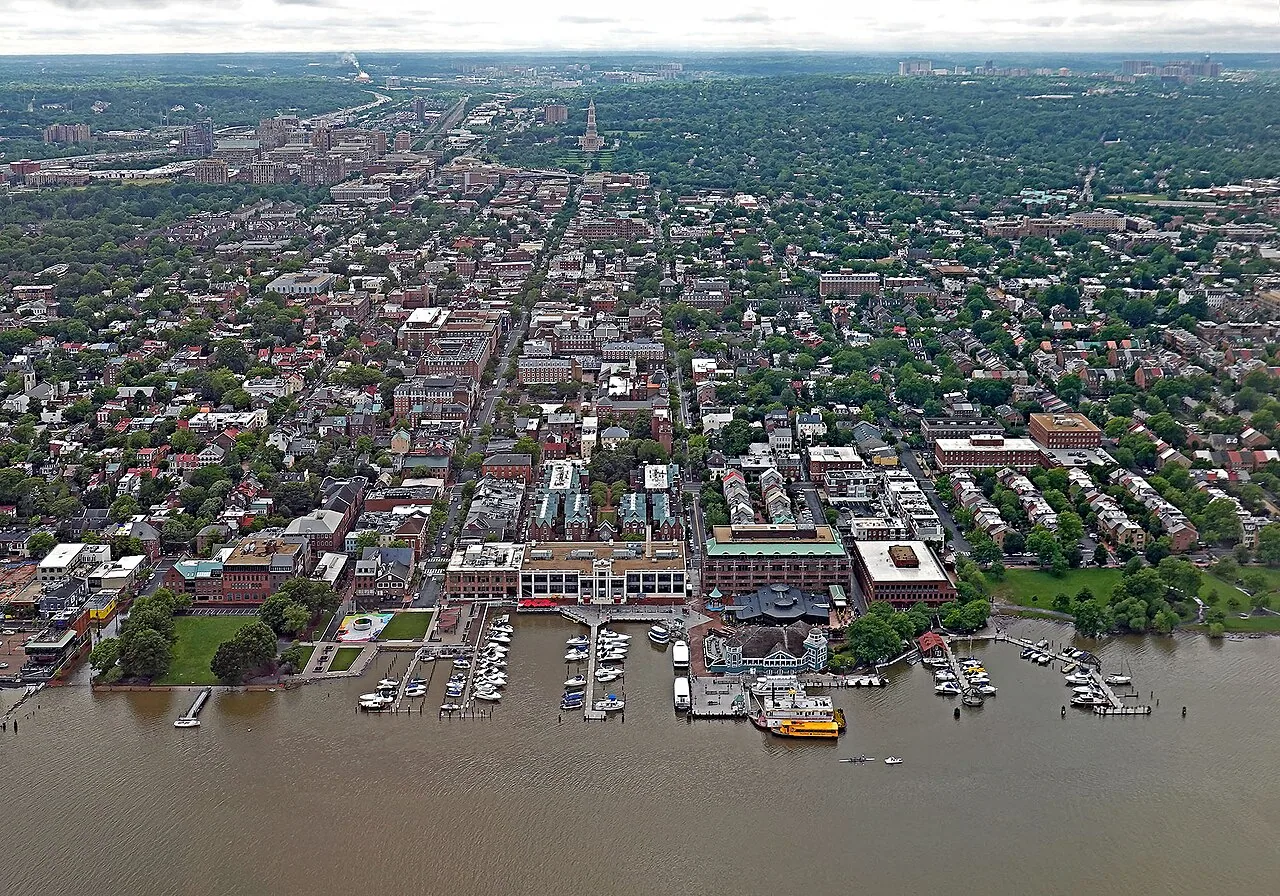
For a regional crew coordinating materials near Pentagon City, access and staging can affect sequence. For multiple hangars, a multi-site roof program can keep building records and priorities in one sequence without assuming the roofs are alike. Each building should retain its own assembly description, access rules and repair history. Maintenance checks can revisit drains, seams, door-area transitions and previous repair boundaries based on observed condition and facility schedule.
Send the Alexandria-area address, the affected bay or roof zone, known access requirements and any operating limits. We can review the roof path, coordinate inspection equipment with the contact and prepare a repair plan grounded in what can be confirmed.
Property Types We Roof

Commercial Roofing Questions
Can a hangar stay in use while roof work is underway?
Sometimes. The facility contact must determine which bay, apron route and interior area can be restricted. We can phase work and protect an approved zone, but aircraft movement, lift placement and roof openings may require a temporary closure. The plan should state the work boundary and the conditions for reopening it.
How do you locate a leak over a wide maintenance bay?
We compare the interior location with drains, seams, curbs, expansion joints and the roof slope above it. Water can travel before dropping through the deck, so the inspection records candidate entry points separately from the observed drip. If surface evidence is incomplete, we agree on targeted testing before enlarging the repair area.
What information is needed before sending a drone to a hangar roof?
We first confirm installation rules, airfield or flight restrictions, weather, launch area and facility approval. A drone is only one way to document visible conditions, and it cannot replace hands-on checks or a test opening where needed. If flight is not permitted, we plan another approved inspection method.
Does repeated ponding mean the roof deck is damaged?
Ponding calls for a review of slope, drains and underlying layers to determine whether the deck needs repair. We check drains, slope, membrane and any available interior evidence. A test opening may be appropriate if moisture below the membrane is suspected. Recommendations should separate drainage correction from any confirmed insulation or deck repair.
How are repairs coordinated with controlled access?
The site representative provides the badging, escort, delivery and vehicle requirements. We confirm them before scheduling, then include roof entry, staging, work hours and closeout checks in the plan. If an operational restriction changes, the facility contact and crew revise the sequence before moving into another area.
Coordinate a Hangar Roof Review
Share the Alexandria-area facility address, affected bay, operating constraints and access contact. We will inspect the roof zones that can be confirmed and prepare a coordinated scope.