



 Services
 Roof Systems
 Property Types
 Industries
 Damage Repair
 Capabilities
 Manufacturers
 Service Areas
Auto Dealership Roofing in Alexandria, VA
Property Types We Roof:
Showroom leaks can interrupt vehicle display and service work before anyone finds the roof entry point. Water may enter at a curb, seam or drain and travel before it reaches the floor. We compare the interior location with roof details, then set a repair boundary. Alexandria’s intense rain tests drainage and summer heat stresses exposed surfaces. Dealership work also needs clear service-bay access and a plan to protect cars below.
Duke Street connects the city center with the Landmark/Van Dorn West End district, and Route 1 is part of the Potomac West planning area. Duke Street connects the city center with Landmark / Van Dorn, while Route 1 serves Potomac West commercial areas. Service-bay, showroom, parts and equipment zones each need a repair plan matched to the building. A retail-center roof may share customer access concerns, while a flex-industrial roof may include different tenant and loading patterns.
Auto Dealership Roofing
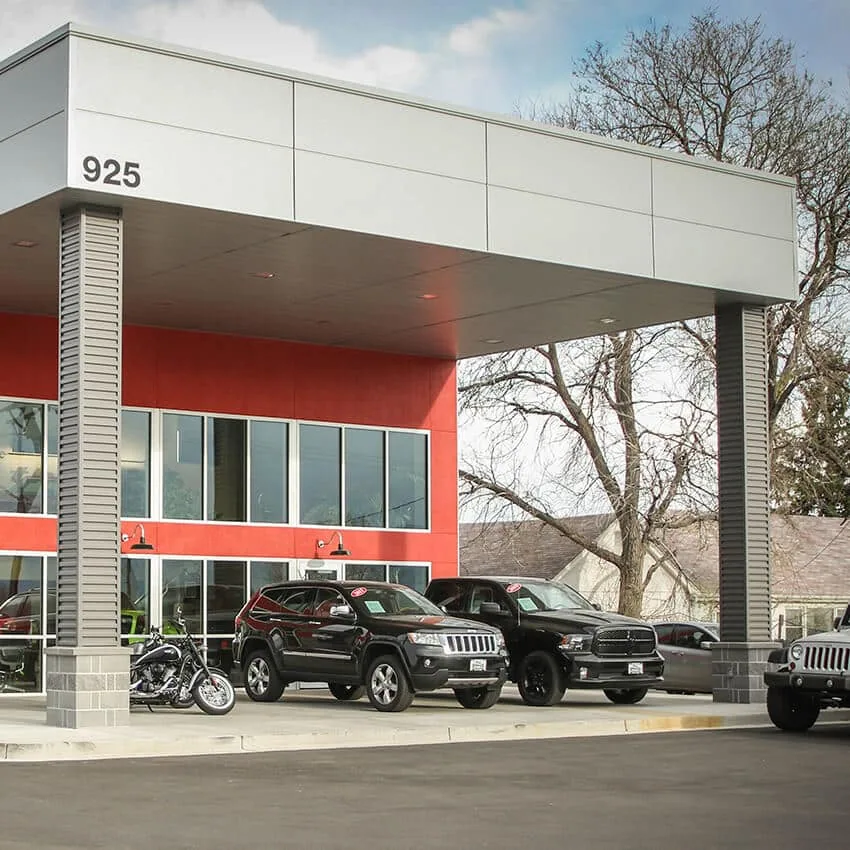
Protect Vehicles and Customer Routes
The dealership contact identifies showroom hours, vehicle display areas, repair lanes, parts deliveries and customer entrances. We plan lifts, material staging and roof access so a delivery does not cross a protected work zone. If an active leak threatens vehicles or service equipment, emergency response is available day or night, weekends and holidays included, while a permanent repair is planned.
Roof removal can produce falling debris, noise or odors. We define protection below and identify which bays or display spaces need to remain clear. The service manager determines whether vehicles can be moved and when a bay may be closed. Our estimate identifies the roof area, vehicle protection and the work effect so the service manager can arrange vehicle moves before the crew arrives.
At a larger reroof, work may be phased by showroom, service bay or roof section where conditions allow. We agree on daily closure points, temporary weather protection and who can approve a change. If concealed damage appears, the crew secures the roof and submits the finding before expanding the scope.
Follow Water Above the Showroom
Water can track along the deck or framing before dripping over an office or vehicle. We compare the interior report with seams, drains, skylights, curbs and roof edges above and nearby. A leak investigation records the likely exterior entry separately from the interior location.
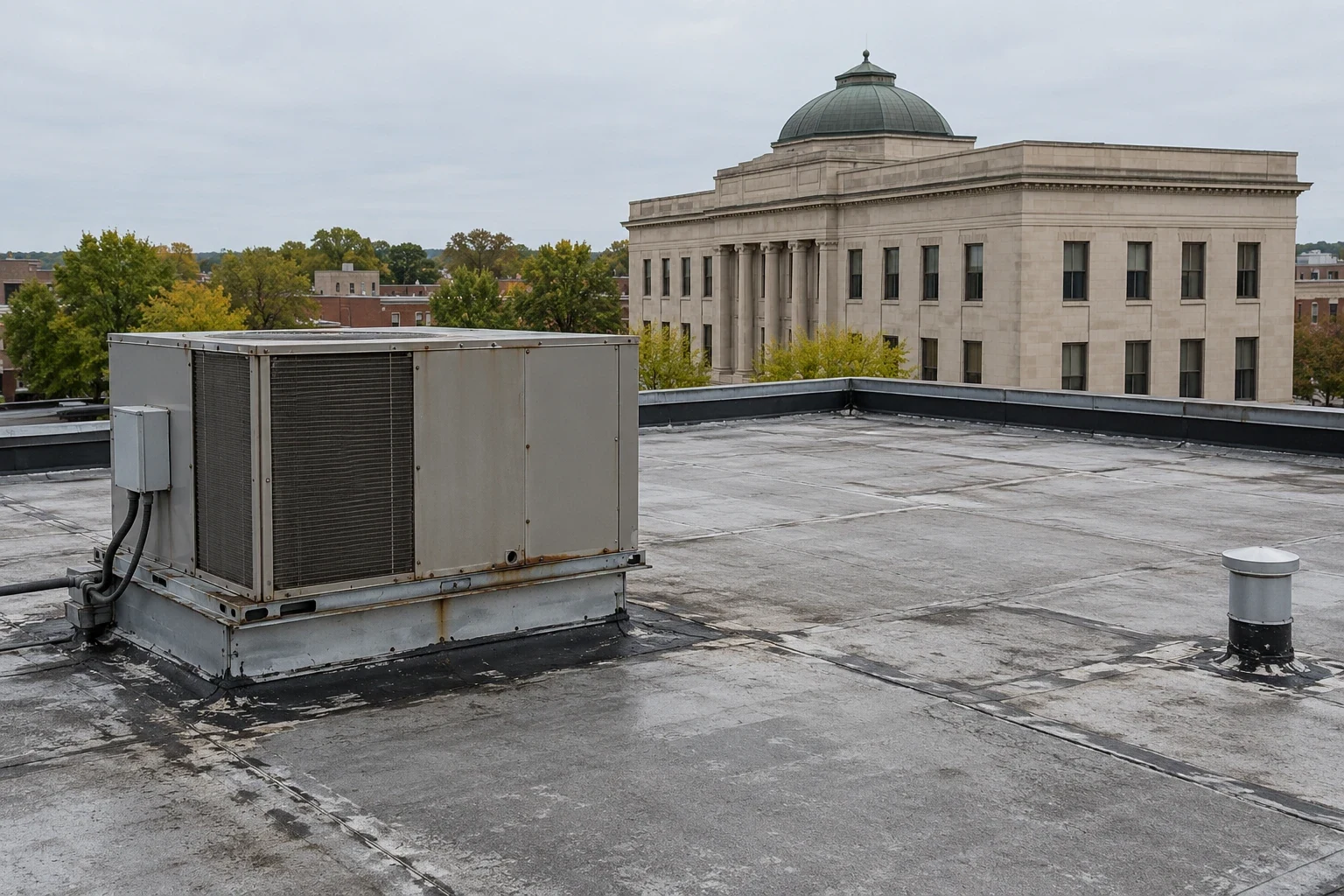
Service bays may have exhaust, rooftop units, vents and conduit that interrupt the membrane. We inspect curb corners, supports, flashing and prior patches. For a unit replacement, we review the curb-to-roof transition alongside the mechanical contractor’s equipment schedule.
When visual inspection leaves the water path unclear, a controlled test or owner-approved opening can show the roof layers at that point. The dealership contact identifies the vehicle or work area below and confirms protection before the roof is cut. The findings identify the exact test zone and any area that remained inaccessible.
Check Drains and Canopy Edges
Rain can back up where gutters, drains or low areas cannot carry flow away. Alexandria’s low elevation near the tidal Potomac makes outlet and overflow routes useful inspection points. We check baskets, scuppers and ponding at the dealership before setting drainage work.
We inspect the drain connection and record whether the outlet serves the showroom or service-bay roof. A drain and scupper service can assess outlet work apart from membrane repairs. If water remains because of slope or deck movement, outlet cleaning will not correct that condition.
Showroom canopies, service entrances and exterior signs may meet the main roof at transitions. We inspect those edges for open flashing and check where runoff discharges near customer routes. The site plan and photos show which doorway or vehicle lane needs protection during the repair.
Set a Repair Boundary
A localized puncture, open seam or failed flashing can be repaired when the surrounding material is dry and stable. We remove failed material, prepare the edge and install a compatible tie-in. If an approved opening reveals wet insulation or a damaged deck, we document it and request approval before extending removal.
Repeated leaks across the showroom and service sections may justify a broader inspection. A roof inspection can organize defects by zone. A recover assessment checks moisture, attachment, roof height and drainage. Replacement can be compared where the existing assembly is broadly compromised.
Alexandria construction applicants use the 2021 Virginia Codes; project design and permit review determine applicable requirements. We coordinate roof details with the general contractor and mechanical trades. Roof design requirements come from the project documents and applicable review; the auto-sales use chiefly affects access, vehicle protection and operating hours.
Work Between Sales and Service
We confirm service appointments, delivery windows, vehicle movement, customer access and any outdoor display areas. Along Duke Street and Route 1, dealership access can share space with customer and service traffic. The contact confirms the approach, loading route and staging limits for the property.
Each phase identifies which service bay or showroom area below needs protection. If weather threatens or a test finds concealed damage, the crew secures the section and pauses for approval. We identify who can move vehicles or close a lane before work begins.
Cost and duration depend on roof access, service equipment, canopy transitions, vehicle protection, repair depth, disposal and the need for work outside open hours. We list measured quantities separately from any concealed repair area, giving the property manager a clear basis for follow-up.
Record the Work by Building Area
Closeout photos show repaired seams, drains, curbs, canopies and areas not opened. We record materials and the limits of work so later service staff can see what changed before another leak or equipment project.
For a dealership along Duke Street or near Landmark/Van Dorn, keep the roof plan, service-bay layout and access records with the repair record. Share recurring leak locations and planned unit replacements at follow-up.
A dealership may combine a public showroom, service bays, parts storage and exterior vehicle inventory under different roof sections. We map the repair zone to the activity below, then identify whether lifts, exhaust, lighting or overhead doors affect the work sequence. Before opening a roof above an active bay, the service manager confirms when vehicles and technicians can be moved and whether any equipment must be shut down by its maintainer. If work crosses from the showroom to a shop addition, show the material transition and separate tie-in in the estimate. That gives the owner a defined repair window and a clear basis for coordinating the next roof or mechanical project.
Property Types We Roof
Commercial Roofing Questions
Can the dealership remain open while the roof is repaired?
Often, if customer routes, vehicles and service bays are planned around the work zone. We coordinate staging, noise and protection with the dealership contact. A bay or display area may need a temporary closure during an open-roof phase.
How do you protect cars under a roof repair?
We identify the work area, access path and potential debris or water exposure before opening the roof. The dealership manager confirms whether vehicles can be moved and which bays need barriers. The plan states who controls the area below.
Why is water showing above a service lane?
The entry point may be at a nearby seam, curb or drain, with water traveling before it drips indoors. We map the interior report and inspect related roof details. A controlled test may be needed if visual evidence is inconclusive.
Can roofers coordinate with an HVAC replacement?
Yes. We review curb dimensions, flashing and work order with the mechanical contractor, then identify shutdown and lift timing. The roof detail is restored after the equipment change, and any concealed damage is documented.
What information helps price dealership roofing?
Provide roof plans, bay and showroom layout, leak dates, service schedule, equipment records, vehicle-protection needs and access rules. We confirm site conditions and identify testing needed to set the work limit.
Plan Auto Dealership Roofing in Alexandria
Send the address, roof and equipment plans, reported leaks, service schedule and vehicle-access requirements. We will inspect affected zones and coordinate safe repairs or replacement.