



 Services
 Roof Systems
 Property Types
 Industries
 Damage Repair
 Capabilities
 Manufacturers
 Service Areas
Commercial Roofing for Hospitality Groups in Alexandria, VA
Industries We Serve:
- Commercial Roofing for Property Management Companies in Alexandria, VA
- Commercial Roofing for Real Estate Investors and REITs in Alexandria, VA
- Commercial Roofing for Healthcare Systems in Alexandria, VA
- Commercial Roofing for Manufacturers in Alexandria, VA
- Commercial Roofing for Logistics and 3PL Operators in Alexandria, VA
- Commercial Roofing for School Districts in Alexandria, VA
A roof leak near a guest room or meeting space can move through the assembly before it appears on a ceiling. We compare the reported room with drains, seams, curbs and wall transitions, then trace the water path across the roof zone. Alexandria, VA combines heavy rain, summer heat and winter freeze-thaw. At a lodging property, those stresses make drains, exposed seams and flashing transitions useful inspection points.
Old Town North includes commercial and retail uses as redevelopment proceeds at the former Potomac River Generating Station. King Street connects Old Town business areas with the Braddock Metro planning district. Guest operations determine room protection and work hours, while the installed assembly determines the repair detail. The property contact can coordinate roof access with hotel staff. Retail and restaurant groups may also need work coordinated around visitors, while property managers can help align tenant and building access.
Hospitality Groups
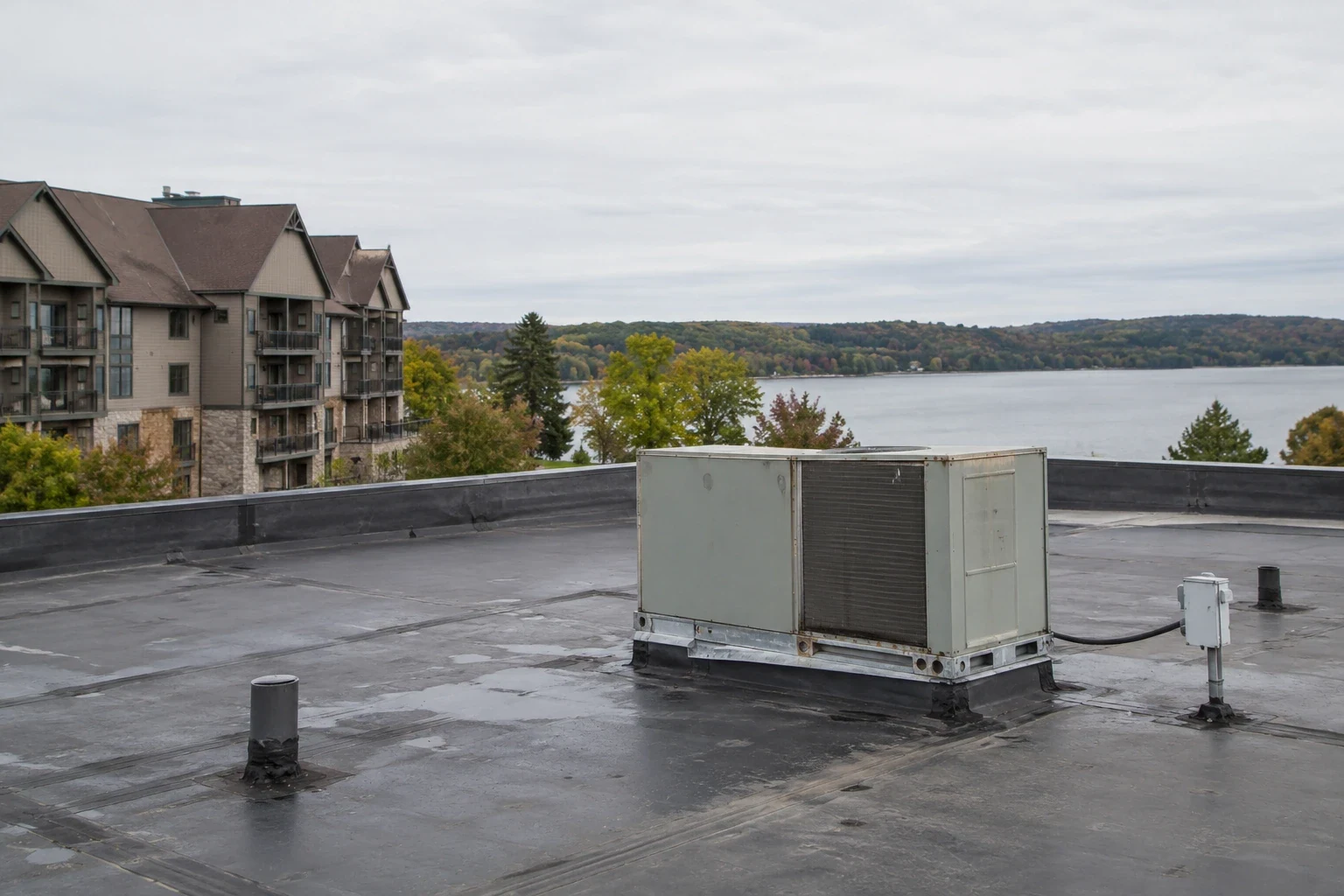
Protect Guest Areas and Service Routes
The property contact identifies occupied rooms, quiet hours, housekeeping routes, kitchens, meeting schedules, service lifts and emergency exits. We plan roof entry and staging around those details. Emergency response is available at all hours, including weekends and holidays, if active water is reaching the building. Permanent work still requires a confirmed work boundary, protection below and a schedule approved by hotel operations.
Roof removal can create noise, odor, debris and vibration. We coordinate barriers, ceiling access and temporary room restrictions with hotel staff where roof work could affect guest or employee areas. A roof opening should not be made above an occupied room without an approved protection plan. If the property can release rooms by floor or wing, the manager determines that sequence and communicates it to guests.
Service routes deserve the same attention as guest spaces. Confirm delivery hours, waste access, laundry or kitchen operations, plus whether a lift can occupy a driveway or loading area. The plan shows staging and daily closure steps, including how an exposed section will be weather-protected. If a conference or event changes the available area, the facility representative can revise the sequence before crews move to another zone.
Trace the Roof Path Behind a Guest Report
A ceiling mark in a guest room may sit below a drain, roof edge or penetration several bays away. We compare room location with roof slope, drainage route, parapets, seams and equipment curbs. A commercial roof inspection documents likely entry points separately from where a guest noticed moisture. Photos and a field sketch let the manager connect the evidence to a roof zone.
We inspect membrane seams, flashing terminations, curb corners and roof-to-wall transitions for openings or movement. Drains and overflow points are checked for obstruction and water marks. If active moisture appears after heavy rain, we compare the discharge route and nearby details before selecting a repair. A ponding-water repair can include drain or slope work if the inspection confirms that condition.
Condensation or plumbing can sometimes resemble a roof leak. We record the timing, weather and room location, then compare the symptom with the roof assembly and mechanical details. An infrared survey can point to a test location; a test opening shows the insulation and deck at that point. If needed, a test opening can show the roof layers at one approved point, with room protection and restoration planned in advance.
Select the Repair for the Installed Assembly
The repair detail depends on membrane, attachment, insulation, deck and edge conditions. We inspect those layers and select materials compatible with the assembly. A patch may be enough if the surrounding material remains sound. Moisture beyond the visible defect or repeated failure at several transitions can change the repair boundary. We show those conditions separately so the manager can weigh disruption and scope.
TPO, EPDM, modified bitumen and metal systems use different details. A TPO membrane and an EPDM roof require compatible repair methods and preparation. Rooftop equipment, exhaust and kitchen penetrations need transitions that match the installed system. The proposal ties materials and affected zones to the roof assembly and operating needs at the building.
If broader work is needed, we compare repair, recover and replacement based on assembly condition, drainage, guest impacts and access. A recover is considered only when the roof can support it and the project permits another layer. A phased reroof can reduce the area active at one time if conditions allow, with a schedule for guest-room protection and end-of-shift closure.
Coordinate Weather and Property Calendars
Heavy rain tests outlets and overflow routes, summer heat increases movement at exposed seams, and freeze-thaw can work on joints that retain water. We inspect those details directly and explain how the findings affect the proposed boundary. Heavy rain tests outlets, summer heat moves exposed seams, and freeze-thaw stresses joints that retain water. We inspect those details and tie recommendations to the roof condition.
Application and repair methods have surface and weather requirements. Before mobilization, coordinate the forecast window, roof access, room availability and staging. If weather interrupts removal, temporary protection and a safe stopping point are included in the sequence. A hotel contact can identify peak occupancy, event dates and service periods that affect which area may be released.
A property near Old Town may have limited delivery or staging options, while another site may allow a different setup. We confirm loading, parking and pedestrian routes at each address rather than carrying assumptions from one property to another. The operations contact confirms which entrance or service corridor must remain open during the shift.
Maintain a Record for Each Property
We document inspected areas, repaired details, materials, photographs, access limits and questions that remain. For a group with several properties, a multi-site roof program can organize records while retaining each building's own assembly and findings. Keep each property’s assembly, leak history and repair boundary with its own roof file.
Maintenance checks can revisit drains, parapets, seams, equipment curbs and prior repair boundaries. The interval should respond to roof condition and hotel access. We can record what changed since the prior visit and identify whether follow-up testing or a separate project is warranted. Operations staff can use room reports alongside roof-zone photos to see whether recurring leaks align with the same area or different details.
Send the property address, room or service area affected, access contact, operating calendar and any roof plans. We will inspect the relevant zones, coordinate protection with hotel staff and prepare repair or replacement options the property team can evaluate.
Industries We Serve
Commercial Roofing Questions
Can roofing crews work without moving every guest?
A defined roof zone can sometimes be isolated while the property remains open. We coordinate guest areas, noise, room access, routes and temporary protection with hotel operations. The manager decides whether any rooms or meeting spaces should be taken out of service during a particular shift.
What should staff record when a guest reports a ceiling leak?
record the room, date, time, active-water status, photos and nearby equipment or ceiling conditions. Tell us who controls roof access and whether the room is occupied. We compare that information with roof details and document what inspection can confirm.
Can work be scheduled between events or booking peaks?
The property calendar can shape access, but material and weather requirements also affect the work window. We coordinate available dates, noisy tasks, deliveries and room restrictions with the contact. A phased sequence may be possible if the roof can be protected between shifts.
How do you tell a roof leak from plumbing or condensation?
We compare the location and timing with roof seams, drains, penetrations and interior mechanical conditions. If the path is unclear, targeted testing may help. The report records the evidence for each possible cause rather than assigning roof work from a ceiling symptom alone.
How should a hospitality group track roof work across properties?
Keep address-specific inspection records, photos, repairs, assembly records and access limits. We can organize those records in a common format while preserving the distinct conditions at each property. A new report should still be inspected on site before it is compared with earlier work.
Plan Roofing Around Guest Operations
Share the property address, reported leak, guest or service constraints and access contact. We will document the roof condition and prepare a coordinated scope.