



 Services
 Roof Systems
 Property Types
 Industries
 Damage Repair
 Capabilities
 Manufacturers
 Service Areas
Commercial Solar-Ready Roofing in Alexandria, VA
Commercial Roofing Services:
A solar array adds equipment, attachment points and maintenance paths to a roof that must already manage rain. Before panels are scheduled, we review the roof assembly, condition, drainage, access and expected future service life. Alexandria’s heavy-rain exposure makes water routes around supports important, while summer heat affects roof surfaces and equipment. A solar-ready plan identifies what the roofing scope will prepare and which structural or electrical decisions belong to the design team.
North Potomac Yard includes Virginia Tech’s academic campus and approved offices; Carlyle and Eisenhower East have office and mixed-use properties. We base the solar-ready scope on the building’s own roof plans, engineering and operating requirements. We inspect existing seams, insulation, curbs and edges, then coordinate attachment locations and work sequencing with the solar contractor. A roof condition inspection can establish the starting point.
Commercial Solar-Ready Roofing
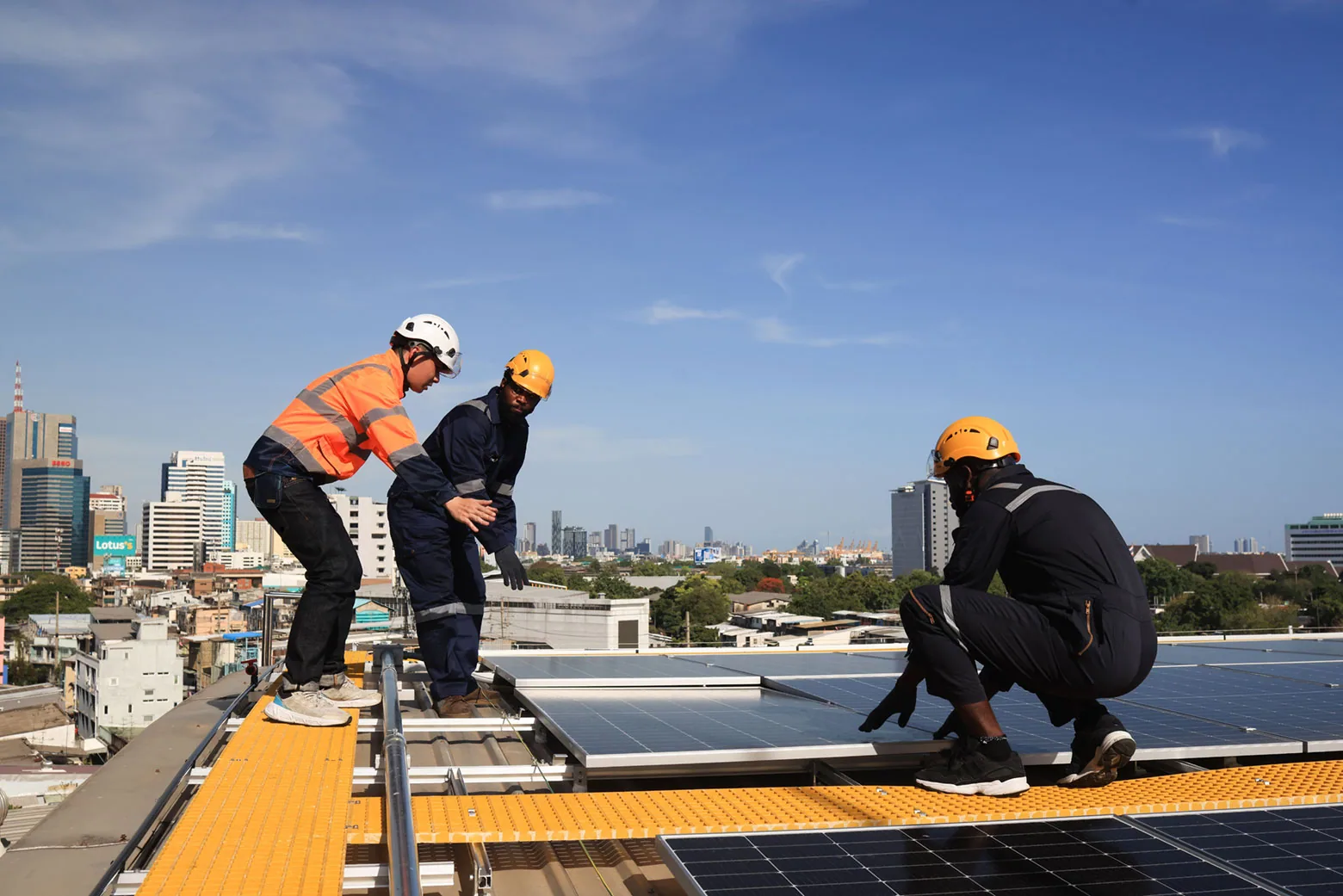
Check the Roof Before Adding Equipment
Solar equipment should not be planned over an assembly already requiring near-term replacement without comparing the full sequence. We review leak history, repairs, membrane condition, insulation and test openings where concealed moisture could change the decision. If the roof needs a larger correction, combining roofing and solar timing may reduce later disruption, but system life and project schedule must be confirmed by the responsible teams.
A test opening can show deck type and roof layers at a selected location. It does not establish conditions everywhere, so we compare openings with visible defects and moisture indicators. If the roof is a recover candidate, overlay eligibility needs to account for added height and future attachment. If wet insulation or widespread failure is confirmed, a replacement plan can define a sound substrate for future work.
Alexandria construction projects use the 2021 Virginia Codes. Permit review for reroofing, solar equipment, structural loads or electrical work depends on the project scope. We provide roof assembly information and coordinate roofing details, while the solar and structural teams confirm array design, attachment loads and approvals.
Coordinate Array Attachments
Solar attachments must be designed for the deck, roof system and expected loads. The roofing plan should identify where supports penetrate the membrane and specify a compatible TPO roof detail or other system method for each flashing. If a ballasted approach is proposed, the project team still needs to evaluate weight, wind movement and roof capacity. A roofer does not establish the building’s structural adequacy from a surface walk.
We review the attachment drawings with the solar contractor and identify details that could affect seams, drains, parapets or service routes. Penetrations should remain accessible for future inspection rather than disappear below equipment. If a support location conflicts with a drain, overflow path or existing repair, the teams can adjust the layout before installation. A curb and support review can identify roof-side details around mechanical equipment.
In an office building, rooftop units and solar rows need maintenance clearance. We record roof hatches, service routes, fall-protection areas and the location of equipment that cannot be blocked. The array plan should preserve access to drains, scuppers and mechanical service points. If a row prevents future flashing inspection, it can create a maintenance problem even when its installation is watertight.
Protect Drainage and Edges
Panels and supports change how a crew reaches the roof and how debris moves with runoff. We map primary drains, scuppers, overflow outlets, crickets and low areas before the layout is finalized. The solar installation should not obstruct a drain strainer or create a pocket that holds leaves. A drainage review can identify outlet repairs and access needs before the array occupies that area.
Heavy rain directs attention to the roof's intended outlet and overflow routes before the array layout is finalized. We inspect visible slopes and outlets, then describe how array supports interact with the water path. We also check that roof-edge metal, parapets and walk pads remain available for inspection and service.
Solar work can involve roof penetrations, conduit routes and equipment supports. Each opening needs a compatible flashing method and a clear owner for closeout. If a conduit or support is installed after the roofing crew leaves, responsibility for sealing the membrane must be explicit. We document the roof detail before and after installation to preserve a record for service calls.
Set a Shared Work Sequence
A coordinated schedule separates roof inspection, repairs or replacement, array attachment, electrical work and final roof review. If panels are installed first, later reroofing may require removal and reset. If roofing comes first, attachment details need to be available so the membrane can be flashed correctly. The project team decides the sequence based on procurement, access, engineering and building operations.
Old Town North’s commercial and retail uses sit near redevelopment at the former Potomac River Generating Station site. Landmark redevelopment includes planned Inova Alexandria Hospital and related medical facilities. At each property, we coordinate loading, staging, tenant notice, roof routes and equipment downtime with the site contact.
Cost depends on roof condition, attachment type, test openings, structural coordination, flashing details, access and whether the existing roof requires repair or replacement before solar work. We separate roof preparation from array supply, electrical service and engineering unless those are expressly included by the project team. The estimate identifies assumptions and the trades responsible for each interface.
Keep the Roof Record Current
Closeout records should identify roof materials, attachment locations, flashing methods, access paths, drainage points and any area that could not be reached after installation. Photos before panels are set help document conditions that later become concealed. The building manager can retain this information with solar and roof plans so future maintenance does not rely on memory.
A roof condition report can combine inspection findings with the solar-ready scope and unresolved items. A maintenance program can revisit drains, penetrations and accessible membrane areas after the array is operating. We identify where panels limit inspection and which party should provide access for a future roof repair.
Share the Alexandria address, roof plans, leak history, solar layout, equipment details and target construction sequence. We can inspect the roof, identify repairs and coordinate flashing interfaces with the solar team. The goal is a roof scope that states what is ready, what needs correction and what requires engineering or permit confirmation before array work.
Commercial Roofing Services
Commercial Roofing Questions
Can solar panels go on my current commercial roof?
That depends on the roof condition, remaining assembly, attachment design, structural review, drainage and future maintenance access. We inspect roof details and identify repairs or test openings. The solar and structural teams confirm array loads and attachment design before installation is approved.
Should we reroof before installing solar?
A roof with widespread deterioration or wet insulation may be better corrected before an array limits access. If the assembly is serviceable, the teams can compare its condition and project timing. We document the roof evidence and show the cost and access implications of each sequence.
Who seals roof penetrations for solar supports and conduit?
The contract should name the party responsible for each roof opening and final flashing. We review attachment plans with the solar contractor and identify compatible roof details. Before work starts, the owner should confirm who photographs, inspects and closes each penetration.
Can solar equipment block roof drains?
Array rows and supports need to preserve access to drains, scuppers and overflow outlets. We map those routes and identify clearance concerns before layout is final. If a drain needs repair or slope work, the roof scope should resolve it before equipment is placed nearby.
What does solar-ready roofing include?
The roofing scope can inspect the existing assembly, repair or replace it, coordinate flashing interfaces, preserve drainage and record support locations. Structural design, solar equipment, electrical connections and permit decisions require their own project scope. We state which items are included so each trade knows its handoff.
Coordinate Roofing Before Solar
Send the Alexandria address, roof plans, solar layout, leak history, equipment details and access window. We will assess the assembly, identify roof-side repairs and coordinate attachment and drainage details with the project team.