 Services
 Roof Systems
 Property Types
 Industries
 Damage Repair
 Capabilities
 Manufacturers
 Service Areas
National Guard Armory Roofing in Alexandria, VA
Property Types We Roof:
Water accumulating at an armory drain calls for examination of the inlet and discharge route before a membrane correction is chosen. At a National Guard armory, that water path matters alongside readiness, controlled entry and the people using the building. We inspect the drain, overflow, membrane seams and perimeter transitions, then record which conditions are visible and which need a test opening. Alexandria, VA has intense rainfall, summer heat and winter freeze-thaw, so drainage and attachment deserve close review without assuming a particular roof has failed.
The Joint Base Anacostia-Bolling development plan identifies warehouse and public-works areas, Navy missions, D.C. Army National Guard support, and a housing and community-support district. We confirm the assigned building, roof plan, access rules and affected area with the authorized facility contact before proposing repairs. A government building roof may share documentation needs, while a warehouse roof can have different operational and loading demands.
National Guard Armory Roofing
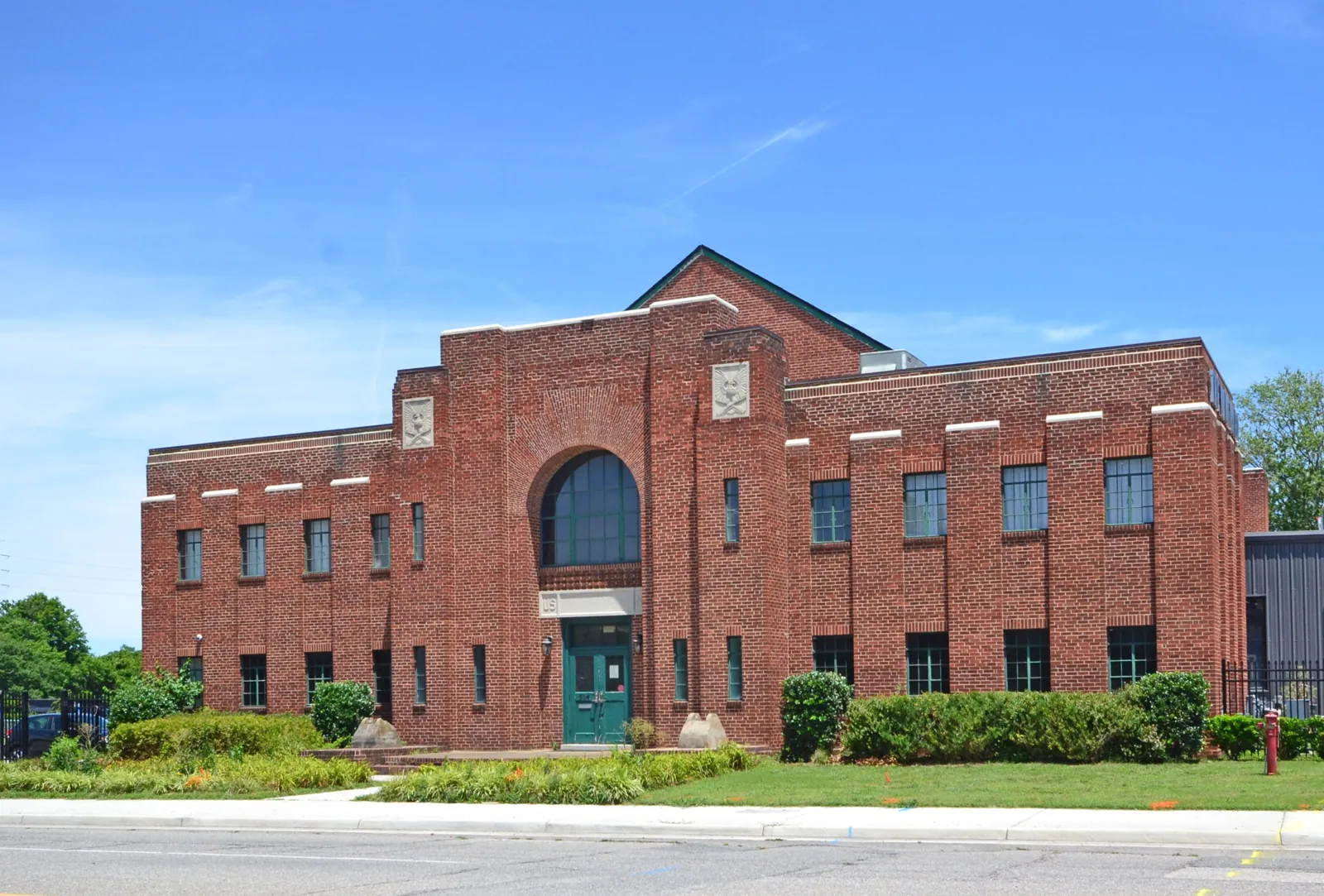
Protect the Readiness Schedule
Readiness activity can make a roof access window more important than the repair method itself. We coordinate noisy removal, crane placement, debris handling and temporary openings with the person responsible for the building. The work plan identifies where materials will be staged and how an open roof area will be protected if weather interrupts the shift. The facility contact identifies readiness activity and the work window available for inspection or construction. The roofing scope is sequenced to fit those confirmed limits.
Before mobilization, we confirm whether a lift can reach the roof, whether a loading zone must remain open and where waste can leave the property. A marked staging sketch helps the facility team review routes and barriers. When these details are settled early, the crew can spend its access period on inspection or installation instead of resolving avoidable conflicts at the gate.
Trace Water Before Opening the Roof
Water that appears in an armory office, storage room or training area may have entered at a distant seam or curb. We compare the interior report with roof slope, drain locations, wall joints and equipment penetrations. A commercial roof inspection records the visible surface and the route water could follow. Photographs and a field sketch tie each observation to a roof zone, so the repair boundary is based on evidence instead of the ceiling stain alone.
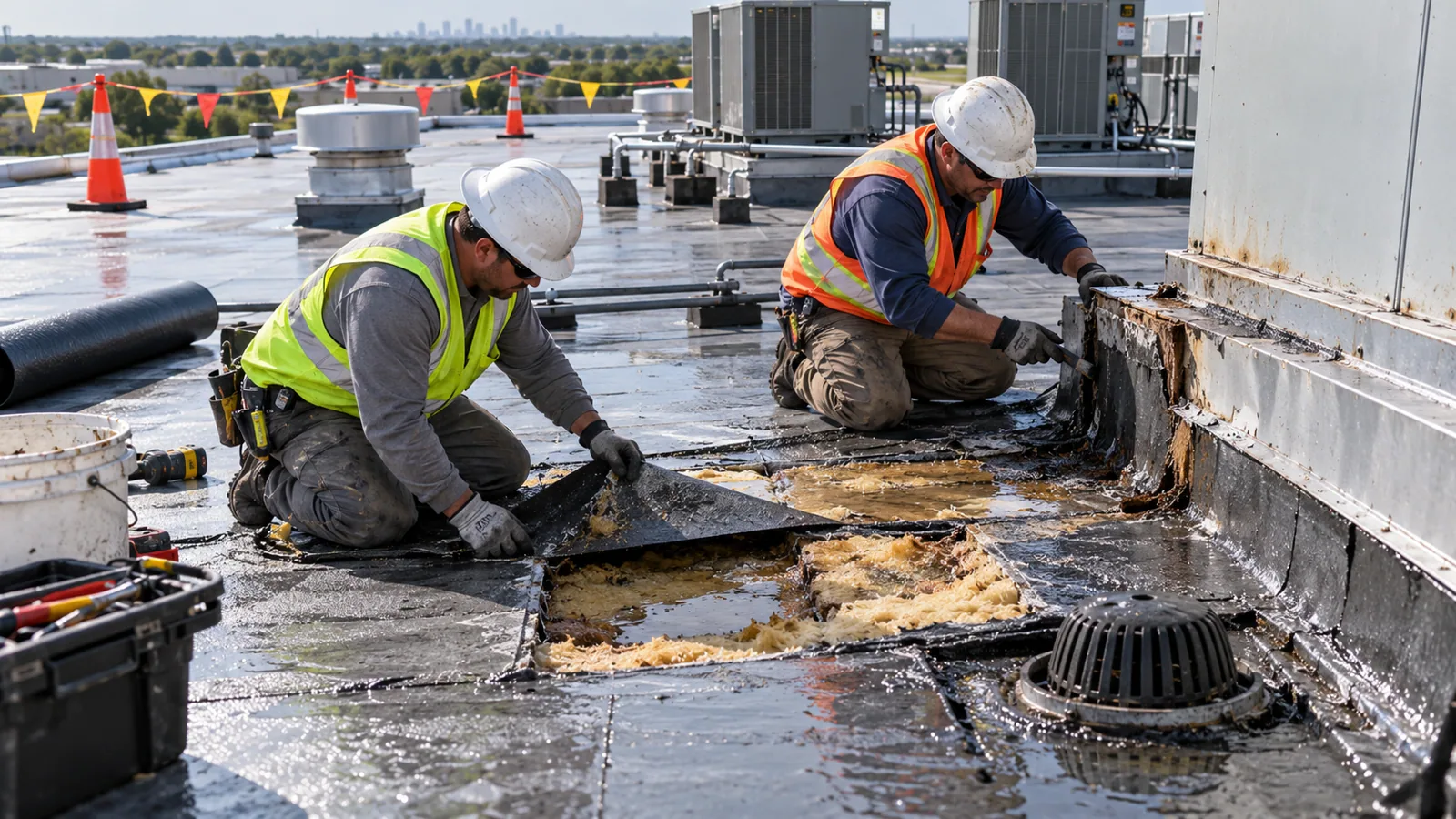
At each suspect detail, we look for open laps, displaced counterflashing, punctures, loose edge metal and old repairs that have separated. We also check the drain bowl and the route to its outlet. Ponding marks can show where water remains after a storm, but they do not by themselves prove the deck or insulation is damaged. A ponding-water repair should address the drainage condition as well as the membrane surface when both are involved.
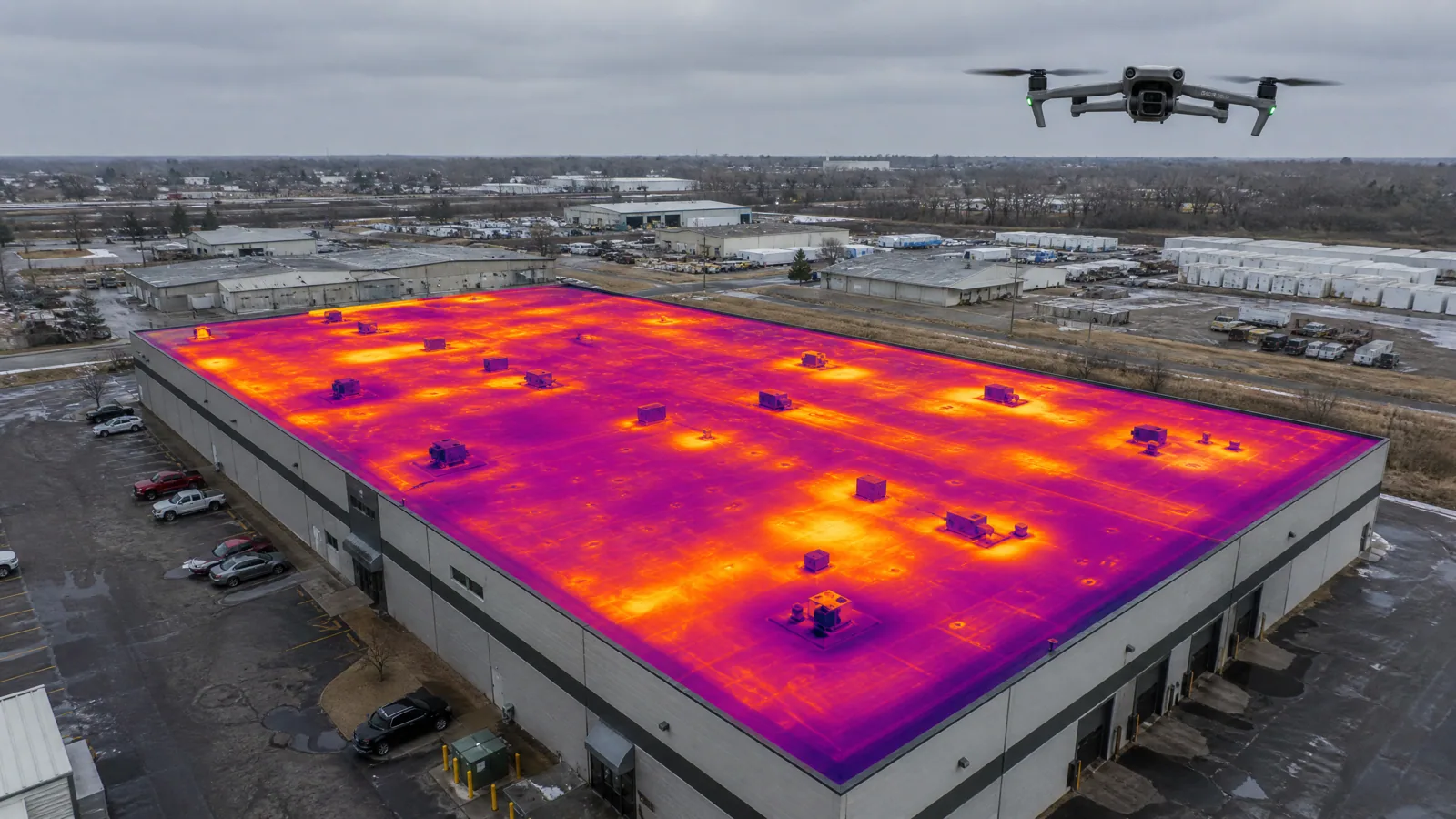
When surface observations cannot establish the assembly condition, an approved test opening can show membrane layers, insulation and deck at one location. We agree on the opening point, interior observation location and restoration method with the facility contact. Suitable thermal collection conditions and interpretation can help select confirmation positions; relevant material findings and adequate investigation support the removal boundary.
Match the Repair to the Assembly
Armory roofs can include different low-slope or metal assemblies, and the building use does not reveal which one is present. We identify the existing membrane, attachment, insulation, cover board and drainage details from records and field conditions. A localized membrane repair may be appropriate where the surrounding assembly is sound. Wet insulation, widespread seam separation or deteriorated edge conditions can change the work from a patch to a defined replacement area.
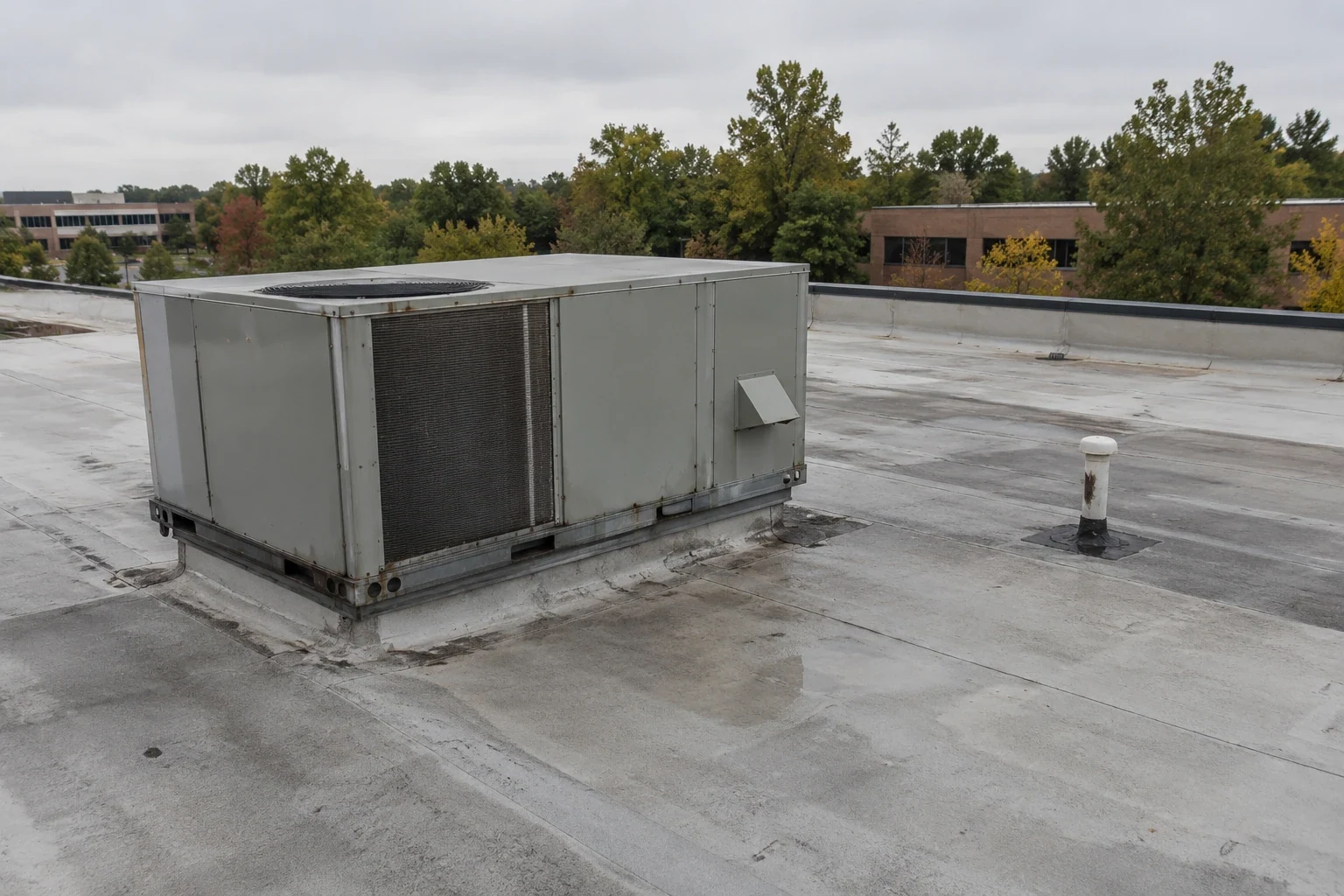
For a thermoplastic assembly, heat-welded seams can be checked for continuity and repaired with compatible material after the surface is prepared. EPDM and modified bitumen require different repair details. At metal roof transitions, we examine fasteners, panel movement, laps and penetrations. The TPO assembly, EPDM membrane and standing-seam metal system each call for a repair method that suits the actual roof rather than a facility label.
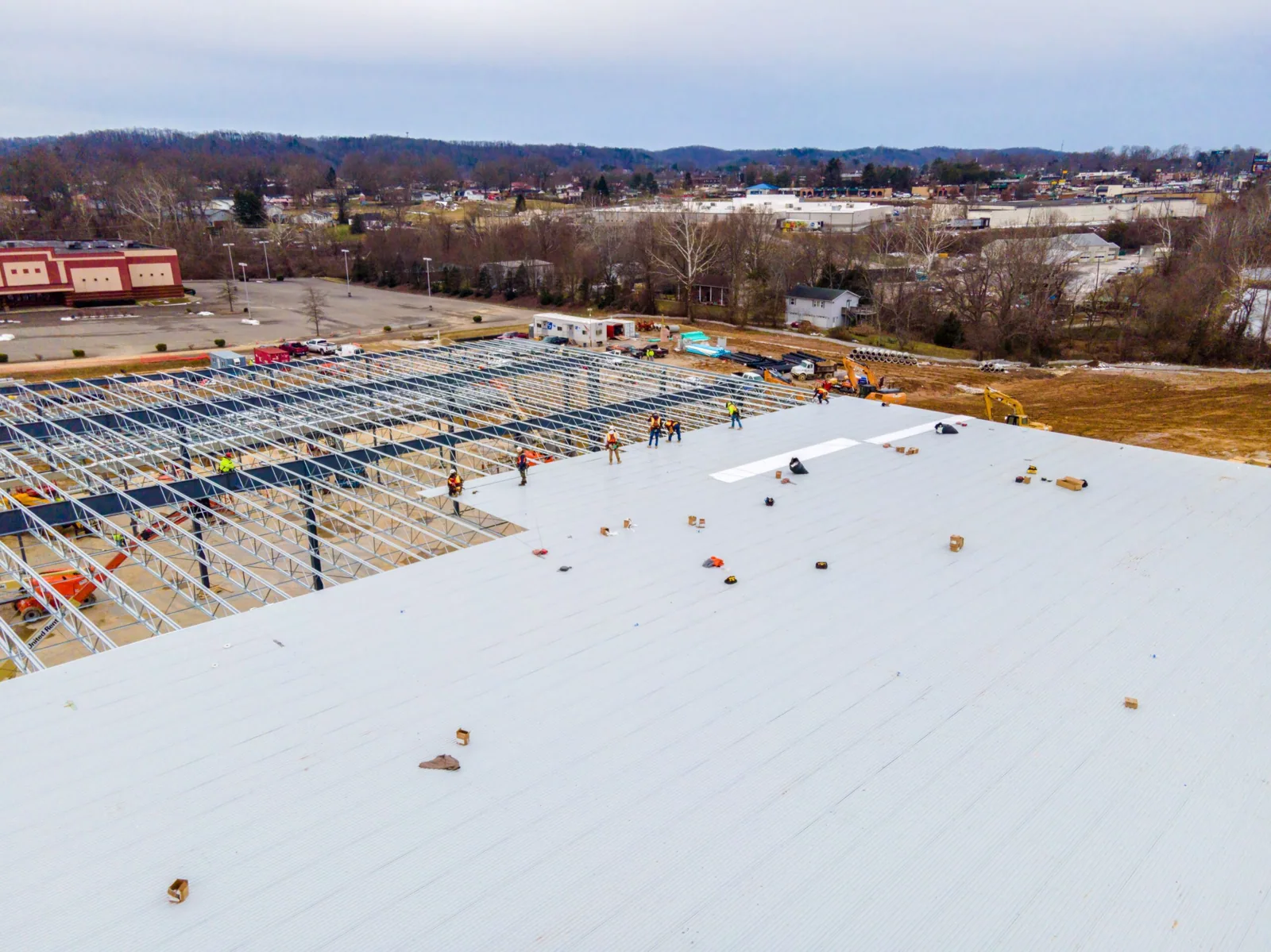
If a larger area is considered, we compare repair, recover and replacement boundaries against drainage, remaining serviceability and the facility’s access window. A roof recover can avoid removing sound material only when the existing assembly and conditions permit it. Where tear-off is needed, the scope states the anticipated sequence, protection and inspection points. For work governed by federal facility criteria, the design and installation details must be coordinated with the responsible project authority.
Separate Findings from Scope
Schedule and material access affect the sequence. Coating or membrane work needs a suitable dry window and surface preparation; metal repairs may need a lift or restricted perimeter. A roof condition report can support budget review, while capital planning can rank areas by observed condition and operational impact. Each proposed phase identifies the roof zone, access needs and temporary protection so the facility can review what changes at each step.
Alexandria’s heat can soften some surface materials and speed aging at exposed details, while freeze-thaw can stress wet joints through colder periods. These are inspection considerations, not a diagnosis of any armory. We record the conditions at the property and explain how they affect the proposed work. That distinction helps the team retain useful regional context without overstating what has been observed on the roof.
Document the Work Area
At completion, we document repaired details, replaced materials, drainage conditions and any limits that remain. The facility contact can compare those notes with the original roof zones and confirm that access routes, staging areas and debris handling have been cleared. If the scope includes multiple shifts, each shift can close with a record of completed sections and any area temporarily protected for the next visit.
Ongoing maintenance can focus on drains, seams, edge transitions and penetrations before water reaches interior rooms. We set an inspection interval with the building representative based on roof condition and operating needs, then keep observations tied to locations instead of broad labels. A preventive maintenance plan can track recurring conditions. For a commercial property in Pentagon City, the site contact confirms access and staging requirements.
For an armory roof review, send the Alexandria-area address, the reported condition and any access or readiness constraints. We can inspect the relevant zones, explain what the evidence supports and prepare a scope the facility team can evaluate.
Property Types We Roof
Commercial Roofing Questions
Can roof repairs fit around scheduled readiness activity?
Yes, when the facility contact identifies the allowed access window and protected areas. We can sequence inspection, material delivery and repair around those constraints, with a plan for temporary weather protection if work is interrupted. The work window should be confirmed before a crew or lift is dispatched.
What changes when an armory roof is on a controlled installation?
Badging, escort, vehicle screening and delivery rules can add steps before roof access. We request those requirements from the facility representative and include them in the mobilization plan. The roof inspection itself still records the same physical evidence: seams, drains, penetrations, edges and any interior moisture pattern.
How do you tell whether water reached the insulation?
Interior stains and surface readings help identify where to investigate, but they do not map the full wet area. We compare moisture indicators with roof details and can use an approved test opening to confirm layers at a specific point. The report marks the tested location and keeps untested zones separate.
Can a coating solve recurring ponding at an armory?
A coating can renew a compatible surface, but it does not correct a blocked drain, failed overflow route or unsuitable slope by itself. We inspect drainage and membrane condition first. The recommendation may combine drain correction with coating, or it may call for another repair if the assembly is not a sound coating base.
What should the facility send before an inspection?
The street address, leak or damage description, roof plan if available, contact for access approval and any schedule restrictions are useful. Include known lift limits, escort procedures and areas that cannot be entered. Those details let us plan a focused inspection and avoid assuming conditions that only the facility team can confirm.
Plan an Armory Roof Inspection
Share the Alexandria-area address, reported roof condition and access constraints. We will inspect the relevant zones and outline the repair or planning options supported by the field evidence.