



 Services
 Roof Systems
 Property Types
 Industries
 Damage Repair
 Capabilities
 Manufacturers
 Service Areas
Coast Guard Station Roofing Near Alexandria, VA
Property Types We Roof:
Rain can enter a waterside station roof at a curb or edge and travel before it reaches a communications or operations room. We inspect the reported zone, trace likely entry points and coordinate access with the authorized facility contact. Coast Guard Station Washington sits about nine miles northeast of Alexandria and serves National Capital Region waterways. Its waterside facilities support small-boat operations and response missions, so roof work must fit the station’s operating rules and boat access.
Coast Guard Station Washington is a Joint Base Anacostia-Bolling mission partner, though its mission and access controls remain distinct. The authorized contact confirms the building, assembly records and work approval before inspection begins. A naval facility roof or government building roof may share formal approvals, with different operational schedules.
Coast Guard Station Roofing
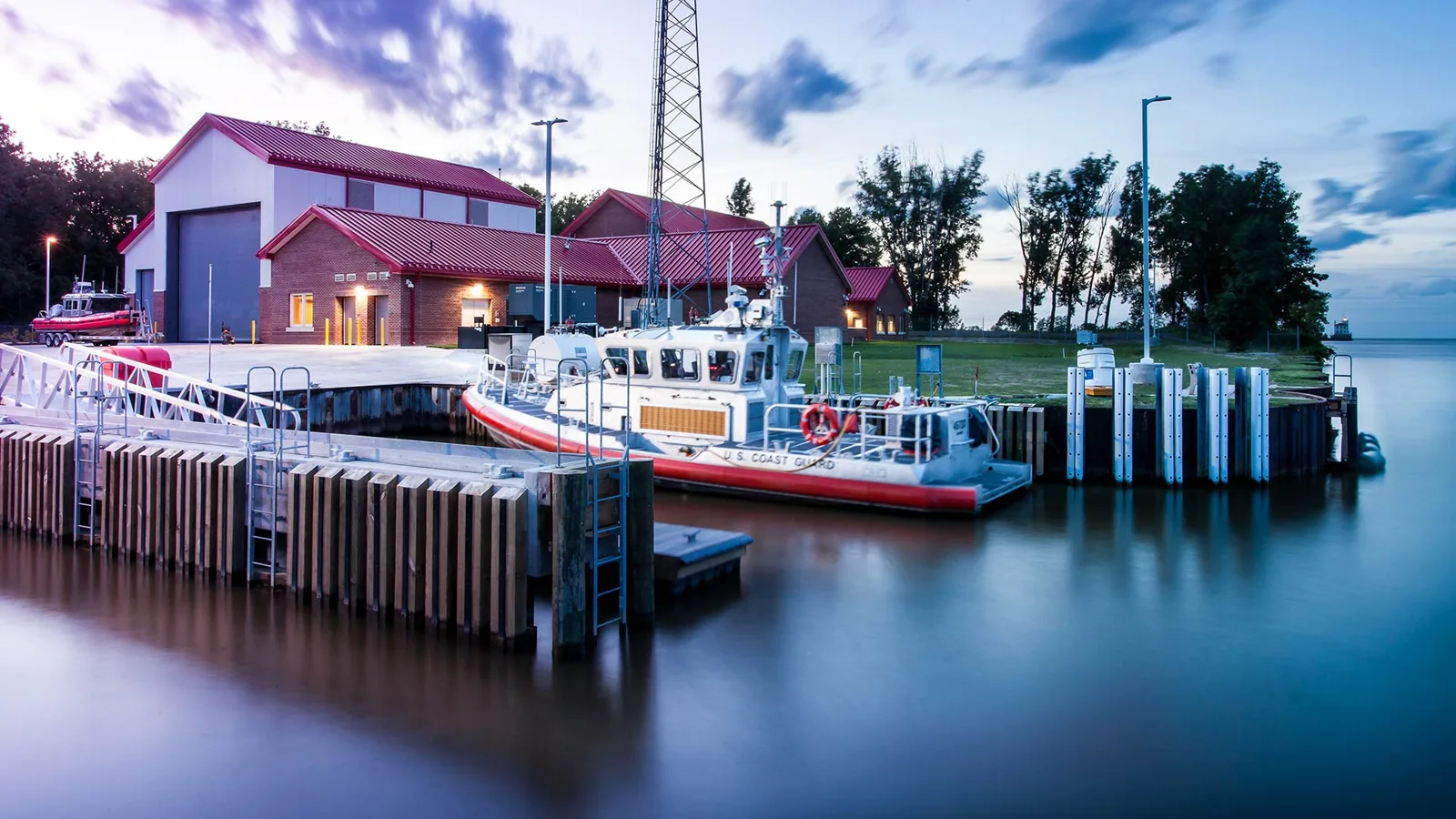
Coordinate Waterside Operations
The facility contact identifies gate entry, escorts, boat activity, loading routes, tool restrictions and which roof areas are approved for inspection. We confirm where a lift or material can be staged without interfering with station traffic or response work. The owner determines security and operational limits; we follow the approved path and keep records tied to that assignment.
Waterfront conditions can change quickly with weather or mission activity. The station representative sets work windows and identifies who can pause the job. The sequence names each roof zone, daily closure point and the person who approves a test opening. If access to a room below is restricted, we document that limit before testing.
For active water entry, emergency stabilization begins through the approved contact. We protect the roof opening and report the condition, then scope permanent work with the owner. The temporary response is recorded separately from a larger repair or removal decision.
Inspect Roof Edges and Equipment
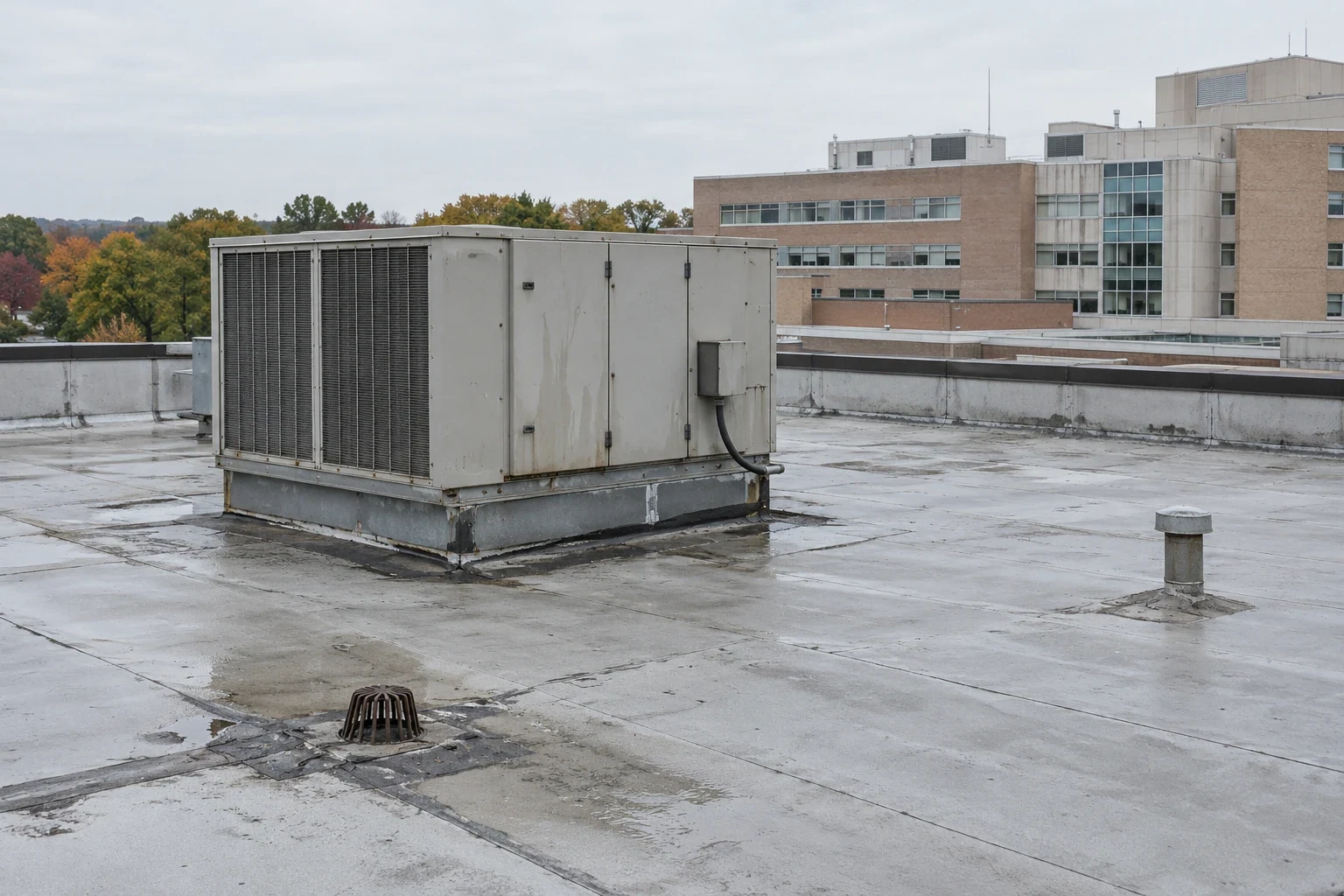
A station can contain administrative, operational and support areas, but the roof layout and systems must be confirmed at each building. We identify membrane or metal assembly, then inspect seams, curb flashing, penetrations, drains and parapets. Equipment and antenna supports can interrupt the roof surface; we check attachment and flashing for movement or water entry.
Joint Base Anacostia-Bolling’s development plan identifies warehouse and public-works functions as well as a housing and community-support district. Nearby warehouse and public-works facilities add to the range of roof systems in the area. At Coast Guard Station Washington, we document the assigned building and connect findings to its roof plan and inspected zones.
A test opening may reveal wet insulation or deck condition when visual evidence is insufficient. The authorized contact approves its location and restoration. A roof inspection can document visible conditions first, with test results listed only for the area directly checked.
Trace Rain and Waterside Drainage
Water may enter at an edge, seam or penetration and follow the deck before appearing indoors. We compare the interior report with roof-level details and record the likely route. A leak investigation separates the point of entry from the location where water became visible.
Alexandria’s low elevation and tidal Potomac exposure make heavy-rain runoff relevant to nearby waterfront facilities. We inspect outlets, scuppers, gutters and overflow paths at the station, while treating the building’s own condition as the evidence. A drain and scupper review can identify outlet work separately from membrane repairs.
Near waterways, we inspect metal edges and exposed fasteners for coating loss, corrosion, open laps and loose trim. Recommendations tie to conditions observed at the station and any further test needed.
Follow the Approved Project Package
Federal work may require details that align with Unified Facilities Criteria, project specifications, fire controls and approved submittals. The owner’s documents determine materials, attachment and inspection records. We review the package with the government project team and identify discrepancies between plans and existing conditions before work proceeds.
A contained seam or flashing defect can be repaired when adjacent material remains sound and the approved method supports the tie-in. If opening the roof exposes moisture or corrosion, we document it and seek direction before extending removal. For broader failure, a recover assessment reviews retained layers and drainage; replacement may be compared where the assembly is unstable.
Alexandria construction applicants are directed to the 2021 Virginia Codes; a federal facility’s governing requirements depend on owner and project review. The authorized project lead confirms which federal and owner requirements apply to the installation work.
Protect the Response Window
The station establishes periods when boat response, waterfront access or other operations cannot be interrupted. We confirm material delivery, staging, vehicle routes and weather stop points before mobilization. A task near National Harbor is part of the region’s Potomac waterfront context, but the installation provides its own controlled access route.
Work proceeds in approved zones that can be protected if weather turns or response activity changes. If a test reveals damage outside the authorized boundary, we secure the roof and present the finding for review. Any change to the approved work area goes through the facility contact before crews proceed.
Cost and duration depend on access approvals, escorts, operational windows, roof height, material handling, corrosion, test openings and repair depth. We identify owner-provided controls and assumptions in the estimate. Photos and open items remain specific to the station building.
Keep the Station Record Precise
Closeout notes identify the building, approved access period, roof zone, repair material, test location and conditions left for monitoring. Photos show the transition and any area not opened. The station can retain the record with facility drawings and maintenance history.
For a facility serving National Capital Region waterways, keep roof access instructions separate from boat-operation procedures. Share the building name, work authorization, leak history and approved window when requesting follow-up so the next visit remains within the correct facility boundary.
Waterside roofs need close attention at metal edges, fasteners, equipment supports and penetrations, where wind-driven rain can test a small flashing gap. We inspect those transitions with the drainage path and record each repaired detail by roof zone. If a controlled opening is needed, the work scope identifies the test location, interior protection, material replacement and weather-tight close for the shift. The station contact sets the approved access window and any limits on equipment or photography. Drains and scuppers also need a clear discharge route, especially where a response path or walk surface sits below the roof edge. We keep drainage correction separate from membrane repair so the facility can approve each item against its own need.
Property Types We Roof
Commercial Roofing Questions
How do you arrange access at a Coast Guard station?
The authorized contact sets entry, escort, vehicle, tool and roof rules. We confirm the building and approved work window before bringing materials to the site. Any test or scope change needs the owner’s direction.
Can roofing work proceed during boat-response operations?
Only within the station’s approved operating limits. We coordinate access, staging and work windows with the facility contact and identify how the roof will be secured if activity changes the plan.
What buildings are at Coast Guard Station Washington?
Its waterside facilities support an active small-boat station and response missions. The roof scope still depends on the particular building, access authorization and assembly confirmed on site.
Does a waterfront location prove corrosion damage?
No. We inspect metal edges, exposed fasteners and coatings for actual loss or corrosion. Regional exposure sets an inspection priority, while site observations determine whether repair is needed.
What should the facility provide for a roof inspection?
Provide the building name, roof drawings, entry approval, operating limits, leak reports and prior repairs. We confirm those details and state any area that could not be accessed or tested.
Coordinate Coast Guard Station Roofing Near Alexandria
Provide the station building, roof plan, access authorization, boat-operations window and reported condition. We will inspect the approved roof area and document a project-specific repair scope.