
 Services
 Roof Systems
 Property Types
 Industries
 Damage Repair
 Capabilities
 Manufacturers
 Service Areas
Big-Box Retail Roofing in Alexandria, VA
Property Types We Roof:
A leak above a sales floor can affect merchandise well beyond the roof opening. Water may travel along a deck or joist before it reaches an aisle. We map the interior location, inspect roof transitions above and nearby, and set a repair boundary that can be verified. Alexandria’s heavy rain makes drains and overflow routes worth checking, while summer heat stresses membranes and exposed flashing.
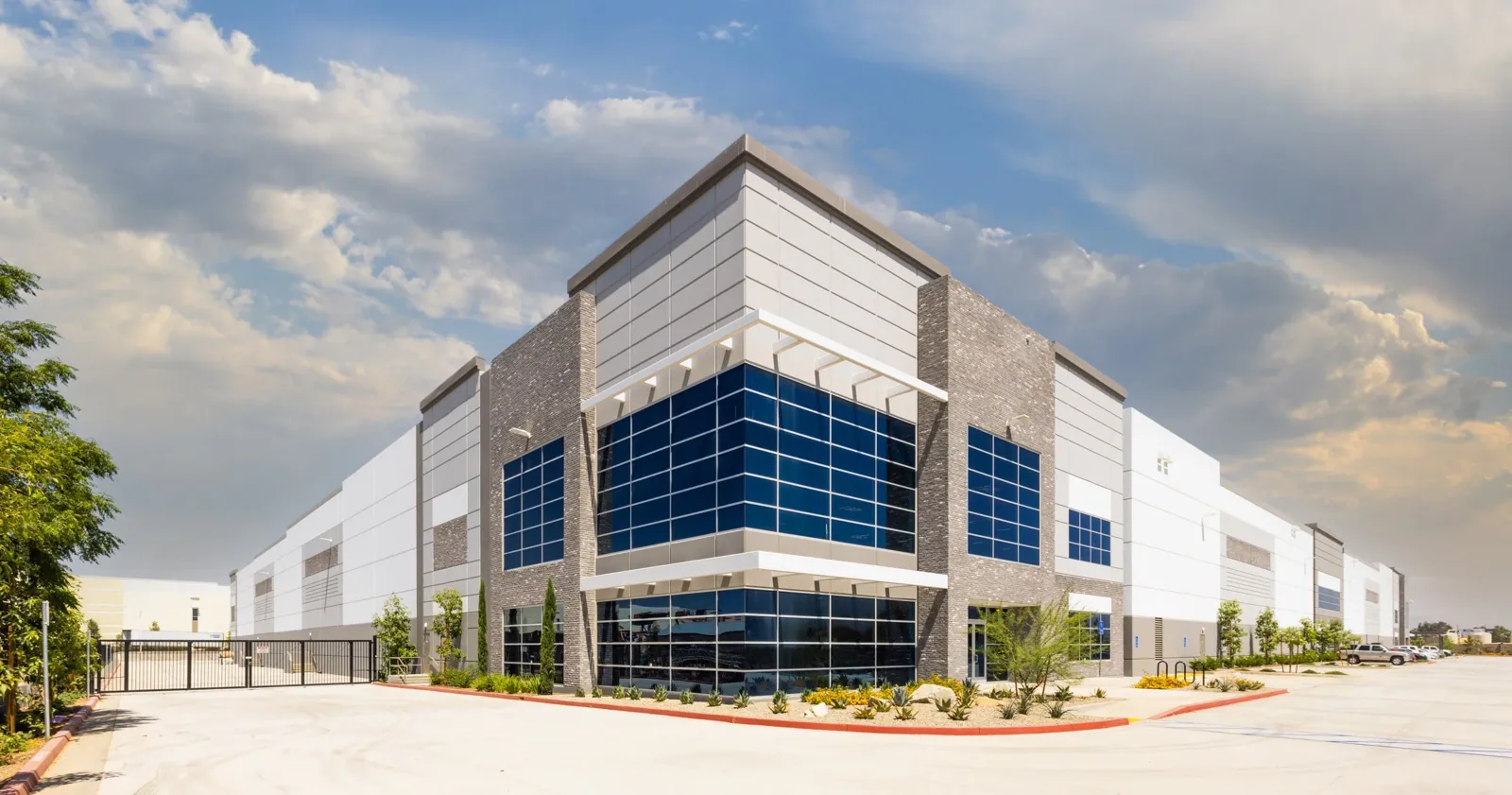
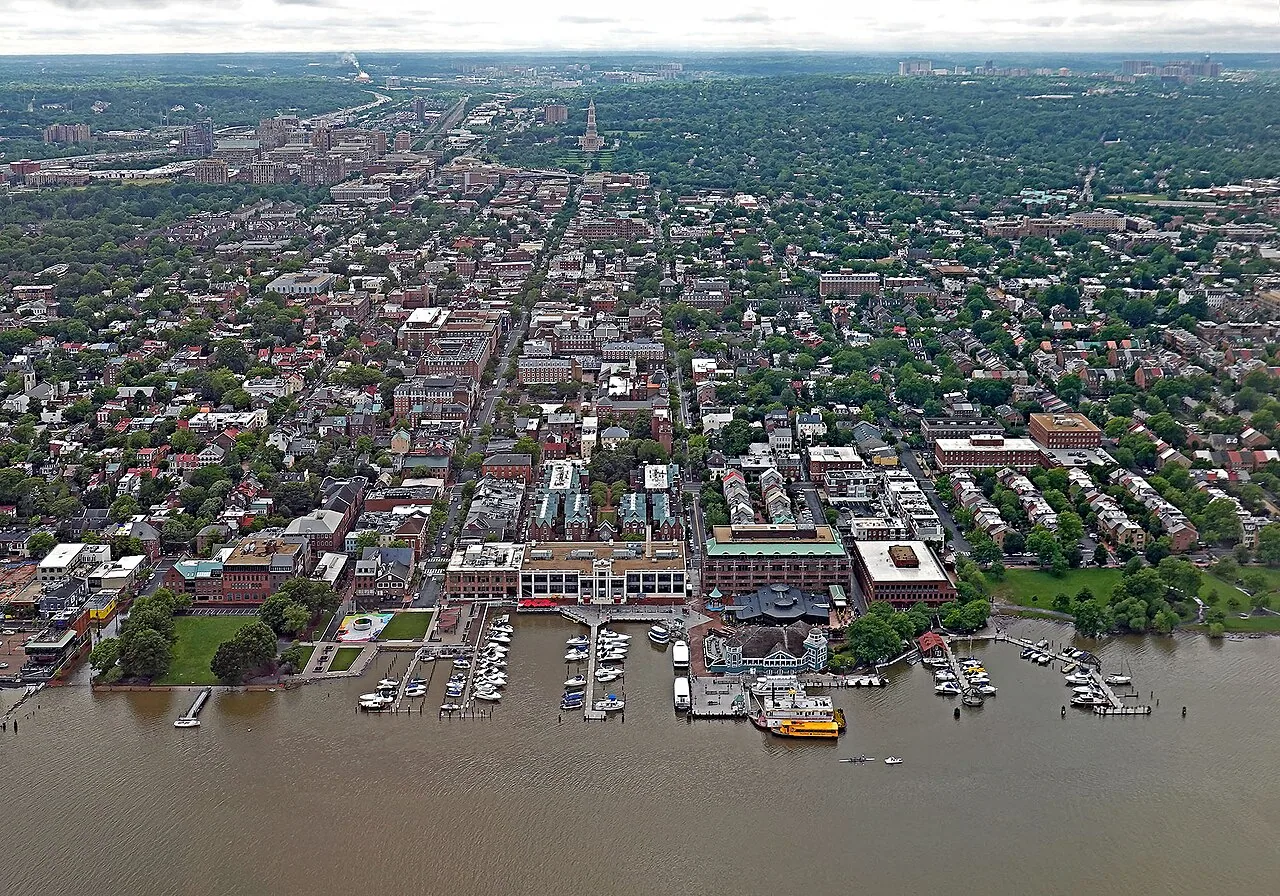
Old Town North includes commercial and retail uses, and the Route 1 corridor is part of Potomac West planning. Those local facts do not identify a big-box building’s roof type or inventory. We confirm the site plan, equipment and access rules at the address. A shopping-center roof may share tenant coordination, while a grocery roof can add refrigeration and loading constraints.
Big-Box Retail Roofing
Keep the Store Moving
The store contact identifies customer entrances, receiving hours, stock areas and routes that must remain open. We plan roof access, deliveries and staging around those priorities, then define which area below needs protection. If an active leak threatens merchandise or electrical equipment, emergency response is available at all hours, including weekends and holidays, while permanent work is scheduled.
Roof repairs may bring noise, odors, debris or equipment across a service yard. We agree on notice, barriers and cleanup with store management. A larger project can proceed by roof zone when each area can be closed and protected at shift end. The plan specifies how material reaches the roof and where removed roofing will be stored before disposal.
Stockroom aisles, receiving and sales areas can have different limits. We identify the impact below each work zone before opening the roof. If merchandise must move or be covered, the store team confirms the area and the person responsible. The roof estimate does not assume that the building can empty a large section at short notice.
Track Water Past the Ceiling
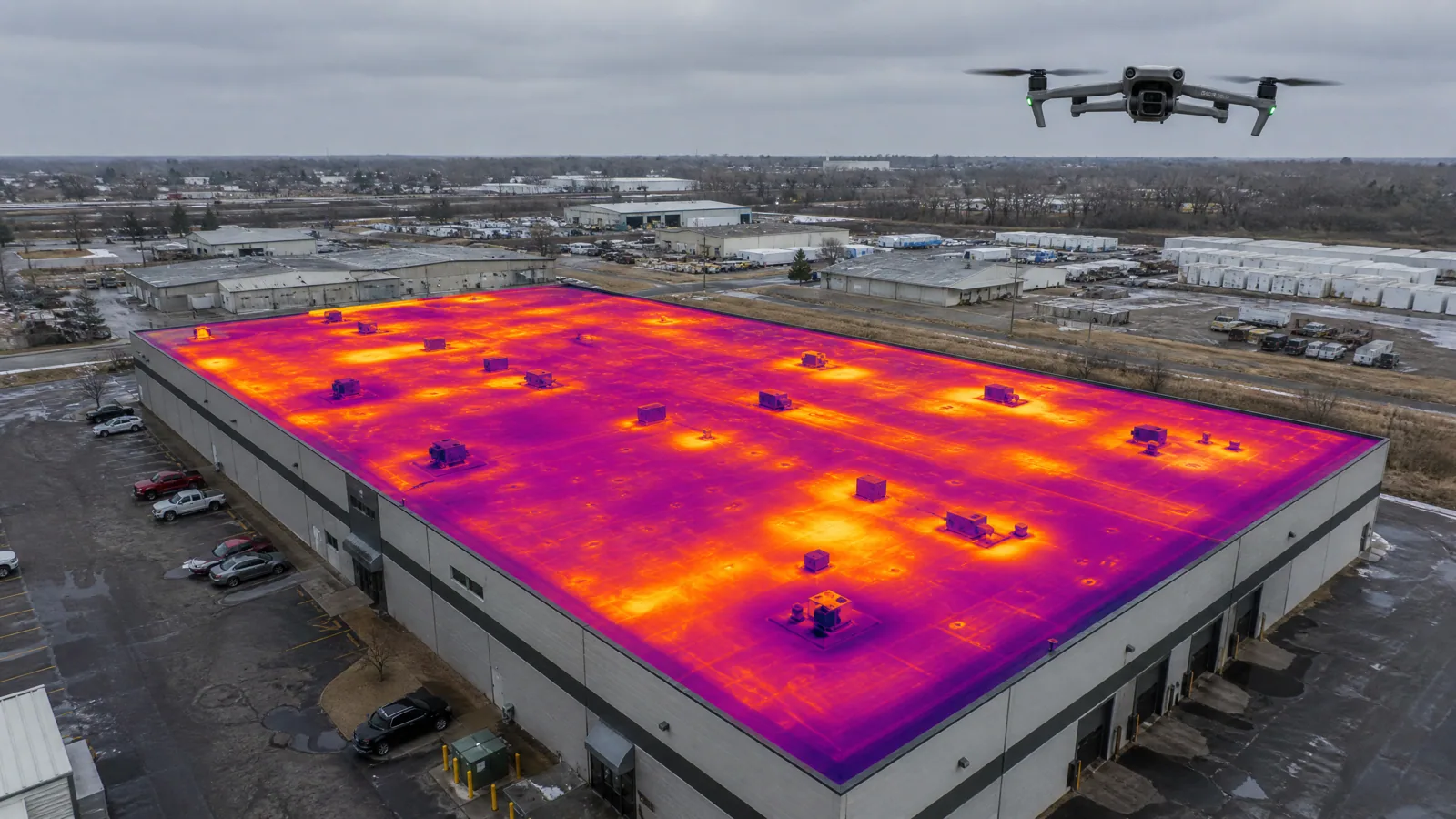
Water can enter at a curb, seam or perimeter and move across the roof assembly before it appears over an aisle. We compare ceiling stains and leak timing with nearby drains, penetrations and flashing. A leak investigation records the likely entry point separately from the affected interior area, so a ceiling patch does not replace a roof repair.
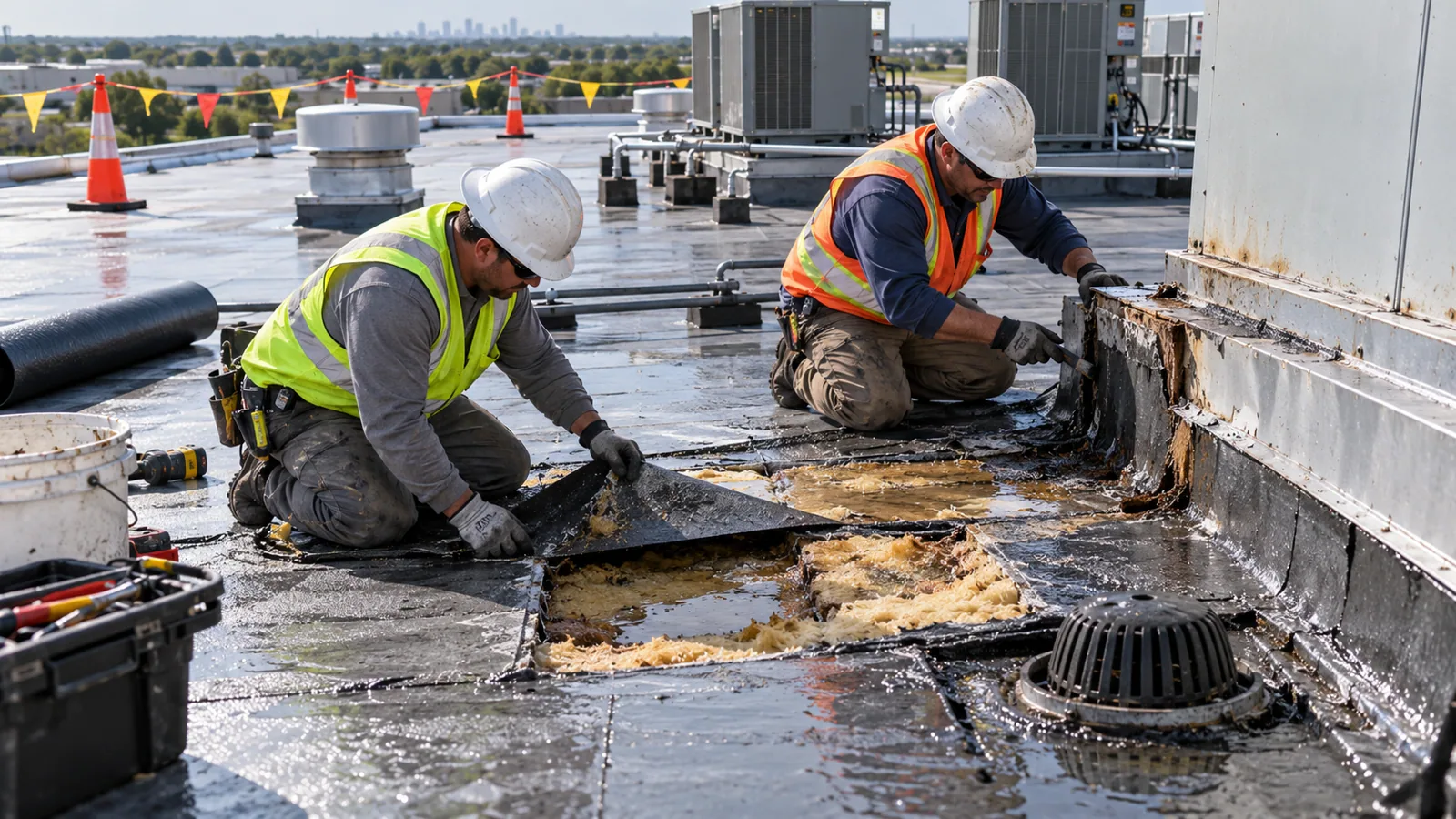
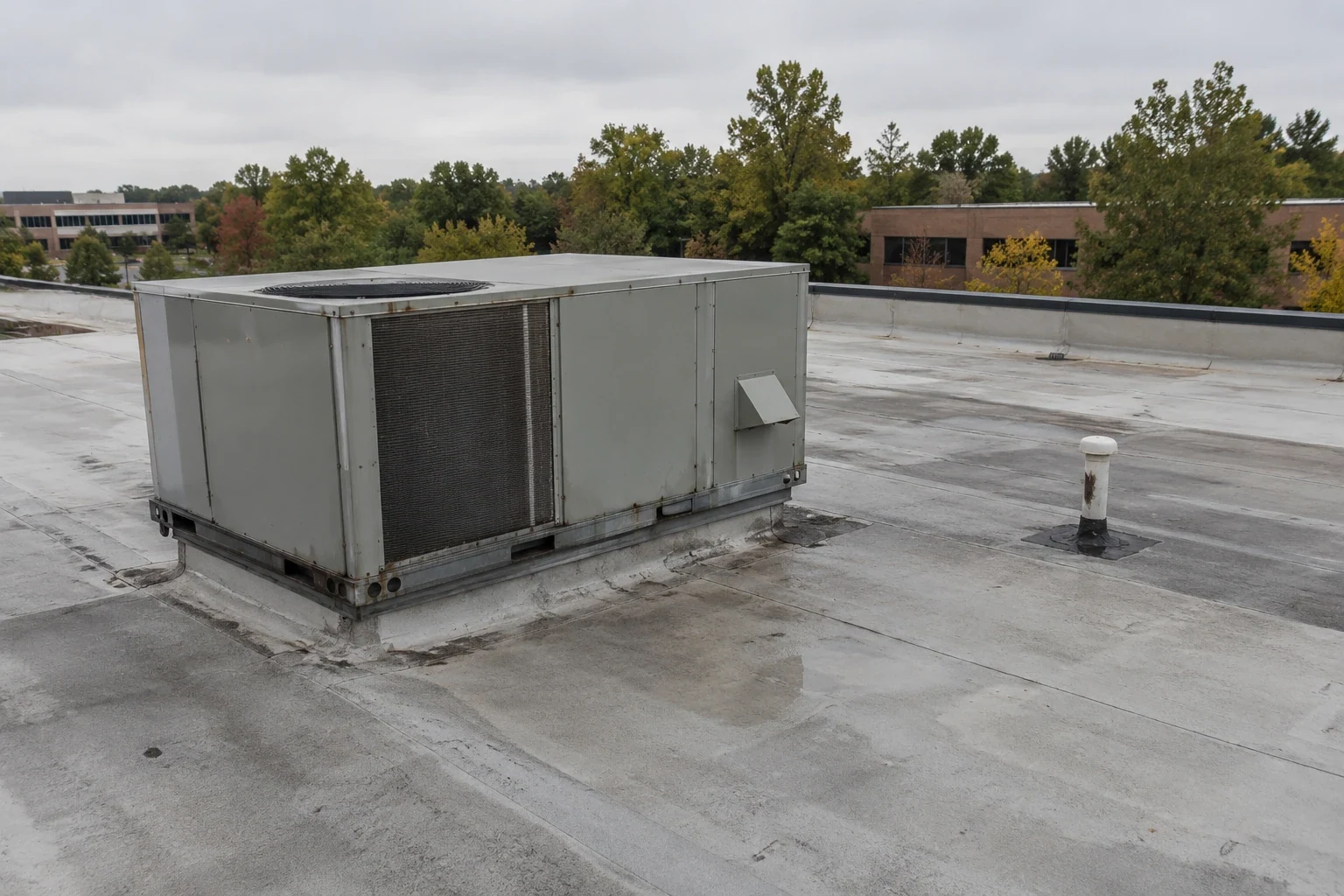
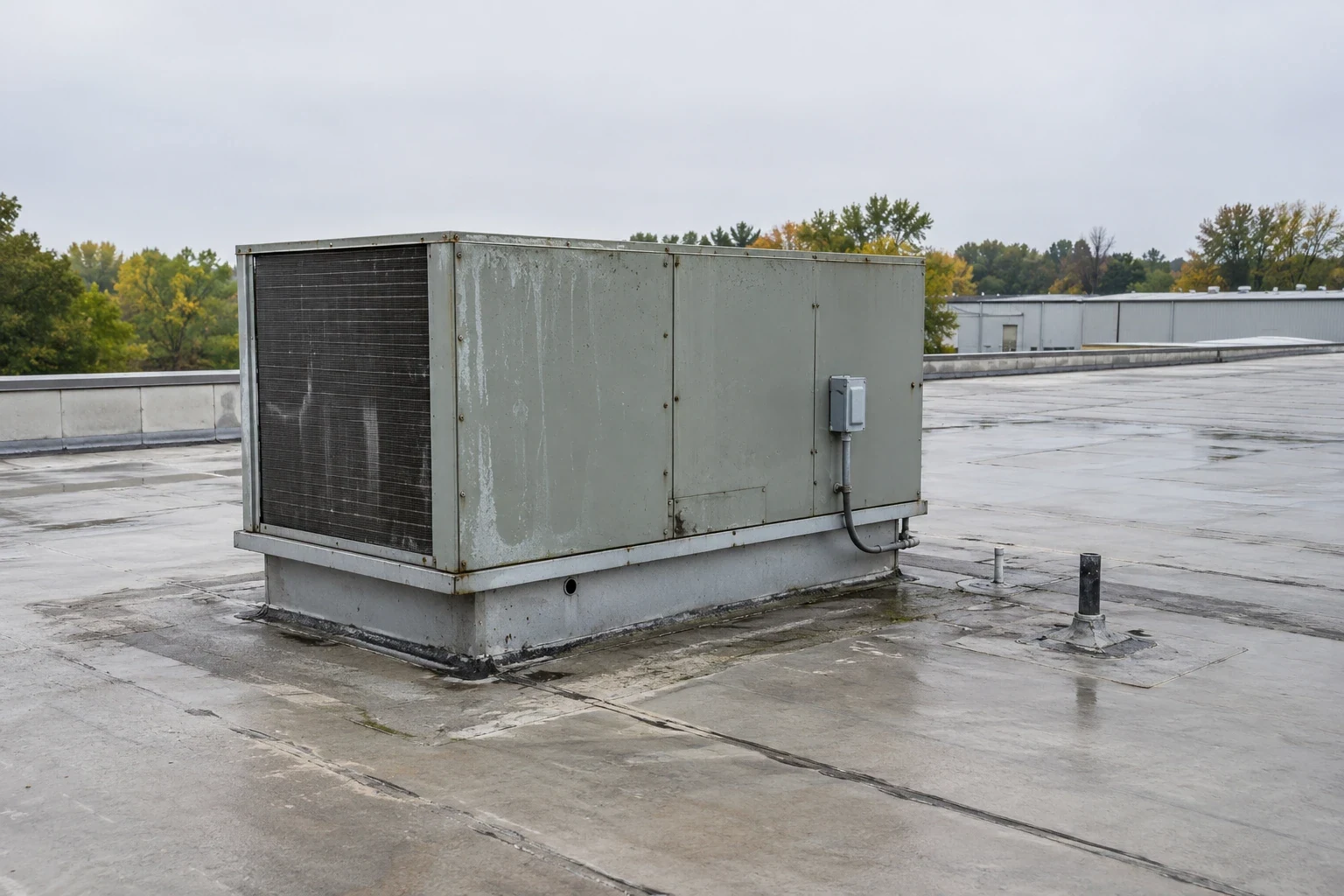
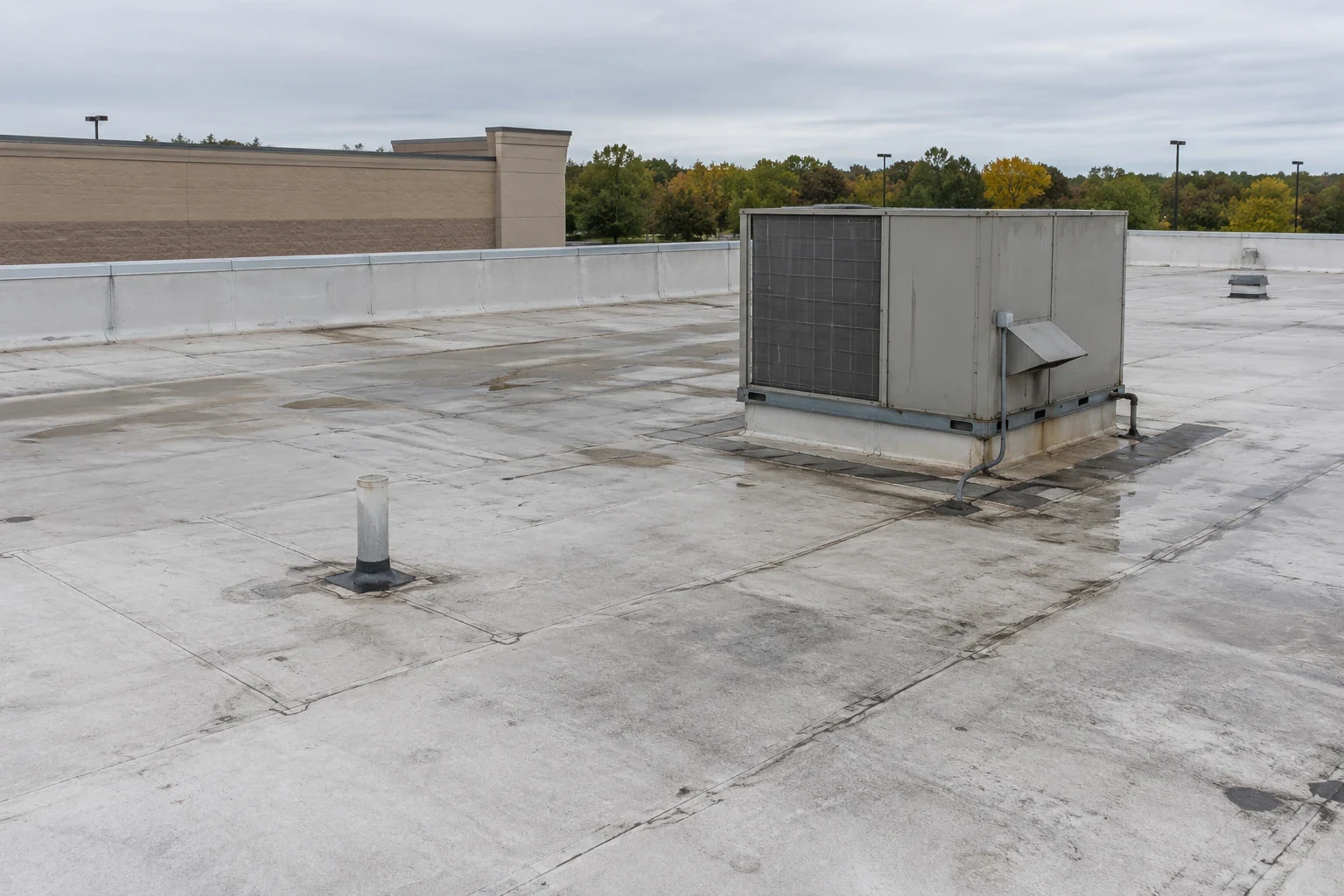
We inspect membrane seams, roof edges and rooftop equipment transitions for separation, open laps and prior patches. A curb and support repair can be coordinated with mechanical work if a rooftop unit is being changed. If a test opening is needed, the manager approves its location and protection below before the roof is cut.
Where there are multiple suspected sources, the inspection checks them as separate roof zones. A controlled water test has a defined area, observation point and stop condition. The result applies to the tested detail only. We identify any part of the roof that could not be reached or safely inspected.
Inspect Outlets and Canopies
During Alexandria’s intense rainfall, roof outlets must carry runoff away from seams, curbs and receiving canopies. We check drain baskets, scuppers, gutters and overflow points for debris and ponding. Local flood exposure does not prove a defect at a particular store. We document the roof’s own water path and whether it crosses a curb, seam or canopy transition.
A blocked drain can hold water near a rooftop unit. A drain and scupper inspection can identify outlet work, with membrane repairs scoped separately. If a low area reflects deck movement or slope, clearing the drain will not resolve that cause. The estimate states what was observed and what needs further testing.
Receiving canopies, signs and wall connections may intersect runoff from the main roof. We inspect those edges where water could back up or cross between surfaces. Photos tied to the site plan help store management connect a reported drip with the correct roof area.
Set Repair and Replacement Limits
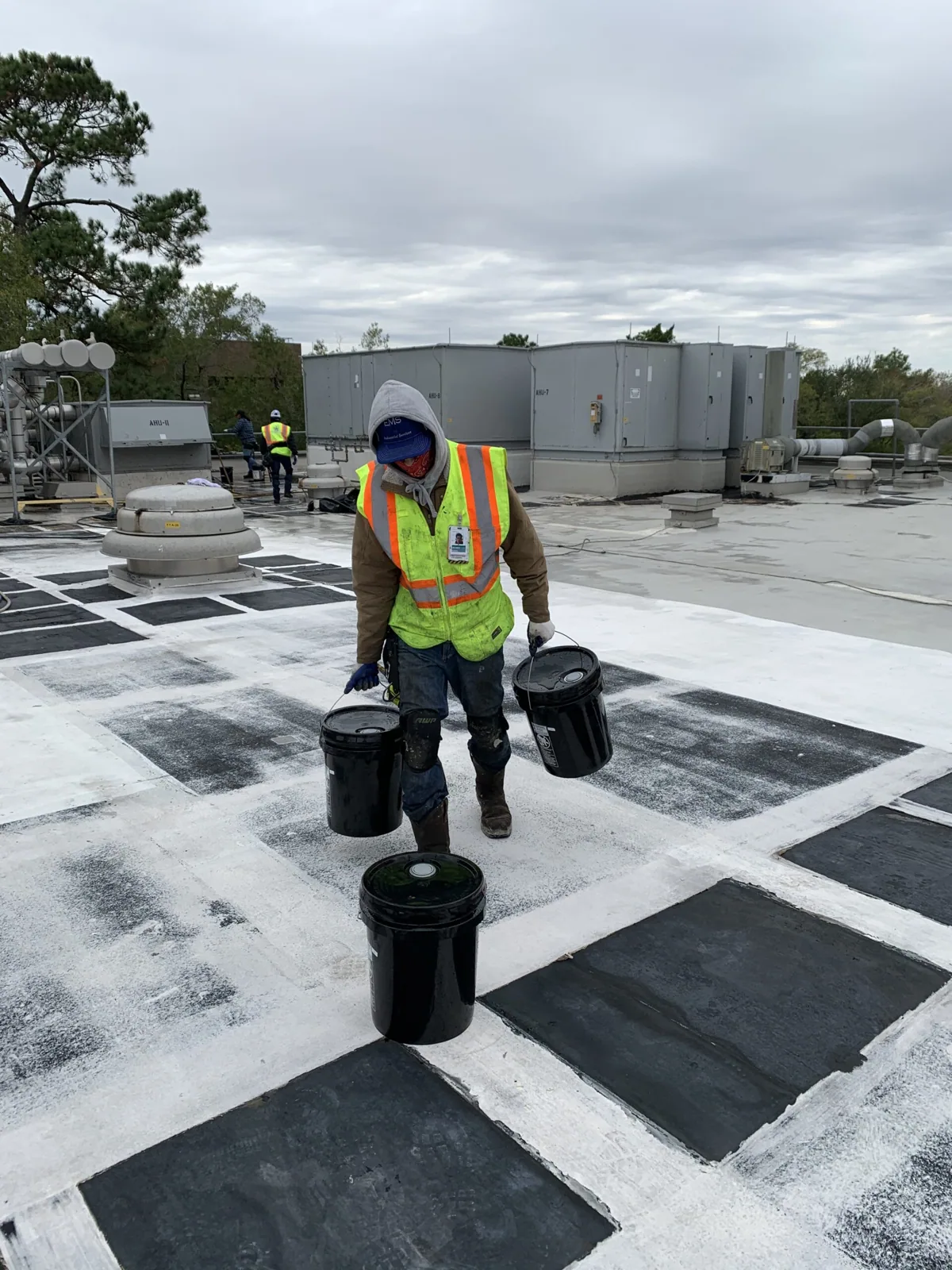
Where an isolated puncture, seam or flashing detail has sound borders, we cut back loose material and rebuild the tie-in with compatible components. Photos mark the repair limit. If an approved test exposes wet insulation or damaged deck, we document the finding and extend removal only after the owner approves the revised scope.
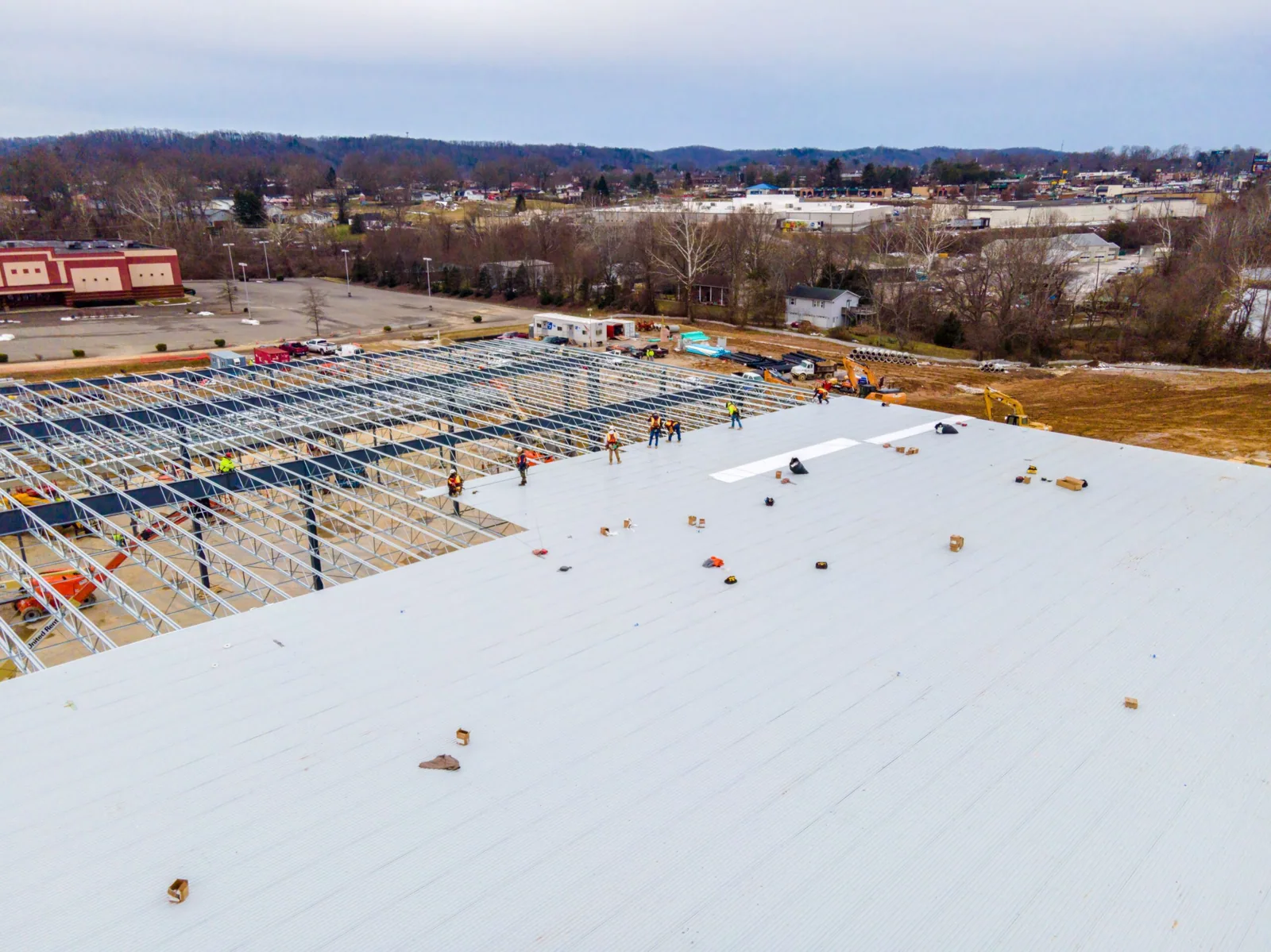
Several repair zones may justify comparing a recover with replacement. A recover assessment considers attachment, moisture, added height, drains and equipment curbs. If testing shows widespread moisture or unstable layers, phase replacement around receiving and store operations. We identify what remains beneath the new assembly and what could only be checked during removal.
Alexandria construction applicants use the 2021 Virginia Codes, with project requirements set through design and permit review. The GC coordinates roof, signage and mechanical details. We do not use the building’s retail category as evidence of a specific design requirement.
Coordinate Receiving and Staging
Work planning confirms receiving schedules, lift access, dumpster placement, delivery routes and customer entry. At an Oakville Triangle or Route 1 property, the street context can vary; the store contact verifies actual approach and staging limits. We also confirm fire lanes and any yard area that cannot be blocked.
The crew opens only the area that can be secured and protected. A weather change or a concealed deck condition can pause work, and the scope identifies who can approve changes. We keep the store informed about work zones and when routes reopen.
Price and duration depend on roof access, equipment count, roof height, material handling, repair depth, interior protection and disposal. The estimate separates known quantities from concealed conditions. A roof inspection can establish the current condition before a larger project is phased.
Record Each Store Zone
Closeout photos show repaired seams, drains, curbs, canopy transitions and any test locations. We note materials and work limits, including areas that remain for monitoring. Store managers can retain this record with maintenance requests and future equipment work.
For a property near Oakville Triangle, keep receiving rules and roof plans with the repair file. Share leak dates, interior aisle locations and access windows when requesting a follow-up visit.
Property Types We Roof
Commercial Roofing Questions
Can a big-box store remain open during roof work?
It depends on whether customer routes and occupied areas can be separated from the work. We coordinate noise, loading, material movement and any temporary closure with store management. The plan identifies who receives notice if weather or concealed damage changes the sequence.
How do you find a leak over a sales aisle?
We compare the aisle location with roof seams, equipment curbs, drains and edges above and nearby. Water can travel through the assembly before it appears inside. If a visual inspection does not confirm the entry point, we propose a controlled test or approved opening.
Can roof repairs be done outside store hours?
Yes, when access, equipment and crew scheduling allow. We confirm receiving windows, security procedures, noise limits and temporary protection before work. An overnight shift still needs a safe closure point if the scope continues the next day.
What happens if wet insulation is under the membrane?
We document the material and remove it to dry, stable layers after approval. If moisture is widespread, replacement may be more useful than repeated patches. The estimate distinguishes confirmed wet areas from roof zones that remain untested.
What records help price a retail roof project?
Send the roof plan, leak history, equipment list, store hours, receiving schedule and access rules. We verify these details on site, then identify required protection, repairs and any test needed to set removal quantities.
Plan Big-Box Retail Roofing in Alexandria
Provide the store address, roof plan, reported leaks, receiving schedule and access limits. We will inspect drainage and equipment transitions and coordinate a phased roof scope.